A solo board game score can be a useful witness. It can show that you learned the tempo of a deck, survived longer than last time, misunderstood a rule, built a more coherent engine, or chose a harder scenario than the table was ready for. It can also become a small machine for making a quiet hobby feel like an exam. The difference is rarely the number itself. The difference is what you ask the number to prove.
Score chasing works best when the score is treated as feedback, not identity. A personal best is a note from one session, under one set of rules, with one level of tiredness, luck, familiarity, table space, and interruption. It is not a public rank. It is not a promise that the next session must be better. It is not a reason to optimize every interesting decision out of the game.
Decide What the Score Is For Tonight
Before the first turn, decide what role the score will play. Some nights the score is the main puzzle. You want to test an opening, choose sharper actions, and see how far the system can stretch. Some nights the score is only a rough trail marker. You want to learn the enemy deck, finish the tutorial, enjoy a theme, or return to a campaign after a break. Those are different sessions, and they deserve different pressure.
Writing one sentence beside the setup can change the tone. “Tonight I am learning the food engine.” “Tonight I am trying the harder weather variant.” “Tonight I am playing casually and logging the result.” The sentence does not need to be formal. It tells future you how to read the number later. A low score from a learning session should not be compared to a polished replay. A high score from a lucky draw should not be mistaken for mastery.
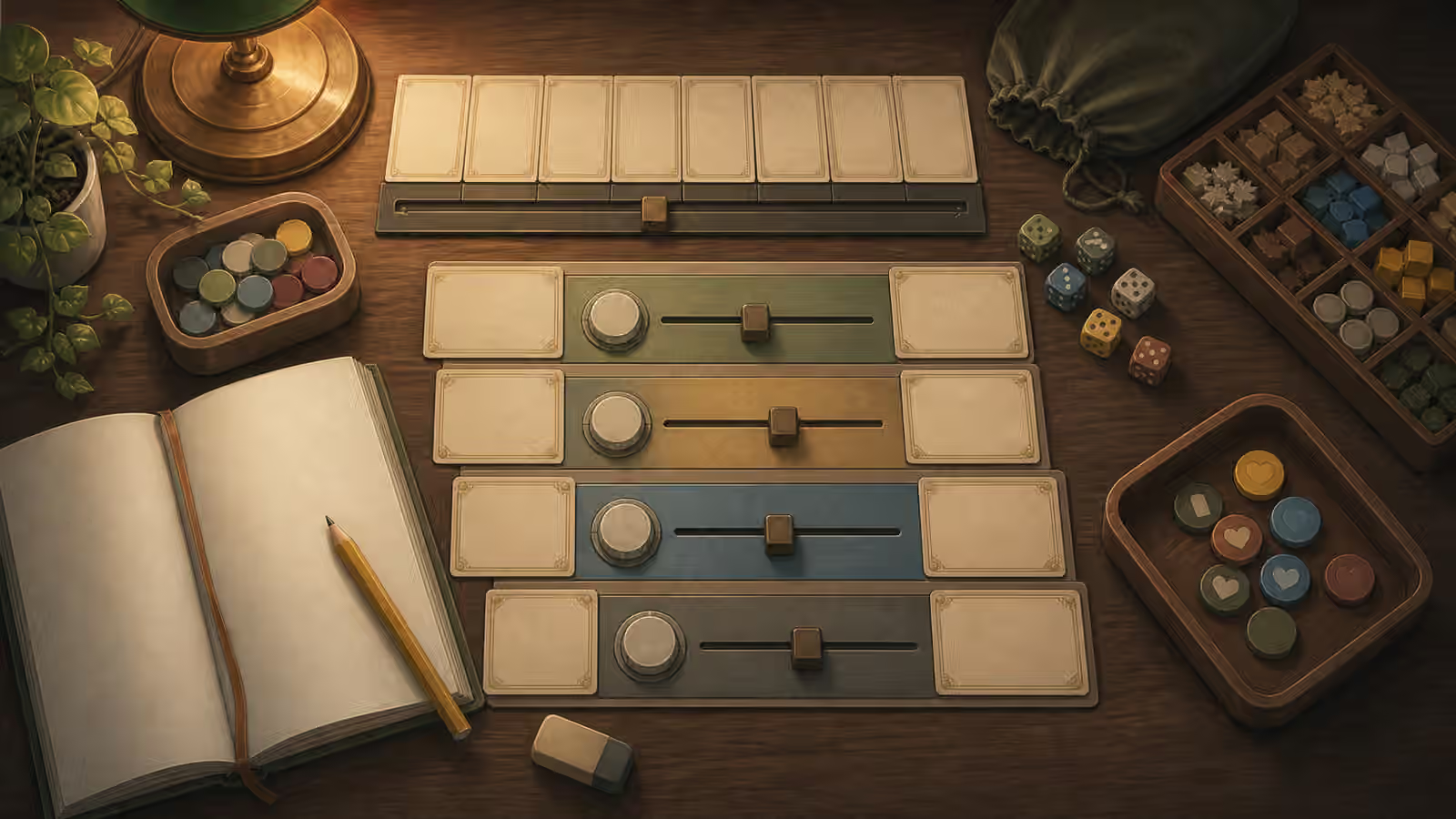
This is close to the habit in Difficulty Sliders and House Rules for Solo Tabletop Play : make the target visible before adjusting the experience. If the goal changes halfway through, mark that too. A session that began as a casual teach and turned into a serious puzzle is still valid, but the score log should remember the shift.
Keep Context With the Number
A score without context is easy to misuse. Instead of recording only the final total, add a short note about the scenario, difficulty, variant, rules confidence, and one thing that shaped the result. The note can be plain. You might record that you used the starter setup, forgot one upkeep trigger until midgame, drew three early resource cards, tried the official beginner mode, or played while tired and stopped before the bonus round.
That context protects you from false conclusions. If the score dropped because you played a harder map, the lower number may be progress. If the score rose because you accidentally skipped an enemy action, the higher number is still a useful learning note but not a clean personal best. If a game includes campaign reveals, expansions, or variable modules, context becomes even more important. A score with a new module may belong in its own band rather than the same line as the base game.
The log should stay small. A score notebook that takes longer than the final turn will not last. If handwriting is uncomfortable, use short marks, a voice memo, or a simple card tucked into the box. Campaign Log Review uses the same idea for narrative continuity: record enough to want the next session, not enough to bury the game under administration.
Notice When Optimization Shrinks the Game
Many solo board games invite optimization. That can be a pleasure. Efficient turns, cleaner resource curves, sharper risk choices, and better timing are real satisfactions. The problem begins when the score goal makes the game smaller than it was meant to be. You stop trying odd strategies. You avoid flavorful cards because they are not efficient. You restart after one bad draw. You read every decision through the question of whether it damages the final total.
There is nothing wrong with a hard optimization session when that is the chosen appetite. But if every session becomes that session, the game may lose its texture. A card that is slightly inefficient may still tell you something about the design. A losing route may teach the map. A failed combo may become the story you remember. Losses, Setbacks, and Failed Checks in Solo Play is useful here because it treats bad outcomes as material, not waste.
One practical move is to alternate score goals with play goals. After a personal-best attempt, play the next session with a different question. Try an underused character. Use a harder map but ignore the final comparison. Pick a thematic constraint. Play for clean rules execution. Those sessions still produce scores, but the number is not the only evidence of value.
Build Score Bands Instead of One Ladder
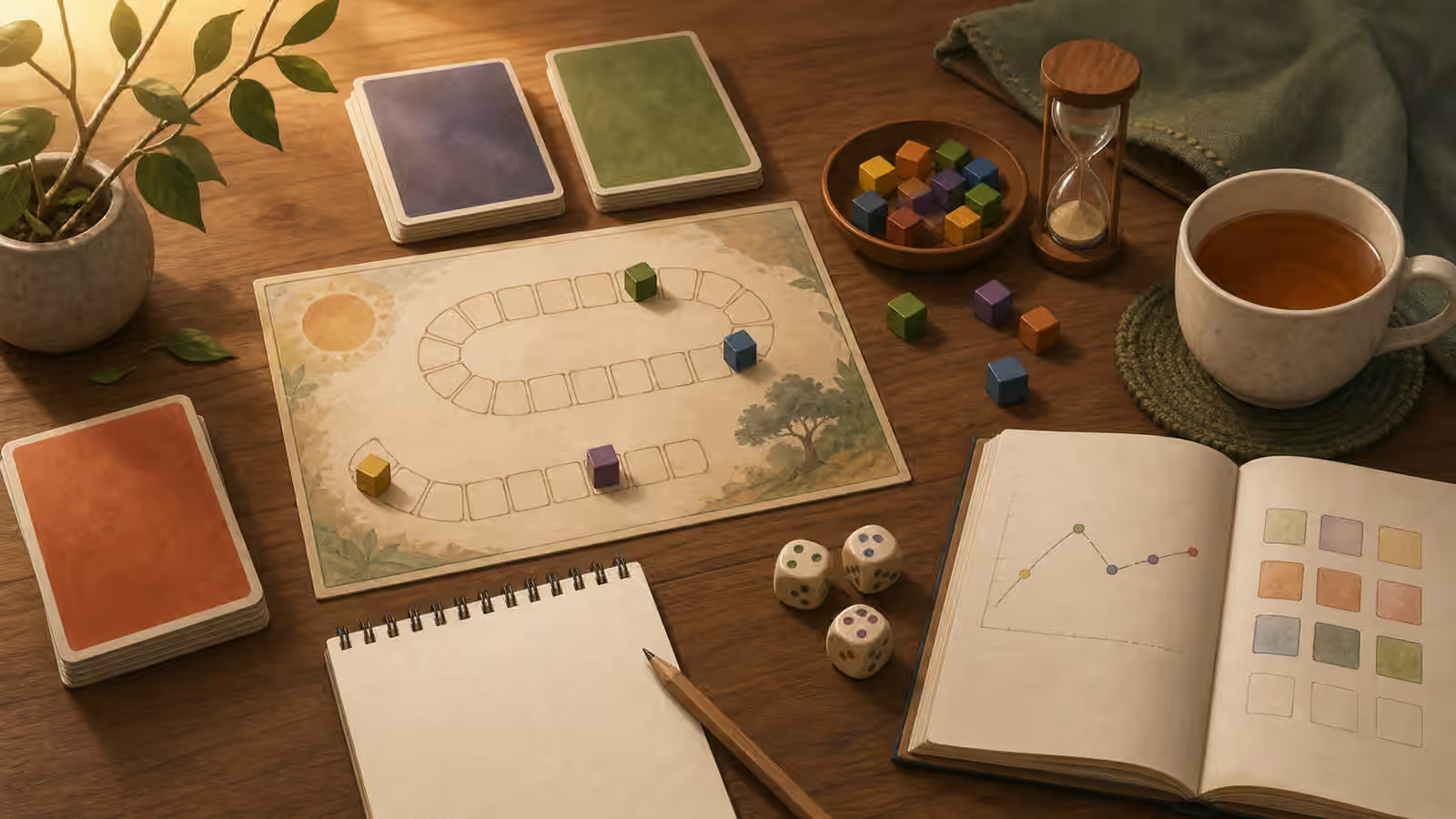
A single high-score ladder can be misleading when a game has variable difficulty, expansions, scenarios, characters, map layouts, or campaign state. It is often better to keep loose bands. A base-game beginner score lives with other base-game beginner scores. A hard-mode score lives with hard mode. A learning session sits apart from a polished attempt. A score with a new expansion does not need to compete with the core box until you understand what the expansion changes.
Score bands also make luck easier to accept. If the game has swingy draws, a personal best may depend on a rare opening. That does not make it meaningless, but it does mean the next ten sessions may not climb smoothly. You can still look for patterns. Are your low scores improving? Are you recovering from poor starts more often? Are rules mistakes dropping? Are you choosing when to push and when to stop?
This kind of comparison keeps score chasing humane. It treats improvement as familiarity with a system, not a straight line. It also leaves room for Replaying a Solo Game With Fresh Prompts , where the point of replay may be a new constraint rather than a higher number.
Let the Table Close Without a Verdict
At the end of a scored session, write the result, one context note, and one return cue. Then close the table. Resist the urge to adjudicate the whole night. You do not need to decide immediately whether the score was good, whether the strategy was smart, or whether the game is worth keeping. Let the number become part of the record.
If the score makes you tense, lower its authority. Hide the log for a few sessions. Play unscored variants when the rules allow. Use win-loss marks instead of totals. Treat the final score as a receipt, not a grade. If score chasing is the reason you love the game, give it a proper seat at the table and make the session honest about that pleasure.
Solo play has room for both sharp puzzles and soft evenings. A score can help you learn, return, compare, and celebrate. It becomes a problem only when it demands that every session justify itself. Write the number down. Write the context beside it. Then let the next game be chosen by appetite, not by the last total.