A solo game often ends before the story ends. Dinner needs the table, the lamp has to move, a child needs the room, or your attention simply runs out. The problem is not that the session was too short. The problem is that many games assume continuity will be easy, then leave the player to reconstruct a board state from memory days later.
Saving state is a practical table skill. It belongs beside Campaign Log Review and Solo Board Game Campaigns Without Losing the Thread because the physical arrangement carries part of the story. A log can tell you that the ranger reached the bridge. A saved tray can tell you which tokens were spent, which card was next, which enemy was still engaged, and which die result had not yet been resolved.
Save the Next Move First
The most useful save state begins with one question: what is the first action future you needs to take? If you answer that before packing anything away, the rest of the system becomes lighter. “Draw the night event,” “resolve the wound check,” “start at room four,” or “choose between the road and ferry” gives the next session a handle.
Write that restart cue in your own words on a card, notebook line, sticky tab, or voice note. It should not be a full recap. It is the invitation back into play. If it needs more than a sentence, the game may need a cleaner pause point or a smaller scene boundary.
This matters because memory is uneven. You may remember the mood of the session and forget the upkeep step. You may remember the villain and forget that the lantern had one charge left. A restart cue protects the first move from becoming an archaeological project.
Separate Rules State From Story Memory
Board state and story memory ask for different containers. Rules state is exact: card order, tokens, damage, opened envelopes, map position, resources, scenario number, score track, or a pending die roll. Story memory is interpretive: why a decision mattered, what a character wanted, which location felt unsafe, or why you stopped with a bad feeling.
Do not force one container to do both jobs. Use trays, bags, envelopes, card sleeves, dividers, or a lidded box for rules state. Use the campaign notebook for story memory. When those two forms are mixed, the log becomes fussy and the storage becomes vague.
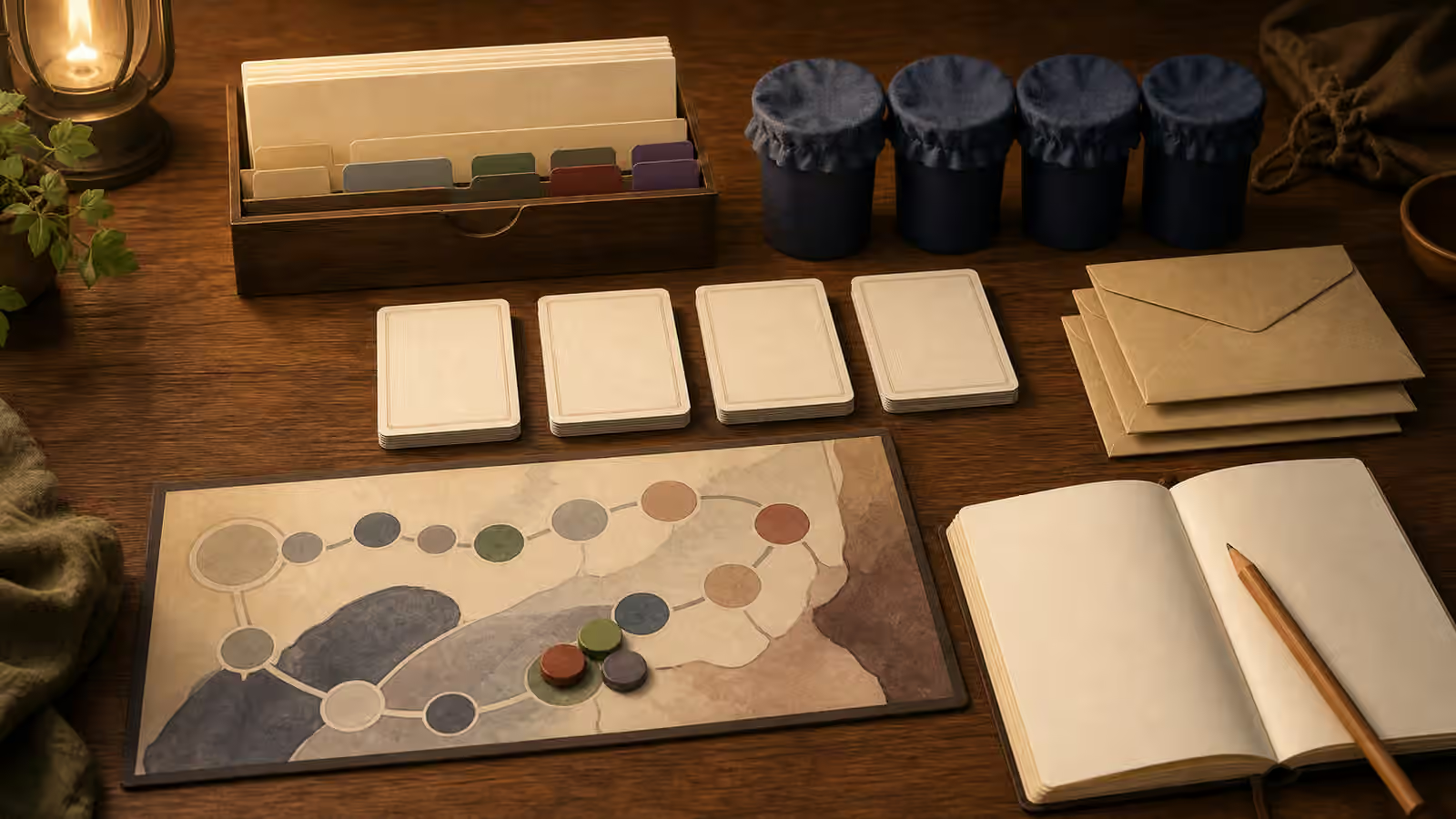
A practical pause might have one tray for active enemies, one for spent resources, one envelope for the market row, and one notebook line for the next scene. That is enough. The goal is not museum preservation. The goal is to reduce the number of decisions required before the next turn.
Use Photos Carefully
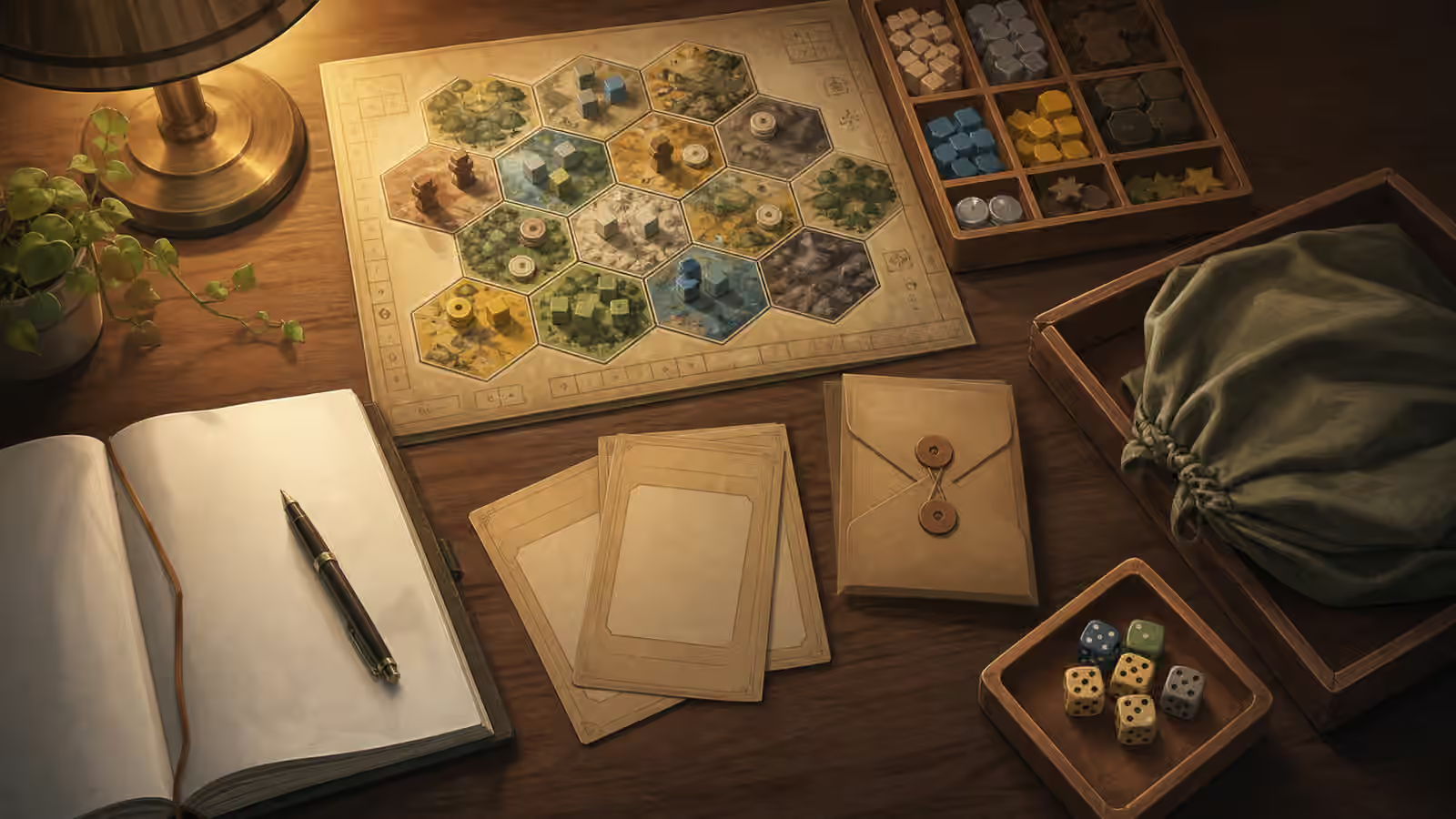
A private photo can be the simplest save tool for a sprawling board. It captures position, facing, card order, and nearby components faster than any written note. It can also become a problem if it includes copyrighted scenario text, puzzle answers, hidden envelopes, or content you would not want shared from a shared device.
Treat save photos as private memory aids. Crop out rulebook pages and story text when possible. If the game involves spoilers, keep the image with your private campaign notes rather than posting it for accountability or proof. If a photo makes access easier, use it without apology. Analog play does not become less analog because a camera helped you resume the table.
Photos also have limits. They show what was visible, not what was pending. Pair the image with a restart sentence. The photo may show a monster beside the bridge, but the note tells you that the monster had already attacked and the next move belongs to you.
Make Teardown Reversible
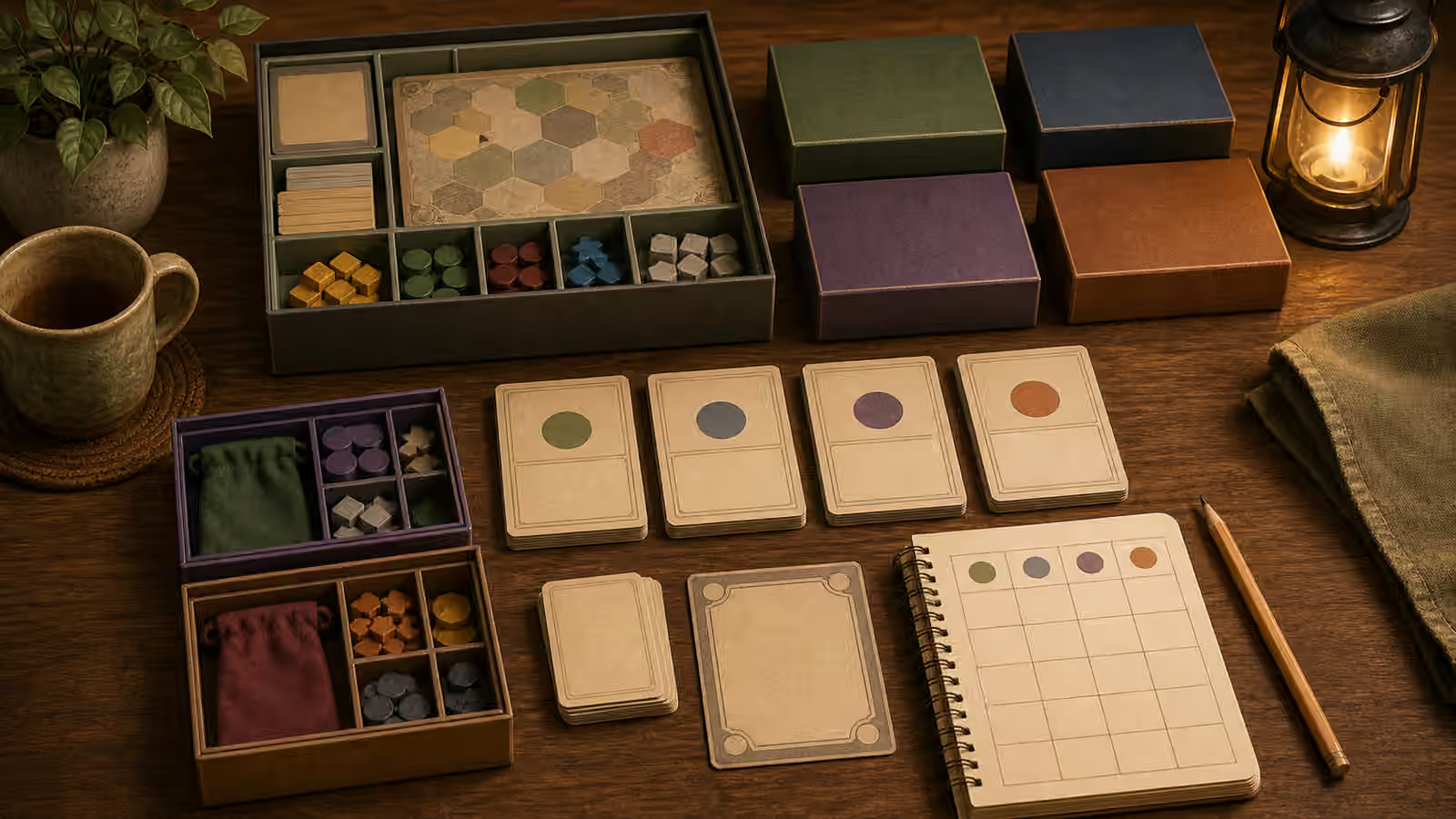
A reversible teardown keeps active pieces grouped by job. Avoid pouring everything back into the main insert if that means future you must sort the whole game before playing. Keep the active scenario separate from the archive. Use a simple envelope for “current scene,” a small box for “available but not active,” and the main box for “not needed next time.”
If the game has an official save sheet, use it. If the official sheet is too small, unclear, or easy to forget, add a private aid in your own words. If the game has no save system, make one around the actions you repeat: current location, pending step, active deck order, visible cards, spent resources, unresolved rule question, and next choice. You do not need every category every time. You need the categories that prevent confusion in this game.
The physical room matters too. If a table can remain set up, cover it with cloth, move drinks away, and protect pieces from pets, dust, sunlight, and curious hands. If the table must clear, choose containers that preserve zones. A tray with four compartments can remember a board better than a paragraph.
Leave a Rules Question Outside the Box
Rules questions are easy to bury. If you paused because a rule became unclear, do not hide that uncertainty inside the campaign box. Put the question on top of the notebook or beside the rulebook tab. Future you should see it before resuming, not after making three mistaken moves.
This is where Teach Yourself Rulebooks Without Turning the Night Into Homework connects to save state. Learning does not end after the first session. A small rules question, handled kindly, can become part of the return path instead of a reason the campaign stalls.
Know When to Flatten the State
Some sessions are not worth preserving exactly. If the board state is tangled, the story is still interesting, and the rules state feels like glue, flatten the state into a clean restart. Record what changed, choose a fair reset point, and begin the next session with a smaller setup. This is not failure. It is editing.
Flattening might mean converting a half-finished tactical scene into one consequence roll, moving to the next safe location, or restarting the scenario with one carried scar. If the alternative is never returning, a clean compression respects the campaign more than a perfect abandoned board.
A saved state should make play easier to resume. When it starts demanding more care than the game itself, shrink it. The table is allowed to serve the player.