A published adventure can be awkward at a solo table. It was often written for a game master who reads ahead, manages secrets, and presents scenes to other players. When the same person is both reader and player, the book can feel like a spoiler machine. Open too much and the mystery dissolves. Open too little and the session becomes page hunting.
The answer is not to pretend you know nothing. Solo play already asks you to interpret, adapt, and choose boundaries. The useful approach is spoiler-light handling. Read enough to run the next decision honestly. Cover, defer, or reinterpret what the character would not know. Use oracles for uncertainty the book does not handle. Keep copied material private and respect the work that made the adventure possible.
Read in Layers
Start with the public premise, tone, safety information, and expected level or scope. That tells you whether the adventure belongs at the table tonight. A grim horror ruin, a political mystery, a wilderness rescue, and a cozy festival may all be good adventures, but they ask for different emotional space and age-rating choices.
Next, read the opening situation and the first active location. Avoid reading every keyed room, twist, treasure, or resolution unless the adventure structure requires it. If the book has an overview for the game master, skim for handling needs rather than plot mastery. You want to know what kind of machine you are running: investigation, dungeon, travel, faction pressure, survival, social choices, or set-piece scenes.
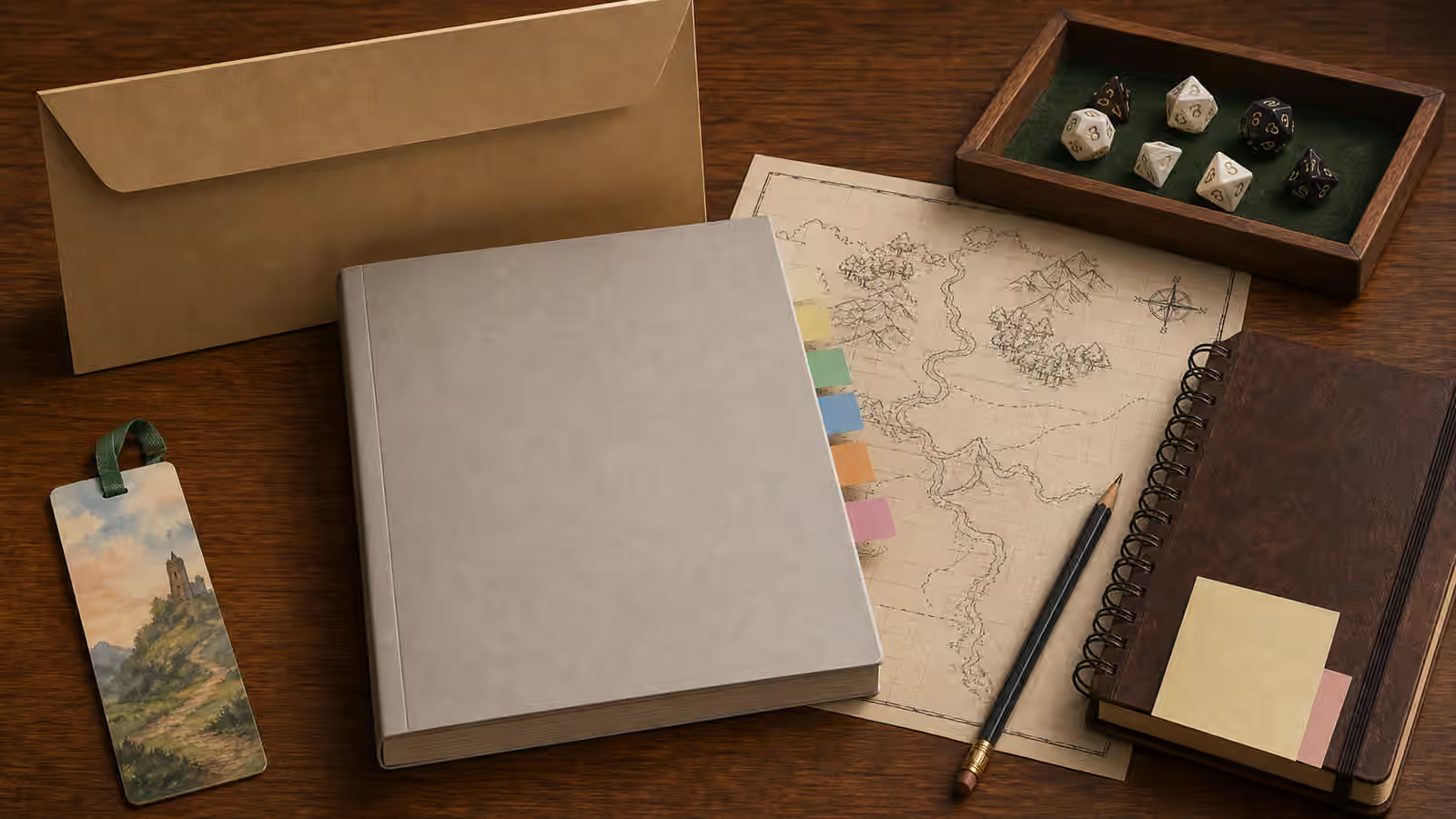
Tabs help. Mark the start, current location, rules appendix, NPC list, map, and any safety or content notes. Do not tab every secret. Too many markers can make the whole book feel urgent. The goal is to reduce page search without turning the adventure into a study project.
Separate Player Knowledge From Character Pressure
Solo play cannot erase player knowledge. If you accidentally see that a room contains an ambush, do not spend the next hour pretending you did not. Instead, convert the knowledge into pressure the character can feel. Maybe the corridor smells wrong. Maybe an ally hesitates. Maybe the oracle asks whether the warning comes in time. The scene can remain playable because the question changes from “do I know” to “what does this knowledge cost in the fiction?”
When surprise matters, use a cover sheet. Keep the map partly hidden. Read room entries only when the character reaches them. Put spoiler-heavy handouts in an envelope until needed. If the adventure has puzzle answers printed beside the puzzle, rewrite the setup in your own words on a private card and leave the answer covered.
Solo RPG Oracle Dialogue: Ask, Interpret, and Move is useful here because the oracle can mediate the gap between book knowledge and character uncertainty. Ask narrow questions. Does the guard notice the false badge? Is the bridge watched? Does the clue point to a person or a place? The oracle should create momentum, not overwrite the adventure.
Let the Book Provide Weight
One reason to use a published adventure is that it already has texture. It may have locations, names, factions, maps, images, encounter ideas, or consequences that you would not have invented alone. Let that weight help. Do not replace every prepared detail with a random result just because you are playing solo.
At the same time, do not force every prepared scene to occur. A solo character may take a route the adventure did not expect. A small party may need fewer enemies. A content boundary may require changing a threat. A tired evening may need one room instead of a whole chapter. Private adaptation is not disrespect. It becomes disrespect only when copied material is republished, creator credit is erased, or a personal edit is presented as the authoritative version.
Copyright, Fan Content, and Respectful Solo Play Notes belongs beside this topic. Your notebook can hold private summaries, page references, and adaptation notes. A public recap should credit the adventure and avoid posting enough maps, boxed text, stat blocks, puzzle answers, or art that the recap becomes a substitute for the book.
Convert Groups Into Solo-Sized Decisions
Published adventures often assume several characters. They may spread clues across skills, expect one person to scout while another talks, or balance fights around multiple turns. A solo player needs fewer simultaneous demands. Rather than inflating the character until they can do everything, adjust the decision shape.
For investigation, make clues robust. If one failed check blocks the whole mystery, allow another route, a cost, or a partial clue. For travel, reduce repetitive hazard rolls and focus on choices that change the route. For combat, lower enemy count before weakening every rule. For social scenes, give the solo character one clear leverage point and one clear risk. The table should ask meaningful questions, not punish the absence of other players.
When a room entry is too dense, translate it into a scene job. This room tests caution. This room offers a resource. This room reveals a cost. This room changes the route. Dungeon Room Prompts Without Endless Empty Corridors can help turn keyed rooms into playable functions without copying the adventure’s text into a new document.
Keep a Light Adventure Log
A published adventure already contains a lot of memory. Your log should record what changed at your table: which rooms were visited, which clues were found, which NPCs were altered, which content was softened, which house rule is active, and where the next session begins. It does not need to restate the whole book.
Write page references instead of copying long passages. Use your own labels for open questions. If the character skipped a location, mark it as unvisited rather than reading it immediately. The unvisited room can remain possible future play, or it can become background the character never sees.
The best solo use of a published adventure is neither total obedience nor total rewriting. It is a conversation between the book, the character, the dice, and the person at the table. Read in layers. Keep surprises protected when they matter. Adapt the scale. Respect the creator. Then let the adventure do what it was made to do: put a place in front of you that feels more solid than a blank page.