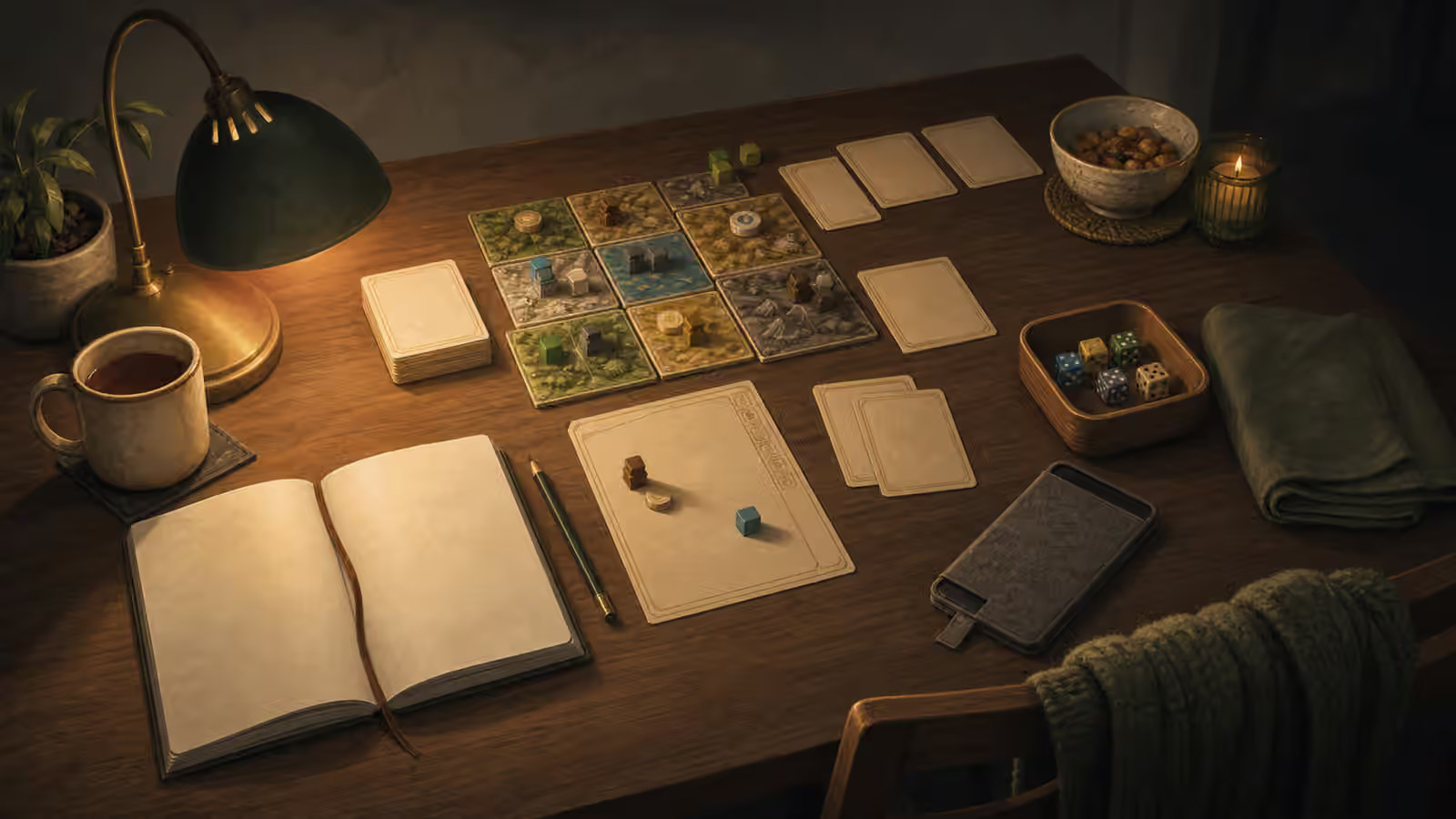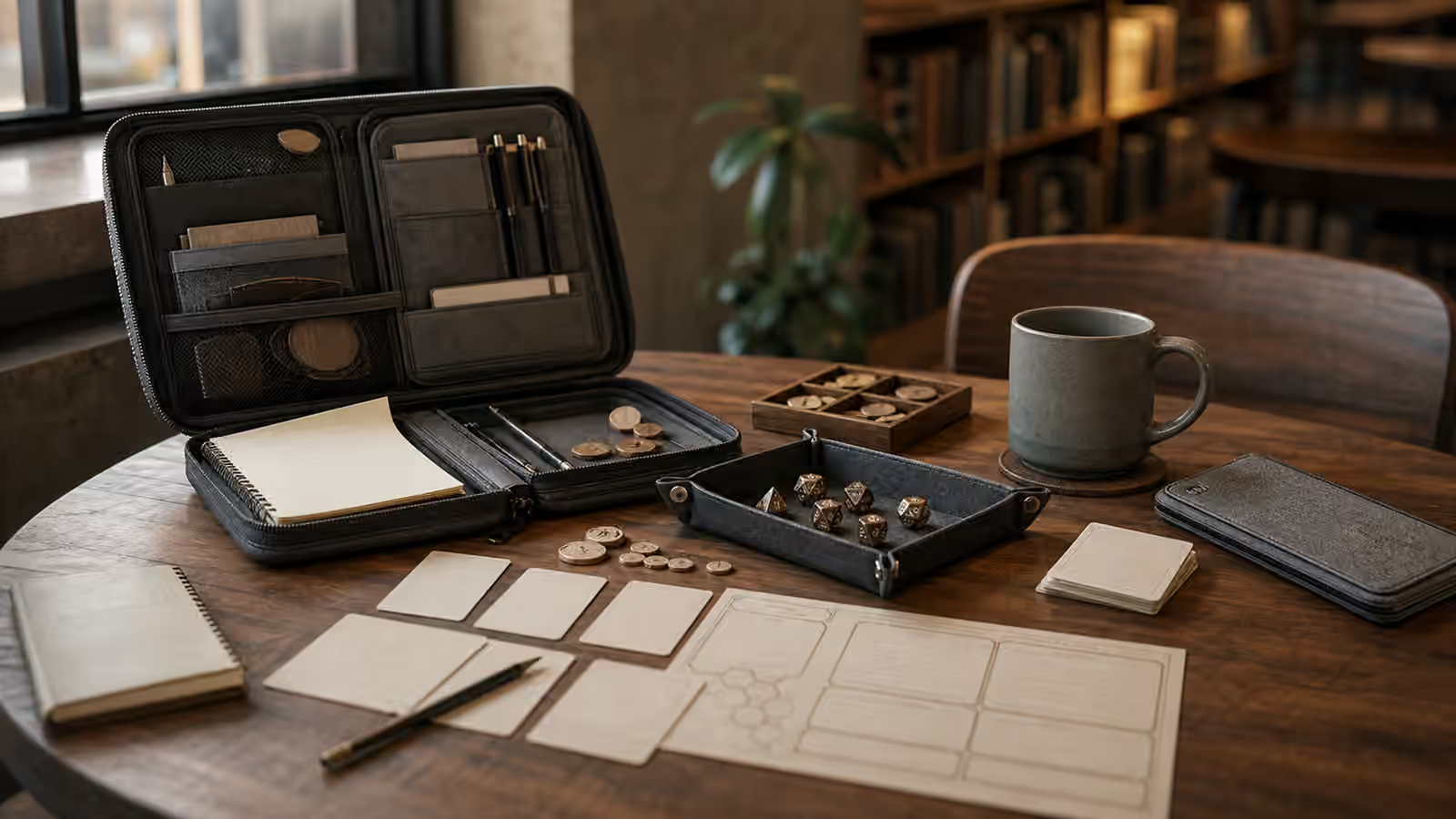
Public solo play has a different rhythm from play at home. The table is not fully yours. The chair may be awkward, the light may change, the room may grow louder, and someone may need the seat after you. A good public setup accepts those facts instead of pretending a cafe, library, hotel lobby, park table, or waiting room is a private studio. The session should be small enough to pause, quiet enough to share the room, and clear enough to pack before it becomes a burden.
Travel Kit for Solo Games at Cafes, Parks, Hotels, and Waiting Rooms covers what to pack. Etiquette is about how the packed kit behaves once it lands. The point is not to make solo tabletop invisible or apologetic. It is to let the game occupy a modest public footprint with enough care that play remains comfortable for you and unremarkable for everyone else.
Let the Venue Set the Frame
Every public place has an implied contract. A cafe sells food and drink and needs tables to turn over. A library values quiet, access, and shared resources. A waiting room has people dealing with time, stress, or discomfort. A park table may be open but weather and cleanup matter. Your solo game should fit the room’s purpose.
This starts with table size. If the only open spot is a tiny two-person table, do not unpack a sprawling campaign map. If the room is crowded, choose a notebook scene, card prompt, small dice roll, or rules reading pass. If the venue asks people not to occupy tables without ordering, follow that norm. If food and drink are present, keep liquids away from paper and leave the surface clean.
The session should be able to end without drama. Public play works best when the active state can collapse into one pouch, envelope, notebook, or tray. If the game cannot survive a fast pack-up, it may be a home game rather than a public game. That is not a flaw. It is a fit decision.
Choose Quiet Components
Noise carries farther in public than it does at home. Dice on a hard table, shuffling cards, snapping boxes, and rummaging through bags can become more noticeable than the player intends. A soft dice tray, cloth pouch, felt mat, pencil, and fewer loose tokens can make the session easier to share with the room.
Dice Tray, Quiet Play, and Shared-Wall Table Manners applies directly. Roll into something soft. Shuffle gently or use draw piles that do not need constant reshuffling. Avoid components that scatter under nearby chairs. If a piece falls, retrieve it calmly and consider whether the setup is too fiddly for the venue.
Quiet also includes audio. If a game uses music, timers, or app support, use headphones or keep sound off. If a phone is part of accessibility, rules lookup, or save photos, use it as a tool without making the public table into a glowing command center. Screen Breaks Without Screen Shaming is a useful reminder that digital tools can support analog play without needing moral drama.
Keep Visible Content Room-Appropriate
Solo games can include horror, romance, violence, grief, religious imagery, political conflict, or private emotional writing. At home, the chosen content band belongs to the player and any invited participants. In public, visible material may be seen by people who did not choose the session. That does not mean every public game must be bland. It means the visible layer should respect the shared room.
Use a notebook cover, blank index cards, abstract tokens, or a folder when prompts are intense or private. Avoid leaving graphic art, explicit text, or sensitive journal entries face-up. If the game depends on mature material, consider playing that scene at home and using the public session for map cleanup, inventory, travel, epilogue notes, or rules learning.
Age Rating and Content Notes for Solo Tabletop Play is not only for children at the table. It also helps the player decide what belongs in view. A waiting room full of strangers is not the same audience as your desk.
Protect Privacy Without Performing Secrecy
Public play may invite curiosity. Someone may glance at the dice, ask what you are playing, or assume you are working. You do not owe a full explanation. A simple answer is enough: “It is a small solo game,” or “I am taking campaign notes.” If you enjoy talking about the hobby, talk. If you do not, return to the notebook.
Protect your own privacy too. Do not write personal material where it can be easily read over your shoulder if that would bother you later. Use shorthand, a folded page, a smaller notebook, or a scene title instead of a full vulnerable entry. If you take photos for private save state, frame only your table and avoid capturing nearby people. Public recap habits should follow the care in Photo-Free Play Recaps and Private Campaign Memory , especially when other people or venue details could appear.
Privacy also applies to creators. Do not spread copied scenario pages, rulebook text, or proprietary maps across a public table in a way that turns private use into casual display. Reading a book you own is normal. Creating an accidental public scan station is not.
Make a Compact Pause State
The public table needs a pause state before you start. Decide where active cards go if you need to stand up. Decide how to mark a scene if your order is called. Decide what can be swept into a pouch without losing meaning. A pause state may be as simple as a bookmark, one index card, and a small envelope for active tokens.
This habit prevents the anxious half-attention that comes from fearing interruption. If the game can pause cleanly, you can actually play. If the game requires ten minutes to reconstruct after a small disruption, public conditions will keep pulling you out of the fiction.
Use fewer components than you brought. The travel kit may contain options, but the public table should hold only the active layer. Keep spare dice, extra cards, and backup pencils in the bag. Put trash away immediately. Keep food wrappers, receipts, and game pieces from mixing. The less the table sprawls, the easier it is to respect both the session and the room.
Leave the Table Better Than You Found It
Public solo play ends with cleanup as part of etiquette. Check under the table for dice and tokens. Wipe crumbs if the venue expects it. Return borrowed chairs. Pack slowly enough that small parts do not scatter, but quickly enough that the table becomes available when needed. If a component is lost, pause and search without turning the area into a scene.
The final note can be short. Write where play stopped, what changed, and what the next private or public session should do. Public sessions are often fragments. They become satisfying when each fragment has a clean edge.
Solo tabletop in public can be quiet, ordinary, and deeply pleasant. A small table, a few blank cards, a notebook, and a soft dice tray can turn waiting time or a cafe hour into real play. The etiquette is simple: fit the venue, reduce noise, keep visible material appropriate, protect privacy, and pack cleanly. When those pieces are in place, the game does not need to justify itself. It can simply be one person enjoying a small table well.