A first print-and-play adventure should become playable before it becomes beautiful. The goal is to get paper to the table with enough clarity that you can make decisions, track state, and put everything away. Laminating, corner rounding, custom boxes, premium cardstock, and perfect color can wait.
Start With the Smallest File
Choose a one-page dungeon, short zine, micro card game, roll-and-write, or quickstart adventure before printing a large campaign. Read the license and creator notes. Some files are free for personal use, some are paid, some allow fan hacks, and some do not permit redistribution. Do not share paid PDFs, scans, or copied component sheets.
For the first run, print only what the first session needs. If the game has optional reference sheets, expansions, standees, or color variants, leave them for later.
Make Components Good Enough
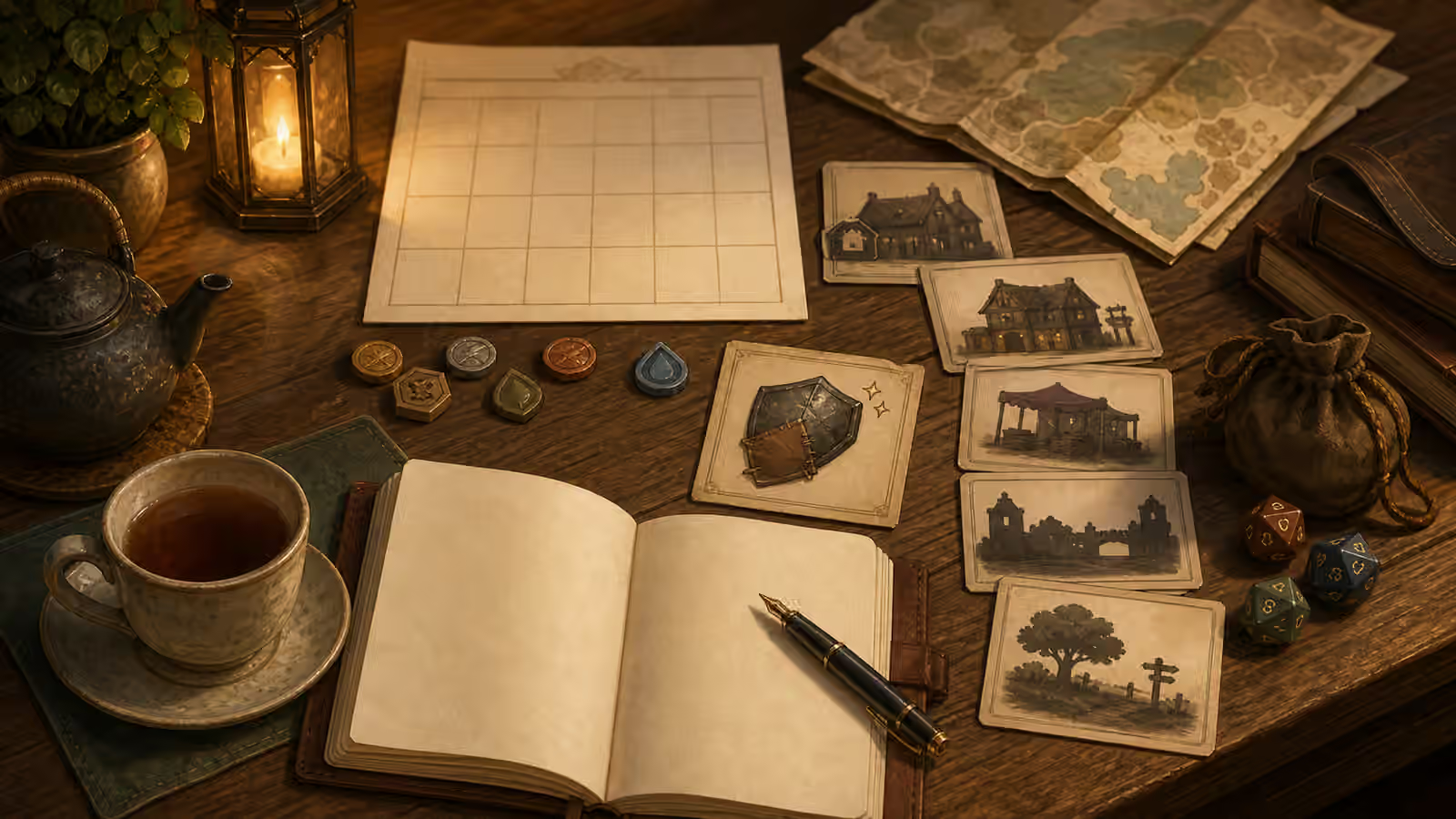
Use ordinary paper if that is what you have. Sleeve paper cards with spare playing cards behind them if they need stiffness. Use coins, buttons, cubes, or folded scraps as tokens. Cut cards with a straightedge and a safe surface, or leave them as strips if cutting is too much.
Good enough means the state is readable. It does not mean the table looks like a product photo.
Sort Before Play
Before the first turn, sort components into setup, draw, discard, map, and saved state. Use envelopes or paper clips. Write one index card with the turn loop in your own words. If a rule is unclear, mark the question and keep the first interpretation conservative.
If small print is inaccessible, enlarge pages, use a tablet as a reference while still playing with paper components, or rewrite the key steps in larger handwriting. Accessibility tools are part of practical play.
Stop Before Craft Takes Over
Craft can be satisfying, but it can also become a delay tactic. Decide in advance: “I will play after thirty minutes of prep.” If the table is not perfect then, play a learning turn anyway.
After the session, write what deserves upgrade: bigger cards, clearer tokens, better envelope labels, or no change. Upgrade only what made play harder.