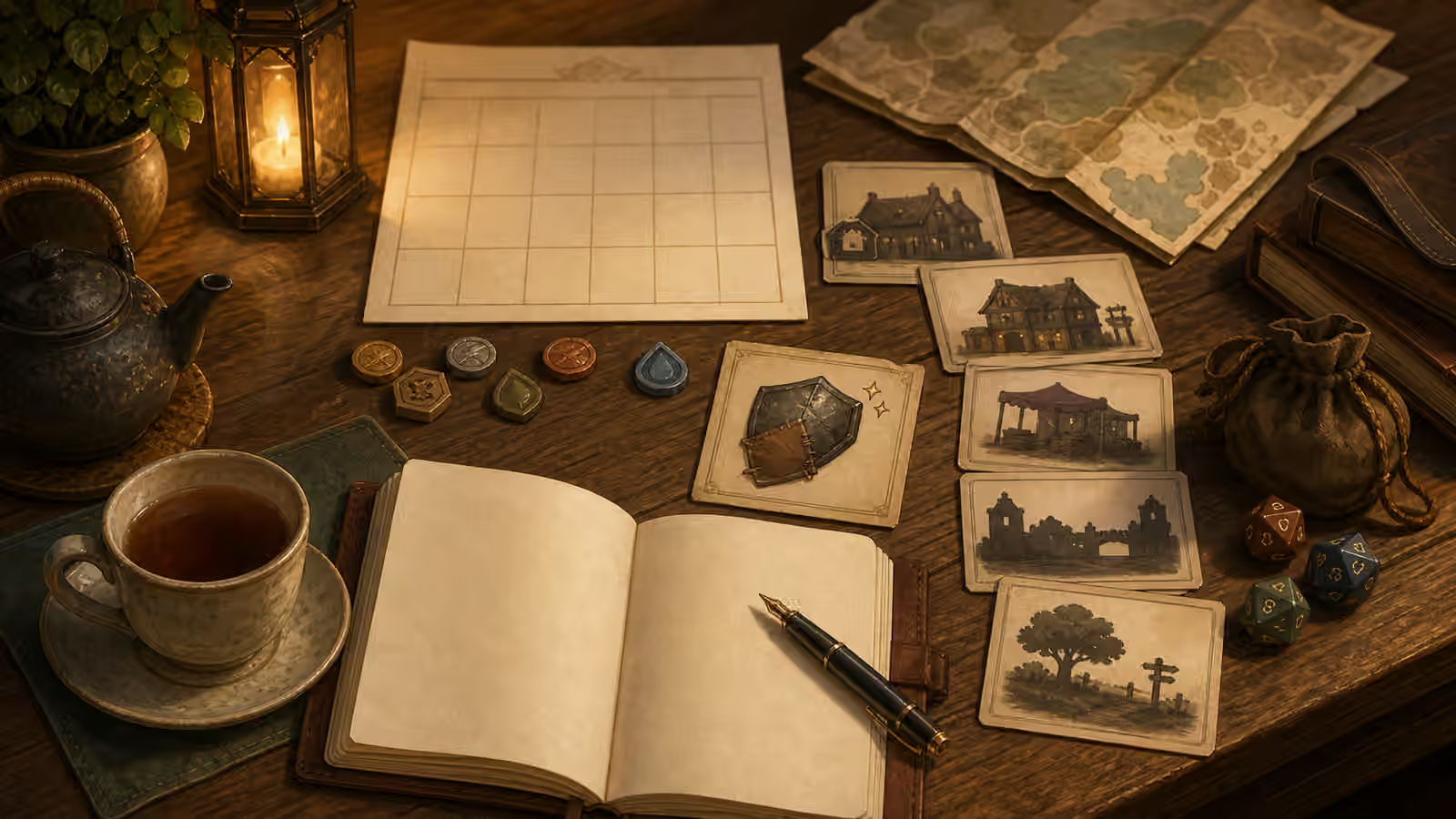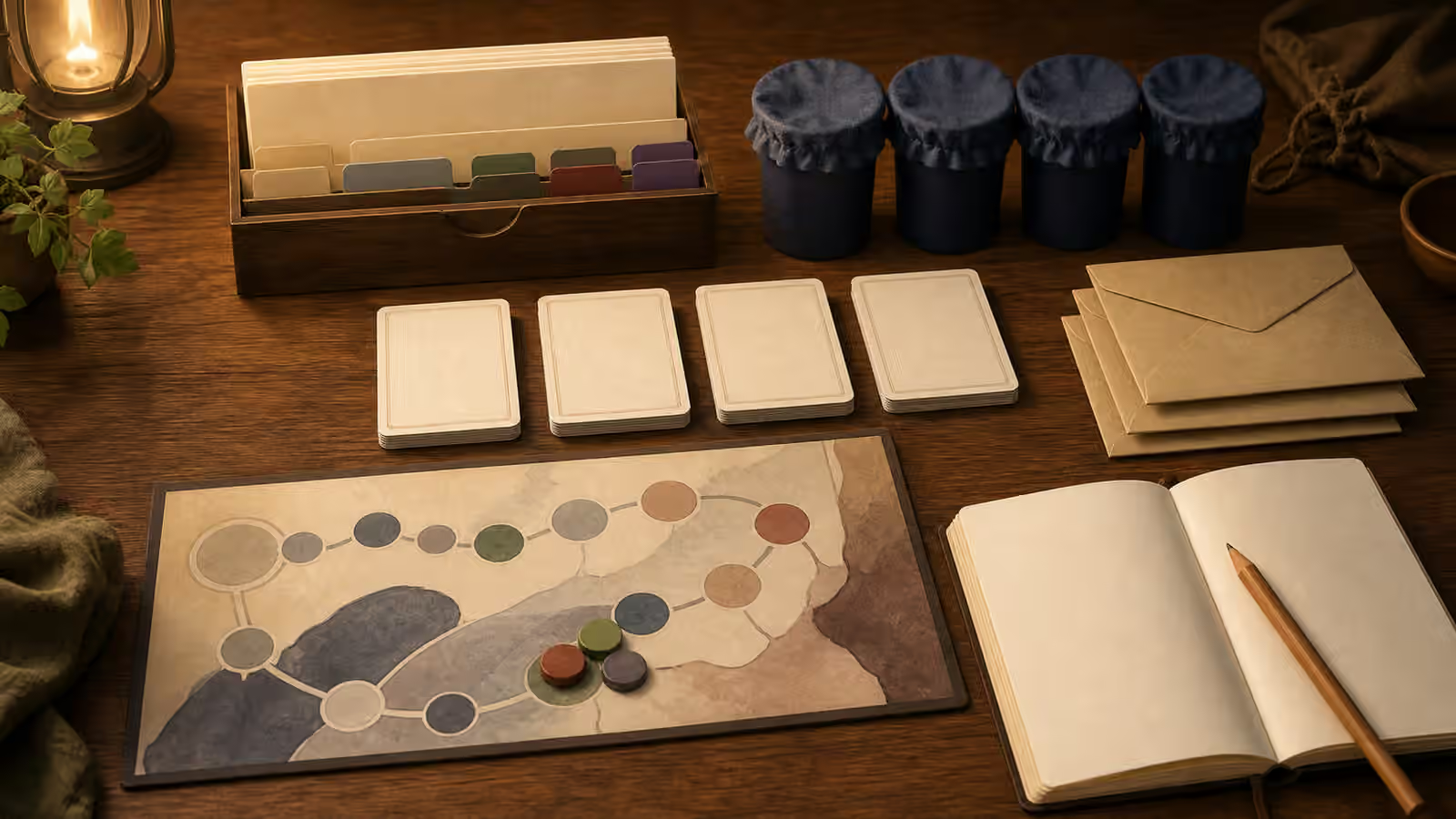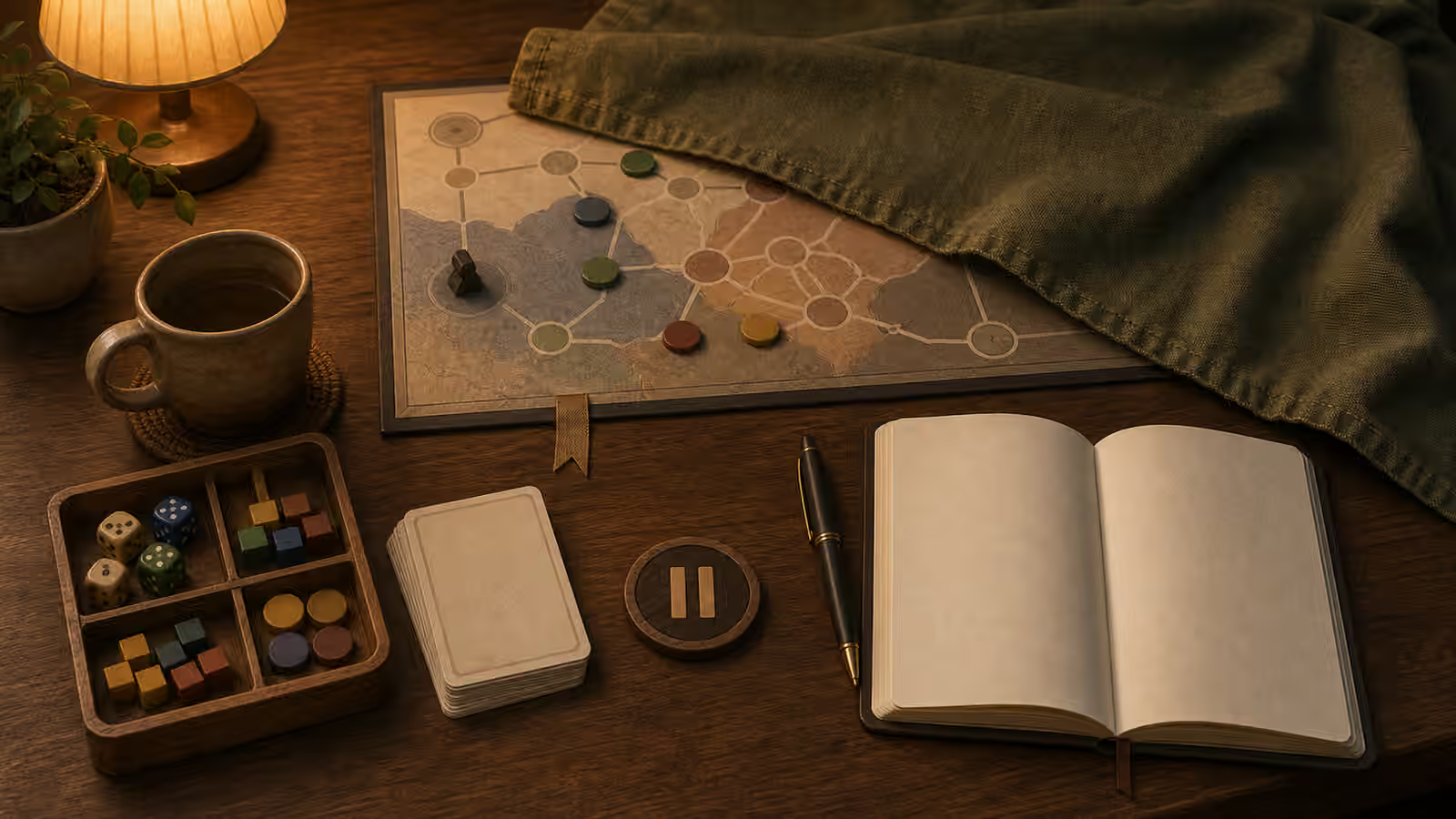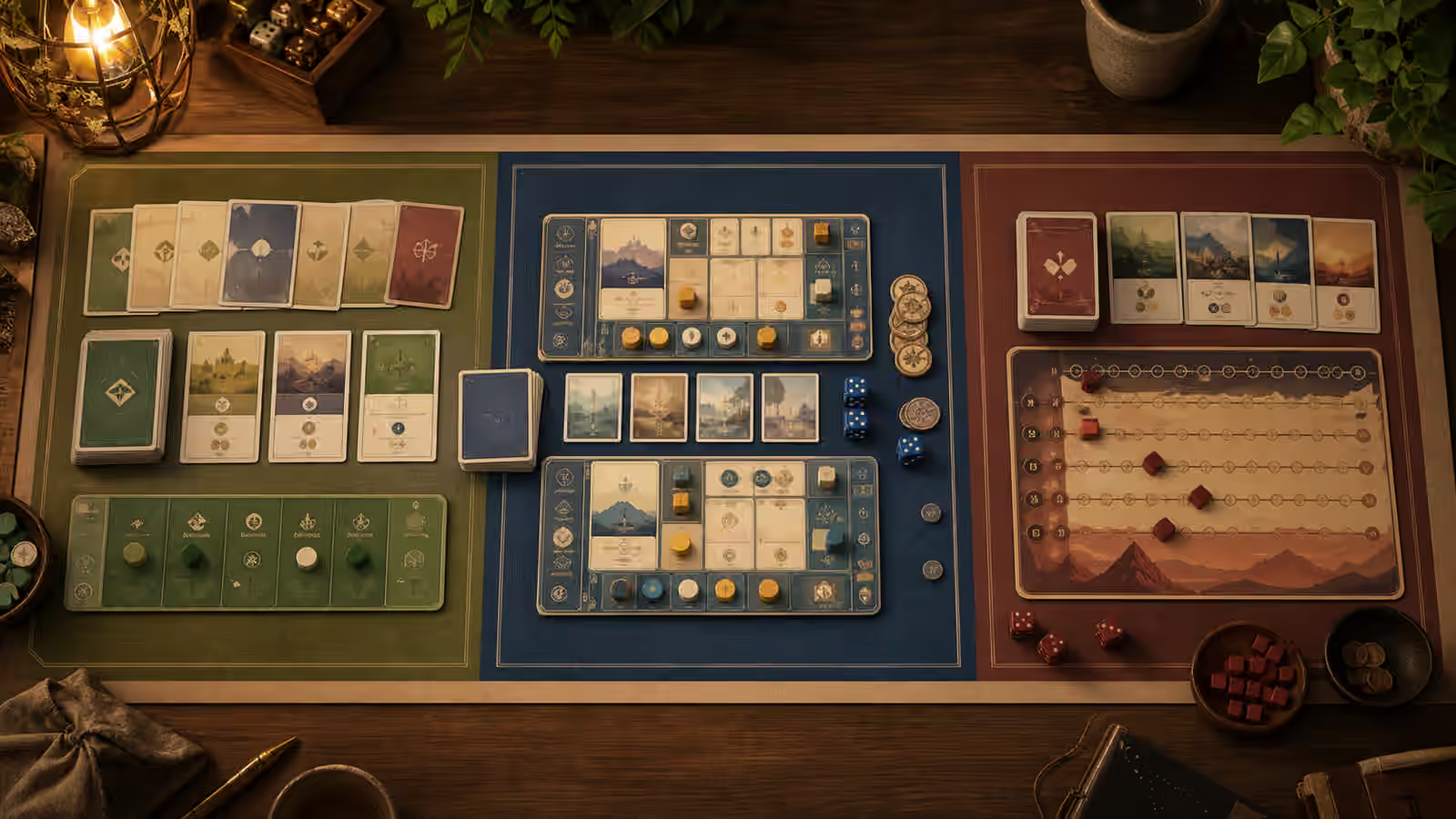
Many multiplayer board games have a solo life hiding inside them, but not every box wants to be forced into that shape. Some games include a strong official solo mode. Some tolerate two-handed play, where one person runs two seats. Some become satisfying score puzzles. Some collapse because negotiation, hidden information, trading, or table talk is not decoration but the center of the design. The useful question is not whether a game can technically be played alone. The useful question is which part of the game must remain alive for the session to feel worth the table space.
This sits next to Choosing Your First Solo Board Game Without Buying a Shelf of Regret because a solo mode is not a magic patch. A heavy multiplayer game may become a generous evening project when played alone, or it may turn into bookkeeping with no social pressure to make the choices matter. Before setting up, name the original pleasure of the game. Is it route planning, resource tension, card timing, spatial blocking, bluffing, negotiation, discovery, or watching several engines grow in competition? The solo version needs to protect at least one of those pleasures.
Start With the Official Solo Shape
If the game has an official solo mode, start there before inventing a variant. Designers often know which levers can move without breaking the machine. The solo mode may use an automa deck, a score threshold, a scripted opponent, a round timer, a blocked action space, or a tighter resource economy. It may also remove parts that only work with people across the table. That removal is not always a loss. A cleaner solo mode can be more respectful of attention than a faithful simulation that asks one player to impersonate three others.
Read the solo section as its own game rather than as an appendix to the multiplayer rules. Some solo modes change setup, turn order, scoring, market refresh, or end conditions in small but important ways. Mark those changes in a private player aid, as described in Player Aids and Rules Reminders for Returning to Solo Games . If the solo mode feels too easy or too punishing, play twice before rewriting it. The first session is often a rules-learning session wearing a score at the end.
Official modes still need taste. A mode can be clever and still not fit your evening. If the opponent procedure is longer than your own turn, or if the mode creates a race you do not enjoy, set that information aside for future shelf choices. Solo suitability is not proof of quality. It is a match between one design, one table, and one player’s appetite.
When Two-Handed Play Works
Two-handed play means one person runs two player positions. It can preserve cooperation, card combos, shared timing, and board pressure. It works best when the two seats have open information and distinct roles. A cooperative adventure where one character guards while another searches may feel lively. A card game where two hands can coordinate openly may become a puzzle about sequencing. A strategy game where two economies compete may teach the system without requiring another person.
The weakness is mental load. Two boards, two hands, two resource tracks, and two sets of special powers can make one turn feel like inventory management. Hidden objectives can become impossible to honor because you know both sides. Negotiation games often lose their reason for existing. Bluffing games may become an acting exercise with no tension. If you notice yourself trying to forget information you already saw, the mode may be asking too much.
Use two-handed play as a learning and exploration tool first. It can teach openings, reveal how factions differ, and let you try a borrowed game before hosting. Keep the table honest by separating the two seats physically. Place each hand, resource pool, and reminder card in its own zone. Tiny Table Layouts for Solo Board Games and Journaling RPGs helps here because a two-handed table can become cluttered faster than a true one-player setup.
Beat-Your-Score Needs a Real Standard
Beat-your-score modes are often dismissed as thin, but they can work when the scoring system expresses the game’s central tension. A harvest game that rewards balanced development, a route game that rewards efficient connection, or a deck game that rewards tempo may become a good solo puzzle if the score tells a meaningful story. The mode becomes weak when the score is only a number at the end of an unopposed activity.
A good score challenge gives the player a reason to take risks before the final tally. It may include round goals, decay, scarcity, or opportunity costs. It should make you ask whether to push, pivot, or settle. If every action is simply positive, the game may need a timer or constraint to become interesting alone. That adjustment belongs with the visible and reversible habits in Difficulty Sliders and House Rules for Solo Tabletop Play .
Keep a short score note after each session. Write the final score, the main strategy, one mistake, and one choice to test next time. Do not turn this into a spreadsheet unless that is part of the pleasure. The note is there to make replay more alive, not to transform a quiet evening into performance review.
Automa Opponents Are Behavior, Not People
An automa can give a multiplayer game pressure without pretending to be a full human opponent. It blocks spaces, takes cards, advances tracks, drains resources, or changes the market. The best automa does enough to make your choices narrower and sharper. It does not need to explain itself like a person.
Automa Opponent Decks for Solo Board Games covers this in more detail, but the core habit is simple: run the opponent cleanly before judging the mode. Put the automa deck, discard, active card, and state markers where your hand can reach them without crossing your own pieces. If the opponent has priorities, read them the same way each time. Do not make the bot smarter when you are winning or kinder when you are behind unless the mode explicitly says to tune it.
Automa systems also reveal when a game depends on human texture. If the bot blocks spaces and the game becomes tense, the design may have transferred well. If the bot removes cards and the game still feels lonely, maybe the missing piece was table talk, not competition. That is useful knowledge, not a failed experiment.
Know When to Leave the Box Multiplayer
Some games should stay multiplayer for you. That does not mean they are bad solo candidates for everyone. It means the part you value most may require another mind. Negotiation, laughter, shared discovery, teaching, bluffing, and reading a friend’s risk tolerance are not minor features. If those are the reasons you love the game, a solo variant may feel like practicing scales on an instrument you wanted to play in a band.
Leave a game alone without guilt. Put it on the social shelf, not the solo shelf. Use the solo table for designs whose decisions still breathe when no one else is present. A box can have one role in your collection instead of proving itself in every role.
When you do adapt, write one mode note and keep it with the game. Name the version you played, what changed, what worked, what was too much to track, and whether you would play it again. Future you should not have to rediscover the same conclusion under worse lighting. A solo mode is strongest when it respects the original design, the player’s attention, and the actual table in front of you.