An expansion promises more of a game you already like: more cards, maps, characters, scenarios, enemies, powers, objectives, difficulty settings, and surprises. For solo play, that promise can be real. A well-chosen module can refresh a familiar system and make replay feel alive again. It can also bury the core game under setup drag, extra exceptions, storage confusion, and difficulty changes you do not understand yet.
The solo player feels expansion weight differently from a group. There is no shared setup conversation, no second person reading the new rule, no table chatter to absorb upkeep, and no one else to catch an overlooked trigger. If the module adds a new deck, a side board, an enemy procedure, and three exceptions, one player carries all of it. That does not make expansions bad. It means they should enter the table with a clear job.
Learn the Core Loop First
An expansion is easier to judge after the base game has a recognizable rhythm. Before adding a module, play enough core sessions to know what the game asks of you. What parts are tense? What parts are slow? Which rules are automatic? Which steps still need checking? Which choices repeat in a good way, and which repeat because the system is too narrow?
Without that baseline, every expansion becomes hard to evaluate. A new card deck might seem exciting because the base game was not learned yet. A new map might seem punishing because a rule was misunderstood. A difficulty module might be blamed for problems already present in the core setup. Choosing Your First Solo Board Game applies here even after purchase: match rules load, table space, and session length before asking for more.
If the core game no longer interests you after a few plays, an expansion may not fix it. Sometimes it does, especially when the expansion adds the missing solo mode or smooths a known issue. More often, it adds more of the same structure. Be honest about whether you want deeper play or just the feeling of renewing attention.
Add One Module for One Reason
When a box includes several modules, resist the urge to add all of them at once. Choose one module and name the reason. You might want more variable setup, a tougher opponent, a new campaign path, a shorter session, a new character style, a richer market, or a refreshed event deck. Naming the reason lets you evaluate the module after play.
After the session, ask what changed. Did the module create decisions, or only more upkeep? Did it improve replay, or dilute the deck? Did it make the automa harder in an interesting way, or only more random? Did it increase setup time beyond the energy you usually have? Did it require table space you do not have on normal nights?
This is the same discipline used in Difficulty Sliders and House Rules . Change one meaningful thing, watch the effect, and keep the adjustment visible. If you add three modules at once, the table may be fun, but you will not know which part earned its place.
Keep Module Boundaries Physical
Solo expansion trouble often starts in storage. Cards from several modules get shuffled together permanently. Tokens migrate into the wrong tray. A campaign envelope sits loose in the base box. Setup instructions depend on remembering which tiny pieces belong to which variant. The next session begins with sorting instead of play.
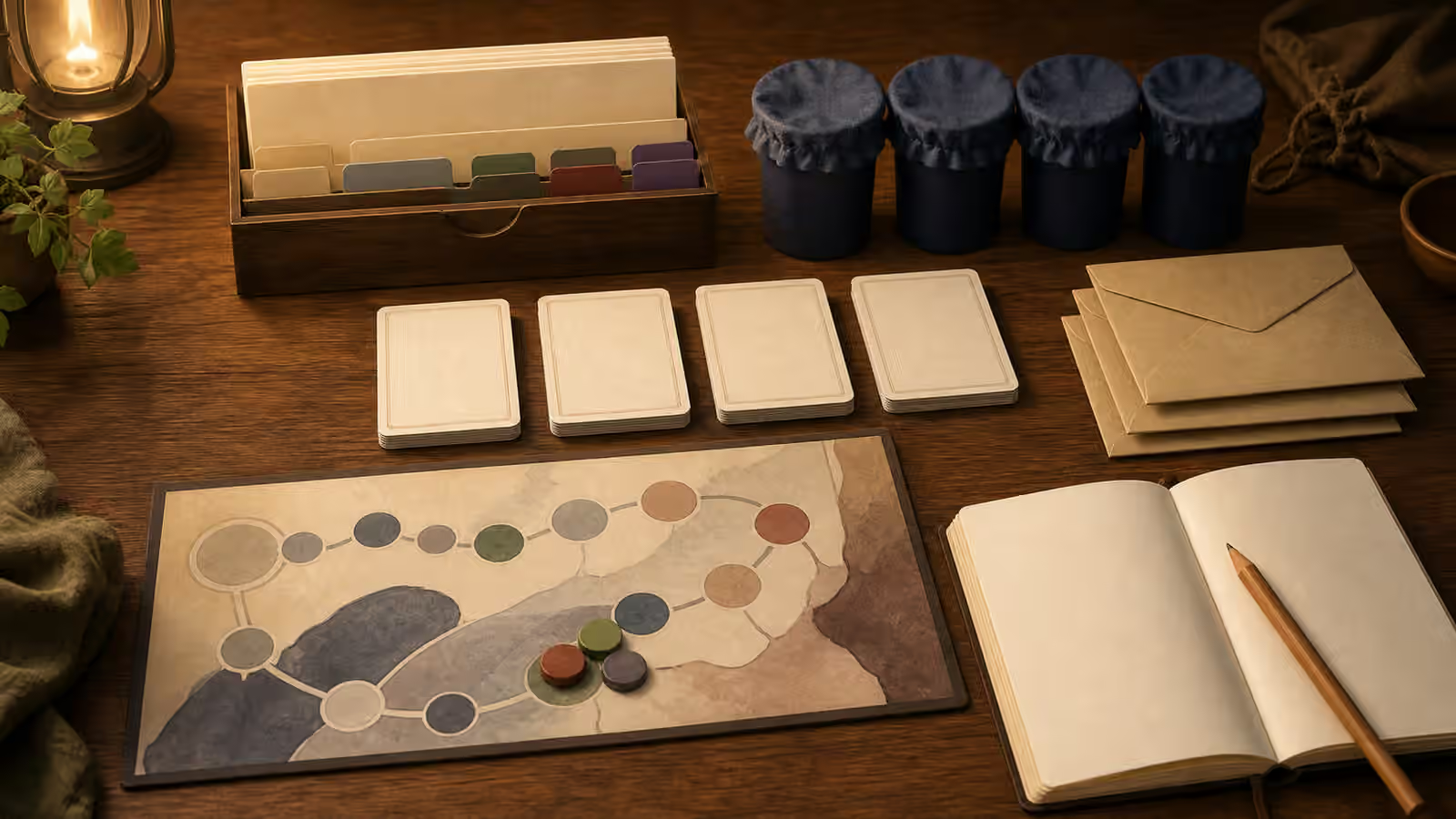
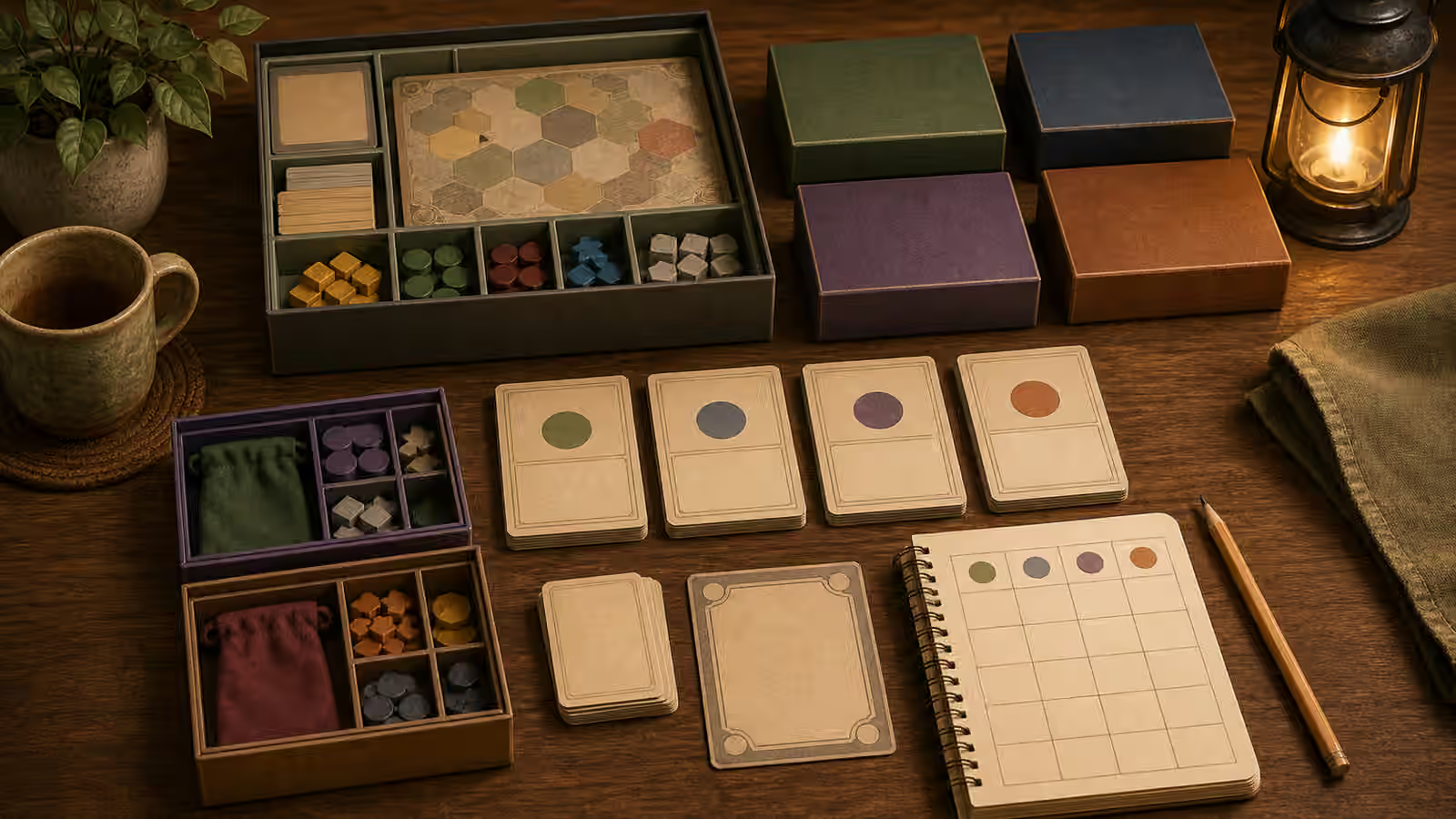
Use physical boundaries before clever systems. Small bags, dividers, tuck boxes, trays, envelopes, colored clips, or separate wells can keep modules distinct. If labels help, make them private and practical. Do not copy rule text onto public materials or reproduce official card lists. A private setup card can say, in your own words, which module pieces enter the table and where they return.
Storage for Small Game Shelves is relevant because expansion ownership is still shelf ownership. A module that cannot be found, separated, or reset will not get played often. A smaller collection with clean module boundaries may create more actual sessions than a large collection that requires excavation.
Protect the Solo Procedure
Many expansions are designed for multiplayer first. They may add negotiation, drafting, trading, hidden information, timing windows, or extra player interaction that changes the solo mode unevenly. Before mixing a module into solo play, check how the official solo rules handle it. If the publisher gives a sequence, use it. If the expansion says it is not compatible with solo, believe that unless you want a design project.
When compatibility is unclear, test the module in a short scenario. Watch the solo procedure. Does the automa know how to interact with the new board? Does the enemy deck target new spaces? Does the score system account for the new resource? Does a new power break the challenge because no opponent can contest it? Does hidden information become impossible to preserve?
Automa Opponent Decks for Solo Board Games helps here. An expansion that adds richness for players may add ambiguity for an automa. That can be fine if the rules cover it. If not, the module may need a clear private tie-breaker or may belong outside solo sessions.
Retire Modules Without Drama
An expansion can be good and still not right for your table. It may be too long, too fiddly, too visually crowded, too hard to reset, too intense for the tone you want, or too similar to what the base game already does. Put it away without turning that into failure. The module did not earn this table under current conditions. That is enough.
Keep a short module note in the box. Record what you tried, what changed, and whether you would use it again. The note may say that the enemy deck was excellent but the side board was too large, or that the campaign cards should wait until winter, or that the market module is now part of the default setup. These private notes save you from relearning the same lesson every few months.
Expansion play is at its best when it stays deliberate. Learn the core loop, add one module for one reason, keep pieces separated, protect the solo procedure, and retire what clutters the table. Variety should make the next session easier to want, not harder to begin.