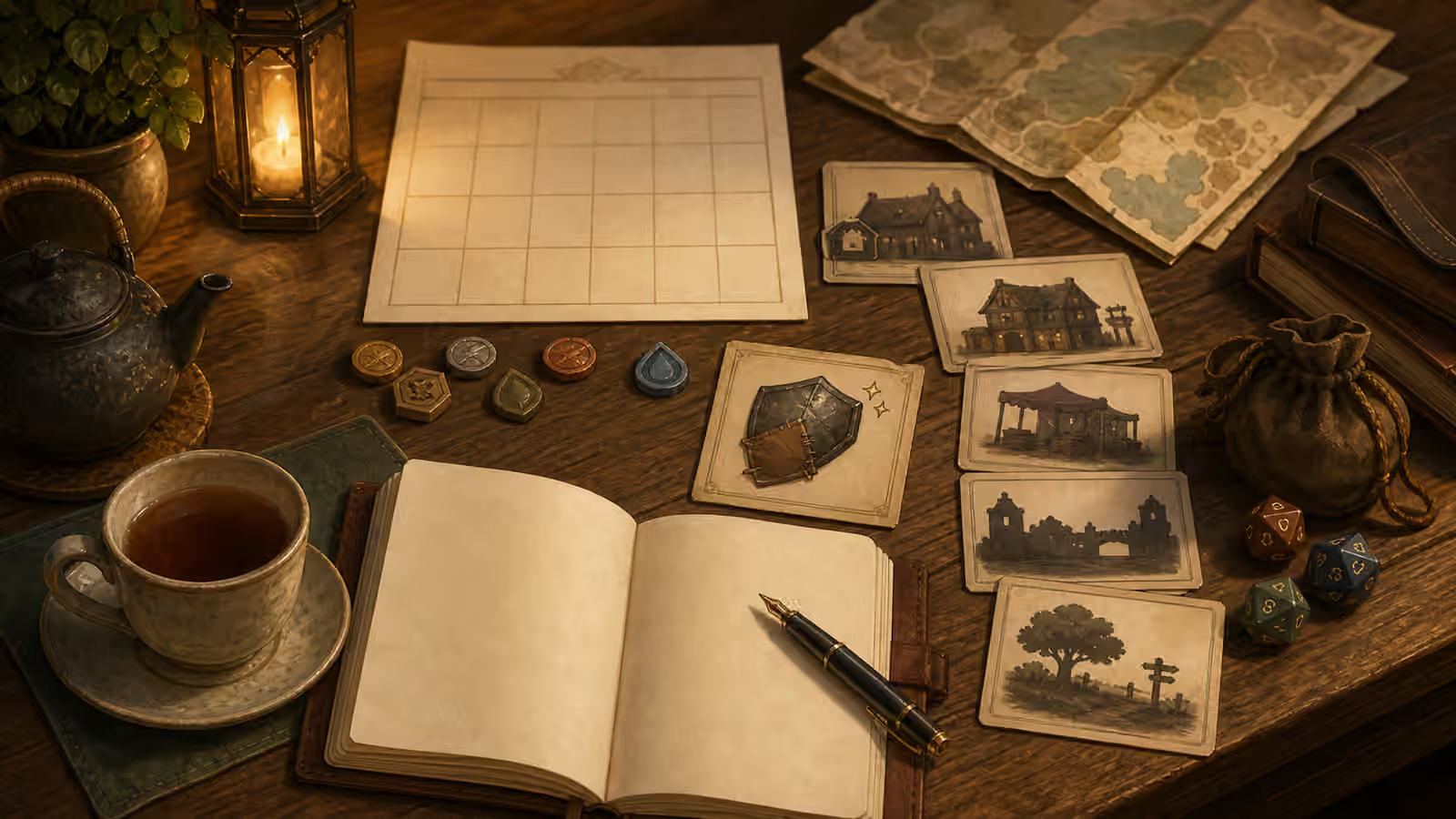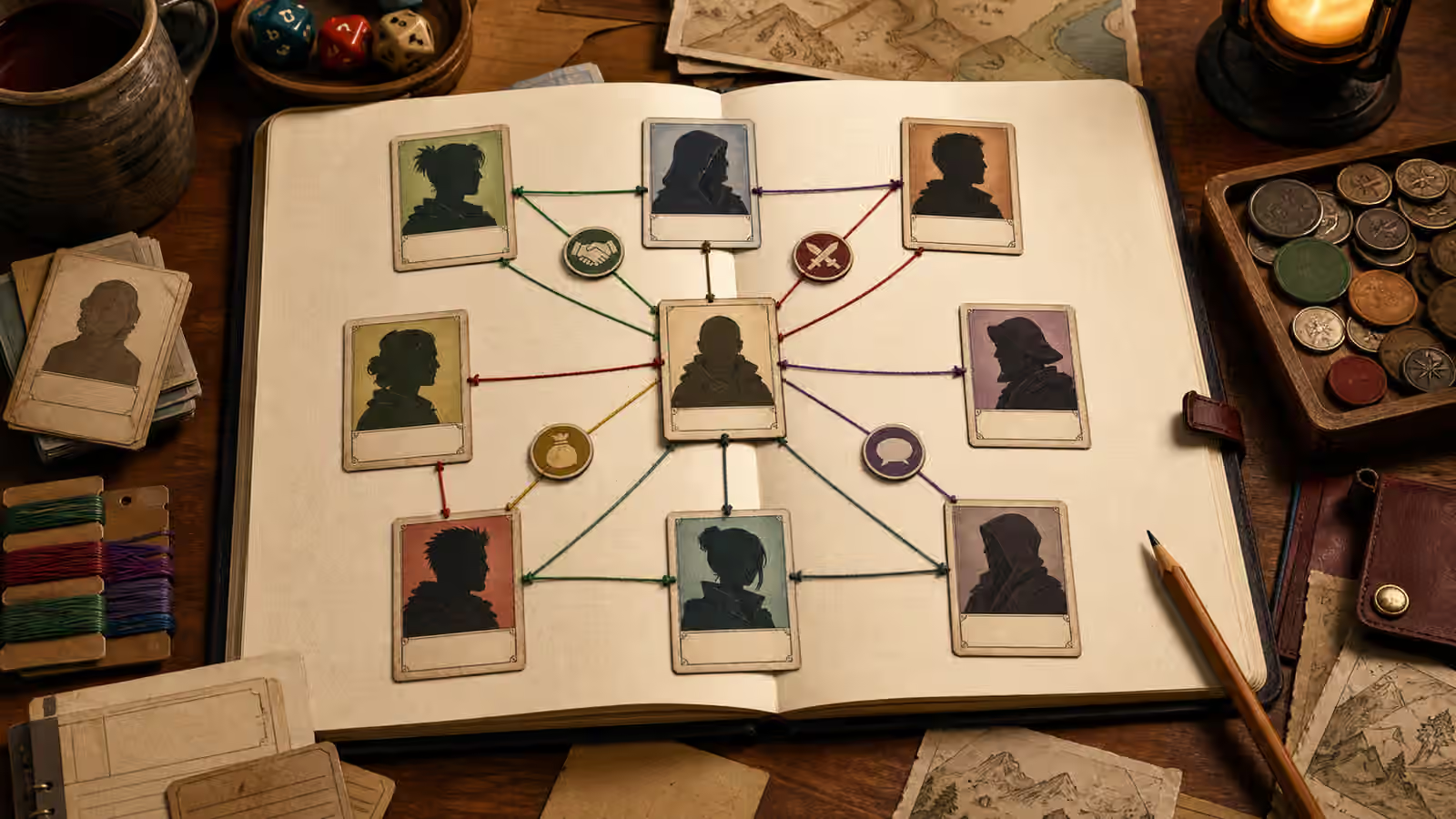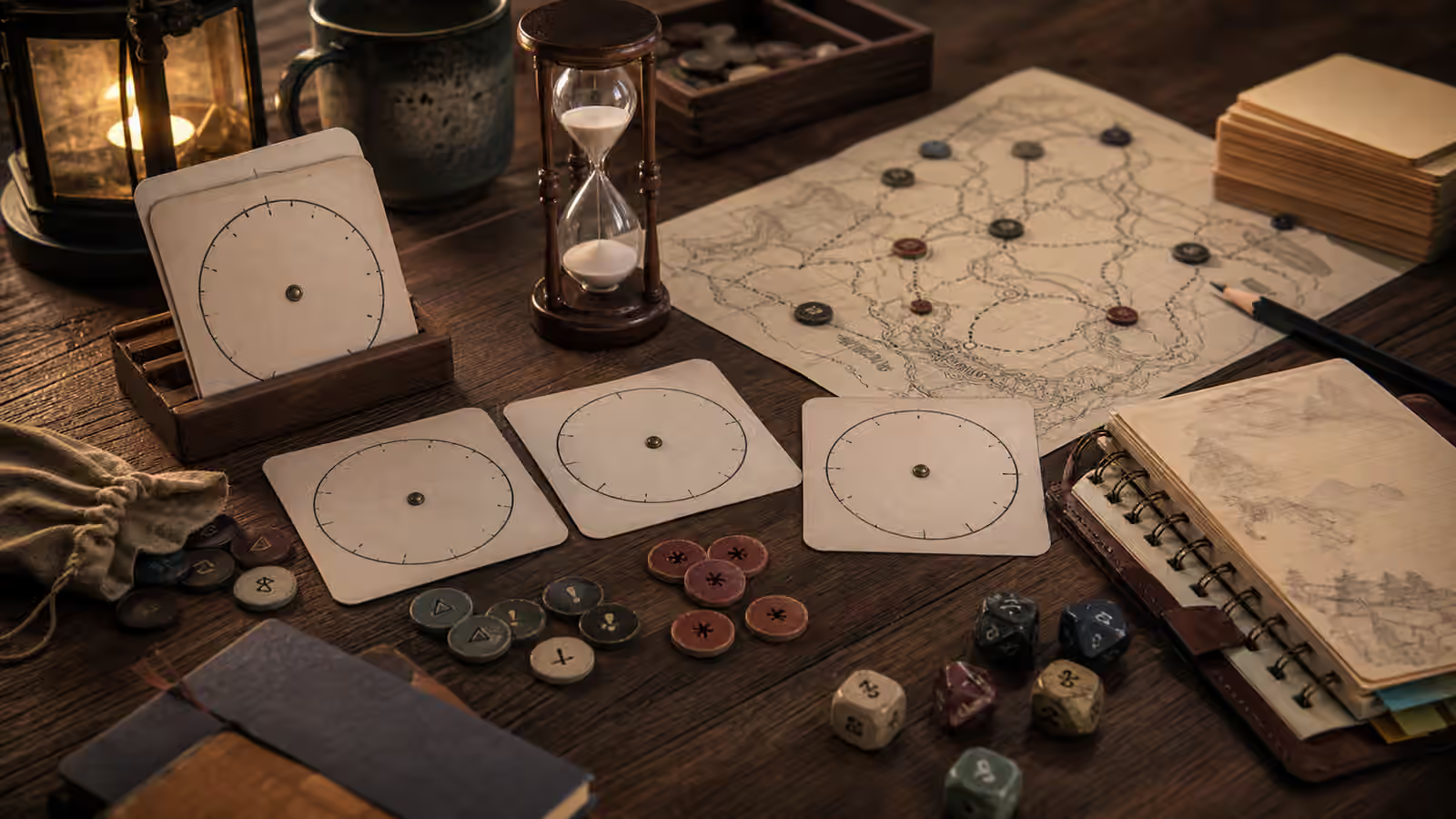
Failure feels different when you are the only player. There is no group laugh to soften a bad roll, no game master to translate a miss into a vivid complication, and no teammate to say the plan was worth trying. The table can go quiet. A failed check may feel like the game judging you, even when it is only a procedure producing pressure.
Solo play needs a healthier relationship with loss. A setback is useful when it changes the next decision, reveals cost, moves the fiction, or teaches the system. It becomes brittle when it humiliates the player, erases too much memory, or leaves no interesting move. The task is not to avoid failure entirely. The task is to make failure playable.
Separate Player Worth From Table Result
A failed check is not a verdict on intelligence, creativity, discipline, or seriousness. It is a result inside a made object. That sounds obvious until the table is private and the story has your handwriting in it. Solo play can feel intimate, so the result can land too close.
Use language that keeps the boundary clear. “The scout missed the sign” is different from “I ruined the scene.” “The expedition pays a cost” is different from “I am bad at this game.” A tiny wording change can keep consequence inside the fiction where it belongs.
This matters for board games too. Losing a scenario does not mean the evening was wasted. It may mean the puzzle won, the luck was sharp, the setup was rusty, or the game was tuned for repeated attempts. Some solo board games expect loss as part of learning. Others use loss as a dramatic end state. The player is allowed to decide how much of that pressure feels welcome tonight.
Make Misses Produce Direction
The weakest failure says only no. The stronger failure says no, and now. A lock does not open, and a guard returns. The river crossing fails, and supplies get wet. The investigation stalls, and a suspect becomes harder to reach. The combat is lost, and the character escapes with a scar, a debt, or a missing tool.
Direction keeps play alive. It also prevents the solo player from having to invent motivation from nothing after every setback. If the result changes a route, resource, relationship, clock, location, or question, the next scene has somewhere to go.
For journaling RPGs, write the consequence as a new prompt rather than a punishment line. For tactical board games, ask whether the loss creates a retry, campaign mark, simpler reset, or epilogue. For map play, move the marker, close a road, add weather, or reveal a cost. A failed check should not always become damage. Damage is only one kind of consequence.
Keep Boundaries Active During Failure
Failure can escalate content quickly. A random table might turn a cozy scene cruel, a survival track might become grim, or a mystery complication might push into material you did not choose for tonight. Boundaries do not disappear because the dice rolled badly. Age rating, tone, access, and content notes still apply.
If a failure result breaks the session agreement, revise it. You can soften, reroll, translate, or choose a different cost. Encounter Tables With Consent Boundaries already treats boundaries as part of table design. The same principle belongs here. Consequence is stronger when the player can trust the frame.
This is not about making every result pleasant. It is about keeping intensity intentional. A hard scene can be satisfying when it was invited. It can feel invasive when it arrives through a careless table at the wrong hour.
Use Recovery as a Rule, Not a Rescue
Recovery paths make setbacks easier to accept. They do not need to erase the cost. They need to show what kind of work returns momentum. Rest, repair, apology, retreat, resupply, asking for help, losing time, accepting a debt, changing route, or ending the scene can all be recovery moves.
When recovery exists only as improvisation, you may feel tempted to grant it too easily or deny it too harshly. A simple rule helps. After a failed expedition, the next scene begins in a safe place but one resource is gone. After a lost fight, the character survives if the campaign tone supports survival, but the map changes. After a failed puzzle, the answer remains hidden, but a clue appears elsewhere at a cost.
The rule should match the game. Some games are meant to eliminate characters, end runs, or create hard losses. If that is the experience you chose, honor it. If the loss structure makes you abandon every campaign, adapt it. Difficulty Sliders and House Rules can help you make that adaptation visible instead of changing it in a fog of frustration.
Know When to Stop the Session
Sometimes the right response to loss is not another roll. It is closing the table. A hard result can be a good stopping point if it gives the campaign a strong question for next time. Write what happened, what changed, and what the first recovery move might be. Then leave the room as a room, not as a failed test.
Decompression matters when solo fiction gets heavy. Emotional Safety and Decompression After Solo Play is not only for intense themes. It also helps after a frustrating loss, a long rules fight, or a session that felt unfair. Put the dice away. Drink water. Mark the restart point. Let the result cool before deciding whether the game is broken.
Let Some Losses Stand
Not every setback needs repair. Some losses are clean endings. Some failed checks create the memory that makes a campaign feel alive. A character who turns back from the pass, a shop that closes for winter, a city that remains unsolved, or a board game score that falls short can be satisfying when the table gives it shape.
The closing question is simple: does this failure make me want to see what follows? If yes, carry it forward. If no, change the consequence, shorten the path, or retire the campaign respectfully. Solo play is private, but it is not lawless. It is a conversation between rules, chance, materials, and attention. Failure should have a voice in that conversation, not the final word every time.