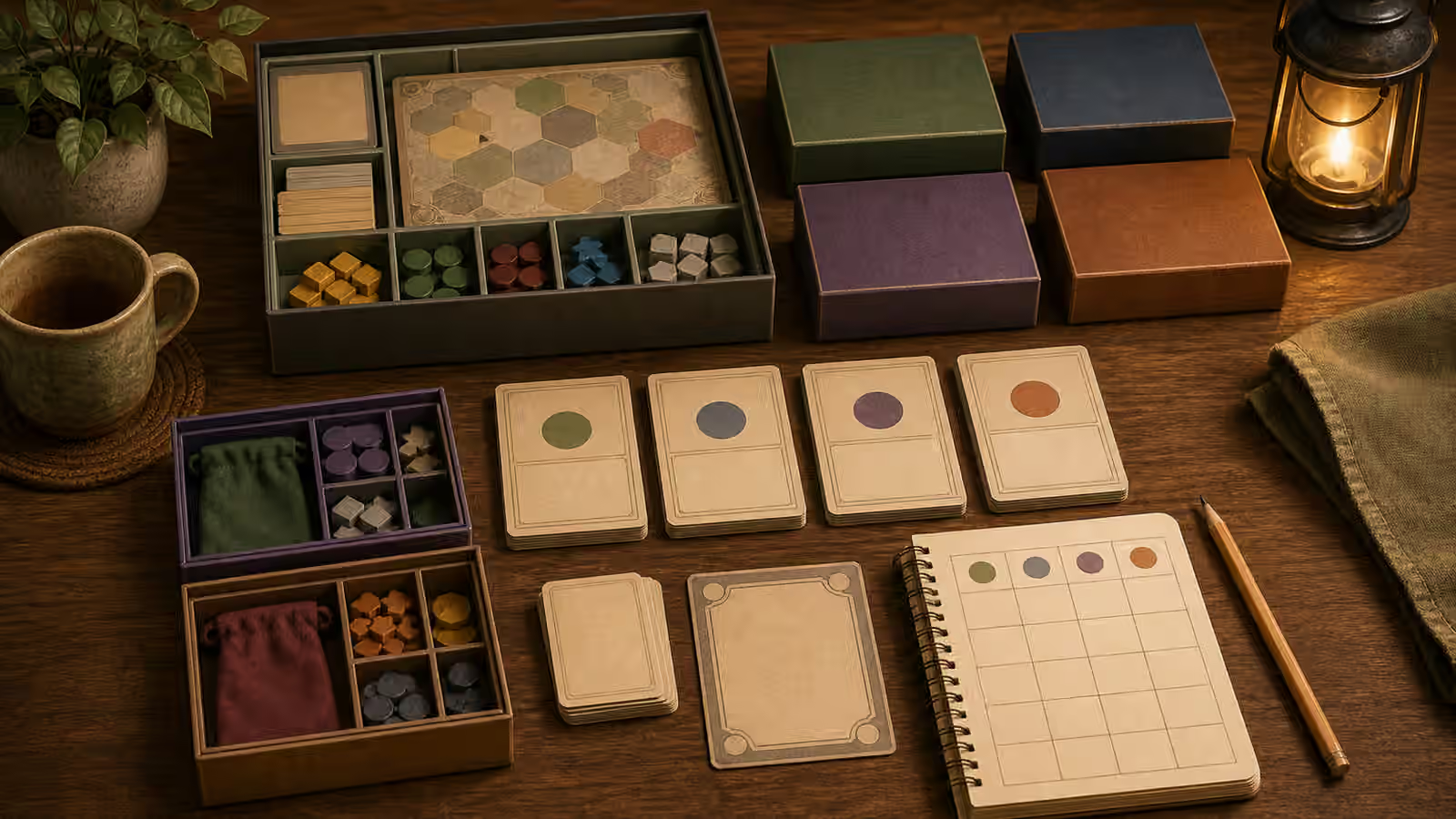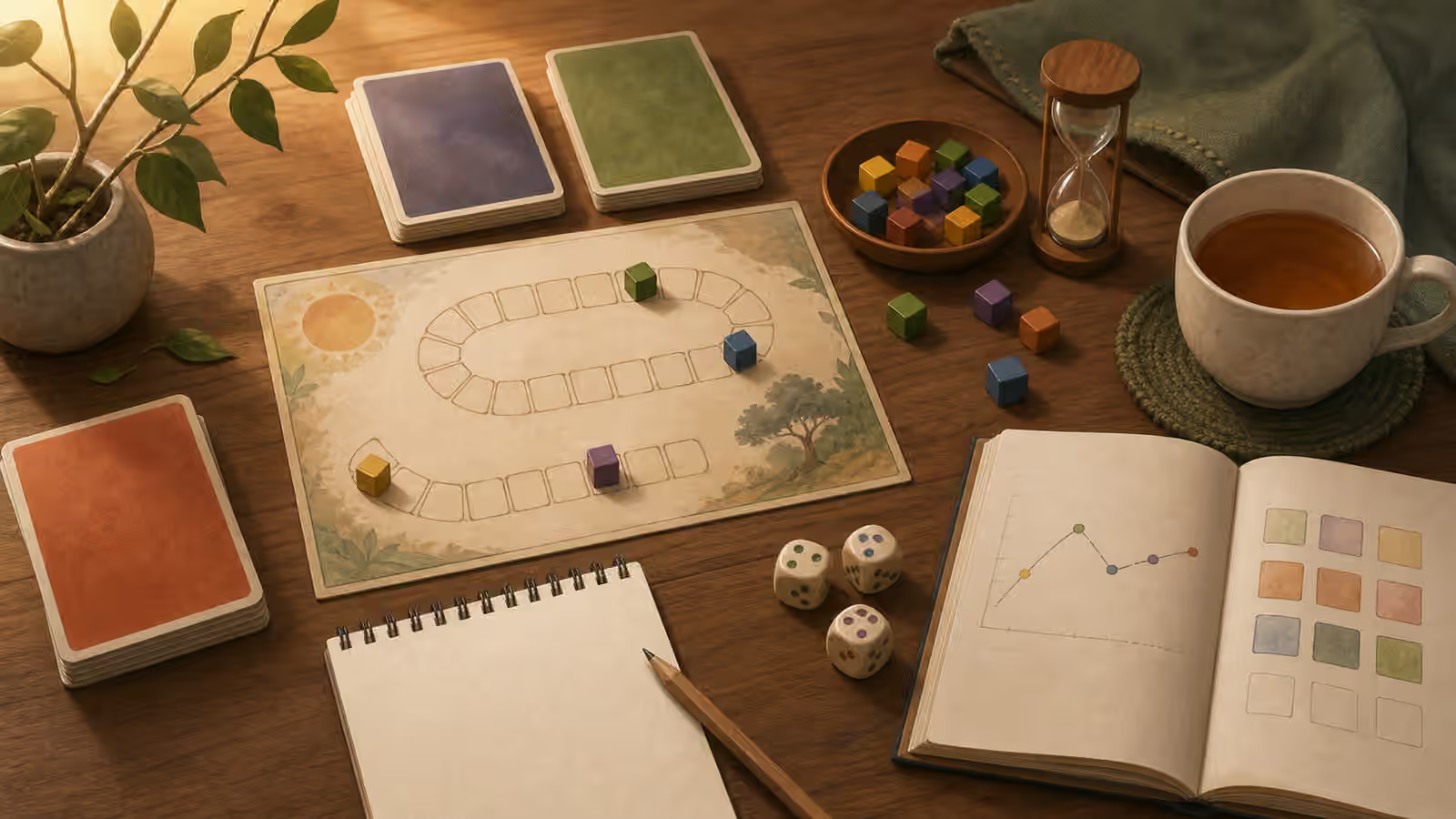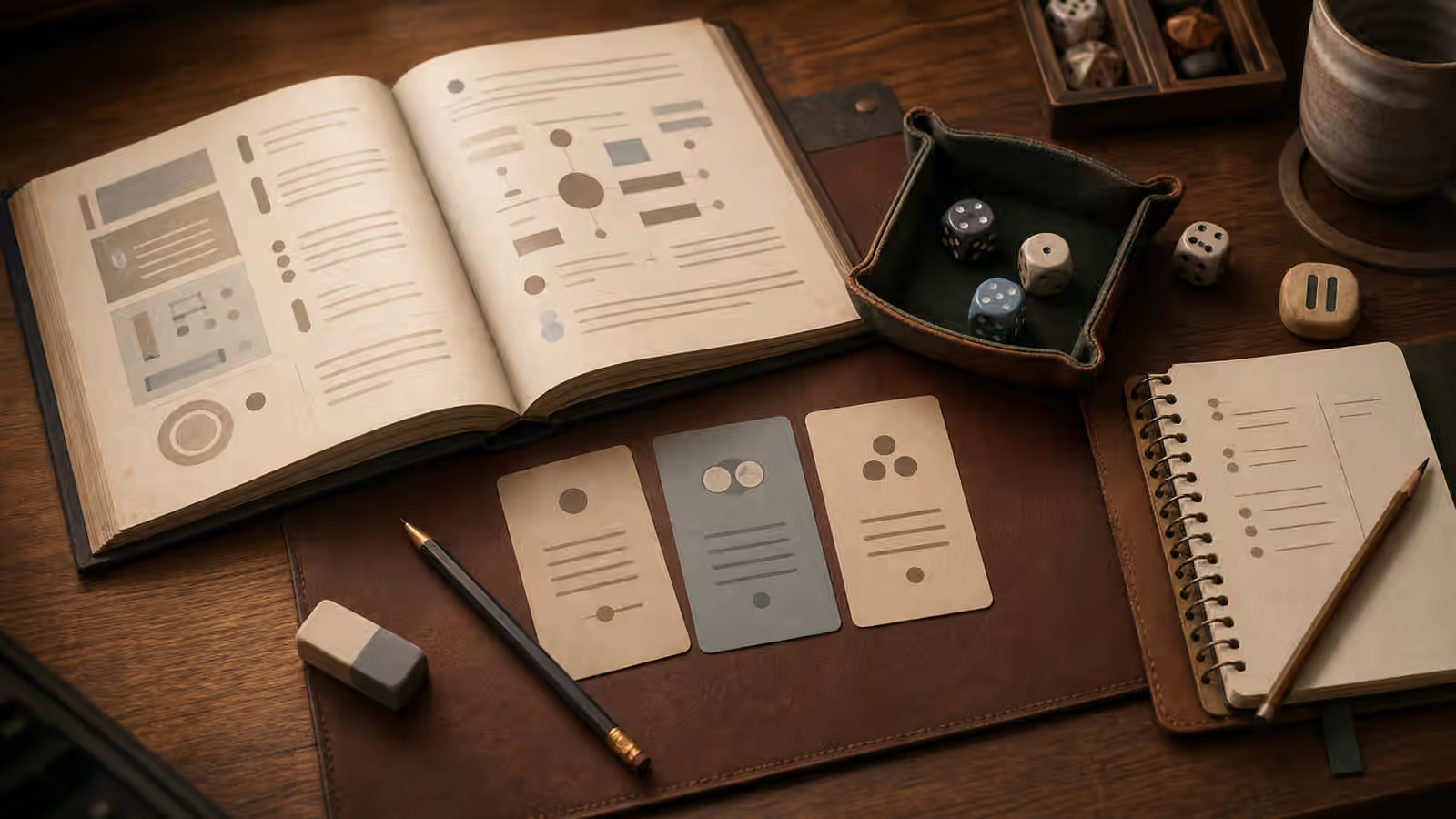
Hidden information is one of the first places a multiplayer game resists solo play. A secret hand, a face-down event deck, a hidden role, a sealed objective, or an opponent’s private plan all assume that someone at the table can act without sharing what they know. When one person is running the whole table, that separation becomes fragile. The problem is not that the solo player is dishonest. The problem is that the game was built around divided attention, and a single player cannot unknow a card once it has been read.
The useful question is not “Can I avoid cheating?” It is “What kind of uncertainty does this game need, and can I preserve enough of it to make the decisions worthwhile?” Some hidden information exists to create suspense. Some exists to keep players from calculating every outcome. Some exists so an opponent can surprise you. Some exists only because a multiplayer format made it convenient. Once you know which kind you are dealing with, you can choose a solo handling method that supports the game rather than pretending the problem is moral weakness.
Separate Mystery From Memory
A hidden card can serve several jobs at once, but one job usually matters most. In a dungeon crawl, a face-down room tile may be mystery: you do not know what space opens next. In a market game, unrevealed cards may be timing: you know useful things are coming but not when. In a social deduction game, hidden roles may be identity and motive: the entire design depends on uncertain trust. In a tactical game, a secret opponent hand may be threat range: you cannot calculate every strike before committing.
Solo adaptations work best when you name the job before choosing the procedure. If the hidden card is mostly suspense, a delayed reveal may be enough. Draw it only when the player reaches the threshold, then accept what appears. If the hidden card controls an opponent’s behavior, an automa-style procedure may be cleaner: keep the card face down until the opponent turn, then resolve it without preview. If the hidden card exists for negotiation, bluffing, or social reads, the game may need a heavier redesign than one player can supply at the table.
This distinction pairs naturally with Multiplayer Games as Solo Modes . A two-handed session can be satisfying when each side has visible policies and limited hidden state. It becomes tiring when the player must pretend to be surprised by private plans that they already optimized.
Delay the Reveal Until the Last Responsible Moment
The simplest solo technique is delayed reveal. Do not read a card, table entry, room detail, or enemy instruction until the moment it can legally affect play. If the game says a player chooses a route before seeing the tile, choose the route first. If an event deck triggers after upkeep, finish upkeep before drawing. If an opponent chooses a target from a behavior card, commit your own move before seeing the card.
The word “responsible” matters. Delaying every reveal can make the game clumsy. You still need enough information to run legal steps, avoid impossible states, and protect the tone of the session. If a hidden deck includes content that could violate your chosen age rating or content notes, do a safety pass before play, remove what does not belong, and keep that decision separate from tactical advantage. Encounter Tables With Consent Boundaries uses the same principle: boundaries are set before surprise is invited.
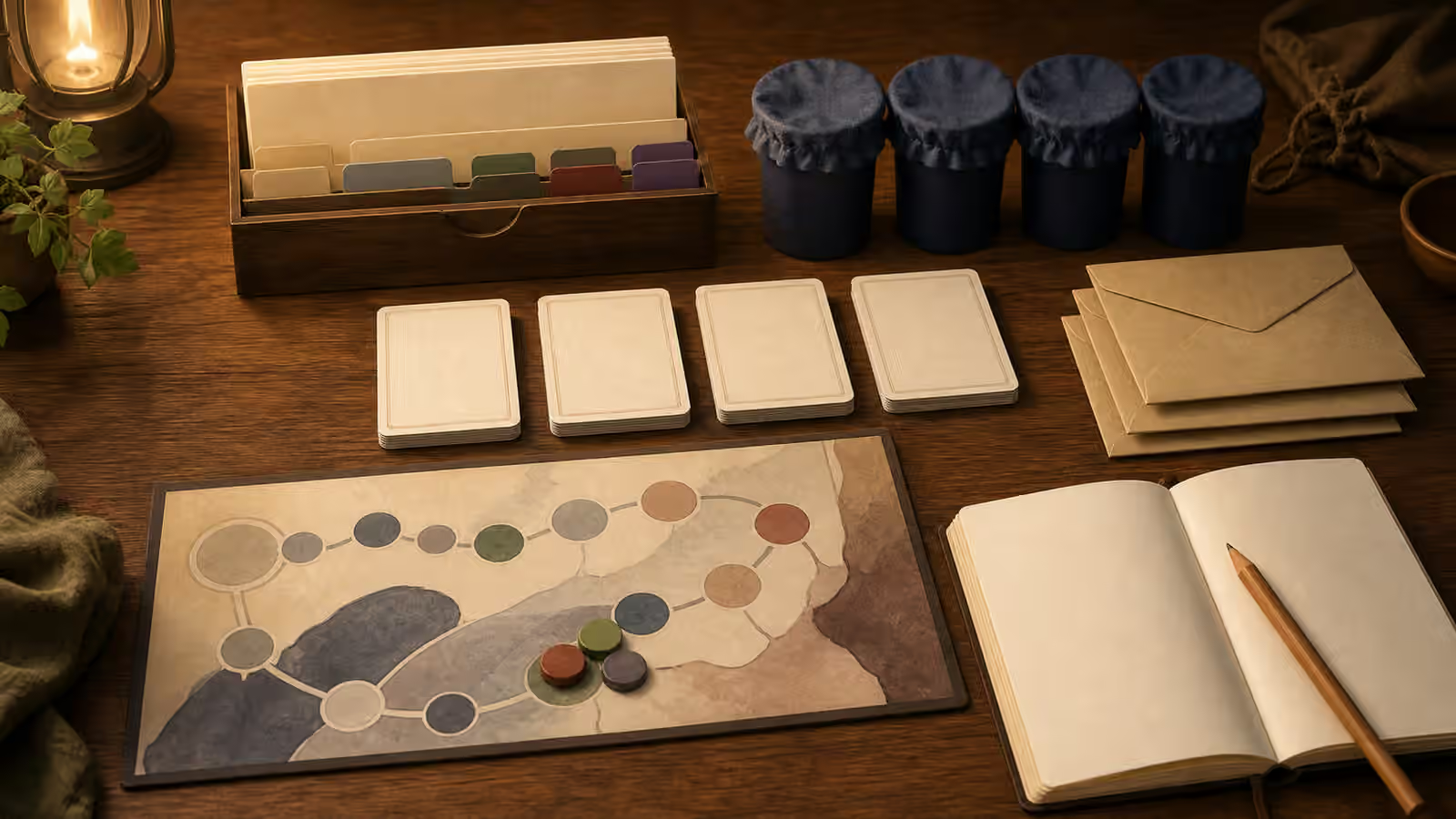
Opaque containers help when tokens are involved. A cup, bag, folded paper sleeve, or small envelope can preserve a random draw without requiring special equipment. Face-down piles help with cards, as long as the backs are not marked and the discard order does not leak too much. For printed material, a paper cover sheet can hide the next paragraph until you reach it. These are ordinary table habits, not proof that the player cannot be trusted.
Give Each Side a Policy
Two-handed solo play fails when both sides borrow the same brain at the wrong time. If one side is supposed to have a secret hand, write a narrow policy for how that side plays before looking at the hand too closely. The policy can be simple: favor immediate points, protect the largest threat, spend the cheapest useful card, attack the closest objective, or hold one card for defense. The point is not to create a brilliant opponent. The point is to stop the player from retrofitting each decision to knowledge that side would not have used.
Policies are especially useful for cooperative games played alone with multiple characters. One character may take cautious support actions. Another may race objectives. Another may remove hazards first. If you decide those tendencies before the turn, hidden hands become easier to run. You are not asking, “What would I do with all information?” You are asking, “What does this position, with this limited policy, do next?”
When the opponent system is already printed, Automa Opponent Decks for Solo Board Games is usually better than inventing a secret second mind. Treat behavior cards as pressure engines. Let them be strange. A clear automa that surprises you modestly is often more playable than a pretend human opponent you must constantly censor.
Avoid Public Conversion Drift
Private adaptation notes are part of solo play. You might write a delayed-reveal rule, a tie-breaker, a reduced hidden-hand procedure, or a note that says the second hand chooses the leftmost legal card when no priority is obvious. Keep those notes short and in your own words. Do not copy or republish proprietary cards, scenario paragraphs, tables, maps, or large rules excerpts under the banner of a solo fix.
There is also a community habit worth protecting. A home procedure that works for one player, one copy, and one tolerance for ambiguity can sound official when shared carelessly. If you post about it, describe the idea without replacing the game text, credit the source, and make clear that it is a private table adaptation. Copyright, Fan Content, and Respectful Solo Play Notes covers that boundary in more detail.
Know When the Design Is Not Asking for Solo
Some games do not adapt cleanly. Hidden traitors, negotiation economies, bidding games built on reading other people, and designs where private information is the core pleasure may lose too much when played alone. That is not a personal failure. It is a sign that the game is doing something social, and solo play may need a different design nearby.
You can still salvage a smaller practice from such a game. Play a puzzle position with all information visible. Use the map system for a solo scenario. Turn a market into a score challenge. Study the rulebook as design craft. But if the hidden information keeps requiring you to act surprised by yourself, put the box away without resentment.
Solo adaptation is strongest when it protects the decision you are about to make. Keep suspense where suspense matters, reveal information only when it can act, give each side a simple policy, and retire adaptations that ask for too much pretend ignorance. The goal is not to prove that every multiplayer game can become solitary. The goal is to make tonight’s table honest enough to play.