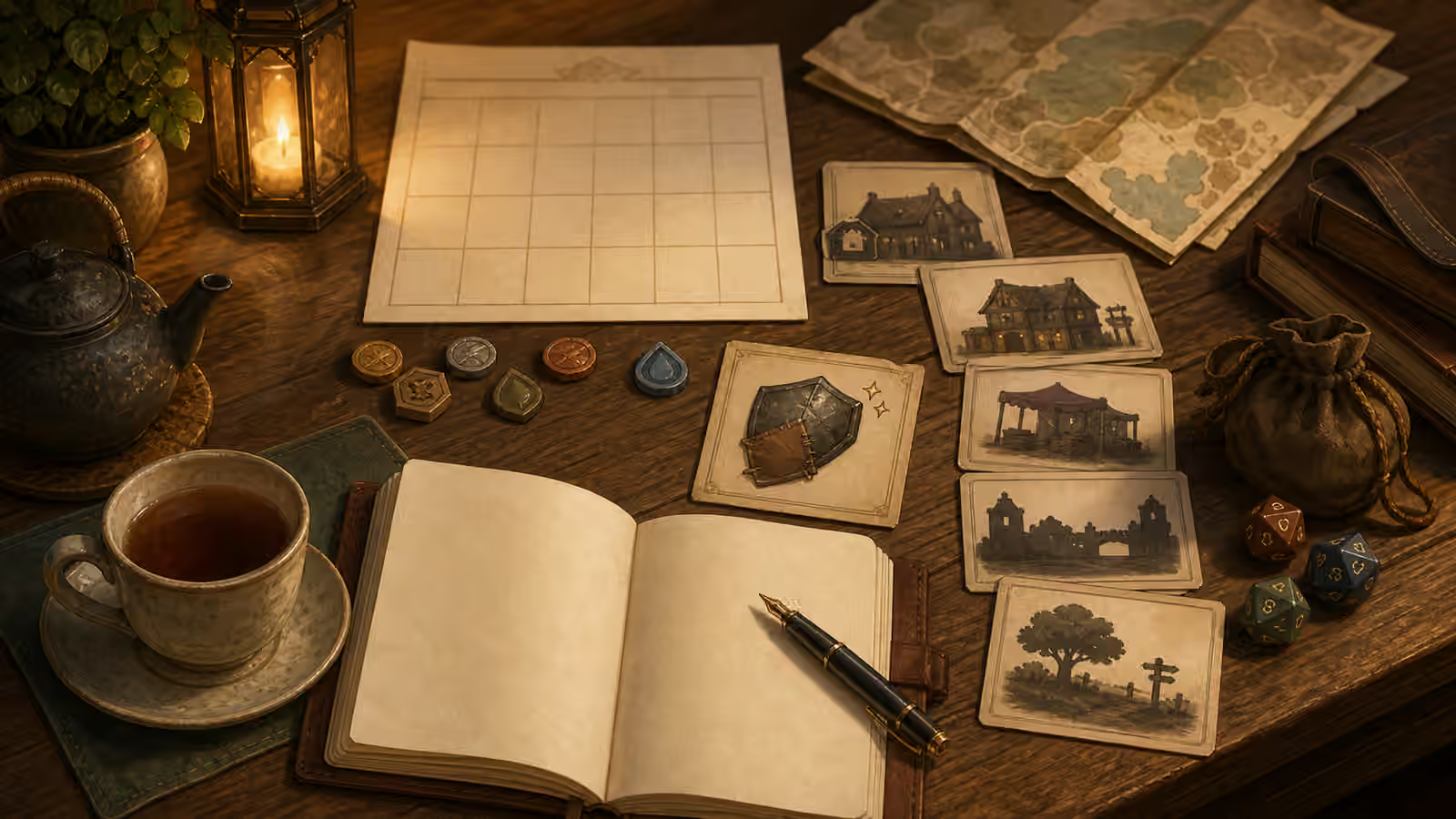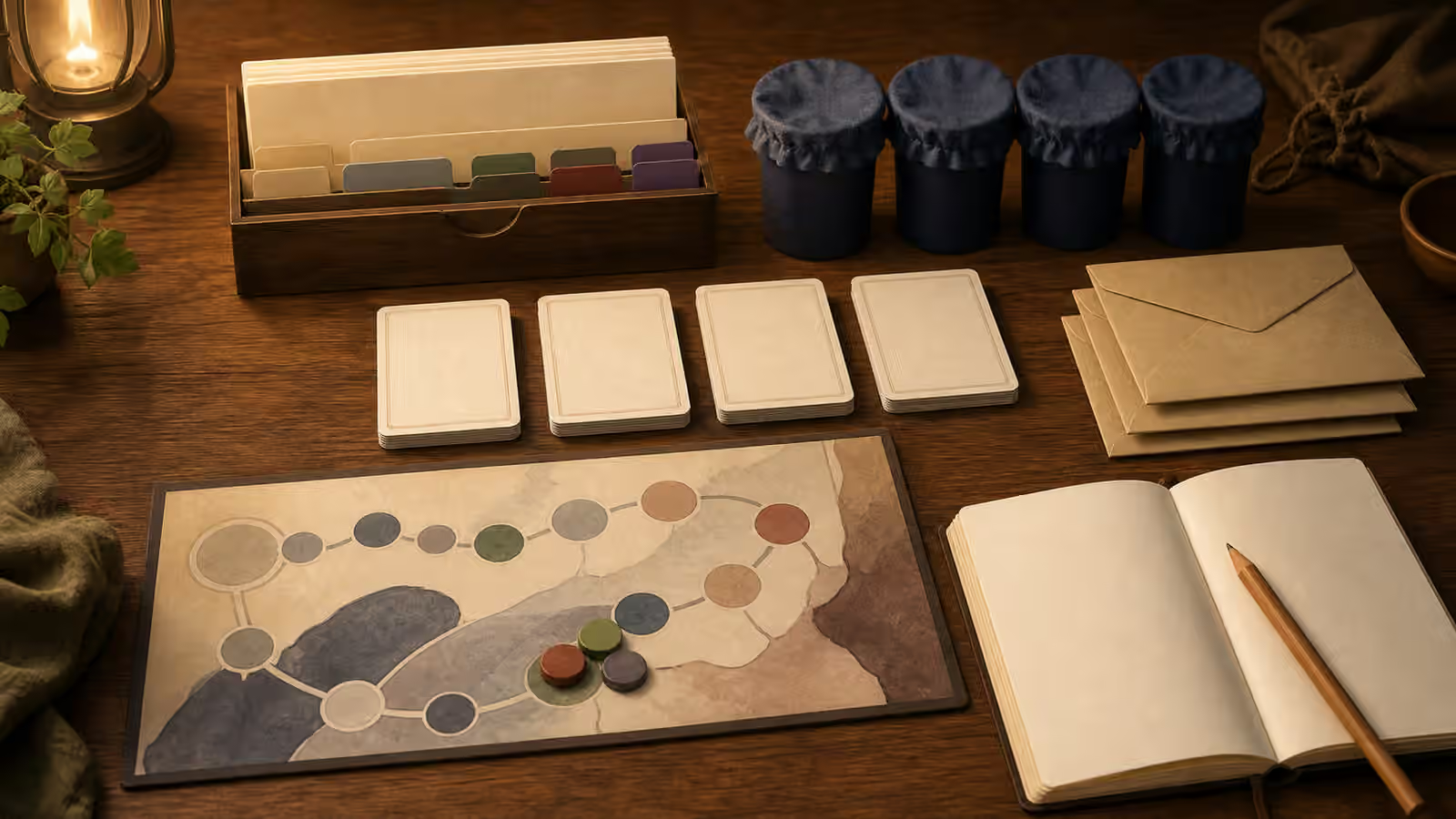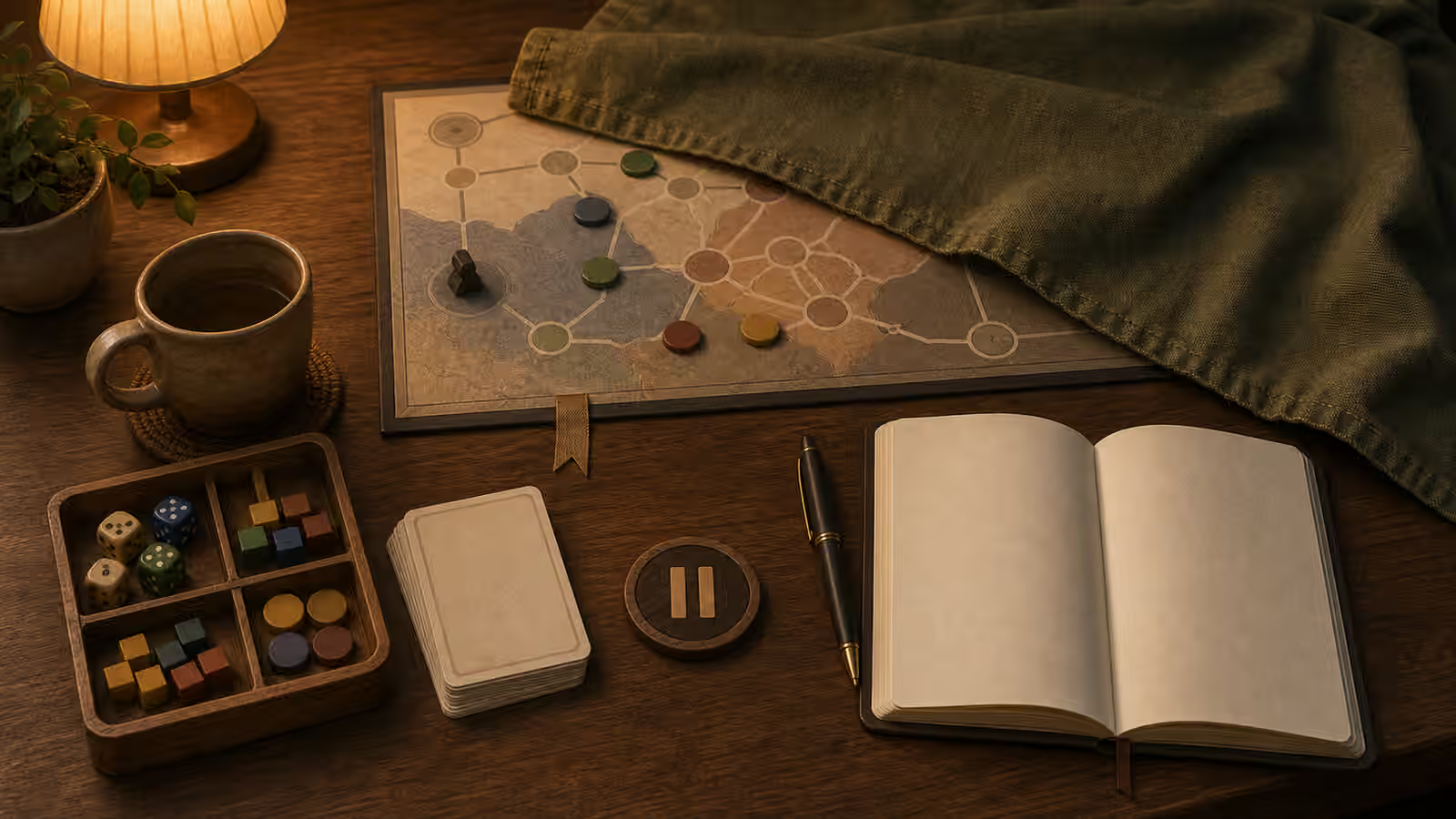
A hexcrawl divides space into map cells. A pointcrawl connects meaningful locations with routes. Both can work for solo play, but they create different kinds of attention. A hexcrawl asks, “What is over there if I cross this terrain?” A pointcrawl asks, “Which known route is worth the cost?”
That difference matters when you are the only player. Without a game master, exploration can either feel too random or too predetermined. A good travel structure gives you enough procedure to discover something honestly, enough choice to feel responsible for the route, and enough mercy that travel does not become bookkeeping for its own sake.
Use the structure that matches the decision you want to make tonight. If the fun is wandering into unknown ground, use hexes. If the fun is choosing between routes, obligations, rumors, and landmarks, use points.
Use Hexes for Wandering
Hexes are strong when direction, distance, terrain, and unknown neighboring spaces matter. They let you ask what is in the next cell, how hard it is to cross, and whether weather or encounter checks change the route. A hex map is good when you want the land itself to be the puzzle.
The mistake is filling every hex before play begins. That turns discovery into reading your own notes. Keep early hexes sparse. Mark terrain, landmark, danger, resource, and unresolved question. You can add detail when play returns there.
Use a small code in each explored hex:
| Mark | Meaning | Example |
|---|---|---|
| T | Terrain | Marsh, ridge, ash field, old orchard, broken road |
| L | Landmark | Standing stone, watch fire, dry well, ruined gate |
| R | Resource | Shelter, water, tool scrap, local warning, safe path |
| P | Pressure | Weather, patrol route, unstable ground, time cost |
| ? | Open question | Tracks vanish here, road bends wrong, signal repeats |
A hex only needs one strong fact at first. If you add five facts to every cell, the map will feel dense before it feels alive. Let the second and third facts arrive when a route crosses the place again, when a clue points back, or when a weather result changes the terrain.
Hexes also help when getting lost is interesting. If the character misreads a ridge, follows an old road, or detours around a flooded crossing, the wrong hex can still become play. A mistaken move should not be a dead end. It should reveal a new cost, view, shortcut, or question.
Use Points for Decisions
Pointcrawls are strong when the world is a network: inn, ruined bridge, shrine, market, forest road, watchtower. The route between points has a cost, risk, or scene. You do not need to map every mile.
For solo play, pointcrawls often reduce drawing load and make choices clearer.
Build points from places that can hold decisions. “Forest” is usually too broad. “Old charcoal road” is better. “South ridge” is vague. “Wind gap above the quarry” gives you a route, view, and risk. A point does not need a long description, but it should be specific enough that you know why a character might go there.
Give every route at least one cost or promise:
| Route tag | What it means |
|---|---|
| Fast | Fewer turns, more exposure |
| Safe | Lower danger, less discovery |
| Costly | Spend food, light, favor, gear, or time |
| Revealing | Better clues, stronger chance of being noticed |
| Social | A person, group, gatekeeper, market, or rumor matters |
| Unstable | The route may close, shift, or demand a new decision |
This is where pointcrawls shine for solo play. The choice becomes readable. You are not asking a blank map to entertain you. You are choosing between the road that saves time, the ferry that costs a favor, the ridge that reveals more of the map, and the old service path that might not still exist.
Choose by Tonight’s Attention
Do not choose hexes because they sound more old-school, and do not choose points because they sound cleaner. Choose by attention.
Use a hexcrawl when you want:
- Terrain and direction to matter.
- Partial knowledge and fog of war.
- Wandering, scouting, detours, and getting lost.
- A region that can slowly become familiar.
- Travel to feel like exploration, not just transition.
Use a pointcrawl when you want:
- Clear route choices.
- Fewer map-drawing demands.
- Strong locations connected by costs.
- Social, mystery, or errand pressure.
- Travel to feel like a sequence of meaningful crossings.
You can mix them. Use a pointcrawl for the known road network, then zoom into a hex map when the character leaves the road. Use hexes for wilderness and points for town, tunnels, sea lanes, campuses, stations, or a chain of safe houses. A solo map does not need one pure method. It needs the method that keeps the next decision visible.
Write a Travel Turn
Use a repeatable turn: choose route, pay cost, check encounter or weather, discover or update, log state. The turn should be short enough to run several times without fatigue.
If survival pressure is not your goal, keep costs light. If it is your goal, add recovery options so travel does not become punishment.
Here is a reliable solo travel turn:
- Choose a direction, hex edge, route, or point.
- Name the expected cost: time, light, food, exposure, favor, or attention.
- Roll or choose one pressure: weather, delay, trace, obstacle, meeting, or quiet.
- Reveal one useful fact: terrain, route condition, rumor, landmark, resource, or clue.
- Update the map with one mark and one next question.
The turn should answer something even when “nothing happens.” Quiet travel can reveal distance, safety, exhaustion, confidence, or a better view. If a travel turn produces neither cost nor knowledge, it probably did not need to be played.
For lower-pressure games, replace resource loss with positioning. Instead of subtracting food every turn, mark “late arrival,” “wet boots,” “missed market hour,” “known road behind me,” or “seen from the ridge.” Those notes create consequences without making the session feel like an accounting sheet.
For harsher games, keep recovery visible. A hard road can still include shelter, advice, trade, kindness, clean water, or a lucky shortcut. If every turn drains the character, the procedure will eventually make the best choice feel like stopping play.
Keep Discovery Honest
Solo exploration needs a fair boundary between what you know as author and what you learn as player. You do not need to pretend you have no control. You do need a ritual that keeps discovery from feeling arbitrary.
One clean method is the three-layer reveal:
- Before travel: write the obvious fact. “The north road climbs into dry hills.”
- During travel: roll or choose the pressure. “The road splits near a burned marker.”
- After arrival: write the consequence or new question. “One branch has recent wheel marks, but the other carries the old shrine symbol.”
This gives you authorship at each step while preserving surprise. You decide the kind of place, chance adds friction, and the final note creates the next decision.
Avoid hiding everything from yourself. A map with no known anchors is hard to care about. Give the region a few visible promises: a town on the lake, a pass in the hills, a market day, a vanished road, a tower seen from far away. The unknown spaces between those promises are where the crawl lives.
Make Encounters Do Travel Work
An encounter should change travel, not pause travel for unrelated content. Before adding a scene, ask what it does to the route.
Good travel encounters can:
- Confirm that a route is used by someone else.
- Show that a landmark means more than it seemed.
- Offer help at a cost.
- Force a choice between speed and safety.
- Reveal weather, politics, scarcity, repair needs, or rumor.
- Create a reason to return later.
If an encounter does not affect route, resource, clue, or mood, keep it small. A footprint, abandoned camp, distant bell, broken milestone, or fresh rope bridge can be enough. Solo exploration often works best when travel scenes create handles for later play rather than demanding a full scene every time.
Use the Encounter Tables With Consent Boundaries approach if the encounter table might introduce intensity you do not want tonight. Travel pressure should respect the same age rating and content boundaries as any other scene.
Keep the Log Short
A travel log should make resuming easy. It should not become a second game that steals energy from the first. Use five lines:
- From:
- To:
- Cost:
- Found:
- Next question:
Example:
| Field | Note |
|---|---|
| From | Ferry shrine |
| To | Ridge road above quarry |
| Cost | Arrived near dusk, one route now unsafe |
| Found | Cart tracks avoid the main gate |
| Next question | Who is using the service road after dark? |
That is enough. If the scene deserves prose, write prose. If it only needs continuity, keep it clean. The best log is one you will actually reread before the next move.
Let the Map Become Personal
A solo travel map becomes more interesting when it records your route, not just the setting. Mark where you hesitated, where you turned back, where a resource ran low, where a clue changed your plan, and where a place became familiar.
This is why repeated paths matter. The first crossing is discovery. The second crossing is comparison. The third crossing is ownership. You notice what changed, what stayed useful, and what now feels risky because of your own previous choices.
If a route becomes routine, shorten it. Once the road between the inn and the ridge is known, you do not need to play every crossing. Roll only when weather, pursuit, scarcity, emotional state, or a new goal makes the route uncertain again.
Exploration earns its weight when the map remembers.
Protect Maps and Spoilers
Published hexcrawls and pointcrawls often hide keyed locations. Do not post copied maps, keys, or secret route information. Share original travel lessons or spoiler-light impressions instead.
Private notes can be specific. Public notes should be careful. If you are discussing a published crawl, talk about your procedure, pacing, safety boundaries, and what the structure taught you. Avoid reproducing routes, hidden locations, keyed discoveries, or secret maps.
For your own crawls, keep prompt materials original. Blank hexes, unlabeled nodes, personal symbols, and invented route costs are enough to create strong play without borrowing a protected map.