Solo dungeon play can stall when every room asks the same vague question: what is here? That question sounds useful, but it often produces the same answer in a different costume: another chamber, another door, another thing to look at, another pause while you try to invent importance from scratch.
A better room prompt asks what matters here. Is this room about risk, clue, resource, exit, atmosphere, rest, or consequence? The answer tells you how to play the room before you decide what the walls look like. It gives the scene a job.
That job matters because a solo dungeon is not only a map. It is a memory system, a pacing tool, and a way to surprise yourself without handing the session to randomness. The best room prompts do not fill corridors with noise. They make the next decision clearer.
Give Each Room a Job
Start by giving the room one primary job. You can still add color later, but the job keeps the prompt from becoming decorative. A carved door, a cold draft, a cracked tile, and an old basin are all fine details. They become playable only when the room has a reason to exist in the session.
Use these six room jobs as a simple starting table:
| Roll | Room job | What it should create |
|---|---|---|
| 1 | Decision | A route, tradeoff, cost, shortcut, or choice between imperfect options |
| 2 | Danger | Pressure that changes position, resources, time, or confidence |
| 3 | Clue | Evidence that answers one question and raises a better one |
| 4 | Resource | Help, cover, equipment, information, rest, leverage, or a safer angle |
| 5 | Atmosphere | Mood that changes interpretation without stopping play |
| 6 | Change | A shift in the dungeon state, map, weather, access, or opposition |
Decision rooms offer routes or tradeoffs. Danger rooms apply pressure. Clue rooms answer or raise questions. Resource rooms help. Atmosphere rooms let the pace breathe while still shaping tone. Change rooms alter the dungeon state so the map feels alive instead of static.
This prevents endless empty corridors without making every room a fight.
Start With the Current Question
Before rolling, name the question already active in the scene. It might be practical: can I get deeper without spending my last torch? It might be investigative: who opened the sealed stair before me? It might be emotional: do I feel brave enough to keep going after the failed check?
The room prompt should touch that question. If the active question is about escape, a resource room might reveal a rope ladder, a draft from an upper crack, or a partial map scratched near a service passage. If the active question is about trust, a clue room might show that a previous explorer lied about what was sealed. If the active question is about exhaustion, an atmosphere room might become the quietest room yet, with dust so settled that every new footprint feels loud.
When you do this, the dungeon stops feeling like a series of disconnected boxes. It starts to behave like a place reacting to what you care about.
Use a Three-Part Prompt
A useful dungeon room prompt has three parts:
- The job: decision, danger, clue, resource, atmosphere, or change.
- The visible detail: what the character can notice right now.
- The pressure: why it matters before the session drifts.
For example, instead of writing “storage room,” write: “Resource room: collapsed storage shelves reveal dry cord, a cracked lantern frame, and a sealed tin; taking time to search may let the noise in the hall catch up.” The room now has something to do. It offers help, asks for time, and creates a decision without needing a complex encounter.
Instead of writing “strange mural,” write: “Clue room: a damaged wall painting shows three exits, but one has been deliberately scratched away; if the missing route still exists, someone wanted it forgotten.” That prompt does not solve the mystery. It gives the next scene a direction.
The visible detail should be concrete enough that you can imagine the room in five seconds. The pressure should be gentle enough that you still have authorship. A room prompt is not a command. It is a handle.
Make Empty Rooms Earn Their Quiet
Empty rooms are not automatically bad. They are only bad when they ask for attention and give nothing back. A quiet room can show pacing, contrast, aftermath, safety, or dread. The trick is to decide what the emptiness proves.
An empty guard post can prove the watch left in a hurry. An empty shrine can prove the place was stripped respectfully, not looted. An empty cistern can prove the water table changed. An empty sleeping chamber can prove nobody has rested here for a long time. A room with no threat can still change how you understand the dungeon.
Use quiet rooms after intense scenes, before branching decisions, or when the player needs a clean place to update notes. If every room has maximum pressure, pressure stops working. A calm room can be the moment where the map, clues, and resource counts finally become visible again.
Roll Less, Interpret More
For each room, roll once for job and once for detail if needed. Then interpret through the current dungeon: old mine, flooded library, ruined tower, root cellar, dream house. A resource in each place looks different.
In an old mine, a resource might be a dry beam, a marked cart track, a tool, or a pocket of safer air. In a flooded library, it might be a floating shelf, a waterproof case, a readable index card, or a high balcony above the waterline. In a ruined tower, it might be a stair fragment, a signal mirror, a lookout ledge with a view, or a fallen banner that can become rope in a desperate moment.
The prompt gives the category. The dungeon gives the form.
If a result breaks tone, shift it. A direct attack can become a blocked passage, warning sign, rival explorer, unstable ceiling, locked mechanism, echoing noise, or time cost. If your session is quiet and reflective, danger can be social, environmental, or logistical. If your session is tense, a harmless-looking resource can carry a catch. The point is not to obey the table. The point is to keep the session honest to its chosen band.
Let Rooms Talk to Each Other
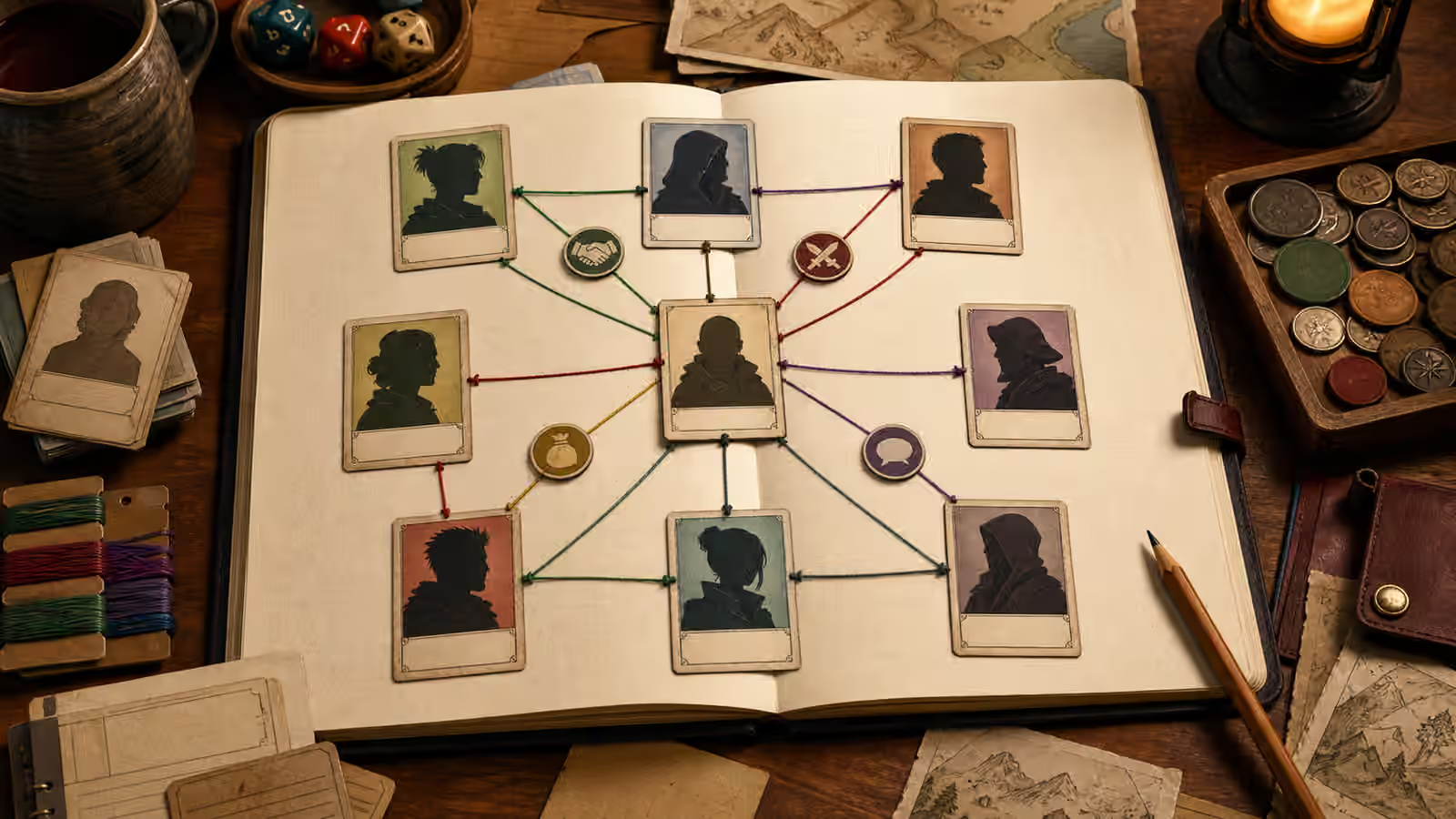
The fastest way to make a dungeon feel designed is to let one room answer another. A clue room should point toward a decision room. A danger room should explain why a resource room matters. An atmosphere room should make a later change feel less random.
Keep a short list of unresolved objects, symbols, routes, and costs. When you roll a new room job, scan that list before inventing something unrelated. If you previously marked a cold draft behind a cracked wall, the next change room might reveal that the draft is stronger after a door closes. If a previous clue showed a missing symbol, the next decision room might offer two routes, only one of which carries that symbol. If a resource room gave you lamp oil, the next danger might threaten light rather than health.
This is where solo play becomes satisfying. You are not preparing a perfect dungeon in advance. You are listening to the pattern that has already appeared and giving it room to matter.
Track Exits and Consequences
Every room should make movement clearer. Mark exits, locked paths, one-way routes, loops, and unresolved symbols. If the room has no exit information, it should at least change what you know about the route you came from.
Consequences should also stay visible: noise made, torch spent, clue found, route collapsed, promise broken, tool used, rest taken, shortcut opened. Write consequences as short state changes rather than diary paragraphs. “North door jammed from other side” is more useful at the table than a long description you will not reread.
Use symbols if you can. A triangle for risk, star for clue, dot for resource, slash for blocked, loop for return route, and question mark for unresolved mystery can carry a lot of memory. The related Map Legend Symbols guide gives that habit more room, but the core idea is simple: future you needs the room to be readable at a glance.
When the map grows, future you needs symbols more than paragraphs.
Build a Small Room Deck
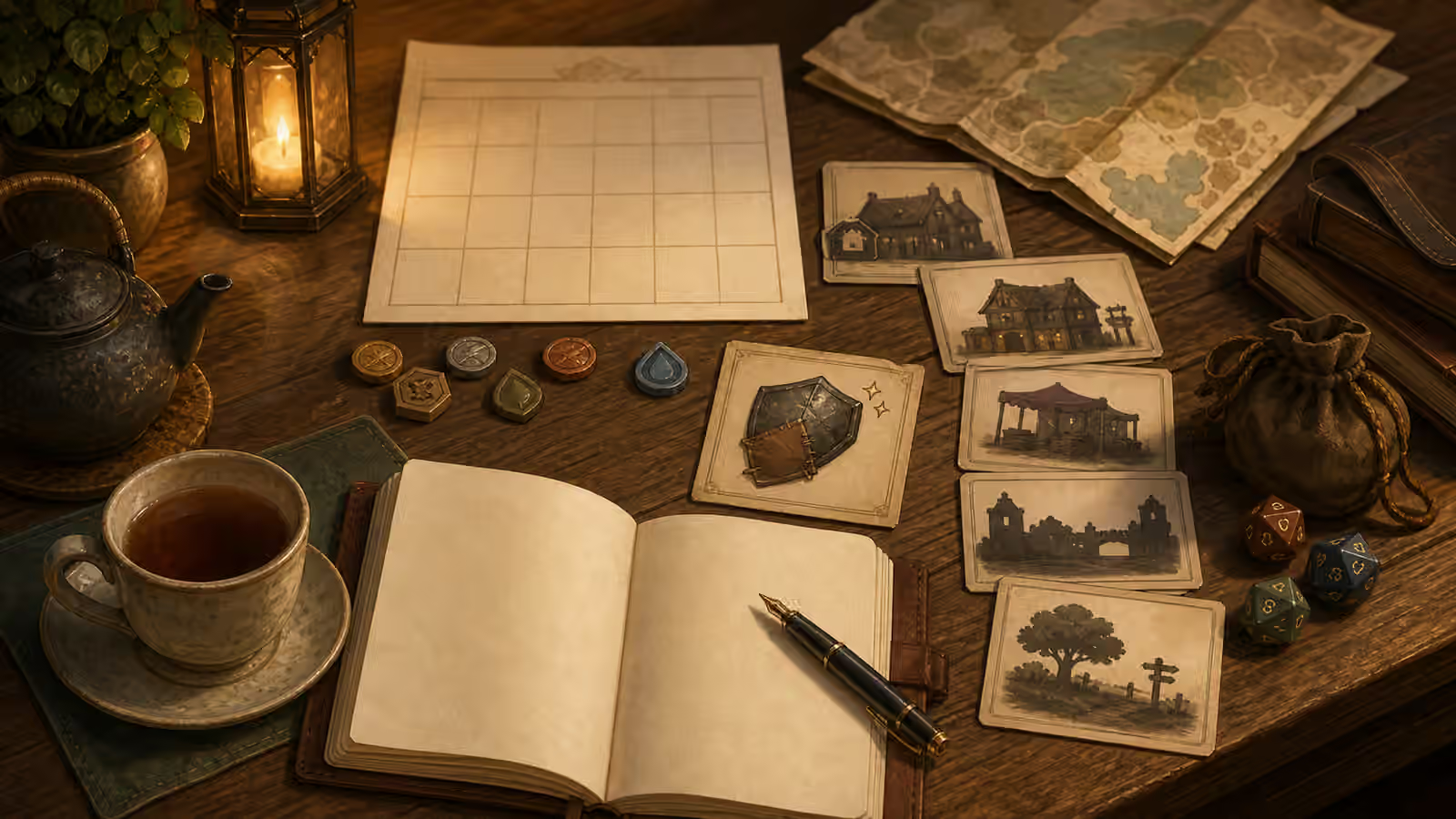
If rolling on a table feels too abstract, make twelve index cards before the session. Put one room job on each card, then add a prompt line that fits the dungeon. Shuffle them and draw when a new room appears.
For a drowned archive, cards might include:
- Clue: water damage reveals what was saved first.
- Decision: a dry balcony overlooks two flooded routes.
- Resource: a sealed container survived under floating debris.
- Change: the waterline is lower than the mark on the wall.
- Atmosphere: pages drift in the current like pale flags.
- Danger: the safest-looking floor flexes under weight.
Keep the cards unfinished. Leave space to add the actual detail during play. A card should start a scene, not finish it. If you draw a card that does not fit, rotate it: danger becomes evidence of past danger, resource becomes information about where resources used to be, atmosphere becomes a clue about what changed.
This method works especially well when you want a dungeon with a strong identity. The same six room jobs feel different in a flooded archive, a mountain watchpost, a sealed greenhouse, a derelict train station, or a buried observatory.
Close Each Room With a Next Action
Before leaving a room, write one next action. It can be tiny: choose north or east, test the door, mark the symbol, spend the torch, take the cord, leave the sealed tin, follow the draft, rest for ten minutes, return with a tool, or stop the session here.
This habit prevents the notebook from becoming a museum of descriptions. A room prompt should end by returning you to play. If you do not know what the next action is, the room may need a clearer job, a sharper pressure, or a more visible exit.
At the end of a session, circle the room’s unresolved action. When you return, you will know why the room mattered.
Respect Published Dungeons
If playing a published dungeon, avoid sharing keyed rooms, hidden maps, or copied descriptions. Use your own recap and spoiler warnings. Private notes can be detailed; public notes should be careful.
You can still use this method privately with a published adventure. Give rooms jobs in your notebook, translate boxed text into your own decision notes, and mark consequences for your own continuity. Just do not turn someone else’s keyed design into public prompt content.
For original solo dungeons, keep prompts generic enough that they belong to your table. Blank room cards, personal symbols, and invented details are safer than copied maps or scenario text.