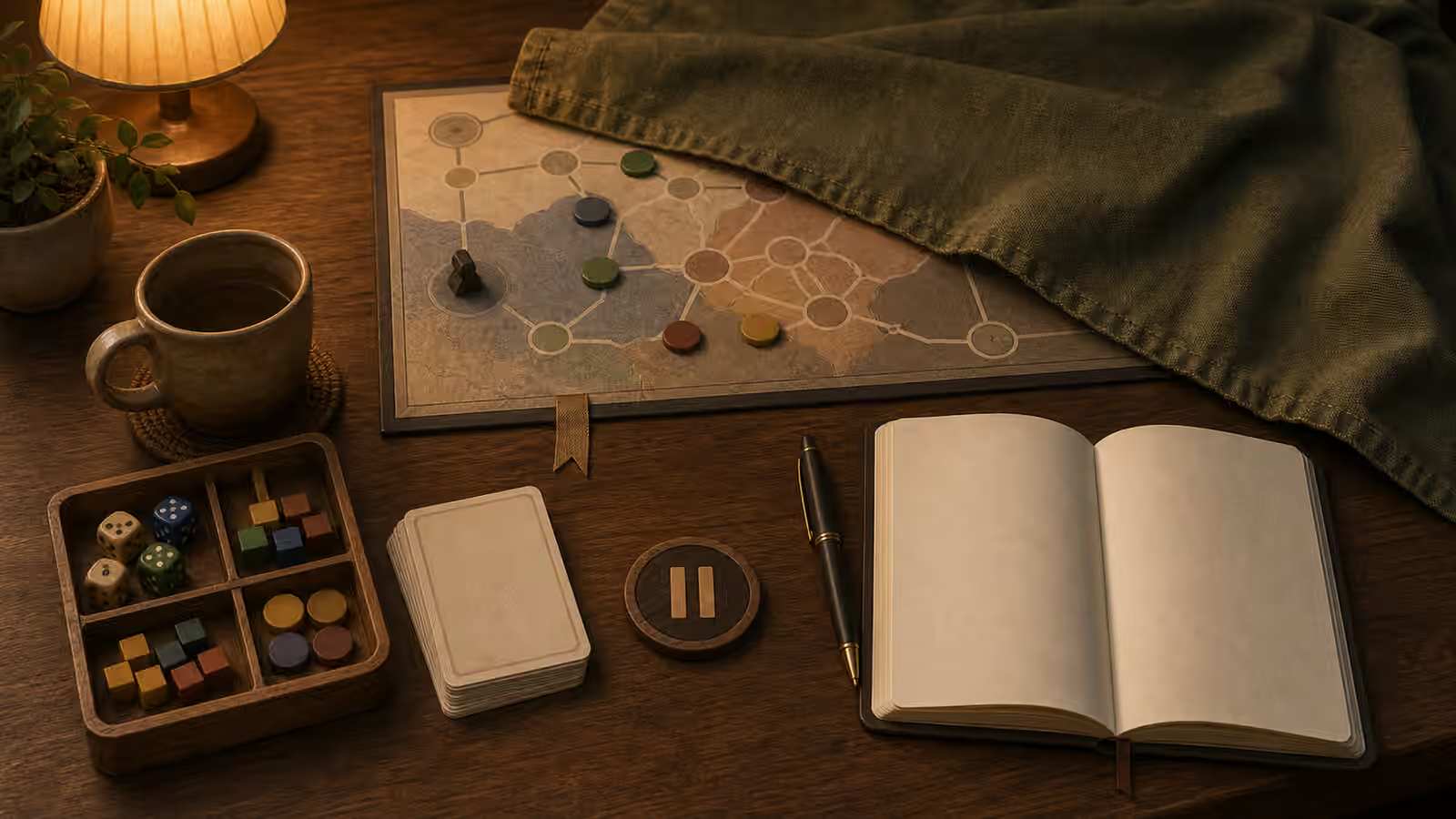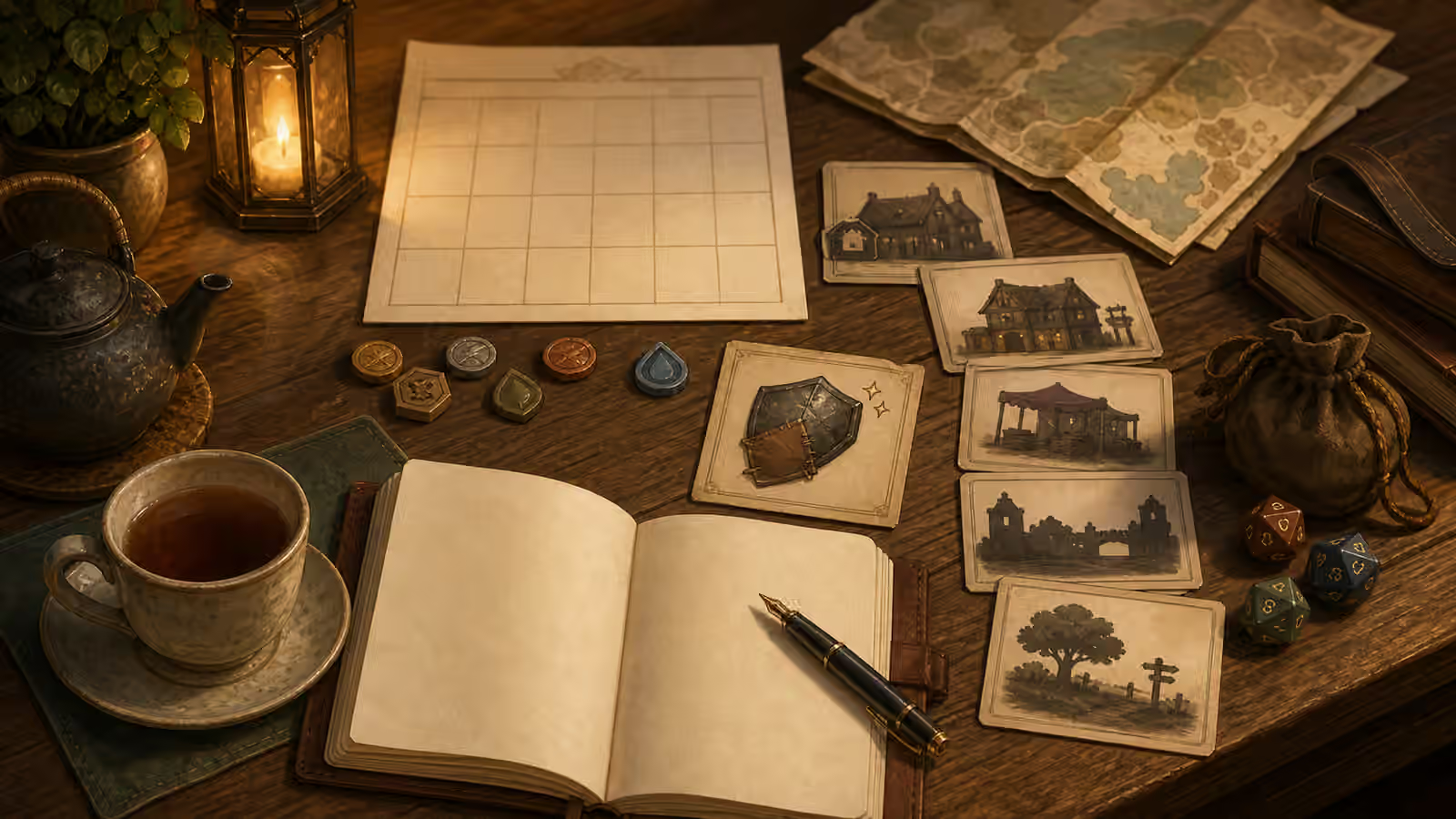
Solo play asks one person to notice everything. You read the cards, remember the turn, track the enemy, check the map, interpret the dice, update the notebook, and protect the table state when the phone rings or the kettle finishes. If a token blends into the cloth or a tiny icon disappears under warm light, the problem is not a lack of attention. The table has made attention expensive.
Accessibility at the Solo Table covers the broader habit of adapting the game to the body at the table. Component visibility is one of the most immediate parts of that habit because it changes the session before any rule changes. A clear table reduces rereading, searching, double-counting, accidental state loss, and the low-grade irritation that makes a game feel harder than it is.
Contrast Starts Under the Pieces
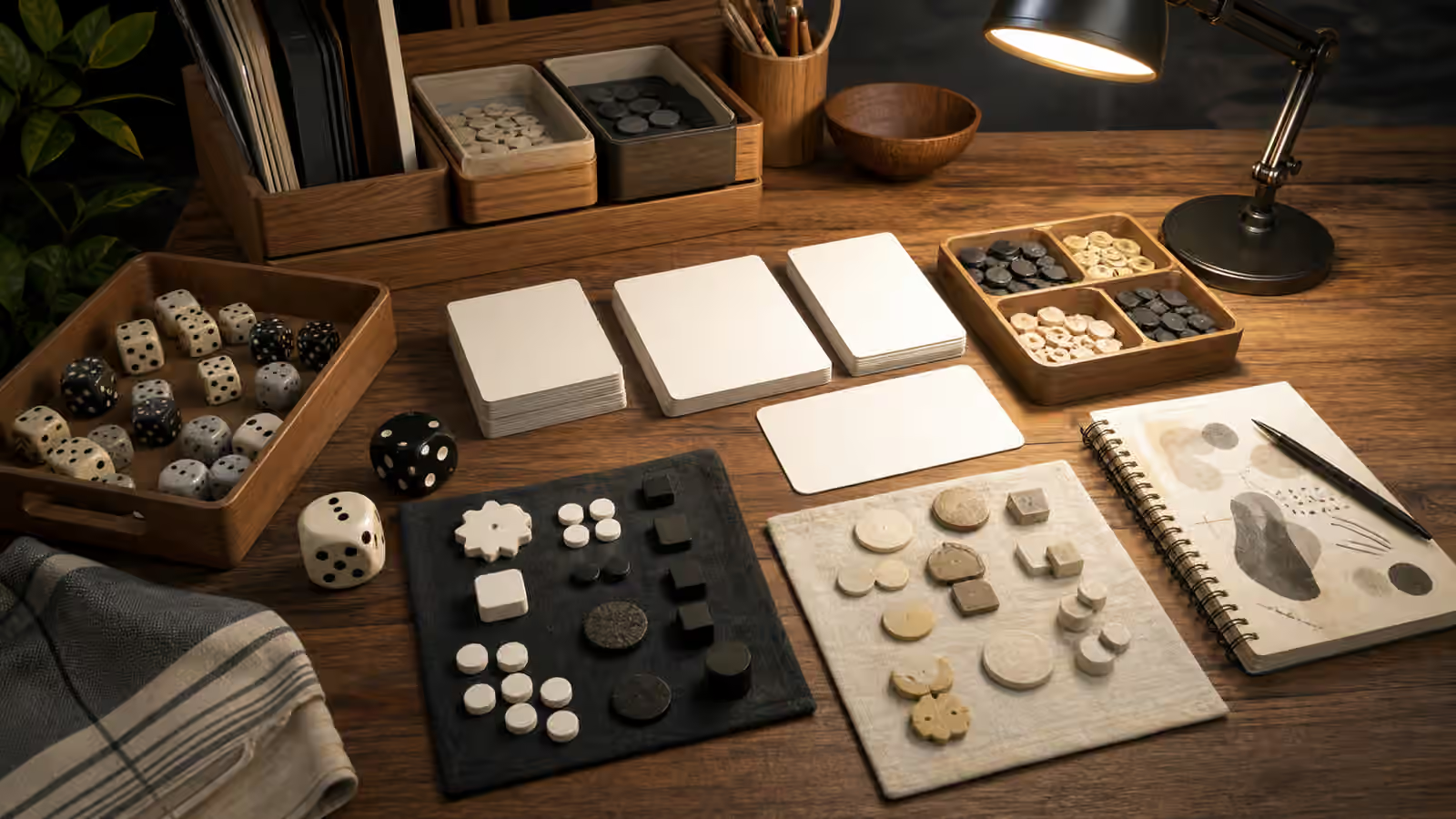
Many players think first about the components, but the surface underneath them often decides whether they can be read. Pale wooden discs vanish on a pale wood table. Black cubes disappear into a dark cloth. Transparent pieces can become almost invisible on patterned fabric. A busy playmat may look beautiful and still be a poor surface for a component-heavy solo game.
Use the surface as a quiet tool. A plain cloth, sheet of paper, cutting mat, tray liner, or placemat can create enough contrast without replacing the game. The goal is not to make the table sterile. The goal is to make active pieces stand out from the background. If a game uses several colors that matter, test them before setup. Put each token on the surface, step back, and see which ones disappear. The token that disappears during setup will disappear during turn five when the board is busier.
Contrast also helps with save states. If a campaign must pause overnight, a clear surface makes it easier to see what moved. This connects to Save State Between Solo Sessions Without Losing the Table because visual state is memory. A photo can help when photos are welcome, but the table should still be readable in the room.
Light Should Reveal, Not Perform
Warm light can make a table feel inviting, but the first job of light is to reveal. Sleeved cards create glare. Glossy boards reflect lamps. Pencil notes fade under dim bulbs. A dramatic pool of light may look like a perfect solo ritual and still make the rulebook harder to use.
Place the lamp where your hand does not shadow the active area. Check the angle from your normal seated position, not from where the table looks best in a photograph. If cards are sleeved, tilt one card in the market row and see whether the icon vanishes. If dice are translucent, roll them in the tray and make sure the pips are readable without lifting the die to your face. If a notebook is part of play, test the page, not only the board.
Lighting is also a shared-space issue. A bright lamp can bother someone nearby, and a dim room can push the player into strain. Shielded lamps, small task lights, and moving the active zone closer to the light often solve more than buying new components. Table Atmosphere Without Overproducing Solo Play is useful here because mood should support access instead of competing with it.
Trays Turn Searching Into Sorting
Trays are not only for neatness. They create boundaries. A shallow dish can hold spent resources. A small box lid can separate enemy markers from player markers. A saucer can keep dice from knocking into a card row. A folded cloth can keep shiny tokens from sliding. When the table has zones, the eye has fewer places to search.
The trick is to use fewer trays than the fantasy version of the table suggests. Ten tiny containers may look organized and still slow the hand. Choose trays for states that are easy to confuse: available and spent, wound and resource, active and future, unresolved and completed. If a tray does not answer a question, it may be decoration.
Trays also reduce noise and scatter, which matters when play happens late or near other people. Dice Tray, Quiet Play, and Shared-Wall Table Manners treats quiet play as a form of care. Visibility and quiet often improve together because both ask where components land and how easily they can be found again.
Replace Pieces When Replacement Improves Play
A substitute component can be more faithful to the session than the original piece if it makes the game playable. Larger dice, poker chips, wooden cubes, colored beads, coin capsules, card stands, sticky flags, or blank index cards can all make state easier to read. A proxy is not automatically a downgrade. It is a table decision.
Respect the design’s information. If shape matters, keep shape distinct. If color matters and color is hard to distinguish, add position, texture, written private labels, or different container zones. If a card’s art carries no game information, covering part of it with a temporary marker may be fine for private play. If the art, icon, or official text is important, do not republish altered images or copied materials as if they were yours.
Substitutes should reduce confusion, not create a secret code only tonight’s energized self understands. Test a proxy after ten minutes away from the table. If you return and cannot remember what the blue bead means, the table needs a clearer cue. This is where private player aids help. A small card with your own words can preserve the replacement system without copying the rulebook.
Use Position as a Second Language
Color is not the only way to communicate state. Position can carry meaning. Spent cards can rotate sideways. Exhausted figures can move to a lower row. Threat markers can sit above a card while resources sit below. Future events can wait on the left and resolved events can move to the right. These habits make the table legible even when colors are similar or lighting changes.
Be consistent inside one session. If sideways means spent, do not also let sideways mean wounded. If a token above a card means danger, do not put bonus markers there too. Solo play is full of small meanings. The table works better when each meaning has one place to live.
Tiny Table Layouts for Solo Board Games and Journaling RPGs matters because position needs room. A tiny table can still be clear, but it cannot carry unlimited zones. If visibility breaks down, shrink the scenario, stack inactive material away from the active area, or use a side tray. A smaller active table is often clearer than a large table covered with every possible component.
Make Return Easy for Tired Eyes
The strongest visibility setup is the one that still works near the end of the session. Early play happens with fresh attention. Late play happens after rules checks, interruptions, and small decisions have accumulated. That is when low contrast becomes expensive. Build for the tired return.
Before ending, scan the table from left to right and ask what future you will need to read first. Put the next action where it can be seen. Move completed clutter away. Place unresolved markers in one visible row. If a token is important, give it space. If a rule must be checked next time, put a tab or private reminder near it. These small moves protect the next session from beginning with a search.
Component visibility is not a cosmetic concern. It is part of the solo game’s handling system. A table that can be seen clearly can be resumed more gently, judged more fairly, and enjoyed with less friction. The best setup may look plain. It may use humble trays, larger dice, and a cloth chosen for contrast rather than style. If it lets the player read the state and make the next decision, it is doing the real work.