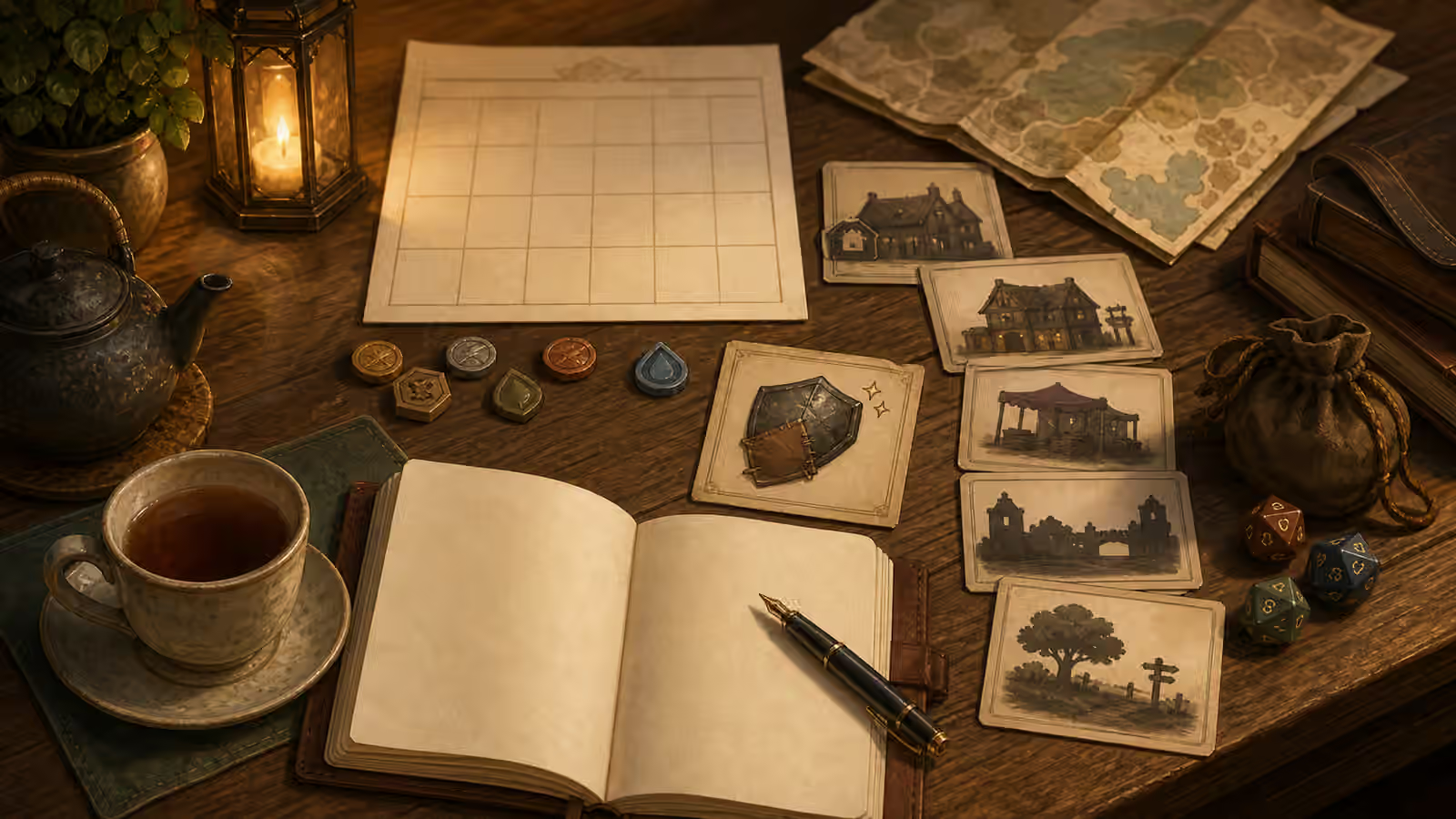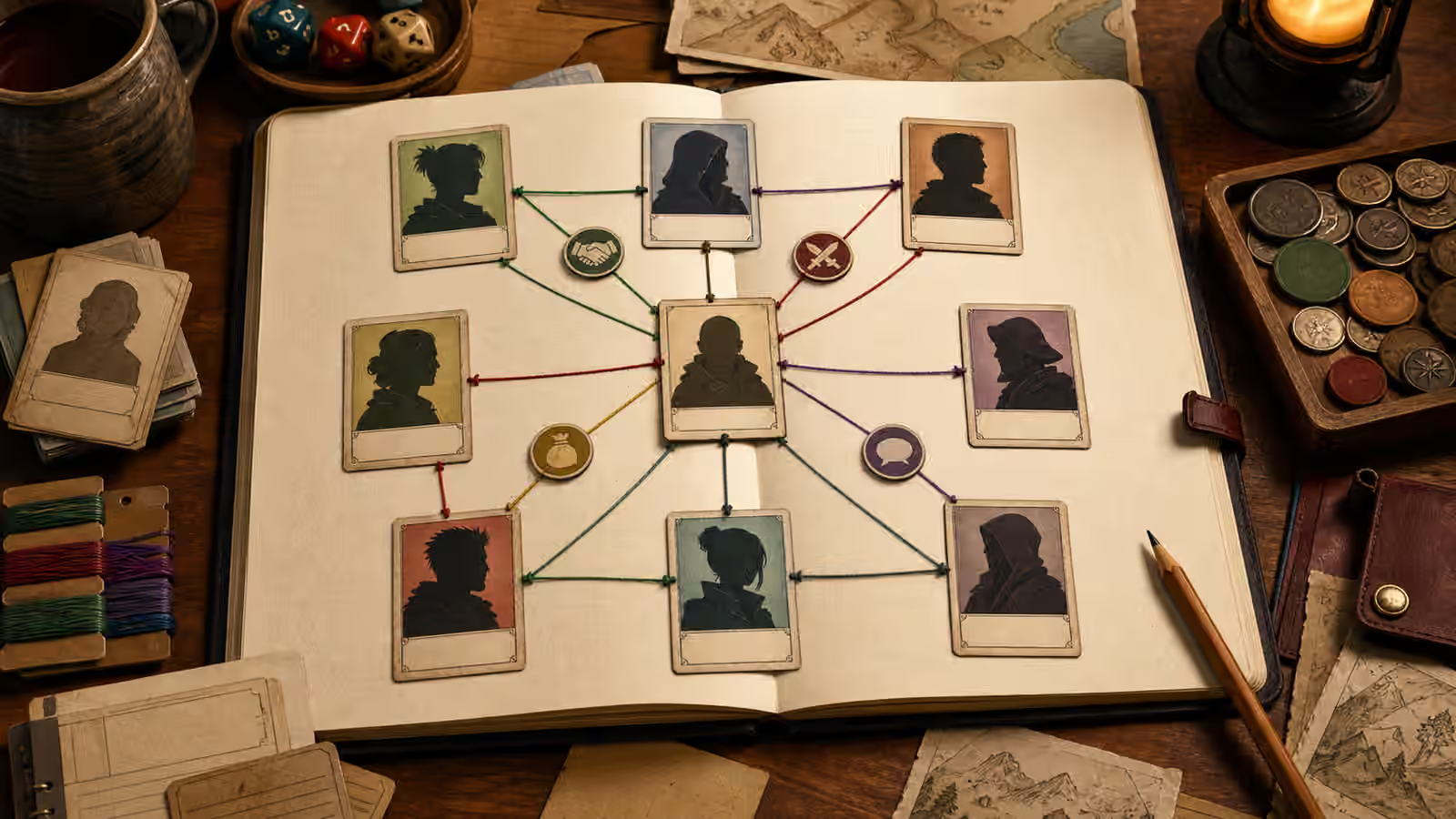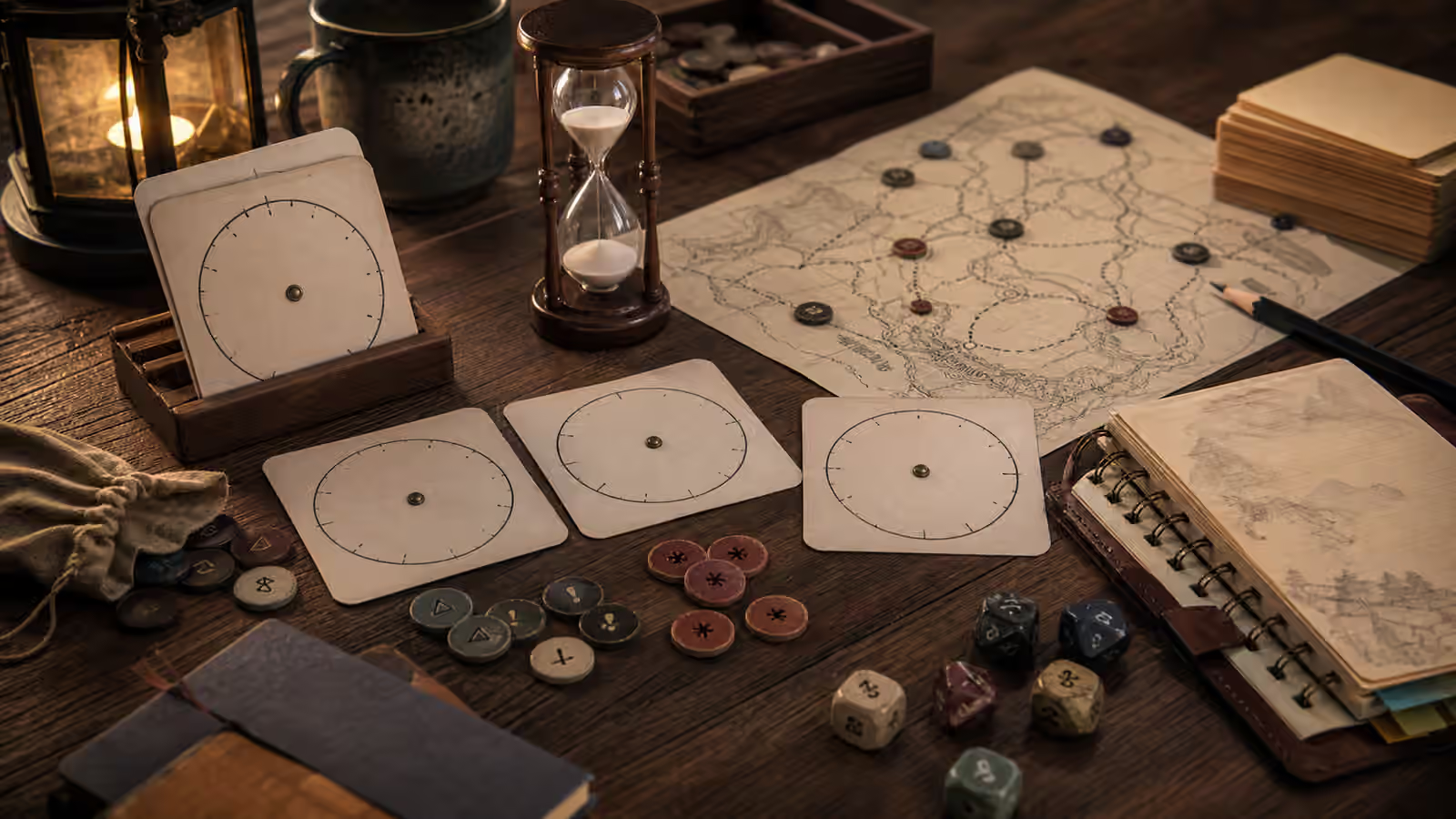
A campaign log template should be boring in the best way. It should ask the same useful questions every time, in an order you can finish while packing the table. If the template becomes more demanding than the game, shrink it.
The purpose is not to produce a beautiful record. The purpose is to let future-you sit down, understand the state of play, and begin again without rereading half a notebook. A strong template protects continuity while leaving the game feeling like play. It catches the few details that actually matter: what happened, what changed, what is saved, what remains unresolved, and what the next session should do first.
Think of the template as a landing strip. At the end of a session, your attention is already moving toward cleanup, dinner, work, sleep, or the next person who needs the table. You need a place to put the campaign down gently so it can be picked up later.
Decide What the Log Is For
Before designing fields, decide what job the log must perform. Most campaign logs fail because they try to be journal, save sheet, recap, rules index, scrapbook, inventory, map key, and public post at once. Those can all be useful, but they should not compete on the same page.
For solo play, the core job is return. The log should answer one question: “What do I need to know so I can play the next scene?”
That question creates a much smaller template. It does not need every die roll. It does not need elegant prose. It does not need a full timeline unless the campaign depends on timing. It needs enough context to restart without uncertainty.
Use a sentence like this at the top of your template draft:
This log exists to help me resume the campaign in less than five minutes.
That line is not for decoration. It is a design rule. If a field does not help you resume, cut it or move it to a separate notes page.
Use the Five-Field Template
Start with five fields: scene, change, state, open loop, next. Scene is where play happened. Change is what became different. State is what must be saved. Open loop is the unanswered question. Next is the restart cue.
That is enough for most sessions. Add character feeling, map update, or rules question only if the campaign keeps needing it.
Here is the compact version:
| Field | What it captures | Good entry shape |
|---|---|---|
| Scene | Where the session took place | “Crossroads market after the storm” |
| Change | What is now different | “The guide refused payment and left” |
| State | Mechanical or physical save details | “Scenario 2, round 5, blue deck half spent” |
| Open loop | The unresolved pressure | “Who moved the locked chest?” |
| Next | The first action next time | “Ask the oracle whether the road is watched” |
The entries are short on purpose. “Scene” is not a literary chapter title. It is an anchor. “Change” is the consequence that would be confusing if forgotten. “State” is where board game campaign notes, tokens, unlocks, resource totals, map marks, and physical setup details belong. “Open loop” holds the question that still has energy. “Next” turns that energy into an action.
If you dislike tables, write the same structure as five prompts:
- Where are we?
- What changed?
- What must be saved exactly?
- What is still unresolved?
- What do I do first next time?
Those five questions are also a good voice-note script. If handwriting is tiring, record a one-minute end note using the same order. The template is the pattern, not the paper.
Write for the Next Tired Reader
The next reader of your log will probably be you, but not you at your sharpest. You may return after a long workday, a few weeks away, or a stretch of playing other games. Write for that version of yourself.
That means specific nouns beat atmospheric summaries. “The party reached the old bridge” is better than “things got tense on the journey.” “Left the copper key under the map card” is better than “key saved.” “Begin with the third rumor, not a new scene” is better than “continue story.”
It also means avoiding jokes that only make sense while the session is fresh. If a funny shorthand helps, use it, but pair it with one clear fact. A campaign log can have personality. It just cannot require perfect memory to decode.
Good log entries usually sound plain:
- “Found the sealed stair. Did not enter.”
- “Mara owes the ferryman a favor.”
- “Enemy morale broken, but leader escaped.”
- “Do not reshuffle the event deck before next session.”
- “Restart at the north gate with a weather roll.”
That plainness is not a failure of style. It is the style that keeps a solo campaign alive.
Build an End-of-Session Rhythm
The template works best when it belongs to a small closing ritual. Do not wait until the table is half packed and your notes are under a box lid. Pause while the board, map, cards, or notebook spread is still visible.
Use this order:
- Stop play at a real decision point.
- Circle or mark the current physical state.
- Fill the five template fields.
- Take any required save-state photo for private use.
- Write the restart line last.
- Pack components in the order the restart line expects.
The order matters because the log and the table confirm each other. If the log says “resume with the torch token on the bridge,” the token should either be placed there in a saved tray or packed with a note that says where it goes. If the log says “event deck not reshuffled,” the deck should be banded, sleeved, or boxed in a way that preserves that information.
For shorter sessions, set a two-minute timer and fill only the five fields. For longer campaign nights, give yourself five minutes and add optional fields after the core is complete. The optional fields should never block the basic save.
Match Template to Game Type
For journaling RPGs, the template can focus on prompt, entry summary, relationship shift, and next image. For board game campaigns, it should include official save state, unlocked rules, damaged items, and box storage note. For map adventures, it should track route, location, discovery, danger, and unresolved paths.
The Campaign Log Template gives a quick starting structure. Treat the result as a draft, not a command.
Journaling RPGs
Journaling games often create a large amount of prose. The mistake is assuming the campaign log must summarize all of it. It does not. Your journal entry is the artifact. The log is the bridge between entries.
Use fields like:
- Prompt used
- Main image or event
- Relationship or location changed
- New question
- First sentence next time
The “first sentence next time” field is especially useful. It lowers the pressure of returning to a blank page. You are not committing to a polished opening. You are giving yourself a handhold: “At sunrise, the bell was still ringing” or “I returned to the shop because the letter had no stamp.” If the sentence feels wrong next session, cross it out. Its job was to get you back in motion.
Board Game Campaigns
Board game campaign logs must respect the official save system. Your template should not replace the rulebook’s save instructions, campaign sheet, or app-supported state if the game depends on them. Instead, use your log to add context around those official records.
Useful fields include:
- Scenario or chapter
- Round, turn, phase, or checkpoint
- Unlocked content
- Modified decks or removed cards
- Character state
- Box or tray storage note
- Next setup instruction
The storage note is often the difference between returning and stalling. “Red deck in left well, wounds under hero board, map tile B still active” can save more time than a paragraph of recap. If the game has hidden information, be careful about where you write it. A private log is fine. A visible note on the top of the box may spoil someone who later joins.
Map Adventures
Map campaigns need location memory. Your template should preserve not just where the character is, but why that location matters.
Use fields like:
- Current location
- Route taken
- New landmark
- Changed danger
- Unexplored exits
- Next map action
Avoid over-mapping in the log itself. Let the map carry geography. Let the log carry meaning. “North road blocked by flood” belongs in the log because it changes choice. “Third bend after second pine” probably belongs on the map if it matters at all.
Rules-Heavy Solo Systems
Some solo games create friction because the story is easy to remember but the procedure is not. In those games, add a “rules touchpoint” field. Keep it tiny: rule page, unresolved timing question, or modifier reminder.
Examples:
- “Check stealth exception before enemy phase.”
- “Do not apply fatigue until after travel roll.”
- “Page 18, camp action limit.”
Do not turn the campaign log into a rules rewrite. If you keep copying rules, you probably need a separate player aid, bookmark, or rules reminder card.
Keep State Separate From Story
One of the strongest template moves is separating story recap from saved state. Story recap tells you what happened. Saved state tells you how to set the game back up.
Those are different jobs. Mixing them creates fog.
A story line might say:
Reached the watchtower and learned the signal fire was false.
A state line might say:
Character at watchtower hex. Torch spent. Supply 2. Weather: rain. Draw from event deck next.
Both are useful, but they help in different ways. If you have time for only one, write the state line first. You can often reconstruct the mood from the board and notes. You cannot reconstruct a spent resource, a chosen card, or an unresolved turn order if the game gives you no other record.
For campaign board games, keep official state exactly where the game asks you to keep it. Use your template to point at that state: “official sheet updated,” “app saved after reward step,” “sealed envelope 3 opened,” or “card pack C removed.” Do not copy proprietary text into a public guide, recap, or shared template. Your private log can be practical without becoming a duplicate of the product.
Add Fields Only After Repeated Need
A template grows by evidence, not by ambition. If you add every interesting field on day one, the log becomes a form you avoid. Add a field only when the same missing information hurts you twice.
Good reasons to add a field:
- You repeatedly forget character goals.
- You lose track of unresolved map exits.
- You return to the game without knowing the exact setup.
- You often stop with a rules question unresolved.
- You share recaps and need a clean public summary.
Weak reasons to add a field:
- The page looks too empty.
- Another campaign journal has it.
- You feel that serious campaigns should track more.
- You want the log to justify the time spent playing.
Empty space is useful. It makes the template easier to finish on tired nights. If a session has only one important change, one line is enough.
When a field stops being useful, retire it. Put a small mark beside fields you actually use for three sessions. If a field stays blank or repeats the same vague phrase, it is not earning its place.
Use Short Codes for Open Loops
Open loops are the questions, threats, promises, debts, clues, and unfinished choices that give the next session shape. They are also easy to lose when a campaign spreads over weeks.
Use short codes if your campaign has several kinds of open loops:
| Code | Meaning | Example |
|---|---|---|
| Q | Question | “Q: Who paid the guard?” |
| D | Debt | “D: Owe healer one favor” |
| T | Threat | “T: Storm reaches town at dusk” |
| P | Promise | “P: Return the charm to Len” |
| R | Rule | “R: Confirm travel penalty” |
Codes keep the log scannable. They also make review easier. At the start of a session, you can skim for Q, D, T, P, and R instead of rereading full paragraphs.
Keep the code list short. If you need a legend to read your log, the method has become too complicated. The best codes are the ones you remember without looking.
Make Restart the Last Line
The last line should always be actionable: place the torch token, read the rumor card, ask the oracle about the road, set up scenario three, open to the map. This is the line that helps when the campaign has been untouched for weeks.
If you only write one thing, write the restart line.
A good restart line begins with a verb:
- “Place the party at the bridge and roll weather.”
- “Read the next prompt, then answer why the lantern went out.”
- “Set up scenario three with the injured side active.”
- “Ask whether the stranger recognizes the old seal.”
- “Open the map to the east road and choose one unexplored exit.”
Avoid restart lines like “continue,” “play next part,” or “see what happens.” They look harmless, but they push the real starting decision into the future. The whole point of the template is to make the first move visible before you leave.
For campaigns that often sit untouched, add a “warm start” line after the restart line. This is a one-sentence mood cue, not a recap: “The room smells of wet stone and old smoke.” It helps the table feel alive without requiring you to reread a long journal entry.
Create a One-Page Master Template
Keep a master copy of your template somewhere easy to duplicate: the first page of a notebook, an index card tucked into the game box, a plain text file, or the output from the Campaign Log Template . The master should be clean. The session pages can be messy.
A practical one-page version might look like this:
Session:
Date:
Scene:
Change:
State:
Open loop:
Rules touchpoint:
Next:
Public recap safe? yes / no
That is enough structure for many campaigns. The “public recap safe” line is a small but useful pause. It reminds you that private notes and shareable notes are not the same thing. A note can be safe to keep and still not be safe to post.
If you use paper, leave more room under “state” and “next” than under “date.” If you use digital notes, make the template easy to duplicate without formatting friction. A beautiful database that takes three taps to open may lose to a plain note that is always ready.
Keep It Private by Default
A private log can include spoilers, uncertain rulings, and messy notes. If you plan to share a recap, separate public summary from private state. Do not paste copied scenario text, paid prompts, or hidden answers.
Respect for creators is part of the template method.
Private notes can say exactly what you need. Public notes should be filtered. Before sharing, remove hidden scenario answers, copied prompt text, unrevealed campaign content, and anything that would make another player’s discovery worse. Credit the game or creator when appropriate, but do not reproduce protected material as a substitute for buying or reading the original.
This boundary also helps your own play. When every note feels like it might become public, you may start writing for an audience instead of writing for return. Keep the working log humble and private. If you want a public recap, write it separately after the save is complete.
Make the Template Accessible to You
Accessibility is not an optional polish step. A template that hurts to use will not last.
If handwriting is uncomfortable, use checkboxes, abbreviations, stamps, sticky notes, dictation, or a voice memo. If visual clutter is tiring, make the template larger and reduce the fields. If executive load is the problem, pre-fill the repeated parts before play: title, date, character, current chapter, and the five field labels.
You can also use a two-tier template:
- Minimum save: state and next.
- Full save: scene, change, state, open loop, next, plus optional fields.
This gives you permission to close a session well even when you do not have the energy for the full version. The minimum save is not a failure. It is the part that protects the campaign.
Review the Template, Not Just the Campaign
Every few sessions, review the template itself. Ask what helped you return quickly, what you ignored, and what you had to reconstruct from memory. Then adjust one thing.
Do not redesign the whole system during review. Small changes are easier to test:
- Rename a field that feels vague.
- Move “next” higher on the page.
- Add a setup line for board game campaigns.
- Remove a mood field you never use.
- Split private state from public recap.
Campaign Log Review is the deeper habit for remembering what happened and why the next session still matters. The template method is the container that makes that review repeatable. Together, they turn continuity into a small closing move instead of a large administrative project.
A Finished Log Example
Here is a compact example for a map-and-oracle session:
Session: 04
Scene: West road, ruined toll house
Change: The toll house is occupied again, but not by the old guards.
State: Supply 3. Lantern spent. Marked blocked bridge on map.
Open loop: Q: Who repaired the blue gate? T: Rain reaches valley next scene.
Rules touchpoint: Check travel penalty if supply drops below 2.
Next: Start at the toll house door and ask if the voices inside recognize the map token.
Public recap safe? yes, if the gate detail stays vague.
Notice what is missing. There is no full prose retelling, no copied prompt, no long explanation of the oracle result, and no pressure to make the session sound impressive. The entry is useful because it points directly back to play.
That is the whole method. A campaign log template is not a record of how serious you are. It is a small promise to the next session: when you come back, the table will know how to begin.