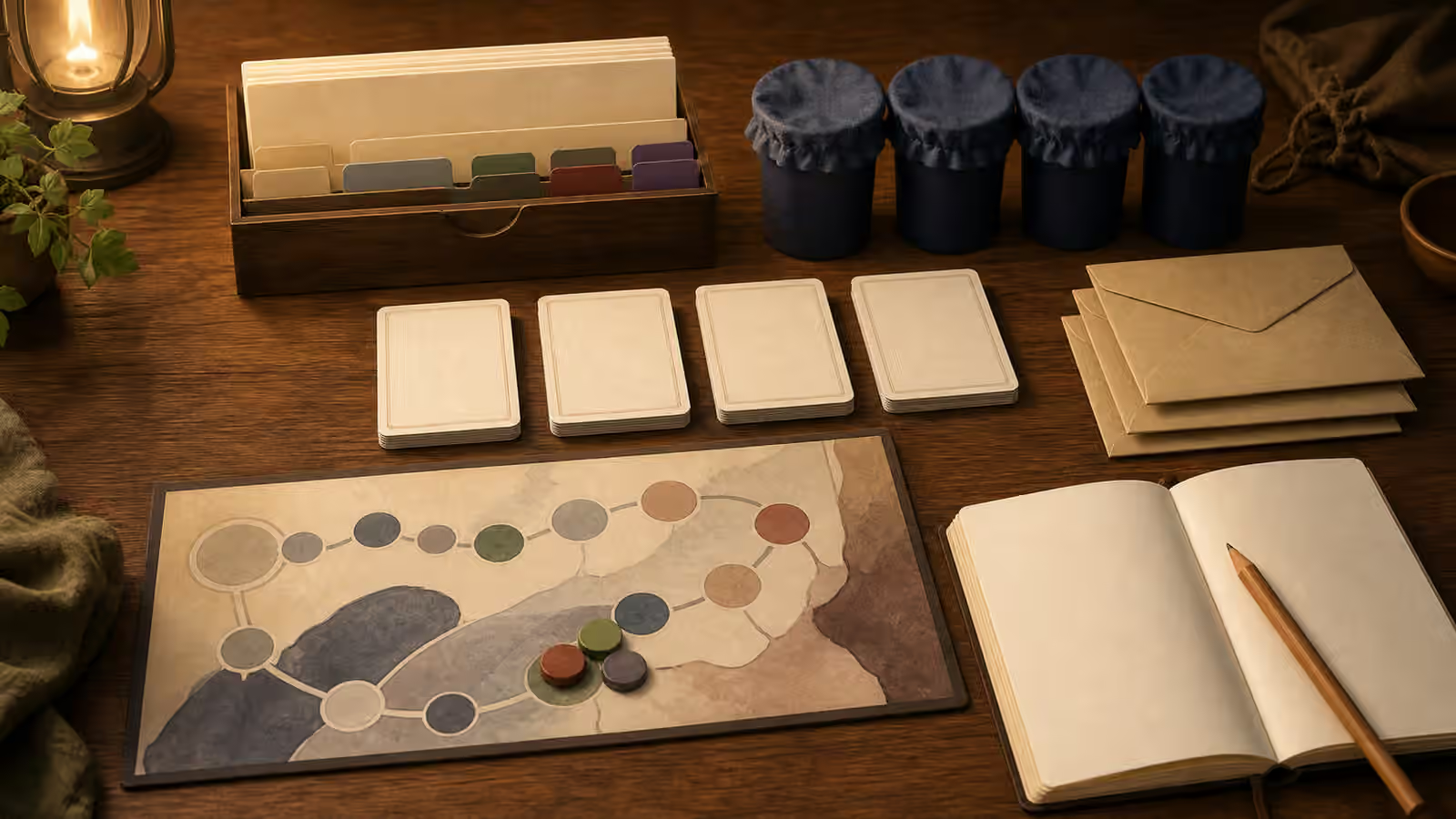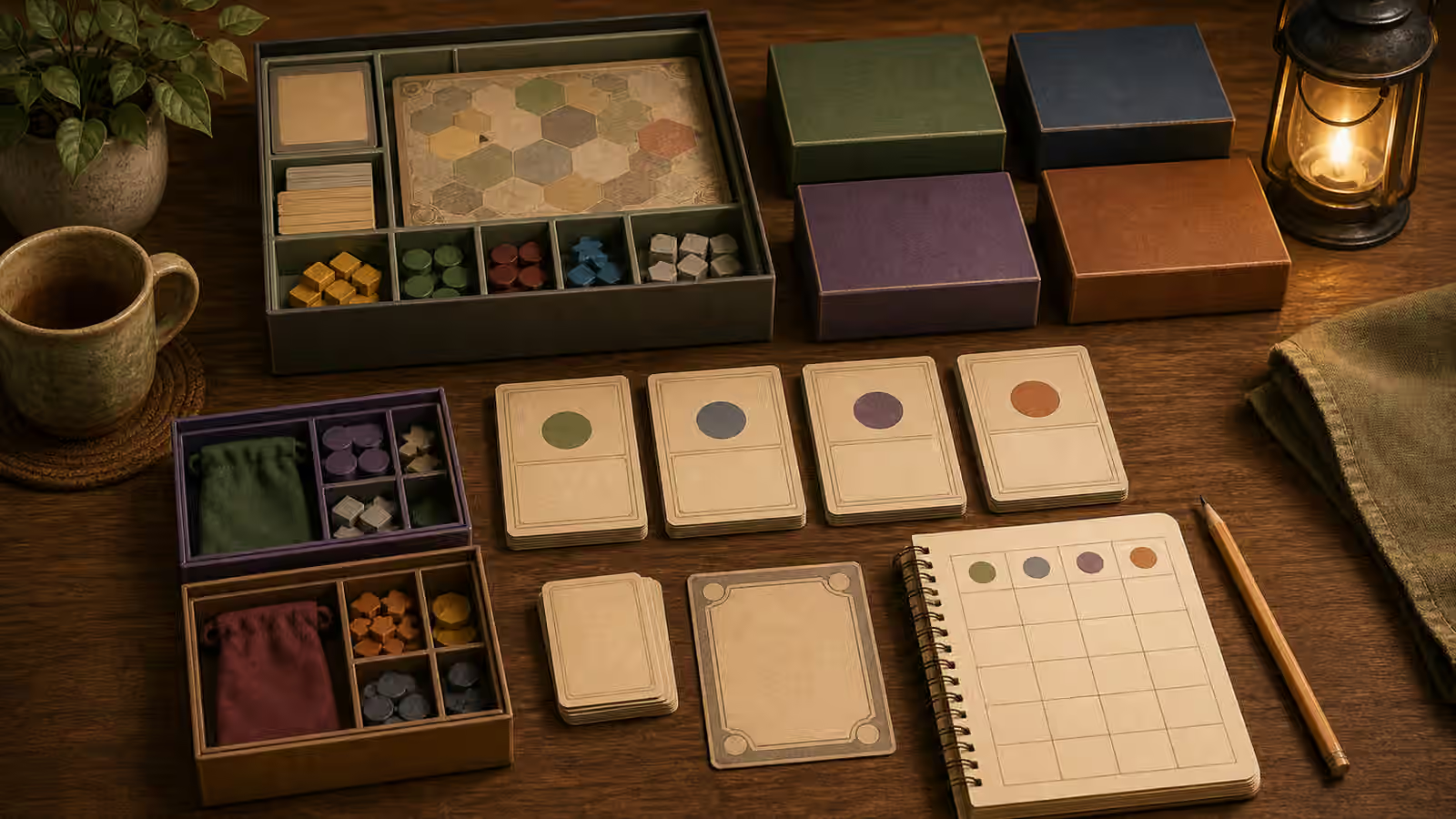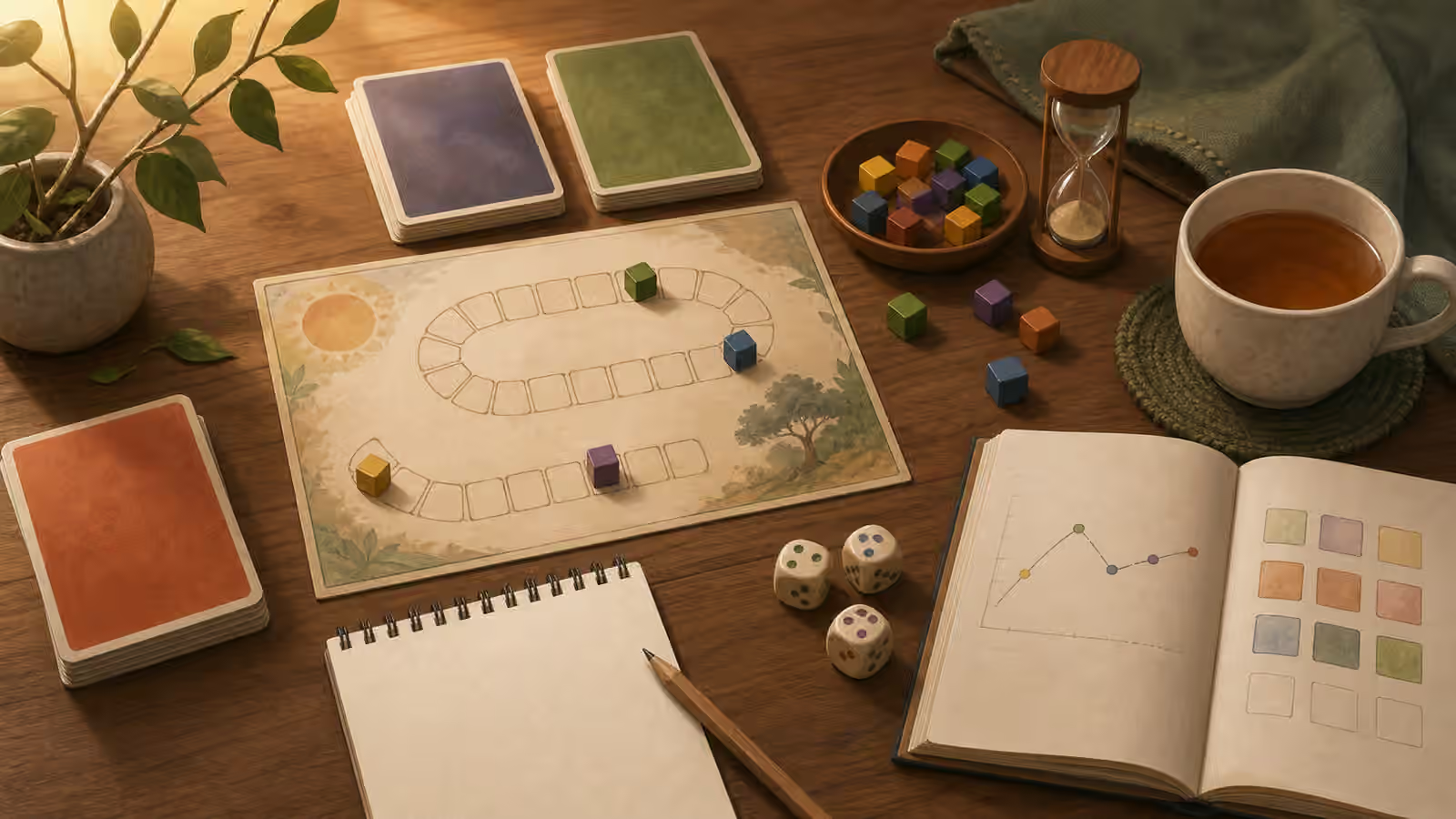
The best campaign review is the one you will actually write while tired. It does not need to preserve every line of dialogue, every roll, or every stray thought from the session. It needs to make the next session inviting enough to begin.
Solo campaigns often fail at the handoff between nights. The session itself may have been satisfying, but the next return starts with questions: where was I, what changed, what was pending, and why did I care? A short campaign log review answers those questions before the memory cools.
Think of the review as a bridge, not an archive. It does not need to prove that the session mattered. It needs to protect the first move next time.
Use Four Lines
Close with four lines: happened, changed, open, next. Happened is one factual sentence. Changed is the state update. Open is the question or threat that still matters. Next is the restart cue.
Example shape: “Reached the old bridge. Lantern spent and river path marked unsafe. Who moved the stones? Next session begins by asking the ferryman.”
Here is the structure in a reusable form:
| Line | What it does | Example |
|---|---|---|
| Happened | Names the main event without retelling everything | Reached the old bridge after the storm road failed |
| Changed | Records state that affects play | Lantern spent, river path unsafe, one favor owed |
| Open | Preserves the live question | Who moved the stones before I arrived? |
| Next | Gives future you a first action | Ask the ferryman before choosing the quarry path |
The order matters. Happened gives context. Changed protects rules and story state. Open restores curiosity. Next turns the page from memory into action.
Do not let “happened” become a full recap unless you want that. One sentence is usually enough. If you need more detail, put it under “changed” or “open” where it can support a future decision.
Write for the Next First Move
A campaign log is not a diary unless you want it to be. Its most important reader is future you at the beginning of a session. That version of you may be tired, distracted, unsure where the notebook is, or deciding whether to play at all.
Write the review so future you can begin in less than a minute. The next line should be physical when possible:
- Open to the bridge map.
- Put the blue token on the ferry.
- Draw the night event.
- Resolve the wound check.
- Read the clue card.
- Choose quarry path or river path.
A physical cue is stronger than a vague intention. “Continue the campaign” asks too much. “Roll weather, then ask the ferryman” gives the hand something to do.
This is why campaign review connects to Campaign Notebook Setup . The notebook should put current state up front, and the review should tell that front page what to say.
Separate Story Memory From Rules State
Story memory and rules state are different jobs. Story memory says why the scene mattered. Rules state says what must be preserved accurately. Mixing them can make the review either too vague or too fussy.
Use two small buckets:
| Bucket | Examples |
|---|---|
| Story memory | Trust broken, bridge feels unsafe, rival knows the route, town mood changed |
| Rules state | Lantern spent, card order saved, health at two, enemy still engaged, score at twelve |
If the game has an official campaign sheet, let it carry exact rules state. Your log can carry the human memory around it: why the state matters, what the next choice is, and what feeling should not be lost.
If there is no official sheet, make a tiny private state block:
- Location:
- Resources:
- Active threat:
- Pending rule:
- Next action:
Keep copied scenario text private. Write public recaps in your own words and avoid sharing hidden solution details, map keys, card text, or paid material.
Review the Table Before the Notebook
Before writing, look at the table. The table usually knows what changed before your tired mind does. Scan the board, map, card row, dice, tokens, notebook, and any side tray. Ask what cannot be reconstructed later.
Look for:
- A spent resource or changed track.
- A card order that matters.
- A route marked unsafe.
- A rule question still unresolved.
- A clue not yet connected.
- A component that must stay with the active kit.
- A content note or intensity shift that matters next time.
Write those first. Mood can come after. A beautiful paragraph that forgets the pending wound check will not help the next session.
If you must clear the table, pair the review with Save State Between Solo Sessions . The review should explain the save state; the save state should protect the review from doing all the work.
Do Not Write a Novel Unless You Want To
Long recaps are allowed, but they should not become the price of play. If writing drains the session, use checkboxes, symbols, or voice notes. For board game campaigns, the official state sheet may carry the rules state while your log carries memory and motivation.
If you share a recap publicly, avoid copied scenario text, hidden solution details, and paid content. Mark spoilers and link to the creator.
Long writing is a creative choice, not a continuity requirement. Some sessions deserve a page because the scene moved you. Others need four lines and sleep. Both are valid.
Use smaller formats when writing feels heavy:
- Four checkboxes: happened, changed, open, next.
- Three bullets: state, question, first move.
- One voice note with a thirty-second limit.
- One photo plus one restart sentence, kept private if spoilers appear.
- One map mark and one next-action card.
If handwriting is hard, use a typed note, voice memo, sticker system, or symbol key. If words feel like too much after intense play, write only the next move and one boundary note. The review should lower the return cost, not become another performance.
Use Different Reviews for Different Sessions
Not every session needs the same review. Match the review to what happened.
For a short session:
| Field | Prompt |
|---|---|
| State | What changed on the table? |
| Hook | What question remains? |
| Start | What is the first action next time? |
For a story-heavy session:
| Field | Prompt |
|---|---|
| Event | What happened that changes the campaign? |
| Feeling | What mood should carry forward? |
| Relationship | Who changed toward whom? |
| Thread | What question is still alive? |
| Start | What scene opens next? |
For a rules-heavy session:
| Field | Prompt |
|---|---|
| Location | Where is the state saved? |
| Tracks | What numbers, resources, or cards changed? |
| Pending | What rule needs checking? |
| Mistake | What should be corrected or replayed? |
| Start | What step resumes play? |
For a stalled session:
| Field | Prompt |
|---|---|
| Block | What made me stop? |
| Keep | What part still interests me? |
| Shrink | What smaller version could restart? |
| Decide | Restart, retire, shrink, or switch? |
That last version connects to When a Solo Game Stalls . A stalled campaign needs a kind review more than a scolding one. The log should name the friction and offer a smaller door back in.
Review for Return
Ask what future you needs. Which page should open first? Which component must be visible? Which rule question needs checking? Which content note matters next time? Which emotion from the session needs a softer close?
This is where solo tabletop overlaps with Startable Life Lab: leave a visible return point.
A return review should end with placement. Put the notebook open to the right page, a tab on the rule question, the current cards in an envelope, the active map in a folder, or the next-action card on top of the kit. The physical arrangement should agree with the written cue.
If the campaign is digital, use the same idea: pin the note, rename the file with the next action, bookmark the rules page, or put the next prompt at the top. The medium matters less than the return point being visible.
Content notes belong in the return review too. If the last session became intense, mark what happened and what boundary should guide the next session. “Next time: no isolation scenes; start with daylight at the inn” is a valid campaign note. Solo play still benefits from care.
Keep Public Recaps Spoiler-Light
Private logs can be messy and specific. Public recaps need more restraint. Campaign games, mysteries, legacy boxes, journaling prompts, and published scenarios often depend on surprise. A log written for return may include details that should not become a public post.
Before sharing, remove or soften:
- Hidden map information.
- Puzzle answers.
- Scenario text or card text.
- Paid prompt lists.
- Secret enemies, endings, or unlocks.
- Photos showing unrevealed components.
Share the experience, procedure, or feeling instead. “I ended with a clear restart cue and a route choice” is often enough. Link to the creator or official page when recommending the game. If spoilers remain, mark them plainly.
Revise the Template
After three sessions, remove fields you never use. Add one field if you keep forgetting the same thing. A campaign log is a living tool, not a moral obligation.
The review succeeds when you can sit down later and know the first move.
Good templates shrink over time. If you never use “favorite moment,” remove it. If you always forget “pending rule,” add it. If you keep writing long emotional recaps and enjoying them, keep that field. If a field makes you avoid closing the session, it is too expensive.
Run a quick template audit:
- Which field did I fill every time?
- Which field helped me restart?
- Which field stayed blank?
- What did I forget more than once?
- What would make the next review take two minutes?
The answer should change the template. A campaign log is not a moral obligation, a productivity artifact, or a public proof of seriousness. It is a small bridge back to play.
End With Enough, Not Everything
The final review question is simple: would this make me want to continue? If yes, stop. Do not keep writing until the energy turns sour.
Enough might be four lines. Enough might be a map mark, a saved tray, and a sentence. Enough might be “Retire this campaign; keep the bridge idea.” A review that protects your next choice has done its job.