An automa is not a hidden person inside the box. It is a behavior system that gives the solo player pressure, timing, denial, uncertainty, or a score to chase. That distinction matters. When the automa is treated as a pretend human opponent, every odd move can feel like failed simulation. When it is treated as a designed pressure engine, the question becomes more useful: what kind of pressure is this deck supposed to create, and can I run it without losing the thread of my own turn?
The best automa sessions feel legible. You understand when to draw, what state matters, how the opponent chooses targets, and which exceptions deserve attention. The system still surprises you, but it does not ask you to become a second full player with a second full strategy. If the solo mode makes you operate two complete hands, two economies, and two hidden plans, you may be playing a two-handed game rather than an automa game. That can be satisfying, but it asks for different energy.
Learn the Behavior Before the Score
It is tempting to judge an automa by the result of the first play. If it crushes you, it feels unfair. If it loses badly, it feels decorative. A better first question is behavioral. Did the deck threaten the same parts of the board again and again? Did it race a track, block spaces, collect resources, rush the end condition, or punish delay? Did it create decisions for you, or only add upkeep?
For the first session, play to observe. Let the score matter less than the rhythm. Notice which card types appear often, which parts of the board the automa can affect, and which state variables are expensive to forget. A bad opening result might be ordinary variance. A repeated feeling of “I have no idea why that happened” points to a rules-learning problem, a player-aid problem, or a solo mode that may not fit your table right now.
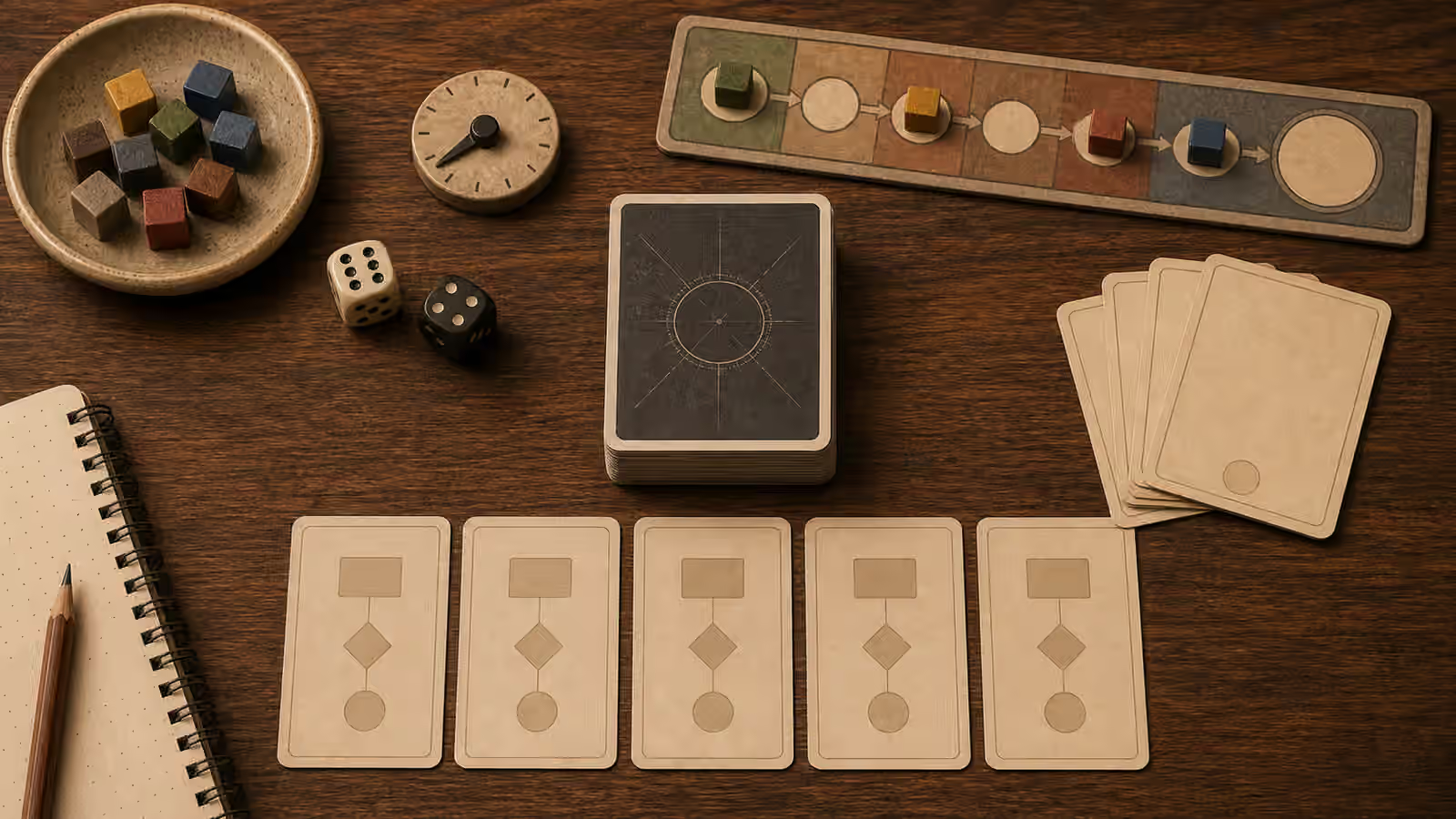
This is where Player Aids and Rules Reminders can help. A private turn strip that says draw, resolve priority, move marker, check end condition, then take player turn is often enough. It should not copy the automa deck or replace the rulebook. It should catch the moment you forget.
Give the Automa Its Own Table Zone
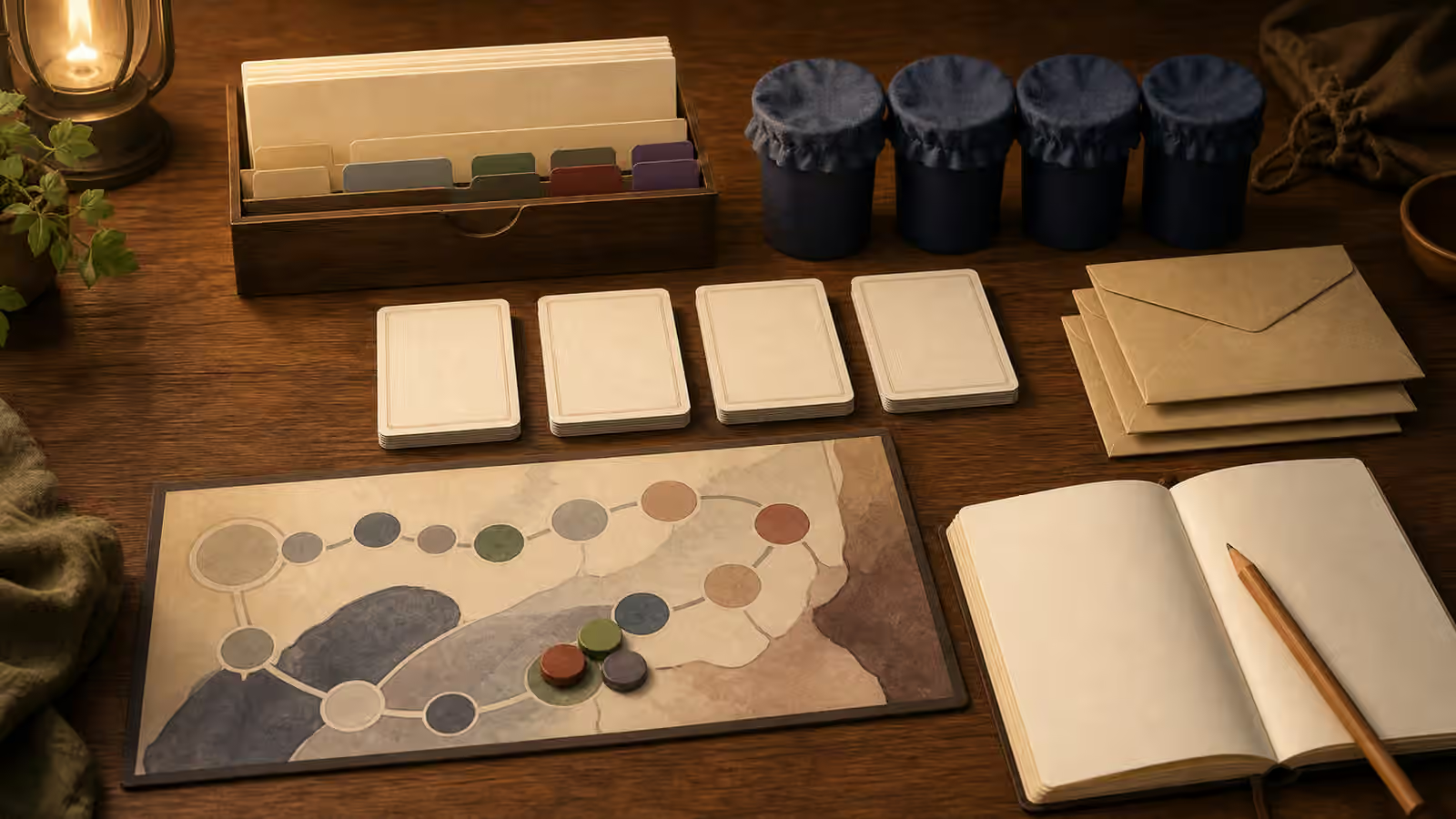
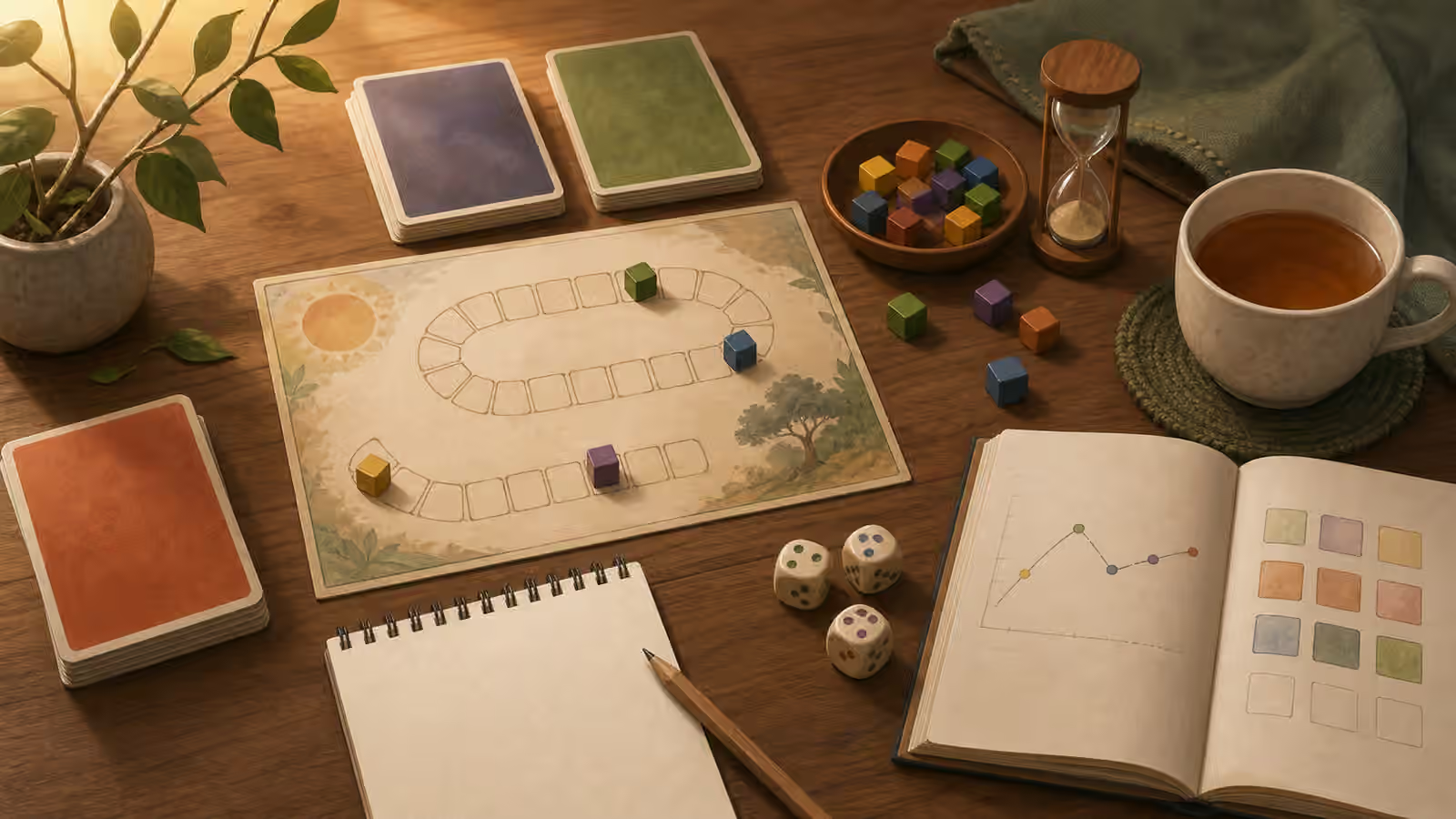
A solo opponent becomes harder when its materials drift into your materials. Keep the behavior deck, discard pile, difficulty dial, score marker, and active instruction card in one zone. Put your hand, player board, resources, and notes somewhere else. The separation is not decorative. It prevents you from spending a cube, drawing from the wrong deck, or reading your plan as the opponent’s plan.
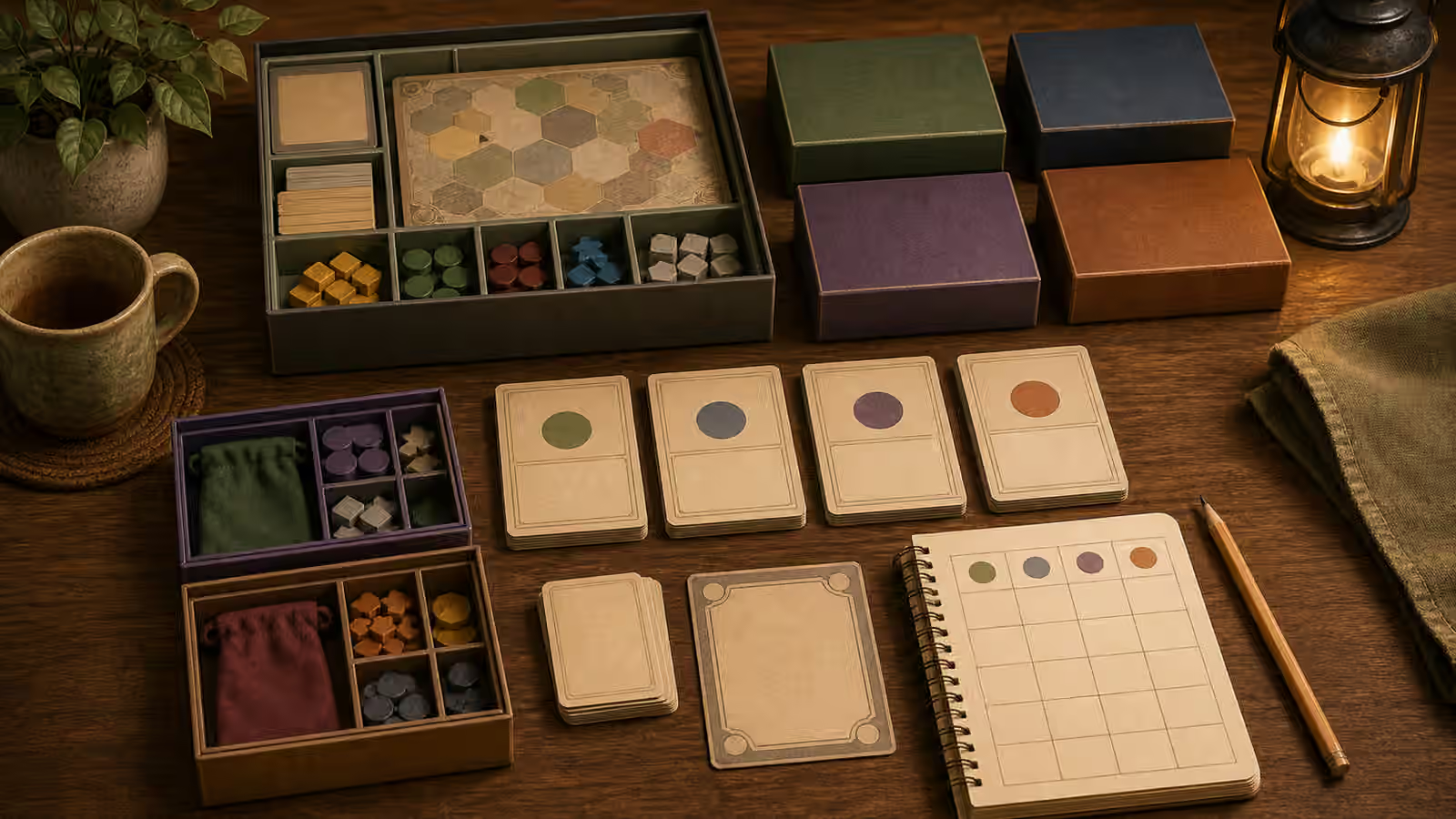
If space is tight, use a tray or strip of cloth rather than a full second board. A face-down deck, face-up current card, discard pile, and one marker can live in a small lane. When a game uses several automa decks, give each deck a fixed place before you start. Moving decks around during play is one of the fastest ways to create doubt about order, especially after interruptions.
For campaign games, mark which automa state persists. Some solo modes reset completely every scenario. Others keep newly added cards, difficulty levels, or achievement marks. Put those persistent pieces with the campaign materials, not loose in the general box. Save State Between Solo Sessions has the same principle: protect the next first move from becoming reconstruction work.
Read Priority Rules Conservatively
Automa rules often use priority chains. The opponent chooses the nearest target, highest value space, leftmost card, cheapest item, most advanced region, or first legal action. These chains are useful because they keep the opponent from needing judgment. They are also where mistakes happen.
When a priority rule is unclear, choose a conservative interpretation and write the question down. Conservative does not always mean easier for the player. It means stable, repeatable, and close to the printed intent. If the automa can choose between two equally legal spaces, use the printed tie-breaker if one exists. If none exists, use a visible table rule such as left to right, nearest to farthest, or highest numbered region, then keep that rule for the session.
Do not pause every turn to search forums unless the whole game depends on the ruling. A note beside the board can hold the question until after the session. The goal is not to avoid all errors. The goal is to avoid changing the opponent’s behavior every time uncertainty appears.
Adjust Friction Before Adjusting Power
If the automa feels too hard, first ask what is hard. The opponent may be numerically strong, but the real burden may be lookup fatigue, tiny iconography, unclear deck order, or too many upkeep windows. Lowering the difficulty will not fix a system you cannot read. It may only make the same confusion less punishing.
Start with friction changes. Use card holders, better light, larger private summaries, a dice tray, fewer simultaneous variants, or a shorter learning scenario. Then adjust power if the game still feels wrong. Difficulty Sliders and House Rules works best when the target is specific: one fewer automa starting resource, one delayed escalation, one extra turn before scoring, or one official beginner setting.
Write any house rule on a card and date it in the campaign log. If it helps for two sessions, keep it. If it makes the game dull, reverse it without drama. Solo play can be tuned, but invisible tuning becomes hard to evaluate.
Let the Opponent Be Strange
A good automa may make moves a person would not make. It may overvalue one track, ignore a perfect opportunity, rush a market, or take a space that looks silly until the scoring round. That is not automatically a flaw. The deck may be expressing the game’s pressure in a compressed way.
The useful standard is not perfect human imitation. The useful standard is playable resistance. Does the opponent make your choices sharper? Does it ask you to care about timing? Does it create enough uncertainty that the board feels alive, while staying simple enough to operate? If yes, let it be strange. If no, retire the solo mode, try a lower upkeep game, or play the system as a score challenge instead.
Automa decks are one of the strongest bridges between boxed board games and solo ritual. They can also be the place where the table becomes crowded with rules you are running for someone who is not there. Keep the behavior visible, the materials separate, the rulings stable, and the purpose honest. The opponent does not need to feel human. It needs to make your next decision worth making.