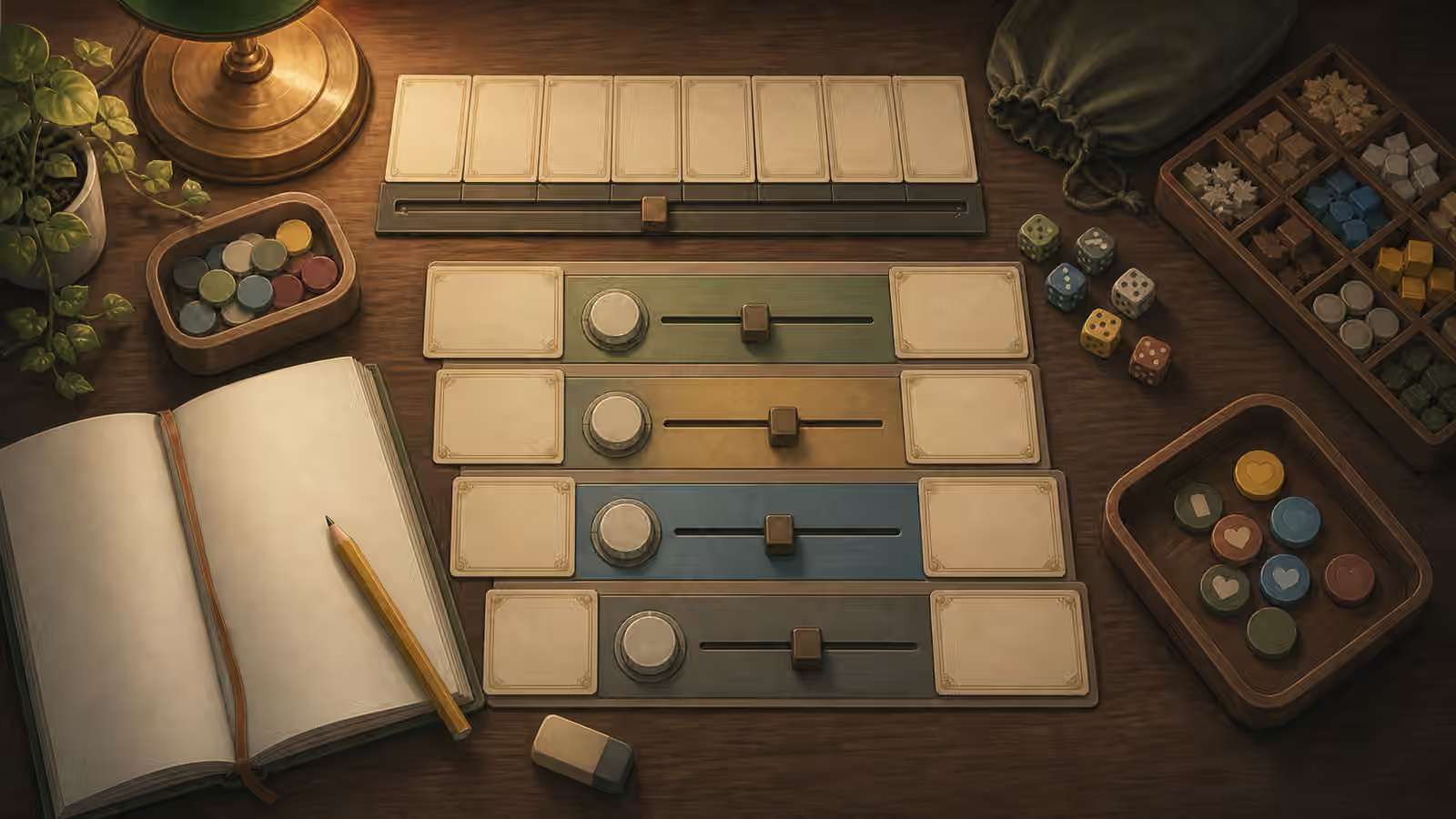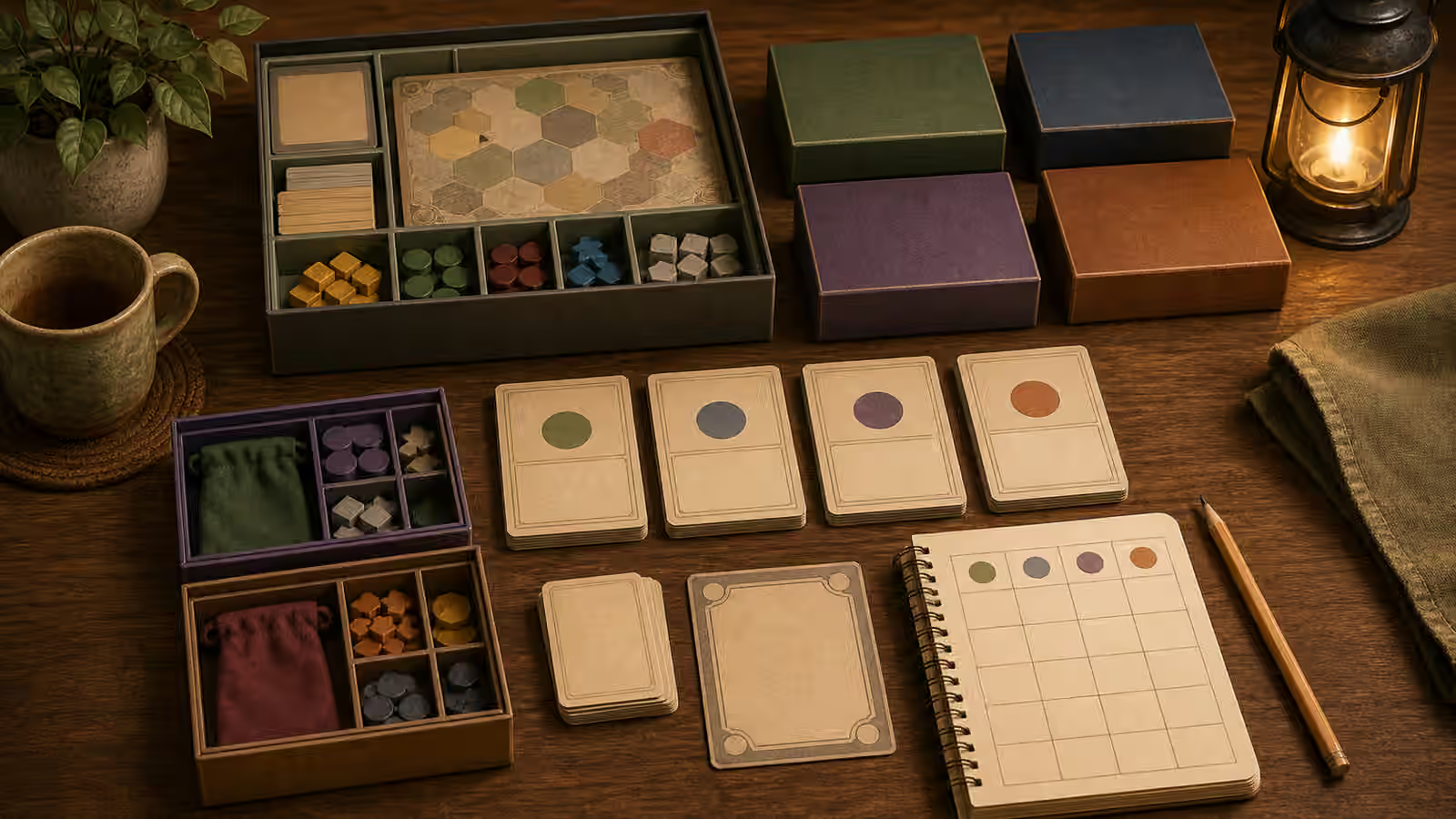
An ambiguous rule lands differently when you are playing alone. There is no table discussion, no host to make a call, no friend to notice a missed exception, and no social reason to keep the turn moving. The question can spread. You reread the paragraph, check the example, scan a forum, reopen the card, doubt the setup, and eventually forget what the scene was trying to do. The rule may be small, but the interruption becomes large.
Solo play needs a ruling habit that is honest, modest, and kind to momentum. The goal is not to crown yourself designer for the night. It is to keep the game playable while preserving enough evidence to correct course later. Teach Yourself Rulebooks Without Turning the Night Into Homework helps before the problem appears. This guide is for the moment when the book is already open and the table is waiting.
Make the Smallest Fair Call
When a rule is unclear, make the smallest ruling that lets the current situation continue. A small ruling answers only the question in front of you. It does not rewrite the system, fix every future edge case, or turn one confusing sentence into a new subsystem. If a card says to move toward a target and two targets are equally near, decide the tie for this case. If a resource is paid during an unclear timing window, choose a timing for this turn. If a solo opponent has two legal priorities, use the first rule that seems consistent with the mode.
The smallest fair call often favors consistency over advantage. That does not always mean punishing yourself. Some players automatically choose the harsher reading because they worry that solo play is only legitimate when it hurts. That habit can distort the game as much as choosing the generous reading every time. Ask what the rule appears to be trying to protect. If it protects tension, preserve tension. If it prevents a loop, prevent the loop. If it streamlines handling, choose the handling that stays simple.
Write the call in your own words if it may return. One sentence is enough. “Ties go to nearest threat marker.” “Resolve the market refresh after the bot turn.” “If both exits are valid, choose the one with the higher danger token.” This is a private aid, not a public rewrite of the rulebook.
Separate Rules Search From Rules Spiral
Looking up a rule is useful until it becomes a second game. A quick check of the rulebook, official FAQ, player aid, or publisher note can save confusion. A long search through arguments can drain the session and leave you less certain than before. Set a boundary before opening the search. Decide that you will check the rulebook index, one official source if available, and perhaps one trusted community thread, then return to the table.
The boundary matters because solo play lacks the social pressure that often ends a rules debate. Alone, you can keep searching past the point where the answer would improve play. The search begins to serve anxiety rather than clarity. If the answer does not appear quickly, make a temporary ruling and mark it for later.
This is where Player Aids and Rules Reminders for Returning to Solo Games earns its place. A private reminder can hold the temporary ruling so the same question does not reopen every session. If you later find the official answer, change the note. Use an eraser, sticky flag, or version date. The note should stay humble enough to be corrected.
Keep Temporary Rulings Reversible
A good temporary ruling can be reversed without damaging the campaign. Avoid rulings that permanently award rare resources, erase major consequences, kill central characters, or skip whole systems unless the published rules clearly support that result. When the rule affects a lasting state, choose the least irreversible path or pause the campaign at that point.
For board games, this may mean saving the state and checking later. For journaling RPGs, it may mean writing the uncertainty into the fiction as an unresolved detail. For a tactical puzzle, it may mean replaying the turn if the rule is central. None of these choices need drama. They are table maintenance.
Difficulty Sliders and House Rules for Solo Tabletop Play uses the same principle: changes should be visible and reversible. A temporary ruling that quietly becomes permanent can alter the game more than intended. If the ruling improves the experience, you may keep it as a house rule, but name it. If it only solved one awkward moment, let it remain a one-time bridge.
Treat Solo Opponents With Consistent Procedure
Ambiguity often appears in bot behavior. The automa could take either card. The enemy could move toward either target. The event could trigger before or after scoring. Because the opponent is not a person, it cannot tell you what it intended. You need a procedure that protects fairness without pretending the bot has psychology.
Use the printed priorities when they exist. When they do not decide the case, apply a stable tie-breaker. Nearest, leftmost, highest danger, lowest cost, oldest unresolved card, or random choice can all work if they fit the game. The specific tie-breaker matters less than using it consistently. A random tie-breaker is honest when no reading is stronger. A harsh tie-breaker is useful only when the mode’s tone supports it. A generous tie-breaker may be reasonable in a learning game, but mark it as such.
Do not make the opponent clever only when you feel behind. Do not make it foolish only when you are close to winning. Solo fairness comes from procedure. It does not require punishing yourself, but it does require resisting the temptation to steer uncertainty toward the ending you want.
Let Fiction Absorb Some Uncertainty
Solo RPGs and journaling games can absorb ambiguity differently from board games. If a rule or oracle answer is unclear, the fiction can carry a provisional meaning. The locked door is not fully understood yet. The stranger’s motive remains uncertain. The weather table gives a sign, but the sign will matter in the next scene. This does not mean ignoring rules. It means using the genre’s openness instead of freezing.
Solo RPG Oracle Dialogue: Ask, Interpret, and Move is relevant because some ambiguity comes from the question, not the rule. If the oracle answer seems impossible, the original question may have been too broad or too absolute. Ask a narrower follow-up. Interpret in context. Move the scene one step, then stop asking once the scene has enough direction.
Content boundaries still apply. If an unclear rule touches harm, fear, intimacy, age rating, or other sensitive material, choose the interpretation that respects the boundary you set before play. The table does not owe the system an intense reading just because the dice pointed that way.
Close With a Ruling Log, Not a Court Record
At the end of the session, review only the rulings that are likely to matter again. Do not write a legal brief. A few lines can keep the next session clean: what was unclear, what you decided, whether to check later, and whether the decision changed campaign state. If the answer turns out different, correct the future. You rarely need to repair every past moment unless the game depends on strict continuity.
Ambiguous rules are part of tabletop play, not proof that you are doing it wrong. The solo table simply makes the handling more visible. Make the smallest fair call, keep it reversible, respect official sources without vanishing into search, and leave a note for future you. The game can continue before certainty is perfect.