Age rating and content notes are not only for groups. Solo play still happens in a home, around your body, your memory, your mood, and sometimes other people who can see the table. A short note before play can prevent a random prompt from surprising the wrong room.
Choose a Band
Use plain bands: all-ages nearby, teen tone, mature but bounded, or private adult play. The band should reflect story content, component imagery, public visibility, and who might join or pass by.
If children are nearby, also consider small parts, sharp tools, and scary images.
Write the band on an index card or first log line. “All-ages nearby” might mean no horror images, no sharp craft tools, and no mature themes on visible cards. “Mature but bounded” might allow danger while excluding sexual threat, graphic harm, or real-world hate. A named band helps you make fast choices when the oracle offers something ambiguous.
Write Lines and Soft Spots
Lines are not in this session. Soft spots are okay only lightly or off-page. Common notes include graphic violence, sexual threat, cruelty, self-harm, body horror, harm to children, confinement, addiction, grief, and real-world hate. Your list can be different.
Put the note where you can see it. Memory should not have to hold the boundary alone.
Use the note actively. If a random result crosses a line, replace it. If it touches a soft spot, fade out, summarize, or choose a gentler consequence. Solo play does not need to prove toughness by obeying a table result that no longer fits the agreed session.
Use Notes When Sharing
If you post a recap, mark spoilers and content warnings. Do not copy protected scenario text or reveal hidden answers without care. Content courtesy and copyright respect often work together.
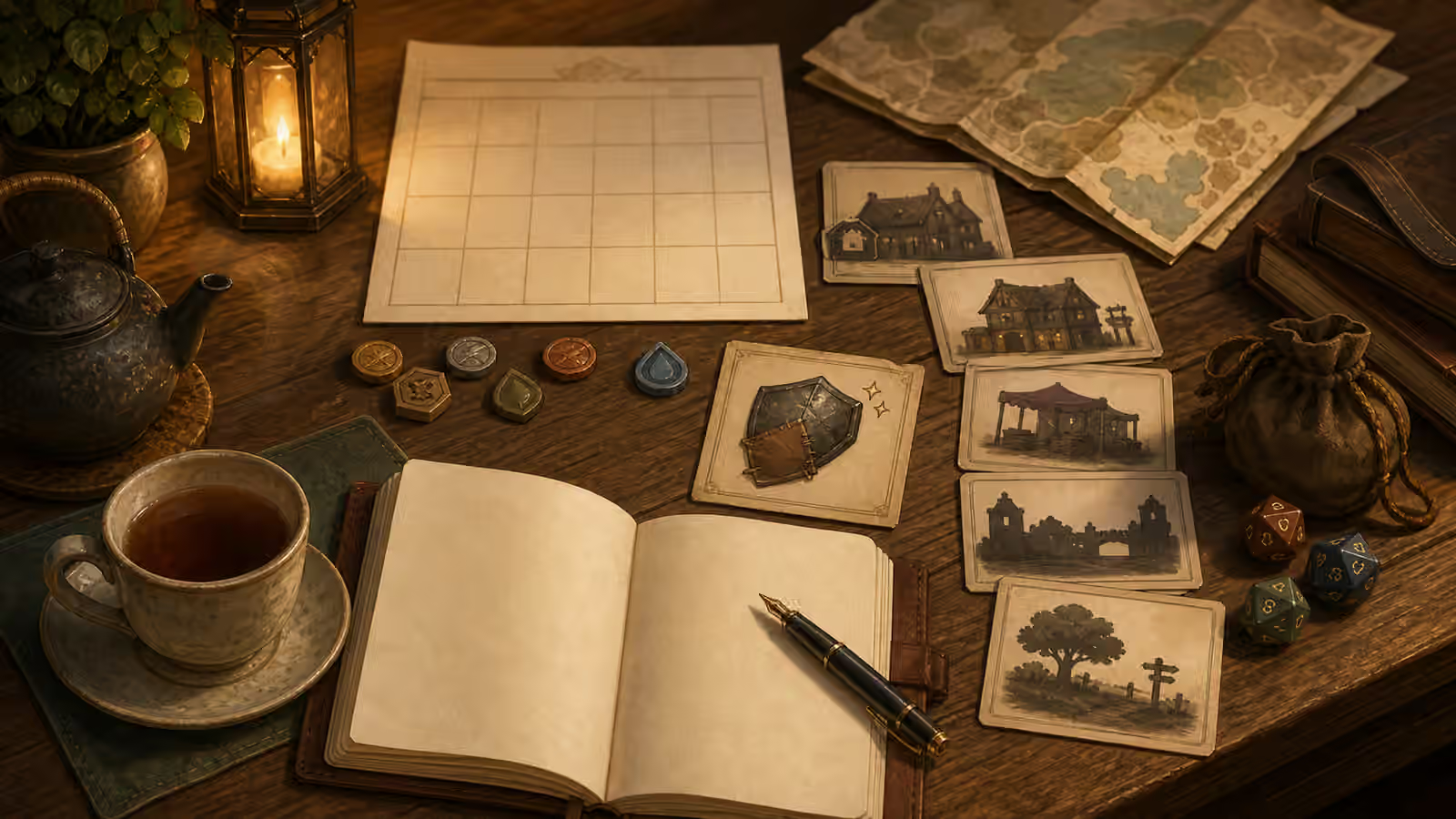
For shared rooms, content notes include visual privacy. A dramatic card, map label, miniature, or journal sentence can be visible to someone who did not opt in. Turn cards face down, use blank markers, or choose a different game if the space cannot support the material.
Change the Band When Needed
Tonight’s boundary can change next time. That is normal. Solo play is not an endurance test.
Changing the band is especially useful after a hard day, illness, family changes, or playing with one friend. Mark what changed and why. The goal is a table that remains playable over time, not a rule that ignores the person playing.