A sofa bed is often treated like a compromise that has already lost. It lives as seating most of the time, becomes a bed when needed, and is expected to work with whatever sheets, pillows, and floor space happen to be available. That attitude makes temporary sleep feel accidental. A sofa bed may never feel like a dedicated mattress, but it can feel prepared, clean, and clear enough that the sleeper is not left solving the room at midnight. For background, see CPSC — Mattresses: Business Guidance .
This guide covers the setup around the sofa bed: support, bedding, lighting, storage, walking paths, and morning reset. It is useful for guest stays, studio apartments, multipurpose rooms, and anyone who sleeps on a convertible surface regularly enough that improvisation has become tiring. For a dedicated guest bedroom, Guest Room Sleep Setup covers the broader room. A sofa bed asks for a more compact system.
Open the bed before deciding what it needs
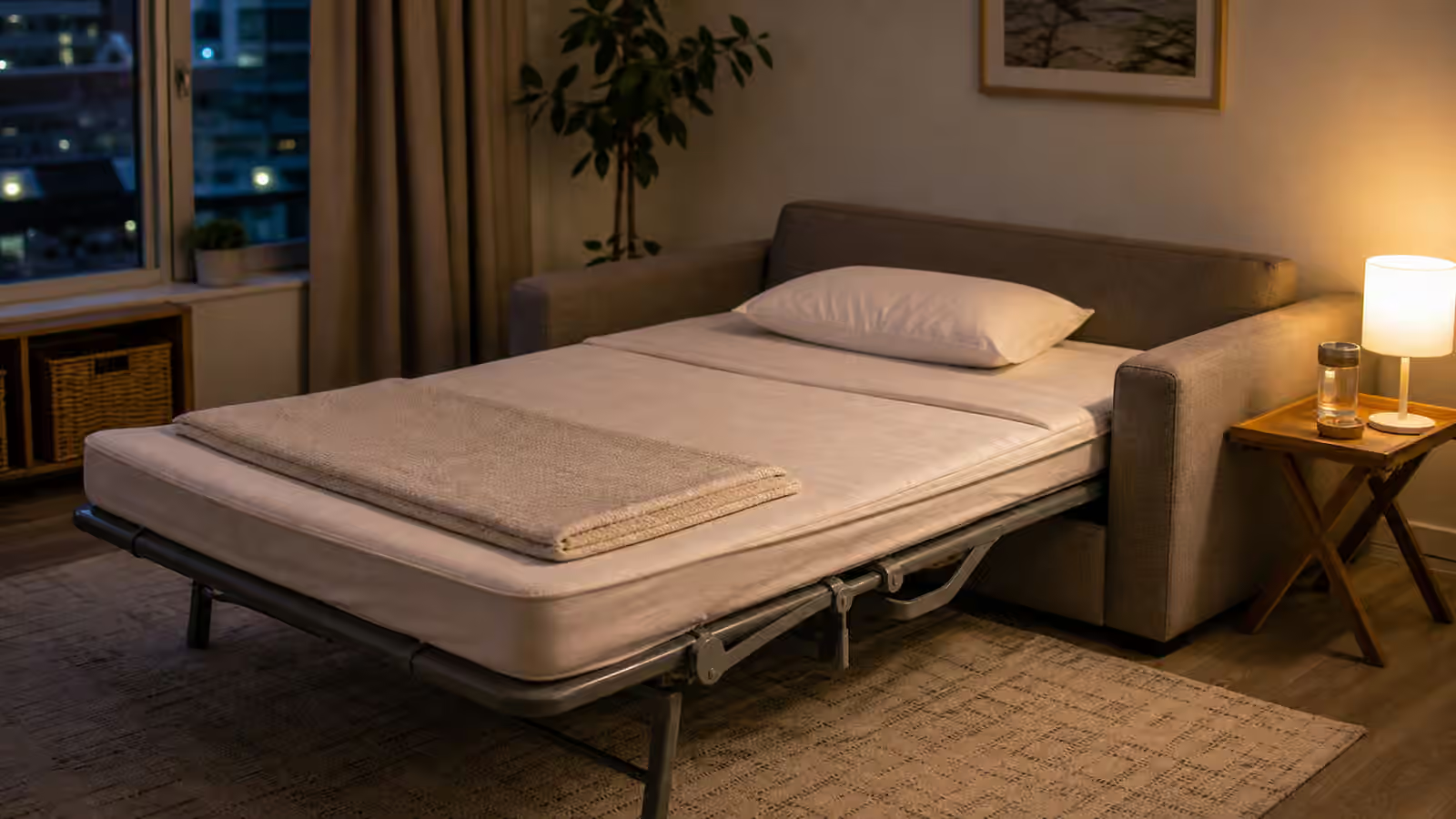
Sofa beds hide their sleep problems while closed. The cushions look fine, the room feels usable, and the bedding is somewhere else. The real test happens when the bed is fully open. Only then can you see the support gaps, bar pressure, mattress thickness, floor clearance, lamp reach, outlet access, and whether the room still has a path to the door or bathroom.
Open the sofa bed during the day, not when a guest has already arrived tired. Sit and lie on it from different positions. Notice whether the frame locks flat, whether the mattress slides, whether the head end slopes, and whether a person can get in and out without stepping over bags or coffee-table corners. If the sofa bed is used often, this test should be part of the room’s normal maintenance rhythm, not a rare emergency.
The room may need furniture choreography. A coffee table, ottoman, rug, side chair, plant stand, or media console can become an obstacle once the mattress is out. The best setup has a predictable landing place for moved furniture. If every opening requires dragging pieces into random corners, the sofa bed will feel like an event instead of a sleeping option.
Add support without building a second mattress
Many sofa beds fail at pressure points. A thin mattress folds into the frame, and the sleeper feels bars, hinges, or uneven zones. A thin topper can help, but it needs to be chosen for storage and fit as much as comfort. Too thick and the bed may not fold properly. Too soft and the sleeper may sink into the same pressure points. Too bulky and the topper becomes a closet problem.
Mattress Toppers and Pads explains how toppers change feel without replacing the bed. For sofa beds, restraint matters. A compact foam topper, quilted pad, or folded comfort layer may be enough to smooth the surface. The topper should be easy to unroll, identify, and store dry. If it needs a heroic storage solution, it will not be used consistently.
Also check sheet fit after the topper is in place. A sleeper sofa mattress may be thinner or differently sized than a standard bed, and a topper changes the depth. Loose sheets can bunch at the fold points. Overly deep fitted sheets can slide around on a thin mattress. Flat sheets can work if they are tucked well, but they need enough fabric to stay put through the night. The goal is a surface that stays sleepable after the first hour, not only a tidy photo before bedtime.
Give the sleeper a bedside zone
A sofa bed is often opened in a room that was not designed for bedside reach. The nearest table may be across the room. The lamp may shine from behind the sleeper. The outlet may be blocked by the opened frame. A guest may have nowhere to put glasses, a phone, water, tissues, or a book. These small misses make temporary sleep feel temporary in the worst way.
Create a bedside zone, even if it is just a tray on a small stool. The surface should be stable, reachable from the pillow, and not in the path where someone will step at night. A lamp should be easy to turn off from the bed. If the room is shared or visible from other spaces, a small reading lamp is usually kinder than the main overhead light. Bedside Reading Light Setup applies to sofa beds too, because page light and switch reach do not stop mattering when the bed folds away.
Charging should be simple and safe. Do not stretch cords across walkways or under the metal frame. A clearly placed outlet, short extension where appropriate, or charging station on the bedside surface can prevent nightstand improvisation. Nightstand Charging and Cables is written for bedrooms, but its cable logic is even more important in a room that changes shape.
Use bedding that has one clear home
Sofa-bed bedding fails when it has no home. Sheets live in one closet, the pillow in another, the blanket under the couch, and the topper behind a chair. By the time the bed is opened, the setup depends on memory and patience. A better system keeps the sleep kit together.
The kit does not need to be fancy. It needs a clean sheet or sheet set that fits the sofa bed, a protector or pad if the mattress needs one, a pillow that is not a retired lump, a blanket suited to the room temperature, and any topper that makes the surface usable. Store those pieces dry, breathable, and labeled by use if the household has many bedding sets. Bedding Wash and Rotation helps keep the kit from becoming a stale bundle.
If the sofa bed is for guests, do not use it as the final destination for worn-out bedding. Guests can feel the difference between simple and neglected. A clean, ordinary pillow beats a decorative spare that smells like the back of a closet. A washable throw beats three mystery blankets. Temporary sleep deserves fewer pieces that are ready, not many pieces that require apology.
Control light, sound, and morning privacy
A living room sofa bed may face windows, hallway light, kitchen appliances, electronics, street noise, or early household traffic. The sleeper may not need a perfect bedroom, but they need predictable boundaries. Curtains should close before bedtime. Indicator lights on electronics should be dimmed, covered, or moved where practical. The white-noise machine, fan, or air purifier should be tested before the room is dark and someone is already lying down.
White-Noise Machine Guide and Sleep Masks and Earplugs can help when the room cannot become quiet or dark enough on its own. For sofa beds, those tools should be offered without drama. A sleep mask on the tray, earplugs in a clean case, and a simple sound option make the room feel considered rather than patched together.
Morning privacy matters too. A sleeper in a shared room can feel exposed as soon as the household wakes. A folding screen, curtain habit, robe hook, or clear morning plan may be enough. The point is not to turn the living room into a permanent bedroom. It is to let the person using it have a dignified start to the day.
Reset the room without punishing the sleeper
The morning reset is part of the sofa-bed setup. If closing the bed requires stripping everything instantly, moving furniture, and hiding bedding before coffee, the sleep arrangement can feel like an inconvenience. If the reset is simple, the room can return to daytime use without making the sleeper feel rushed.
Give bedding a temporary landing place. Let the mattress and topper air before sealing them away if time and room allow. Keep the storage path clear. Check for trapped cables, lost socks, and bedding caught in the frame. A sofa bed that folds with sheets, blankets, or cords in the wrong place can damage fabric or hardware.
For regular use, treat the sofa bed like a small room system. It needs a sleep surface, side access, bedding storage, light control, sound control, and a reset plan. Once those pieces are named, the sofa bed stops being a last-minute object and becomes a temporary bed with a method. That method is what makes the difference between “you can crash here” and “this space is ready for sleep.”