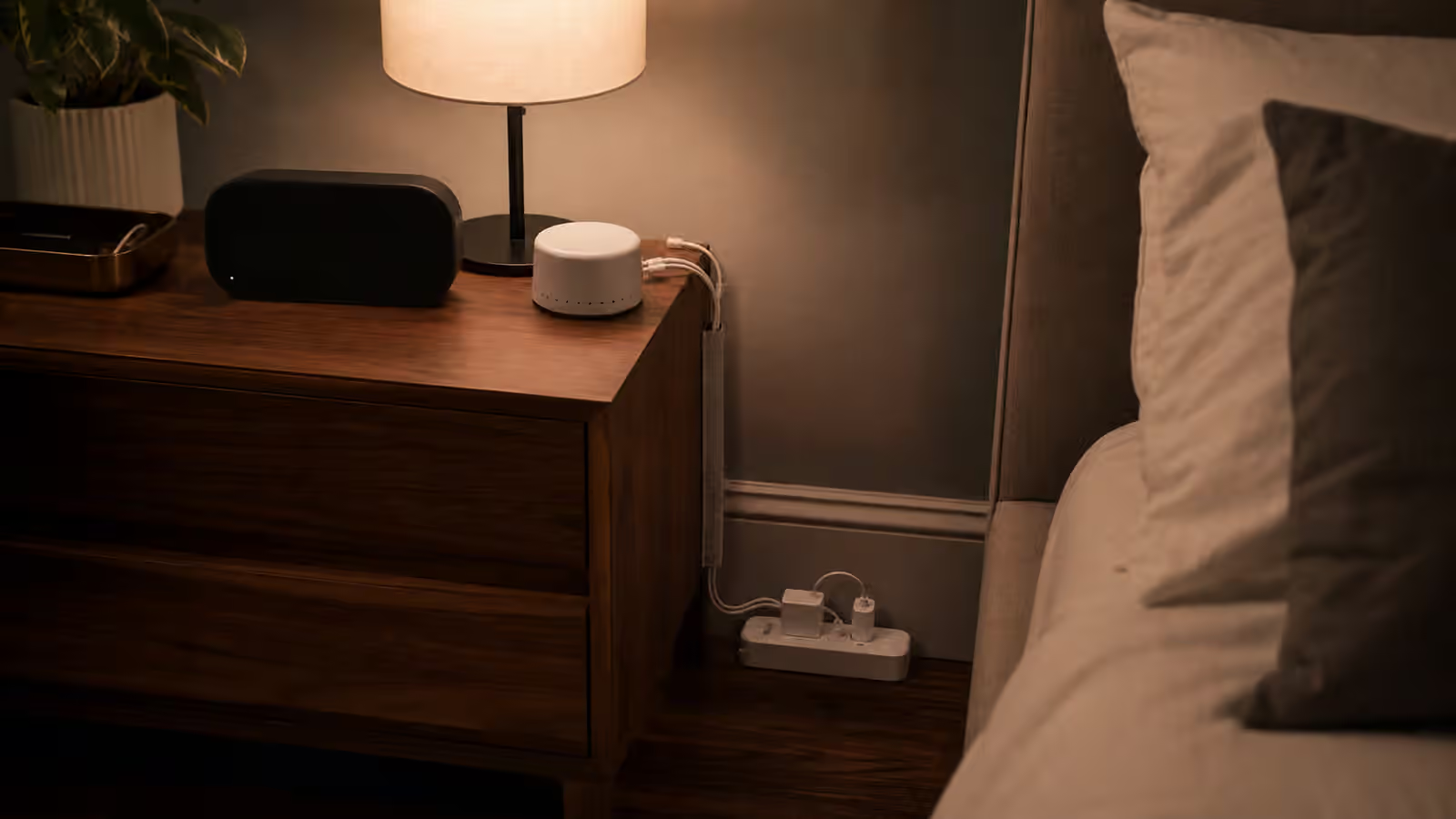
A smart bedroom should reduce fiddling. If you need a troubleshooting session to turn off a lamp, the room got worse.
Start with one automation that solves one repeatable problem.
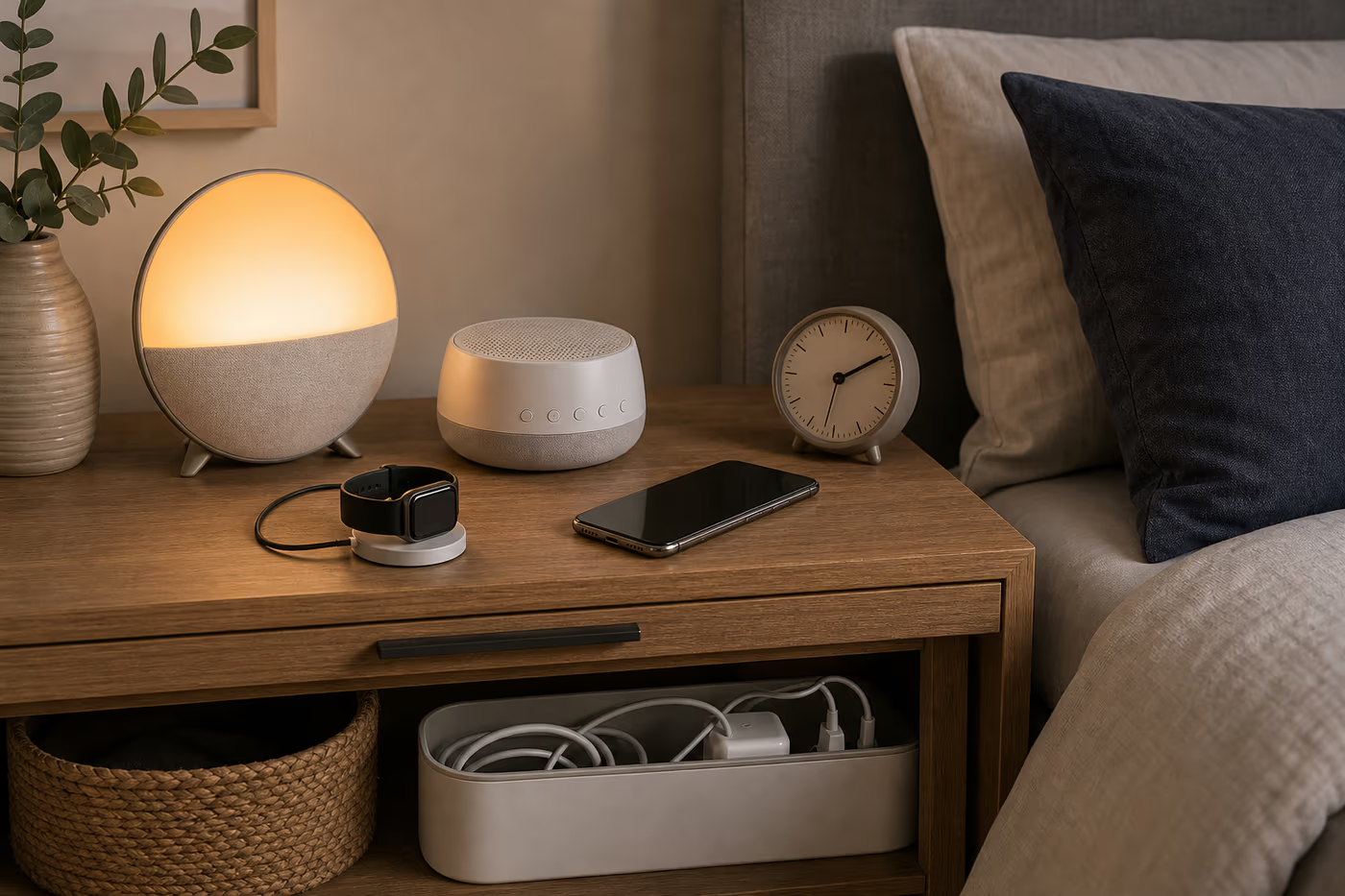
Keep a manual fallback
Every smart-bedroom choice should still work when an app is slow, Wi-Fi is down, a guest is staying over, or your phone is in another room. Physical switches, simple remotes, and visible controls matter more in a bedroom than in many other rooms.
Useful simple automations
The best automations are small and obvious. A lamp can dim or turn off at a set time. A compatible fan can turn on before bedtime. Curtains can open or close on a schedule if the window is used daily and the mechanism is reliable. A white-noise machine can start with one button. A charger or outlet can turn off bright accessories. Morning lights can turn on gently after the alarm.
Start with the simplest tool that solves the repeat action. A lamp schedule may only need a smart plug or dimmable bulb unless scenes, remotes, or multi-lamp control are truly useful. Fan timing may only need a smart plug on a compatible fan unless speed control or temperature triggers matter. Curtain automation should come after the manual curtain already works well. Sound routines should use device memory or a physical button unless app control genuinely reduces steps. Morning light may be solved by a sunrise alarm or lamp schedule before a full lighting system enters the room.
Avoid automating a bad setup. If the lamp glares, fix the bulb and shade before adding schedules. If the fan is loud, a smart plug will only make a loud fan start automatically.
Shopping shortcut
Start with a simple smart plug for lamps or fans before replacing devices. For bedside light, compare dimmable warm smart bulbs only if the lamp and shade already work.
Keep the controls human
Ask what manual action repeats every night or morning and whether a basic timer solves it without an app. Decide what happens if Wi-Fi fails. Make sure there is a physical switch everyone can use. Hide or dim indicator lights. If guests or partners cannot understand the controls, the smart setup is too clever for a bedroom.
Automate annoyances, not the whole room
The best bedroom automation removes a repeated irritation. A lamp turns off from bed. A fan starts before the room gets stuffy. A sunrise alarm fades in without a phone screen. Blackout shades close on a schedule if the hardware is reliable. That is different from making every object depend on an app. If guests, partners, or half-asleep you cannot use the room, the automation has become another chore.
Privacy and quiet settings
Check microphones, cameras, notification sounds, status LEDs, and app permissions before placing connected devices near the bed. A bedroom device should be easy to mute, dim, unplug, or remove without breaking the rest of the setup.
Subscriptions are not automatically bad, but they should buy something you actually use. For bedroom basics, timers, plugs, lights, and sound usually should not need a monthly plan.
Good default
Use smart plugs and simple schedules before replacing major devices. Keep the bedroom controllable without a phone.
Next step
Automate one repeatable action, then stop. A smart bedroom works when it quietly removes friction without asking for attention.
Apply this guide as a decision record
Use Smart Bedroom Without Fuss: Automations That Stay Out of the Way to turn a vague household question into a checkable one. Its scope is specific: A beginner guide to simple smart-bedroom choices for lamps, plugs, fans, curtains, and controls. Before changing the setup, write down the condition you are trying to change, the constraint that matters most, and the evidence you still lack.
For a first pass through smart bedroom without fuss, compare the current state with a relevant baseline and record one observation, measurement, or conversation. Make the smallest reversible change available. Keep the manual, model number, room condition, schedule, or maintenance note beside the decision so a future check does not depend on memory. Keep smart bedroom, smart plugs, sleep tech in view as separate signals instead of treating them as one verdict.
A useful follow-up asks whether Smart Bedroom Without Fuss: Automations That Stay Out of the Way improved the named problem without creating a new one. Check the tradeoff that fits this subject — heat, noise, comfort, water, power, wear, effort, or cost — and describe the result in plain language. If a boundary is safety-critical, stop at the guide’s limit and bring the details to a qualified local professional.
The conclusion for smart bedroom without fuss should stay narrow. Record what was observed, which condition made the result possible, what maintenance keeps it dependable, and what would make you revisit the choice. That turns a guidebook into a decision record you can use again rather than a promise to remember.