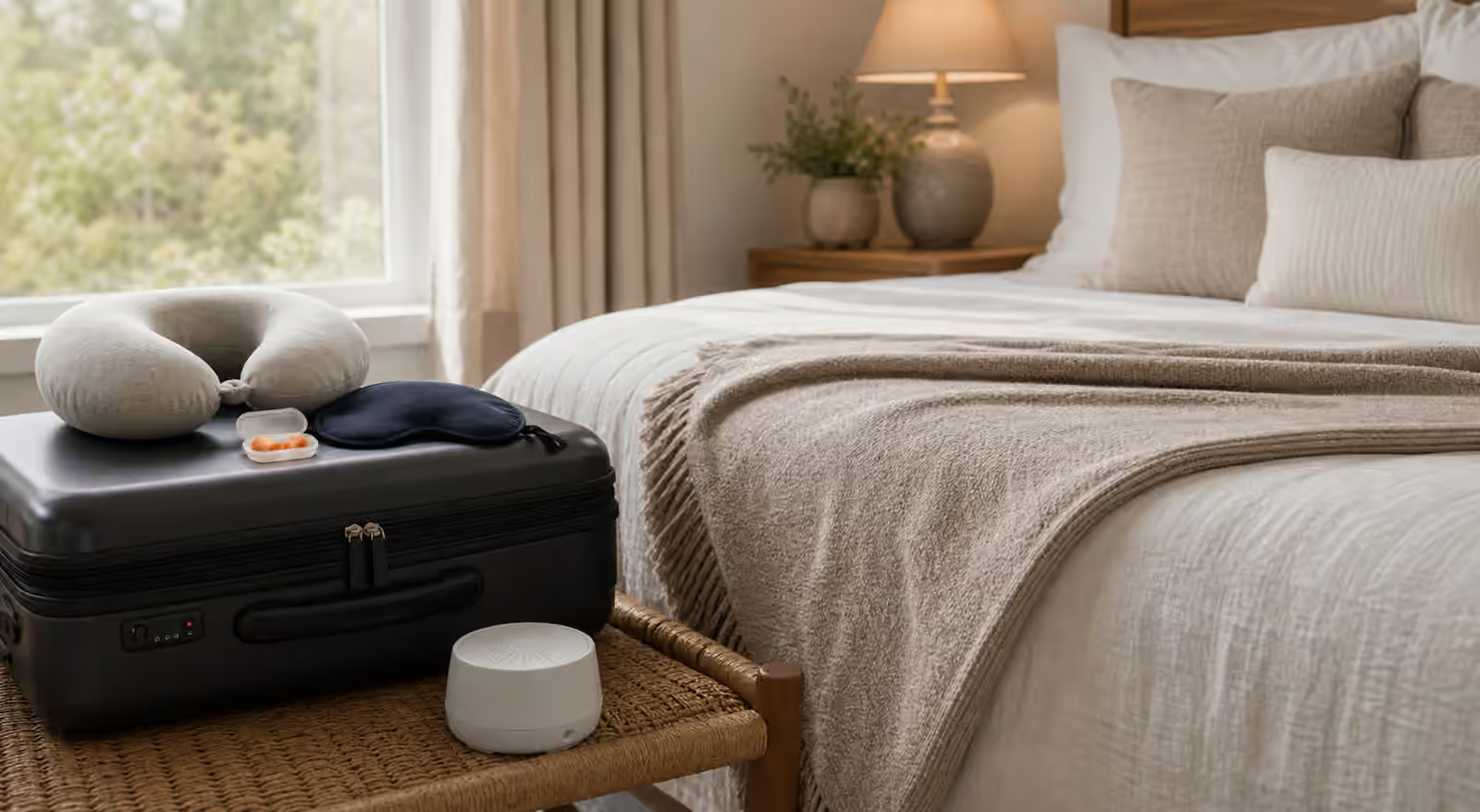
A sleep mask and a pair of earplugs are not substitutes for a good bedroom, but they are often the smallest tools that make an imperfect room usable. A bright streetlight, a partner’s reading lamp, a hotel curtain gap, hallway voices, morning traffic, or a thin rental door can turn into a nightly project if every fix has to involve hardware, furniture, or a new device. Personal light and sound blockers work differently. They move the control closer to the sleeper. For background, see CDC/NIOSH — Tips to Improve Your Sleep When Times Are Tough .
That closeness is useful, but it also makes fit more important. A curtain can be a little awkward and still darken the room. A mask that presses the eyes, shifts on a side sleeper, traps heat, or smells like laundry product will be removed before morning. A sound machine can sit across the room. An earplug that rubs, falls out, or makes the ear feel sealed in an unpleasant way will not become a habit. The good version of this setup is small, comfortable, clean, and easy to find in the dark.
This guide stays with setup and comfort. Ear pain, drainage, infection, persistent ringing, hearing changes, severe sensitivity to sound, or any symptom that worries you belongs with a qualified professional. For ordinary bedroom friction, though, masks and earplugs are worth treating as real sleep equipment rather than travel freebies thrown into a drawer.
Start with the room problem
The first question is not which mask looks best or which earplug blocks the most sound. The first question is what the room is doing to you. Light from a window behaves differently from light from a hallway. A partner’s lamp is not the same as a phone screen. Steady traffic is not the same as occasional hallway voices. A baby monitor, early alarm, heating system, elevator, shared wall, or barking dog each asks for a different amount of blocking and a different amount of awareness.
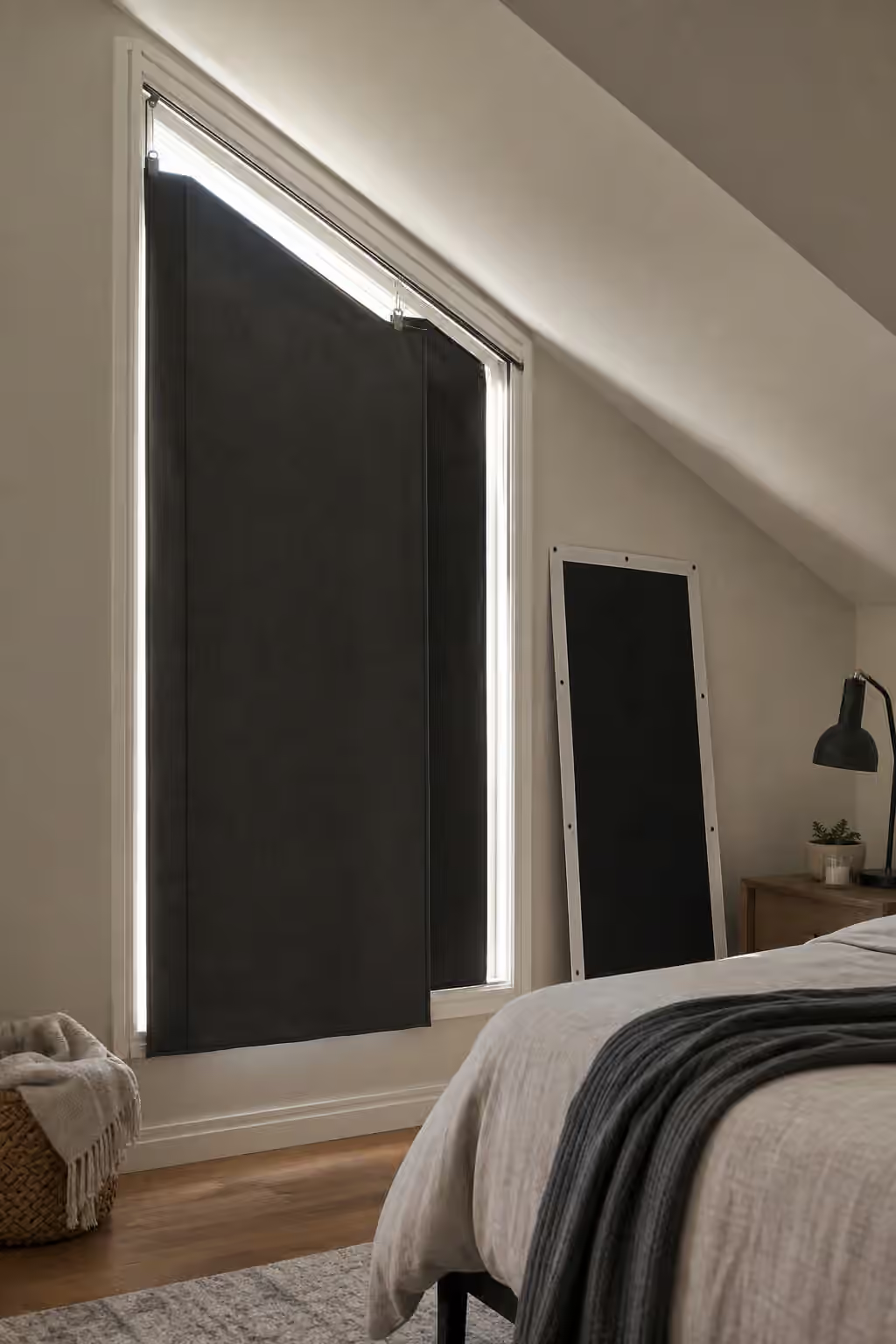
If the room itself can be corrected cleanly, do that first. Blackout Curtains Guide is still the better answer when one window floods the room every morning and you are allowed to change the window treatment. White-Noise Machine Guide is better when the issue is intermittent sound that can be softened by steady masking. A mask or earplug is strongest when the room fix is limited, temporary, shared, rented, or too expensive for the size of the problem.
That is why these tools show up so often in travel and shared-bedroom setups. They do not require agreement from the room. They can help one sleeper without darkening or quieting the entire space. In a shared room, this matters. One person may want to read for twenty minutes while the other wants darkness. One person may like low white noise while the other finds it intrusive. The guide to Shared Bedroom Light and Schedule covers the room agreement; masks and earplugs are the personal layer that can make that agreement easier to live with.
A good sleep mask disappears
A sleep mask should block the light that actually reaches your eyes without making your face feel managed. The shape matters more than the marketing words. Flat masks can be light and packable, but they may press against eyelashes or shift if the strap is loose. Contoured masks create space around the eyes and can feel better for some people, though bulky edges may bother side sleepers. Silk and smooth synthetic covers can feel cool and low-friction, while cotton or jersey can feel familiar and washable. The best choice is the one that stays on without calling attention to itself.
Fit starts at the nose bridge. Many masks fail there because light leaks upward from the cheeks or through the space beside the nose. A soft nose baffle can help, but only if it does not press uncomfortably or lift the mask away from the face. The strap is the second common failure. A narrow elastic strap may tangle hair or create pressure behind the ears. A wider adjustable strap can distribute tension better, but it may feel warm or bulky against a pillow. Side sleepers should test the exact side they use, because a mask that feels excellent while lying on the back may twist as soon as the face meets the pillow.
The room decides how dark the mask needs to be. Someone blocking a partner’s reading lamp may need a mask that prevents direct side light. Someone softening early morning glow may be fine with a lighter, cooler mask that blocks most light without feeling sealed. If the bedroom already has decent curtains, a comfortable mask that removes the last edge leaks may be better than a heavy blackout mask that feels too warm by 3 a.m.
Earplugs are about fit, not hero numbers
Earplugs often get compared by noise reduction rating, but the number only matters when the plug fits correctly and remains comfortable long enough to use. Foam plugs usually need to be compressed, inserted, and held while they expand. If they are too large, they may feel like pressure. If they are too small, they may loosen or leak sound. Silicone putty-style plugs sit differently and can be useful when deep insertion feels wrong, though they need careful handling and replacement when they collect lint or lose their shape. Reusable flanged plugs can be practical for travel or repeated use, but some people find the stem or ridges noticeable against a pillow.
Comfort also changes with sleeping position. A plug that is fine while sitting up can press against the pillow when lying on one side. This is one reason low-profile shapes matter. If the outer portion protrudes, the pillow may push it inward or bend it. A softer pillow can hide this problem during a quick test, while a firmer pillow exposes it quickly. Testing earplugs in the position you actually sleep in is more useful than judging them from the package.
Earplugs do not have to block everything. In many bedrooms the goal is to reduce sharp interruptions enough that the room feels less jumpy. A lower-blocking plug that you wear comfortably may be better than a stronger plug you remove after an hour. If you need to hear a child, alarm, doorbell, phone alert, or household safety signal, think carefully about what should remain audible. Some sleepers solve this with a vibrating alarm, a lower-blocking earplug, sound masking near the noise source, or a different room arrangement. The setup should reduce nuisance noise without creating a new worry.
Combine personal blockers with room-level fixes
Masks and earplugs work best when they are not asked to solve the whole room by themselves. A sleep mask can finish a room that has small curtain leaks, but it should not excuse a curtain setup that makes the bedroom unusable for everyone. Earplugs can soften traffic, but if the bed is pushed against a shared wall and a bookshelf could move the sound path, the room still deserves attention. Personal tools are especially good for leftover problems, variable problems, and problems that belong to only one sleeper.
In a rental, the small-tool approach can be the first test before bigger reversible fixes. If a mask solves most of a light issue, you may not need tension rods, temporary panels, or liner clips. If earplugs help with hallway noise but not street rumble, a sound machine placed near the window may be the next experiment. Renter-Friendly Blackout and Noise pairs well with this because it starts from low-risk changes before larger room work.
Travel is similar. A hotel room is rarely worth rebuilding. A familiar mask and known earplugs can solve a curtain gap, elevator ding, hallway light, or unfamiliar appliance hum faster than a late-night room negotiation. Travel Sleep Kit treats these as core pouch items for that reason. The travel version should be replaceable, washable, and easy to repack. The home version can be a little more comfortable because it does not have to survive the bottom of a bag.
Give the tools a clean home
The biggest setup mistake is owning masks and earplugs without giving them a place to live. A mask tossed under the pillow gets dusty, stretched, or lost in bedding. Earplugs rolling loose on a nightstand collect lint and become suspect. The fix is not a large organizer. It is a small tray, drawer section, pouch, or lidded case that can be reached without turning on a bright light.
This is where Storage and Bedside Setup matters. The mask and earplugs belong with the items that make the night run smoothly, not with random receipts, spare cables, and half-finished packaging. A bedside tray can hold the mask, a case, glasses, and a book. A drawer divider can keep unused earplugs separate from the pair in rotation. If the items are used only for travel, keep duplicates in the travel pouch so the home pair does not disappear before a trip.
Cleaning needs the same ordinary attention. Washable masks should be washed often enough that face oil, hair product, and detergent scent do not build up. Check the care label, then keep the cleaning habit simple. Earplugs should be replaced or cleaned according to their type. Foam plugs are usually disposable after limited use, while reusable plugs need drying and storage in a clean case. A tool that touches the face or ear should not live loose at the bottom of a dusty drawer.
Test before depending on them
The worst time to test earplugs is the first night in a noisy hotel. The worst time to test a mask is after a partner has already turned on a lamp and you are annoyed. Do the test on an ordinary evening. Put the mask on in bed, roll to each side, adjust the strap, and notice whether light leaks at the nose or the temples. Try the earplugs while lying down with your normal pillow. Set the alarm you actually use and confirm that the volume, vibration, light, or backup plan still works for your household.
This short test prevents overbuying. If the mask is close but leaks at the nose, a different nose shape matters more than a darker fabric. If earplugs reduce noise but feel too firm on the pillow, shape matters more than maximum blocking. If both work but vanish from the nightstand by midweek, storage is the real problem. The trial should reveal which part of the setup is failing.
For shopping, compare simple categories instead of chasing one perfect object. A contoured mask, a soft flat mask, foam earplugs, silicone putty-style plugs, and low-profile reusable plugs cover most ordinary experiments. If you are building a small home kit, compare sleep masks and earplugs with a case and choose by fit, washability, and storage before extra features.
Keep awareness in the setup
Personal blocking tools should make rest easier, not make the room feel unsafe or unmanageable. Before using strong earplugs or a total blackout mask, decide what you still need to perceive. Some sleepers need to hear a child’s call, a partner’s alarm, an accessibility device, a pet, a building alarm, or a phone kept on for real reasons. Some people feel uneasy with full darkness in an unfamiliar room. These are setup requirements, not failures of discipline.
There are practical ways to keep awareness. A dim path light outside the direct line of sight can help with movement without brightening the pillow. A vibrating alarm can reduce the need for loud alerts. A phone can sit farther away if it creates light, but close enough if it is genuinely necessary. A mask can be worn only after reading, or earplugs can be reserved for the noisiest nights. The point is to fit the tool to the life around the bed.
Good sleep setups are rarely one object deep. A mask, earplugs, curtains, sound placement, bedside storage, and shared-room habits all affect each other. The personal tools earn their place when they remove a specific irritation without adding fuss. When the mask is comfortable, the earplugs fit, the case is clean, and the alarm plan still works, the room has one more quiet way to adapt.