Thread count is not the whole story. Fiber, weave, finishing, weight, and care matter more than a large number on the package.
Choose sheets by how they feel in your room and how you actually wash them.

Thread count without the fog
Thread count can be useful inside one fabric category, but it is not a universal quality score. Fiber quality, weave, finishing, yarn thickness, and honesty of the count all matter. A lower-count percale can feel better for a warm room than a dense high-count sateen.
Start with feel: crisp, smooth, textured, warm, or stretchy. Then check fit and care.
Common choices
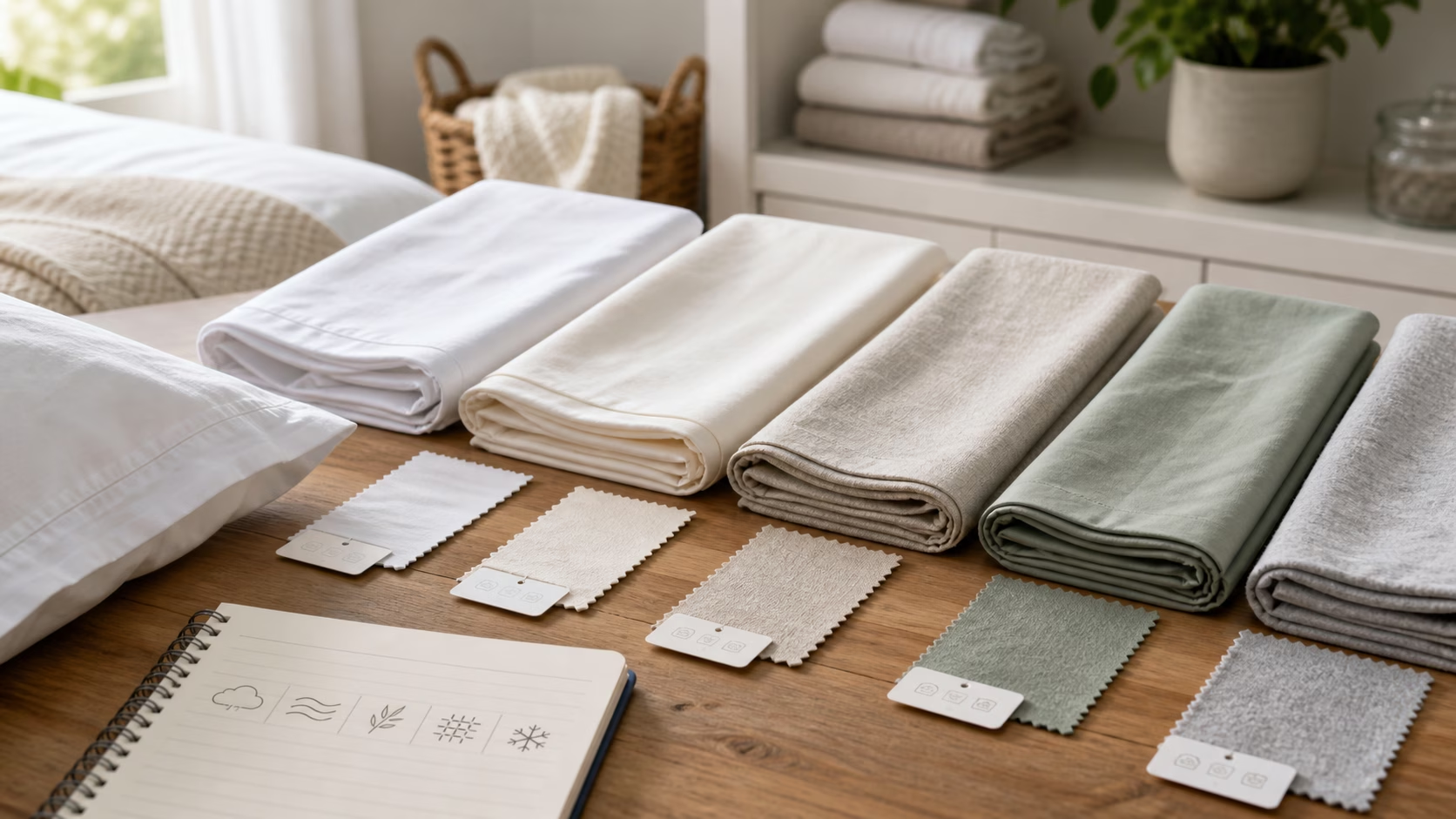
Cotton percale is crisp, matte, and airy, which is why it often appeals to people who like a cool hotel-sheet feel. Cotton sateen is smoother and slightly heavier, with more drape and a softer hand. Linen feels textured and relaxed; it can be excellent in warm rooms if you like the lived-in look. Flannel is brushed and warm, better for cold seasons or cool rooms. Jersey knit feels stretchy and T-shirt-like, trading crispness for softness.
Fit details
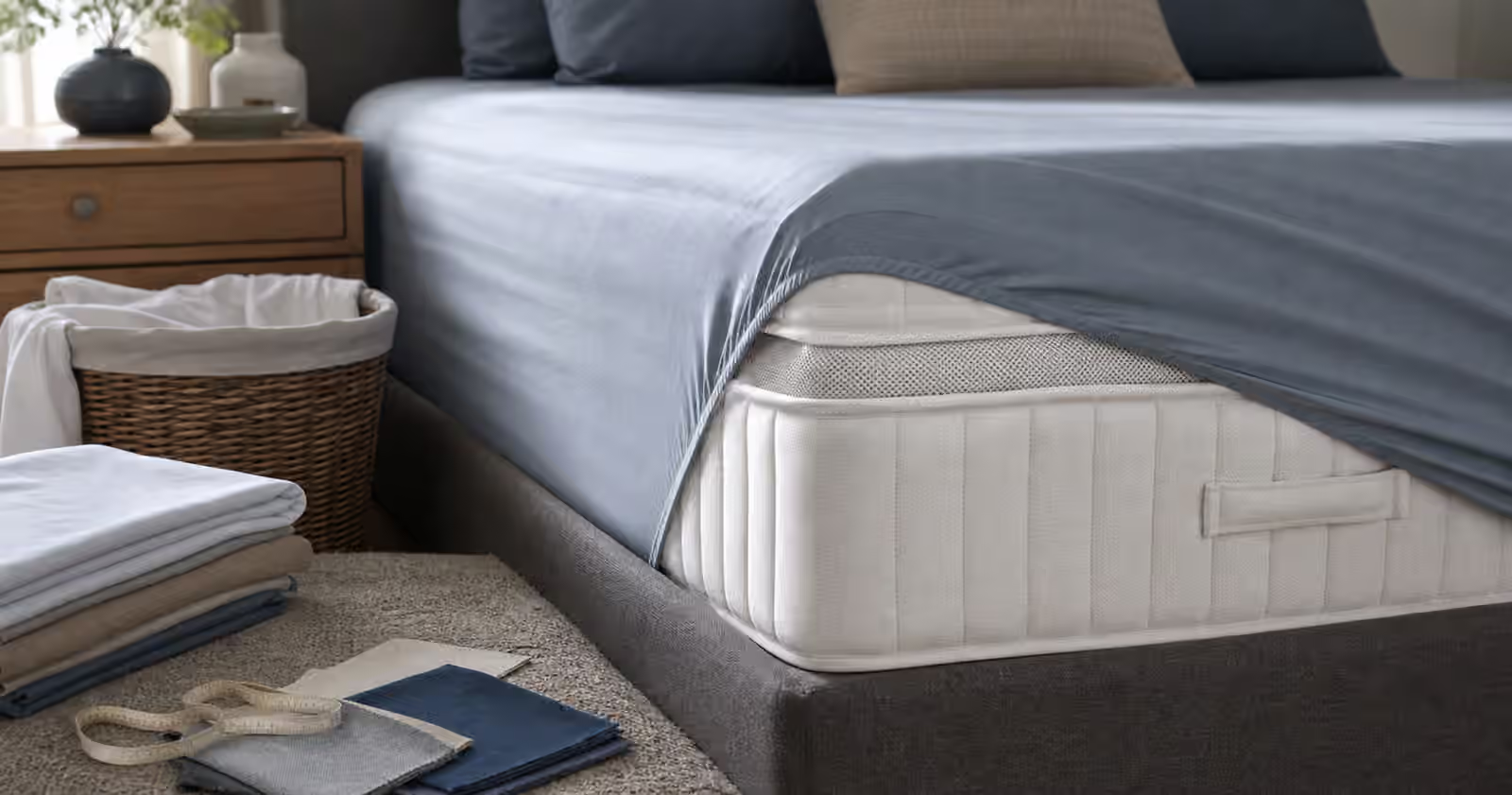
Sheets fail when the fitted sheet will not stay put. Mattress height, protector thickness, topper height, pocket depth, elastic quality, shrinkage, and pillowcase size all matter. A fitted sheet that barely reaches the corners on laundry day will be annoying every week. A pillowcase that does not match the pillow size makes even good fabric feel sloppy.
If the fitted sheet barely fits on laundry day, it will be annoying every week.
How fabric behaves after week three
Sheets should be judged after washing, not just after unboxing. Percale can feel crisp and cool but may wrinkle. Sateen can feel smoother and heavier but may sleep warmer. Linen softens slowly and looks relaxed rather than polished. Jersey feels familiar to people who like T-shirts, but it can stretch and cling. Flannel is cozy until the room runs warm. The question is not which fabric is objectively best. It is which one still feels good after your normal wash cycle and your normal bedroom temperature.
Shopping shortcut
For a crisp, broadly useful first set, compare cotton percale sheet sets . If you already know you like texture and a relaxed look, compare linen sheet sets instead.
Buy for the room and the laundry
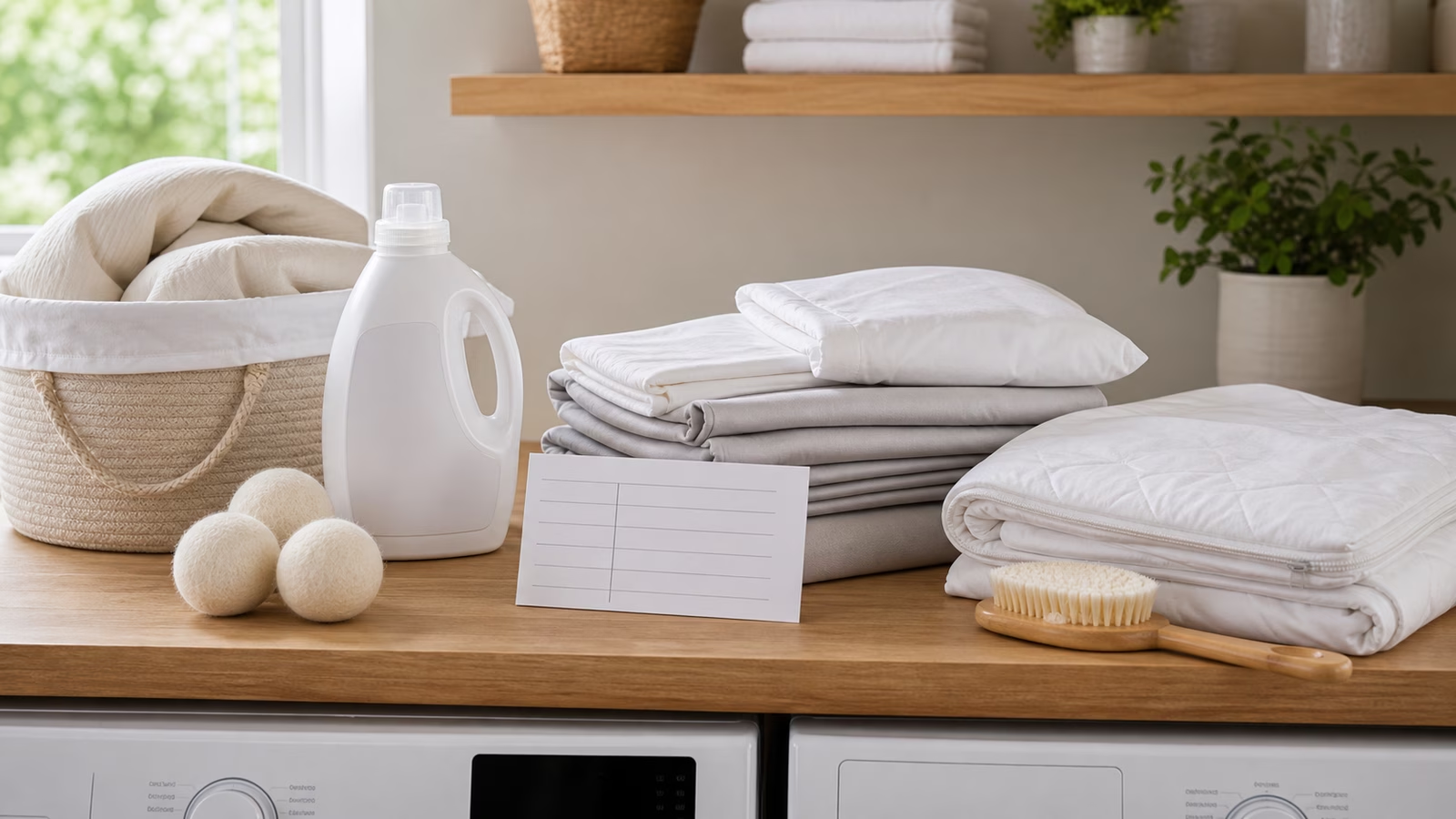
The right sheet set should match the feel you prefer and the care you will actually do. Crisp, smooth, textured, warm, and stretchy sheets live differently through the week. A fabric that needs special care may be lovely and still wrong for a household that wants simple wash-and-dry rotation.
The common mistakes are predictable: buying by thread count alone, ignoring pocket depth on a tall mattress, choosing one expensive set instead of two dependable rotation sets, or shopping for sheets before deciding whether a protector or topper will change the mattress height.
Good default
For many beginners, two dependable midweight sheet sets beat one delicate expensive set. Rotation makes laundry easier and keeps the bed from depending on one perfect wash day.
Next step
Try one fabric direction before rebuilding the whole linen closet. The best sheets are the ones that feel good and survive the laundry rhythm you already have.
Apply this guide as a decision record
Use Sheets Materials Guide: Percale, Sateen, Linen, Flannel, and Knits to turn a vague household question into a checkable one. Its scope is specific: A beginner guide to sheet materials, weave, feel, warmth, durability, and care routines. Before changing the setup, write down the condition you are trying to change, the constraint that matters most, and the evidence you still lack.
For a first pass through sheets materials guide, compare the current state with a relevant baseline and record one observation, measurement, or conversation. Make the smallest reversible change available. Keep the manual, model number, room condition, schedule, or maintenance note beside the decision so a future check does not depend on memory. Keep sheets, percale, linen in view as separate signals instead of treating them as one verdict.
A useful follow-up asks whether Sheets Materials Guide: Percale, Sateen, Linen, Flannel, and Knits improved the named problem without creating a new one. Check the tradeoff that fits this subject — heat, noise, comfort, water, power, wear, effort, or cost — and describe the result in plain language. If a boundary is safety-critical, stop at the guide’s limit and bring the details to a qualified local professional.
The conclusion for sheets materials guide should stay narrow. Record what was observed, which condition made the result possible, what maintenance keeps it dependable, and what would make you revisit the choice. That turns a guidebook into a decision record you can use again rather than a promise to remember.