A pillow can look harmless long after it has stopped doing its job. It sits inside a clean case, disappears under the bedding, and gets judged mostly by habit. Then the neck support feels inconsistent, the fill clumps, the pillow smells stale after washing the case, or the bed never feels fresh even when the sheets are clean. Pillow care is not glamorous, but it is one of the simplest ways to keep a sleep setup from drifting. For background, see FTC — Guide to Textile Care Symbols .
This guide is about maintenance and comfort, not medical diagnosis. Neck pain, headaches, breathing symptoms, allergies, skin irritation, and sleep disruption can have many causes. If symptoms are persistent or severe, treat room setup as supportive only. For ordinary bedding upkeep, the goal is more practical: keep pillows clean enough, dry enough, and structurally honest enough that Pillow Fit Guide remains meaningful.
Separate pillow fit from pillow age
People often decide a pillow type is wrong when the actual problem is age or care. A side sleeper may blame loft when a once-supportive pillow has flattened. A back sleeper may blame firmness when fill has shifted into uneven zones. A person who likes the feel of a down alternative pillow may think they need a new material when the old pillow simply no longer recovers after compression.
Before shopping, look at what the current pillow is doing. Does it spring back, or does it stay folded? Is the fill evenly distributed? Does one side feel different from the other? Does the pillow support the same sleep position it supported when new? Does it smell clean after the pillowcase has been washed, or does stale odor remain? Does the cover show yellowing, oil marks, or fabric wear? These observations do not require a lab test. They are the ordinary evidence that the pillow is either still part of the setup or has become a disguised chore.
A pillow can also be the wrong fit even when it is clean and new. That is why care and fit should be judged separately. If the pillow is in good condition but the head position feels wrong, return to fit. If the shape and support used to work but no longer do, maintenance or replacement is probably the better question.
Use protectors before the pillow needs rescuing
A pillowcase is not the same as a pillow protector. A case touches the face and changes the feel of the bed. A protector sits underneath and slows the movement of sweat, skin oils, hair products, drool, and dust into the pillow itself. The protector does not make the pillow immortal, but it gives ordinary washing routines a chance.
The best protector is one you do not notice much. It should fit the pillow size, zip smoothly, avoid crinkling, and not make the pillow too hot or stiff. Waterproof or highly protective materials may be useful in some households, but they can change sound and breathability. A protector that makes the pillow unpleasant will be removed and forgotten. A breathable, washable protector that stays on the pillow is often more useful than the most technical option.
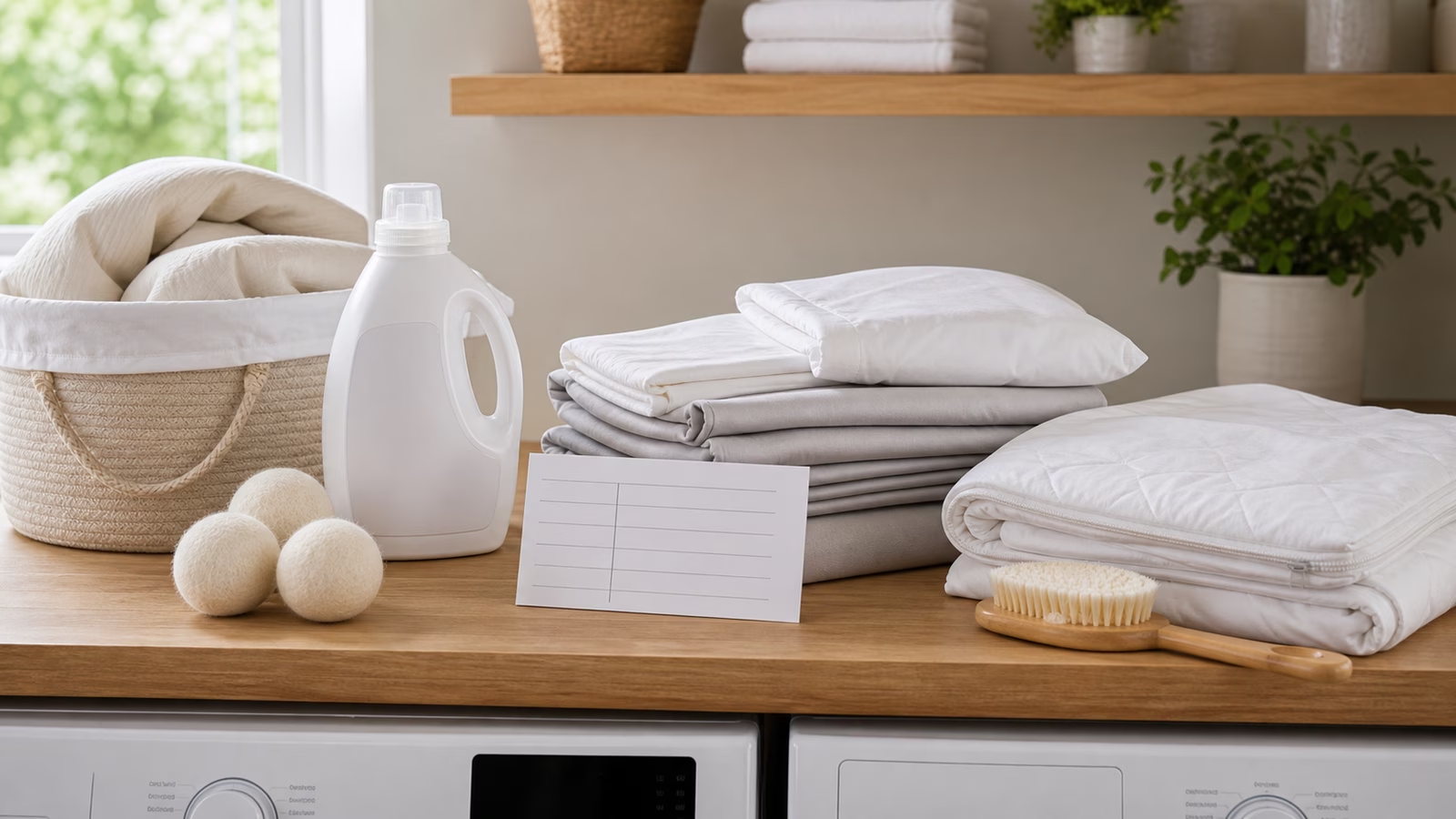
Bedding Wash and Rotation covers the larger laundry system. For pillows, the rhythm is simple: pillowcases wash often, protectors wash periodically, and the pillow itself is cleaned only according to what its fill and label allow. The protector keeps that schedule from becoming urgent every time the pillowcase is overdue.
Respect the fill when washing
Pillows are not one maintenance category. Down, feather, down alternative, shredded foam, solid foam, latex, buckwheat, wool, cotton, and specialty fills behave differently. Some can be machine washed. Some can be spot cleaned only. Some need careful drying to prevent clumps or trapped moisture. Some should never be soaked. The care label matters because a pillow can be ruined by the wrong kind of ambition.
The most common failure is incomplete drying. A pillow may feel dry on the surface while moisture remains deep inside. That can lead to odor, clumping, or a stale feel that makes the bed worse after washing. Large pillows need space, time, and patience. Low heat, extra dryer time, dryer balls where appropriate, and full air circulation can matter more than the wash itself. If the fill cannot be dried reliably in your home machines, choose a pillow that fits your actual laundry path next time.
Spot cleaning also has a place. A small mark on a foam pillow does not mean the whole pillow should be submerged. A removable cover can be washed while the core airs. A protector can take the maintenance load. The aim is not to sanitize the pillow into a new object every week. It is to keep the pillow fresh without damaging the support you bought it for.
Airing is maintenance, not decoration
A pillow spends hours under a warm head, then often gets buried under a made bed. Airing is the quiet maintenance step between washing and ignoring. Pulling bedding back for a while, letting pillows stand or rest where air can move, and avoiding a tightly sealed bed immediately after waking can help moisture leave the sleep surface.
This does not require a lifestyle performance. The bed can still be made. The useful habit is simply to give pillows and sheets a little breathing time when the room allows it. In humid rooms, this matters even more. Bedroom Humidity and Dry-Air Comfort explains how moisture changes fabric feel and freshness. A pillow that never dries fully will not feel fresh for long, even with clean cases.
Sunlight can freshen some bedding, but it can also fade fabric or degrade materials if overdone. Outdoor airing may not be practical because of pollen, dust, weather, pets, or building rules. Indoor airflow is enough for many households. A chair near the bed, a clear bench, or simply pulling the covers down before making the bed can make pillow care easier without adding another product.
Store spare pillows like bedding, not leftovers
Spare pillows often become storage clutter. They sit in plastic bags, closet corners, under-bed bins, or guest-room piles until someone needs them and discovers they smell stale or feel crushed. A spare pillow is only useful if it remains clean, dry, and identifiable.
Use breathable storage where possible, and avoid sealing even slightly damp bedding into a bin. Keep guest pillows separate from worn-out pillows waiting for a decision. A pillow that is no longer good enough for nightly use may still be fine as a sham filler or reading support, but only if you label its role in your own mind. If every old pillow becomes a spare, the storage plan is not a plan.
Guest Room Sleep Setup is a useful companion because guests expose pillow neglect quickly. A guest pillow should not require apology, explanation, or a deep closet search. If guest bedding only appears a few times a year, air it before use and check that the pillow still feels like a pillow rather than a compressed souvenir.
Replace when the pillow stops being honest
Replacement does not need a universal schedule. Materials, use, protectors, washing, sweat, pets, storage, and personal tolerance all change the timeline. The better rule is honesty. If a pillow cannot hold its shape, cannot be cleaned enough to feel fresh, no longer supports the sleep position it was chosen for, or has become something you constantly adjust, it is no longer doing quiet work.
Do not keep a failing pillow in active rotation because it feels wasteful. Move it to a non-sleep role only if it truly fits one. A tired pillow may be useful as temporary knee support, reading support, or packing cushion, but those roles should not send it back under your head by accident. The main sleep pillow deserves a clearer standard.
When replacing, buy with maintenance in mind. Check whether protectors are available in the right size, whether the cover removes, whether the fill can be cleaned, whether the pillow fits your washer or drying routine, and whether the height still suits your mattress and sleep position. A pillow that feels good for one night but cannot be cared for in your home will age quickly.
Pillow care is small, repetitive work. It keeps the most personal piece of bedding from becoming invisible. With protectors, sensible washing, airing, dry storage, and a willingness to retire pillows that no longer support you, the bed feels fresher without turning maintenance into a project. The pillow does not have to be perfect. It has to be clean, dry, supportive, and honest about the job it is still able to do.