
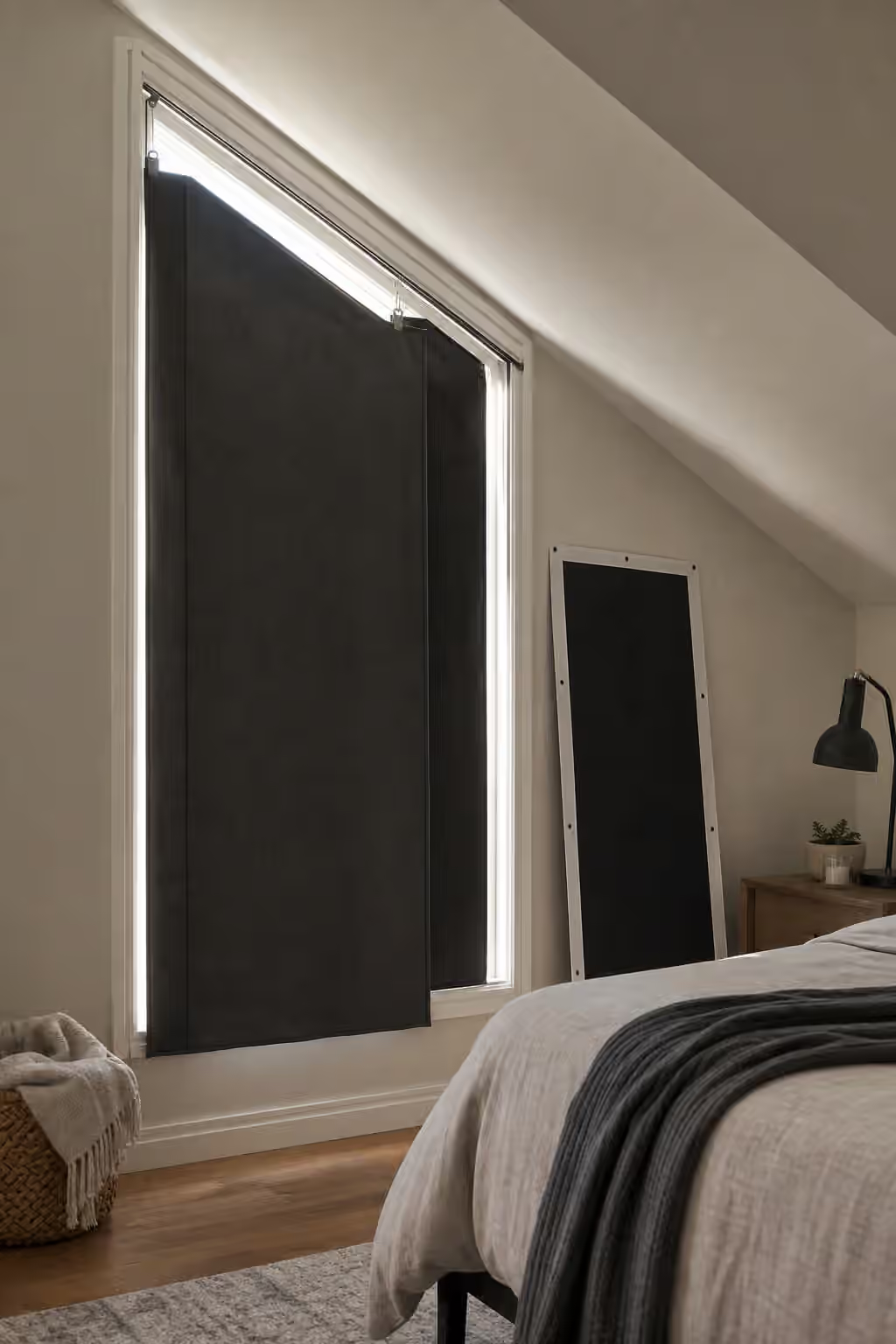
Most blackout advice assumes a polite rectangular window with room for a rod, enough wall on both sides, and a sill that does not interfere with furniture. Many bedrooms are not that tidy. They have arched tops, shallow frames, wide sliders, transom glass, skylights, angled attic windows, deep trim, radiators, air conditioners, casement handles, or landlord rules that limit hardware. For background, see CPSC — Window Covering Cord Safety .
An odd window does not need a perfect showroom solution to become more sleep-friendly. It needs a leak map, a removable plan when necessary, and enough respect for the window’s daytime jobs. The best fix is the one that blocks the light that actually bothers you while still letting the room ventilate, avoid condensation, and feel livable when the sun is up.
Make the leak map first
Start with the same principle as Blackout Curtains Guide : find the leak before buying fabric. Odd windows make this more important because the first obvious product is often the wrong one. A dark curtain may block the center of the glass and leave a bright halo around an arch. A cellular shade may fit the lower rectangle and do nothing for a transom. A tension rod may work in a deep frame and fail completely on shallow trim.
Check the room at the problem hour. Morning light, streetlight, hallway spill, and summer evening brightness behave differently. Stand near the bed, not only near the window, because the sleeper’s view is what matters. Notice whether light comes through glass, around a shade, over the top, under the bottom, through a side gap, or from a second small window that gets ignored during shopping.
Use plain temporary tests before choosing hardware. A towel, cardboard panel, spare curtain, or painter-tape mockup can show whether the leak is at the glass or around the edges. This is not the final setup. It is a way to avoid spending money on the wrong fix.
Separate the permanent layer from the nightly layer
Odd windows often work best with two layers. The permanent layer handles normal daylight privacy and appearance. The nightly layer handles the stubborn light leak. Trying to make one decorative solution do both jobs can lead to heavy fabric, awkward hardware, or a window that nobody wants to open.
For an arched window, the permanent layer may be ordinary curtains hung high and wide, while the nightly layer is a removable insert for the arch. For a transom, the permanent layer may be a shade over the main window, while the transom gets a small panel, film, or separate fabric piece. For a skylight or sloped attic window, the useful answer may be a fitted shade or a removable panel that is easy to store flat. For a wide slider, side overlap and track movement matter more than buying the darkest possible fabric.
This two-layer thinking also helps rentals. Renter-Friendly Blackout and Noise covers the broader rental approach. With odd windows, the rental question is not only whether you can drill. It is whether the fix can be removed without turning each night into a chore. A solution that takes ten minutes to assemble may be abandoned by Wednesday.
Keep the window usable
A bedroom window is not only a hole where light enters. It may provide ventilation, emergency access, a view, a place to check weather, or the only source of natural daylight in a small room. A blackout fix that makes the room dark but traps stale air, hides condensation, blocks a radiator, or prevents the curtain from opening fully can create a new setup problem.
Condensation matters especially on tight or cold windows. If a removable panel presses against the glass and stays there for days, moisture may be harder to notice. If heavy fabric blocks airflow around a window that already sweats, the room may feel damp. Window Drafts and Condensation is a useful companion before sealing every edge.
Ventilation matters too. A blackout panel that must be removed each morning should have a real storage home. A curtain that slides open easily is more likely to be used well. A shade behind furniture may look neat in a photo and become annoying in daily life. If the room needs open-window sleep in mild weather, plan for darkness and air together rather than treating them as separate projects.
Choose materials by behavior
Blackout fabric, rigid foam board, honeycomb shades, removable film, magnetic strips, hook-and-loop tape, curtain tracks, wraparound rods, and compression-fit panels all behave differently. The right material depends on the window, the wall, and the person using it.
Fabric is forgiving and easy to store, but it needs overlap and may sag on unusual shapes. Rigid panels block light well, but they need careful sizing and a place to live during the day. Film can reduce glare or privacy problems, but it rarely solves every bedroom darkness problem by itself. Magnets and hook-and-loop strips can make a nightly panel easier, but they need surfaces that hold reliably and do not damage finishes. Tracks can be excellent for wide or awkward windows, though they ask for more planning than a simple rod.
Do not judge a material only by darkness in your hand. Judge it by how it attaches, how it moves, how it stores, whether it blocks handles or vents, and whether you can use it when tired. A perfect blackout panel that is irritating at bedtime is not a good sleep setup.
Small rooms need visual restraint
Odd-window fixes can make small bedrooms feel busy. A sloped ceiling, a tall curtain, a removable panel, and a compact bed can all compete for attention. If the room already feels tight, use fewer visible parts and calmer colors. A simple dark insert behind a curtain may look better than a web of clips and layers. A wall-color track or shade can reduce visual noise.
This is where Small Bedroom Layout connects to blackout choices. The window treatment has to leave space for the bed, walkway, nightstand, radiator, vent, and curtain movement. If the bed is pressed against the window wall, avoid a solution that requires reaching behind pillows every night. If a desk or dresser blocks the lower window, choose a control point you can actually reach.
Test the ugly version before refining it
There is no shame in testing the ugly version first. Tape up a temporary panel for one morning. Hang a spare blanket to see whether side glow is the real issue. Place a dark removable board over the transom for a weekend. The test should answer one question: did the room feel meaningfully better at the problem hour?
If it did, refine the attachment, fabric, color, and storage. If it did not, the light may be coming from the door, hallway, electronics, or another window. Bedroom Door Gaps may solve a problem that looked like window failure from across the room.
Odd windows reward patience. They are too varied for one standard purchase to solve them all. Map the leak, protect the window’s other jobs, and choose a fix that a tired person can use every night. Darkness should make the room calmer, not turn the window into a nightly engineering project.


