A mattress trial can feel strangely emotional because the bed is large, expensive, and present every night. The first few sleeps often carry too much pressure. A new surface smells different, sits at a different height, changes how sheets pull, and makes the whole room feel unfamiliar. It is easy to decide too quickly that the mattress is perfect because it feels new, or terrible because it does not feel like the old bed. Good trial notes slow that reaction down. For background, see CPSC — Mattresses: Business Guidance .
This guide is about judging the sleep setup you can observe. It is not medical advice, and it cannot tell you what your body should tolerate. If sleep disruption is severe, persistent, painful, or tied to health symptoms, the mattress is only one part of a larger conversation. For everyday product decisions, though, careful notes can separate a real mismatch from a bedding problem, frame problem, pillow mismatch, heat issue, or simple adjustment period.
Keep the room boring during the trial
The first job is to avoid changing everything at once. If you buy a new mattress, new pillows, a new protector, cooling sheets, blackout curtains, a sound machine, and a different bedtime routine in the same week, you will have no idea which change helped or hurt. A mattress trial needs a stable background. Keep the room, bedding, temperature, and pillow setup as familiar as possible for the first stretch, then adjust one variable at a time.
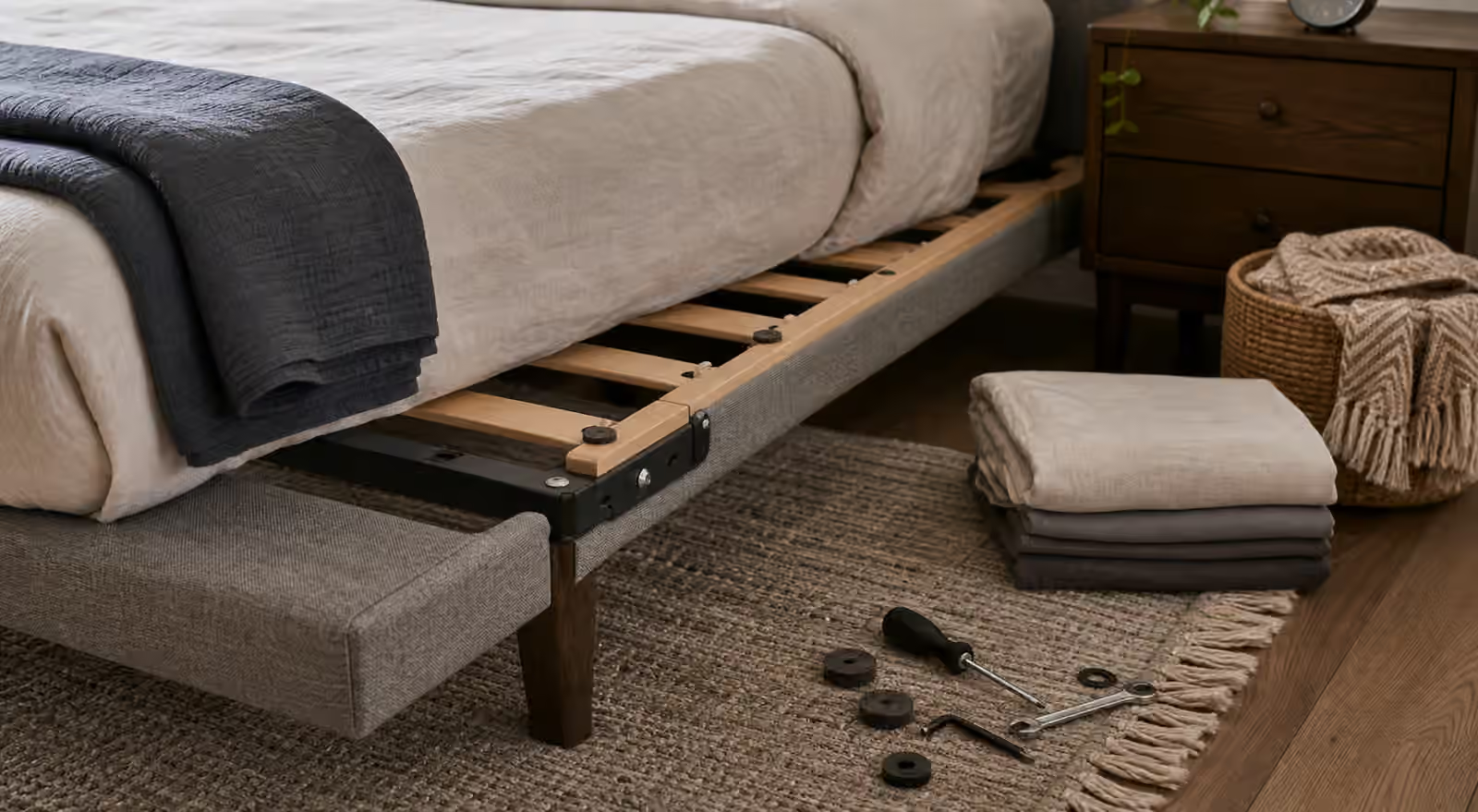
The foundation matters before the feel does. A mattress placed on slats that are too far apart, a sagging box spring, a bowed platform, or a frame with loose center support may feel worse than the mattress actually is. Before judging firmness, check the support under the bed. Bed Frames and Foundations is the companion guide here because the mattress can only perform as well as the surface below it. A trial note that says “lower back felt unsupported” is not complete until the frame is part of the inspection.
Sheet fit also changes the trial. Deep pockets, tight corners, thick protectors, and slippery toppers can make the surface feel different from the mattress in the showroom. A protector that runs warm can make a bed seem hotter than it is. A quilted pad can soften the first impression. If the mattress feels wrong only after the protector or topper goes on, read Mattress Toppers and Pads before blaming the core bed.
Write notes that describe moments, not verdicts
Useful notes are ordinary. They do not need scores, graphs, or sleep-stage claims. The best note names a moment and a setup. Did your shoulder feel crowded when you turned onto your side. Did your hips dip after the room warmed up. Did the bed feel supportive at bedtime but softer by morning. Did one partner notice motion when the other got up. Did the edge feel secure while sitting to put on socks. Those observations help because they connect the mattress to real use.
Avoid notes that only say “bad night” or “great sleep.” Sleep changes for reasons that have nothing to do with the bed: stress, travel, alcohol, late work, illness, noise, weather, and schedule shifts. A mattress note should capture what the bed contributed. If a hot room ruined the night, write that. If the pillow was too tall because the new mattress let your shoulder sink differently, write that. If the bed felt fine but the frame squeaked, write that too.
Couples need separate notes because two people can be testing two different mattresses in the same object. One person may notice shoulder pressure while the other notices heat. One may like the motion isolation and dislike the edge. Another may care most about how easy it is to turn. Couples Mattress Decisions gives language for those tradeoffs. During a trial, the goal is not to win the comfort argument. It is to understand whether the bed can be made workable without making either side quietly tolerate the wrong setup.
Give break-in a fair but limited role
Mattress break-in is real enough to respect and vague enough to misuse. Foams, fibers, covers, and springs can settle after use. Your body may also take time to stop comparing every sensation to the previous bed. That does not mean every problem should be explained away as break-in. A bed that feels mildly firmer than expected may become more familiar. A bed that creates sharp pressure, obvious sagging, unstable edges, or heat that ruins every night deserves closer attention.
Separate three things. The mattress may be changing slightly. Your perception may be changing because the bed is no longer new. The room may be changing because the new mattress altered height, airflow, bedding fit, and pillow alignment. That third category is often ignored. A taller mattress can put the nightstand at the wrong height. A softer surface can make the old pillow too tall. A thick protector can trap heat. A different edge can change how the bed feels when getting in and out.
Mattress Firmness and Feel is helpful because firmness labels are not the same as support, pressure relief, surface feel, or ease of movement. Trial notes should use those distinctions. A bed can feel plush on top and still hold the body well. A bed can feel firm at first touch and still let the hips sink too far. A bed can be supportive but annoying because the cover grips sheets or the edge feels narrow. Break-in will not solve every kind of mismatch.
Control heat before judging comfort
Many mattress complaints are heat complaints wearing a firmness costume. If the room is warm, the protector is dense, the sheets are heavy, and the duvet traps moisture, a mattress may feel too soft, too sticky, or too confining by morning. Before returning a mattress for feel, examine the sleep stack. Cooling Bedding Layers and Bedroom Temperature and Airflow help isolate whether the bed surface or the room environment is doing the damage.
Heat notes should name timing. If the bed feels hot immediately, the surface materials and bedding may be the issue. If it feels fine at bedtime and uncomfortable at 3 a.m., the whole room may be warming or airflow may be weak. If only one person overheats, split bedding may solve more than a mattress exchange. If the mattress feels comfortable with a lighter blanket but not with the usual duvet, the trial has learned something useful.
Humidity can complicate this further. A damp room makes bedding feel heavier and less fresh, while dry air may make a room feel scratchy even when the mattress is fine. Bedroom Humidity and Dry-Air Comfort is worth checking when the mattress feels inconsistent across weather changes. The bed is part of a room system, not a sealed lab sample.
Know when a trial has enough evidence
A trial does not need endless observation. It needs enough ordinary nights to reveal a pattern. One bad night after delivery tells you very little. Several nights with the same specific complaint tell you more. A note that repeats across different stress levels, bedding changes, and room temperatures deserves attention. A complaint that disappears after a pillow adjustment or frame repair is not a mattress verdict anymore.
Return policies and trial rules vary by seller, so keep the practical paperwork organized without letting it dominate the bedroom. Save order details, delivery notes, and any required packaging information in a place outside the bed area. Do not rely on memory for dates or conditions. The administrative side should be tidy enough that you can make a calm decision if the bed does not work.
The best trial ends with a clear sentence, not a dramatic feeling. The mattress works with the existing room after a pillow change. The mattress works for one sleeper but not the other. The mattress feels supportive but too warm with the current protector. The mattress is not compatible with the frame. The mattress creates a repeated pressure problem that does not improve with reasonable adjustments. Those are useful outcomes because they point to the next decision.
Treat the trial as reading, not arguing. The mattress is telling you how it behaves in your room, under your bedding, with your frame, your pillow, your schedule, and your partner if there is one. Careful notes keep that story specific enough to trust.