Firmness numbers sound precise, but they are not universal. One company’s medium-firm can feel softer than another company’s medium.
Separate three ideas: surface plushness, deeper support, and how quickly the mattress responds when you move.

Firmness is not support
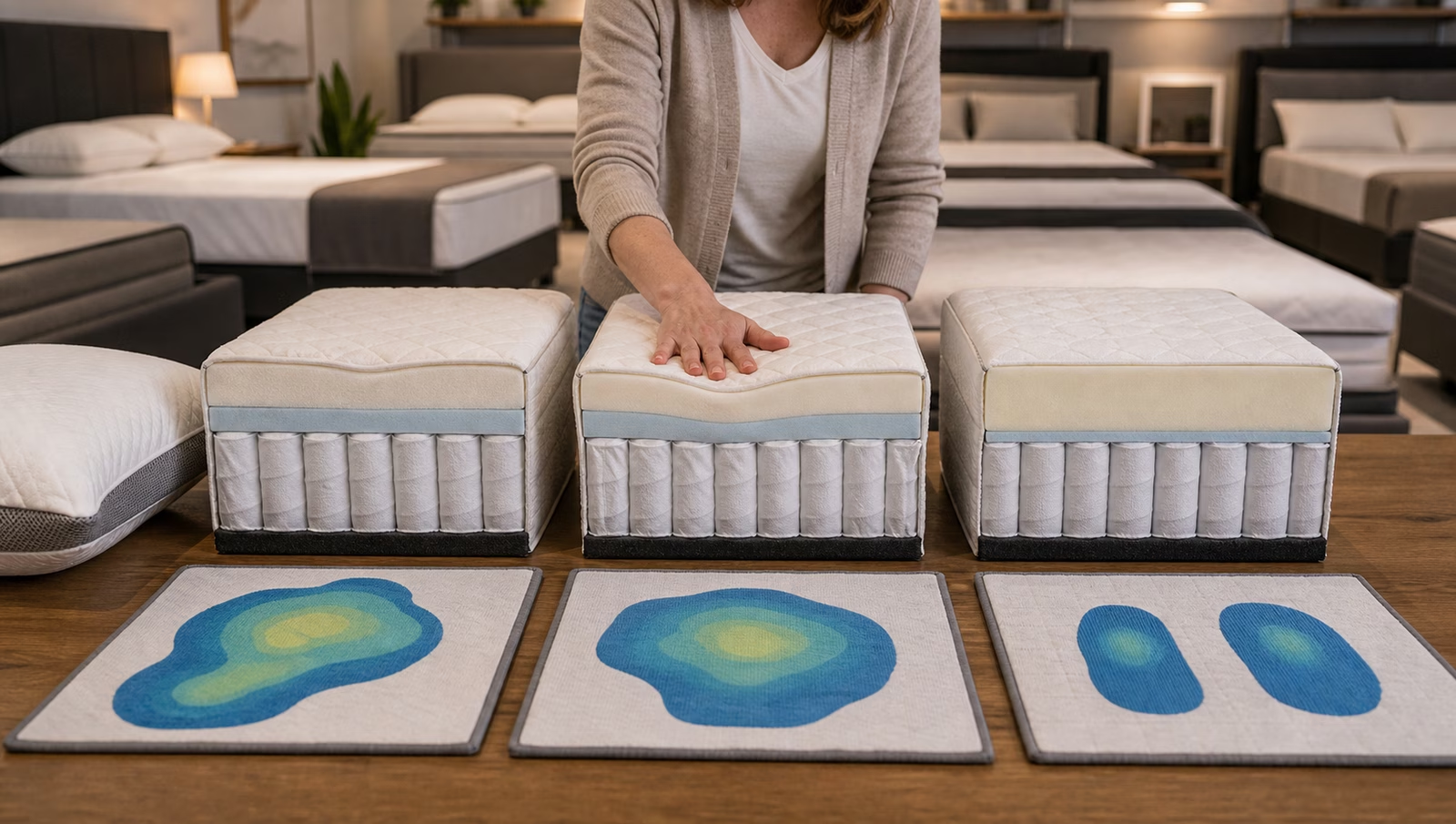
Firmness is the first surface impression. Support is how the mattress holds your body after the comfort layers compress. A plush mattress can still feel supportive. A firm mattress can still feel wrong if it creates pressure or does not match your shape, pillow, and sleep position.
Use the label as a rough map, then judge the real feel.
What to notice
Surface feel is the first impression: plush, flat, quilted, springy, slow, or buoyant. Support feel shows up after your heavier areas have settled into the mattress. Response is how the bed behaves when you roll, sit up, or change position. Temperature is whether the comfort layer traps warmth for you. Motion is how much a partner or pet movement travels across the bed.
Showroom or home-trial test
Lie still for several minutes so the first softness has time to change after compression. Roll from side to back and notice whether the response feels easy or sticky. Sit on the edge if you use the edge at home. Use your normal pillow height, because head position can change the entire feel. Test your usual sleep position rather than the posture that looks neat in a showroom. Notice whether the top layer feels warm after time, not just in the first few seconds.
Do not judge the mattress from a quick hand press. Your hand mostly tests the cover and top foam.
Bring useful notes
Before a showroom visit or home trial, write down your usual sleep positions, the current mattress complaint in one sentence, the pillow height you use now, the bed frame or foundation type, whether you sleep warm or cool, whether edge support matters, and the minimum return window you are comfortable with. These notes keep the decision anchored to your actual room.
Notes to take during a trial
Keep trial notes boring and specific. Record the first impression, the morning complaint if there is one, whether you changed pillows or bedding, whether room temperature changed, how motion felt if the bed is shared, and whether the edge worked for getting in and out.
If every note is vague, wait before deciding. If the same complaint appears several times under normal conditions, the trial is telling you something useful.
Shopping shortcut
Before replacing the whole bed over a firmness complaint, test the smaller variables: an adjustable-fill pillow for loft and a breathable mattress protector if the current protector changes the feel or heat of the mattress.
Testing without overthinking
Lie still long enough for the top layers to compress. Then roll from side to back and sit on the edge. A mattress that feels impressive for thirty seconds may feel annoying when you move normally.
If your pillow is wrong, mattress feel gets harder to judge. Pair firmness testing with Pillow Fit Guide .
Next step
Make one feel change at a time. Firmness only becomes meaningful when the pillow, frame, bedding, and room temperature stay readable.
Apply this guide as a decision record
Use Mattress Firmness and Feel: How to Compare Without Guessing to turn a vague household question into a checkable one. Its scope is specific: A beginner guide to firmness labels, pressure feel, support feel, and mattress trial notes. Before changing the setup, write down the condition you are trying to change, the constraint that matters most, and the evidence you still lack.
For a first pass through mattress firmness and feel, compare the current state with a relevant baseline and record one observation, measurement, or conversation. Make the smallest reversible change available. Keep the manual, model number, room condition, schedule, or maintenance note beside the decision so a future check does not depend on memory. Keep mattress firmness, bed feel in view as separate signals instead of treating them as one verdict.
A useful follow-up asks whether Mattress Firmness and Feel: How to Compare Without Guessing improved the named problem without creating a new one. Check the tradeoff that fits this subject — heat, noise, comfort, water, power, wear, effort, or cost — and describe the result in plain language. If a boundary is safety-critical, stop at the guide’s limit and bring the details to a qualified local professional.
The conclusion for mattress firmness and feel should stay narrow. Record what was observed, which condition made the result possible, what maintenance keeps it dependable, and what would make you revisit the choice. That turns a guidebook into a decision record you can use again rather than a promise to remember.