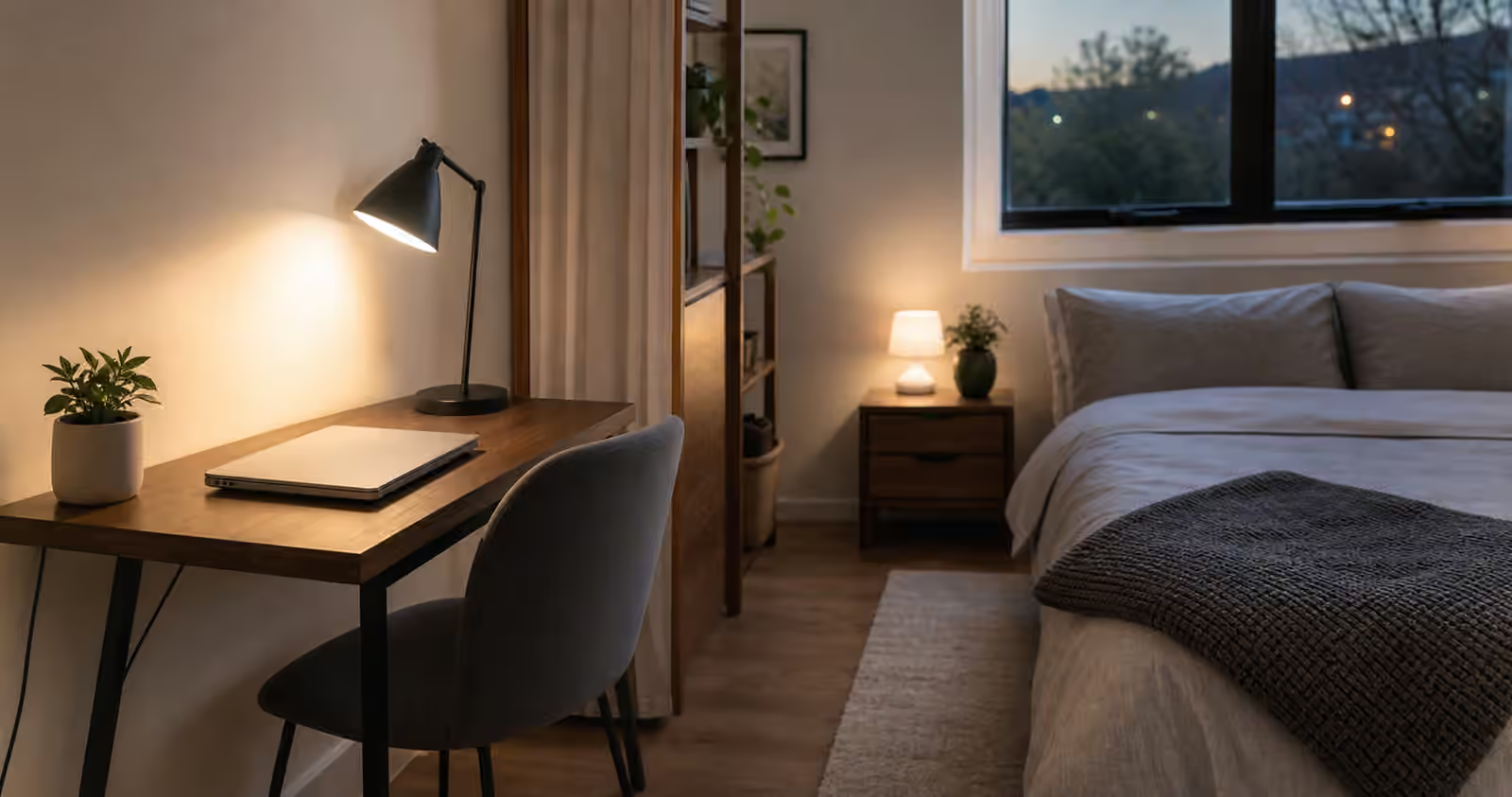
A dorm room is a sleep setup with very little privacy and very little margin. The bed may be narrow, the mattress may not be chosen by the sleeper, the walls may be hard, the window treatment may be basic, and the room may also serve as closet, study space, storage unit, snack shelf, social zone, and morning launch pad. That does not make good sleep impossible. It means the setup has to be deliberate because every object is close to the bed. For background, see CDC/NIOSH — Tips to Improve Your Sleep When Times Are Tough .
This guide uses “dorm” broadly: residence halls, shared student rooms, training housing, temporary shared rooms, and compact bedrooms where the sleeper controls only part of the space. It is not about school policy or building rules. Follow the rules of the place you live, especially around appliances, adhesives, lofting, windows, heaters, sprinklers, and exits. The practical goal is to make the bed zone calmer without pretending the room is a private apartment.
Start with the mattress you actually have
Dorm mattresses are often firm, thin, vinyl-covered, or simply unfamiliar. Before buying layers, inspect the size, depth, condition, and support. Many dorm beds use twin XL sizing, but assumptions create bad sheet fit. Measure the mattress and the finished bed height, especially if the frame is lofted or raised for storage. A fitted sheet that pops off every night will make the bed feel worse than it is.
A topper can help, but it is not always the first purchase. A thick topper raises the bed, changes sheet depth, traps more heat, and becomes another bulky object to move and store. Mattress Toppers and Pads explains the difference between changing feel and adding maintenance. In a dorm, the best layer is often the one that improves comfort without making laundry, packing, and heat worse.
Protectors matter because shared buildings are hard on bedding. Choose something washable and properly fitted, but remember that a dense protector can make the bed warmer. If the mattress feels hot, do not blame the room immediately. The stack may be doing it. Cooling Bedding Layers is useful for building a bed that can survive both overheated rooms and cold nights without requiring a pile of blankets.
Keep the bedding simple enough to wash
A dorm bed needs bedding that can be carried, washed, dried, and remade without taking over the day. Complicated layers look comfortable until laundry becomes impossible. A simple sheet set, a washable top layer, a spare pillowcase, and one flexible blanket usually work better than a decorative stack that spends most of the semester on the floor.
Think about the route from bed to laundry. If the laundry room is far away, if machines are crowded, or if drying takes patience, heavy bedding becomes a tax. Bedding Wash and Rotation applies strongly here. Bedding that cannot be cleaned easily will eventually stop feeling like comfort and start feeling like storage.
Pillows deserve restraint too. One main pillow that fits the mattress and sleep position is more useful than several pillows with no home. If the bed doubles as seating, a back pillow or small support cushion may help, but it needs a landing place at night. Pillow Fit Guide can help if the dorm mattress changes the height your neck expects.
Make light control personal and reversible
Dorm windows, hallway light, roommate lamps, phone screens, and glowing devices can all reach the bed. You may not be allowed to change window treatments, and you may not control when another person needs light. That makes personal light control more important. A good sleep mask, a low-glare bedside lamp, and a habit of turning screens away can do more than a fight over the overhead light.
Sleep Masks and Earplugs is a core dorm guide because the room may never be dark enough for everyone at the same time. Choose a mask that fits your face and has a known storage spot. A mask lost in the sheets is not a system. Earplugs need the same respect: clean storage, realistic alarm planning, and awareness of what you still need to hear.
If you are allowed to add temporary window help, use the reversible thinking from Renter-Friendly Blackout and Noise . Do not damage paint, block vents, cover heaters, or trap moisture against glass. A dorm room is often inspected, shared, and repaired by someone else. Sleep setup should not create move-out problems.
Soften sound without starting a volume war
Shared rooms make noise negotiation unavoidable. One person studies late. Another wakes early. Doors close in the hall. Someone’s phone vibrates on a hard desk. The goal is not to demand silence from a building that cannot offer it. The goal is to make small sounds less sharp and preventable sounds less frequent.
Soft surfaces help. A washable rug beside the bed, curtains if allowed, bedding that does not rustle loudly, and fabric storage can reduce the hard-room echo that makes every sound feel closer. Bedroom Acoustics and Echo Control gives the broader method. In a dorm, acoustic changes must stay compact and easy to clean.
Sound masking can help if it is agreed upon. A small white-noise machine, fan, or air purifier should run at a modest level and sit where it helps the source of noise rather than blasting the sleeper. White-Noise Machine Guide explains placement. Headphones may seem easier, but sleeping in devices that are uncomfortable or unsafe for you is not a durable plan. The room setup should reduce friction before gadgets become the only answer.
Give every night object a landing place
Dorm clutter forms quickly because the bed is the largest horizontal surface. Books, chargers, earbuds, water bottles, laundry, toiletries, bags, and snack wrappers all land there unless the room gives them a better home. The sleep setup needs a small landing system close to the bed and a larger storage system away from the pillow.
A tray, clip-on caddy, small drawer, or shelf can hold glasses, mask, earplugs, charger, water, and one current book. Under-bed storage can hold less-used items if it does not block airflow, cords, or access. The chair should not become the laundry system. Storage and Bedside Setup is especially useful in a dorm because there is no spare corner for mystery piles.
Cables need discipline. A phone charger crossing the ladder, floor path, or roommate side of the room will become annoying and possibly unsafe. Use simple cable routing that can be removed cleanly. Nightstand Charging and Cables covers the habit: fewer cables near the pillow, dimmer device lights, and a consistent place to charge.
Handle airflow without taking over the room
Dorm rooms often run hot, cold, dry, or stale depending on the building and season. You may not control the HVAC. A small fan can help, but placement matters in a shared room. Do not aim strong airflow across another bed or across loose papers. Do not block vents, heaters, windows, or required clearance. Keep fan cords out of walking paths and clean the fan often enough that it does not become a dust spreader.
Bedroom Fan Placement and Bedroom Temperature and Airflow both apply, but the dorm version has more negotiation. One sleeper’s breeze can be another sleeper’s irritation. A lower setting, better angle, or fan near the window side may solve more than a stronger fan.
Humidity and odor are also shared-room issues. Wet towels, drying laundry, snack trash, shoes, and packed storage can make a small room feel stale fast. Bedroom Scent and Odor Control starts with source control rather than fragrance, which is the right habit in a room where scent preferences differ.
Make roommate boundaries physical and polite
The best dorm sleep setup includes visible signals. A small lamp instead of the overhead light. Headphones or low volume after a shared hour. A closed curtain if the bed has one. A known place for alarms. A quiet morning path. A habit of moving conversations outside when someone is trying to sleep. These are not products, but they matter as much as the bedding.
Shared Bedroom Light and Schedule gives language for this kind of room. It helps to discuss defaults before everyone is tired. What light is okay late. What happens with alarms. Where guests sit. How laundry and food stay out of the sleep zone. What counts as quiet when one person is asleep and the other is awake.
A dorm room will never behave like a private sleep suite. That is not the standard. The standard is a bed zone that can be reset quickly, bedding that can be washed, light and sound tools that are personal rather than dramatic, and roommate habits that reduce preventable friction. In a small shared room, modest systems are stronger than perfect intentions.