
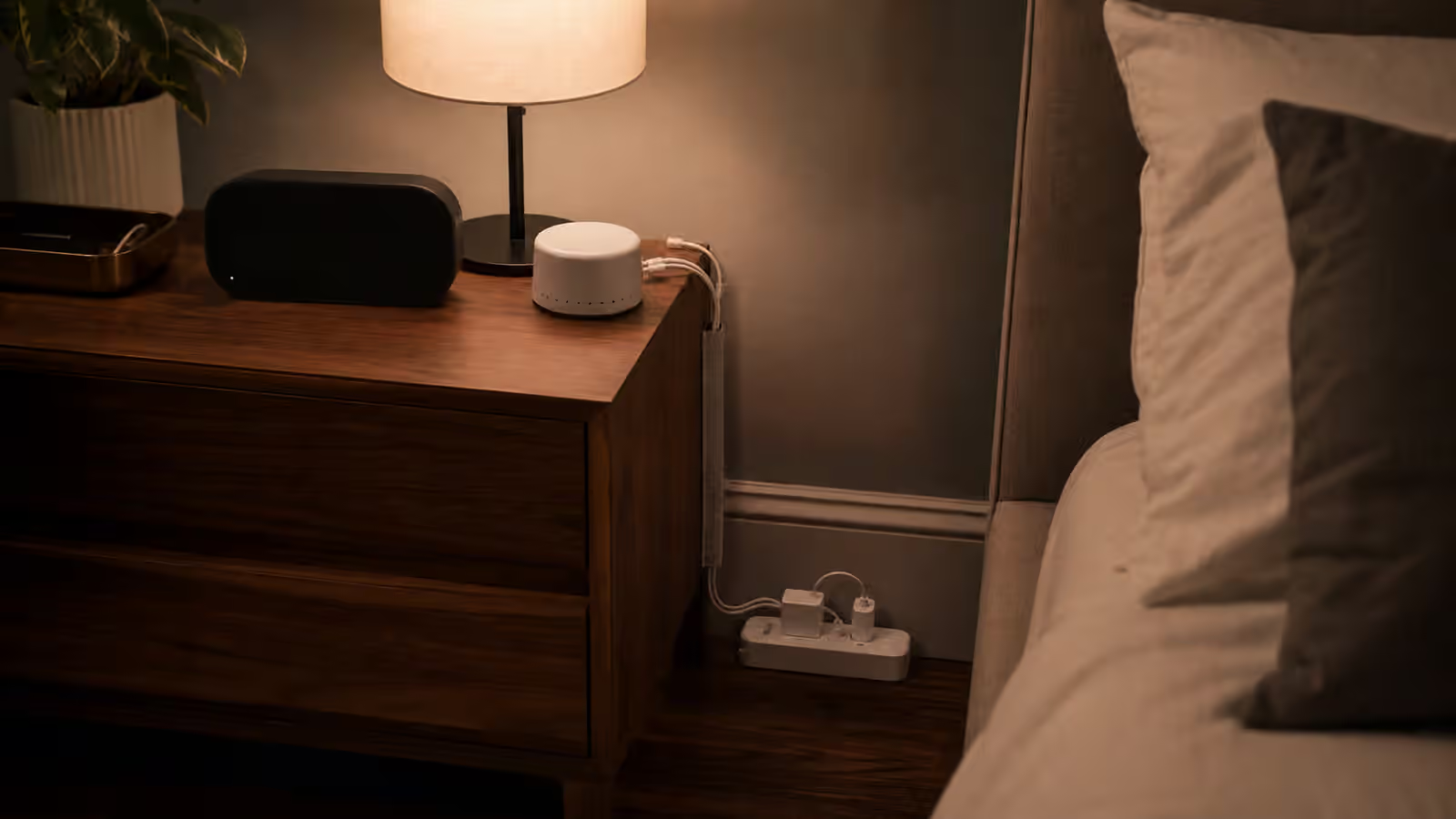
Small electronics can make a bedroom feel busier than it looks. A charger glows from the floor. A clock is dim enough at bedtime and too bright at 3 a.m. A power brick hums faintly near the pillow. A tracker, speaker, humidifier, router, fan, or air purifier adds one more status light. None of these objects seems worth a room reset by itself, but together they can keep the bedroom from feeling fully dark or quiet. For background, see CDC/NIOSH — Tips to Improve Your Sleep When Times Are Tough .
This guide is about tiny irritations, not a demand to remove technology. Many devices are useful. A sunrise alarm may make mornings gentler. A white-noise machine may mask street sound. A phone charger may be necessary. The question is whether each device earns its place near the bed and whether its light, sound, cable, and controls are calm enough for the room.
Audit the room after lights out
Electronics should be judged in the room state where they matter most. Stand in the bedroom during the day and everything looks harmless. Turn off the lamp, let your eyes adjust, and the room changes. Tiny LEDs appear on chargers, strips, speakers, air filters, toothbrush bases, watches, clocks, routers, fans, and cable boxes. Some reflect off glossy furniture, white walls, mirrors, or framed art. Others are hidden from the doorway but visible from the pillow.
Do the same with sound. A device that is inaudible while the household is active may hum in a quiet room. A charger can whine. A fan motor can pulse. An air purifier can rattle against furniture. A dimmer switch, adapter, or older power supply can make a faint electrical sound that is hard to locate. The point is not to become suspicious of every device. It is to inspect the room in the conditions where small things become noticeable.
Sleep Trackers: What to Compare encourages comparing devices by what they actually add. Use the same standard here. If a device is helpful, make it quieter and darker. If it adds little, move it, unplug it, or remove it from the bedroom.
Move devices away from the pillow zone
The pillow zone should be the strictest part of the room. Lights and hums feel more intrusive when they sit close to the face. A power strip under the head end of the bed, a glowing charger on the nightstand, or a speaker inches from the pillow can feel louder and brighter than the same device across the room.
Start with distance before buying accessories. A router may not belong in the bedroom at all if another location works. A charger can move to a dresser if the phone does not need to be used as an alarm. A humidifier or air purifier may work better across the room, depending on the device instructions and airflow path. A white-noise machine can sometimes sit between the sleeper and the noise source rather than directly beside the head.
Nightstand Charging and Cables is the closest companion guide. The nightstand should hold what needs to be touched from bed, not every powered object the room owns. A cleaner nightstand is not only visual. It reduces the number of lights, cords, buttons, and sounds within arm’s reach.
Dim, cover, or turn around status lights
Many status lights exist for setup and troubleshooting, not for sleep. Once a device is working, the indicator may not need to face the bed. Turning the device, placing it lower, choosing a dimmer mode, or using manufacturer settings can solve the problem without hacks. Some clocks and alarms have true low-light modes. Some air purifiers let display lights turn off while the fan continues. Some smart speakers can reduce or disable indicator behavior, though settings vary.
If a light cannot be disabled, a small piece of removable dimming film or opaque tape can help, provided it does not cover vents, sensors, heat openings, microphones that need to work, or safety indicators. Do not seal a device, block airflow, or hide warning lights that matter. The fix should be reversible and boring.
Sunrise Alarm Buying Guide is relevant because wake lights and clocks often live in the same bedside territory. A good wake device should be gentle in the morning and quiet at night. If its display lights the room all night, the morning benefit may be paired with an evening cost.
Find hums by simplifying the room
Faint hums are hard to solve because they bounce around the room. The simplest method is temporary simplification. Unplug nonessential devices one at a time during a time when the room is quiet. Move a device away from the wall and see whether vibration changes. Lift a power brick off a hard surface. Check whether a cable is touching a bed frame, nightstand, or resonant drawer. A tiny vibration can sound larger when furniture amplifies it.
Fans, air purifiers, humidifiers, and white-noise machines deserve special attention because they are intentionally sound-producing or motorized. A steady sound may be helpful. A rattling, pulsing, buzzing, or intermittent sound is different. Placement can change the character. A device on a soft, stable mat may sound calmer than one on a hollow nightstand. A fan aimed across the room may be more comfortable than one buzzing near the ear. Bedroom Fan Placement covers that airflow side.
Do not chase silence so aggressively that useful masking disappears. Some bedrooms feel calmer with a steady sound floor, especially near traffic, neighbors, or household noise. White-Noise Machine Guide explains how to choose and place that sound intentionally. The goal is not a perfectly silent room. It is a room without accidental electrical chatter.
Keep smart controls understandable
Smart devices can reduce friction or create it. A lamp that turns off from bed is useful. A room where every light depends on an app is fragile. A fan schedule can help. A fan that cannot be adjusted without a phone at midnight is annoying. A smart plug can remove a glowing charger from the night, but only if everyone knows what it controls.
Smart Bedroom Without Fuss gives the right standard: automate one repeatable annoyance and keep manual control. Bedroom electronics should be understandable when tired, in the dark, and without troubleshooting. Labels can help inside a drawer or on a power strip if they are not visible clutter. Physical buttons still matter. A guest should not need a technical briefing to turn off a lamp.
Privacy belongs in the same conversation. Bedrooms are intimate rooms. Devices with microphones, cameras, cloud accounts, motion sensing, or subscriptions should earn trust as well as convenience. You do not need to make every device suspicious, but you should know what is listening, seeing, notifying, updating, or recording. If a feature is not useful in the bedroom, disable it or choose a simpler device.
Give charging a bedtime boundary
Charging clutter often starts with reasonable needs. A phone, watch, earbuds, reader, tracker, lamp, alarm, and speaker all need power. The problem is when every charge point moves to the nightstand and the bedside becomes a small dock. More cables mean more light, more dust, more objects to knock over, and more reasons to reach for a screen.
Choose what truly charges beside the bed. The phone may move across the room if a separate alarm exists. Earbuds may charge at a desk. A reader may charge during the day. A tracker may need a small tray but not a glowing cable near the pillow. Cable clips, short cords, and a tucked power strip can help, but the better move is reducing bedside charging to what belongs there.
The electronics setup is finished when it fades into the room. The useful devices still work. The lamp turns off cleanly. The alarm wakes without lighting the ceiling all night. The charger does not glow from the floor. The power strip does not hum under the pillow. Quieting these small irritations will not solve every sleep problem, but it gives the bedroom one of its basic qualities back: when the lights go out, the room should feel like it agrees.


