A basement bedroom can feel wonderfully quiet, protected from bright morning sun, and separate from the busier parts of a home. It can also feel cool, damp, stale, dim, dusty, or cut off from the routines that make a bedroom easy to maintain. The lower-level location changes how air, moisture, light, storage, and sound behave. A good setup respects those differences instead of decorating the room as if it were a sunny upstairs bedroom. For background, see EPA — A Brief Guide to Mold, Moisture and Your Home .
This guide is about ordinary sleep setup, not building approval, code compliance, or remediation. Basement rooms raise safety and building questions that vary by place and structure. If the room has water intrusion, visible mold, persistent musty odor, combustion concerns, unsafe exits, electrical problems, or any question about whether it should be used as a bedroom, treat that as a professional building issue. Bedding and gadgets do not fix an unsuitable room.
Read moisture before you furnish heavily
Moisture is the first basement bedroom question because it changes everything else. A room can feel cool and still be humid. Bedding can feel heavy. Rugs can hold odor. Closets can smell stale. Cardboard storage can soften. A mattress placed tight against a damp wall or on a poorly ventilated surface may become harder to keep fresh. Before adding more fabric, measure and observe.
An inexpensive indoor humidity monitor can help you stop guessing. Watch the room at different times: after rain, after laundry, after a shower nearby, after closing the door overnight, and after running HVAC or a dehumidifier. Bedroom Humidity and Dry-Air Comfort is the companion guide because it explains why moisture changes comfort even when temperature looks reasonable.
Do not hide dampness with fragrance. A basement bedroom that smells musty needs source awareness: water, condensation, storage, poor ventilation, dirty textiles, or materials that stay damp. Bedroom Scent and Odor Control starts with source control for this reason. Fresh scent is not freshness if the room is still holding moisture.
Keep the bed away from problem surfaces
Basement bedrooms often have exterior walls, low windows, utility access, columns, or odd corners. The bed should not be pushed into the coldest, dampest, or least ventilated spot just because the floor plan is awkward. Leave breathing room around the mattress and headboard when the room allows it. Avoid trapping bedding against a wall that shows condensation, staining, or a stale odor.
The support under the mattress matters even more in a lower-level room. A mattress directly on the floor may look minimal, but it can reduce airflow and make moisture harder to notice. A suitable frame or foundation creates clearance, makes cleaning easier, and gives the bed a better chance to stay fresh. Bed Frames and Foundations covers the support decision; in a basement, add moisture awareness to every support choice.
Bed placement should also respect windows, exits, heaters, vents, and access panels. This guide cannot tell you what your building requires, but it can state the sleep-setup principle: do not let the bed block the room’s safe and practical functions. A bedroom that only works when the bed blocks a window, vent, electrical panel, or door is not actually working.
Choose washable layers over bulky softness
Basement rooms often invite heavier bedding because they feel cooler. That can be comfortable in winter and unpleasant in damp weather. Heavy comforters, thick mattress pads, dense pillows, and layered throws may hold moisture and odor longer than lighter washable layers. Warmth should come from a system you can clean and adjust, not from a permanent pile.
Duvet, Comforter, and Blanket Choices helps compare warmth and care. A duvet with a washable cover, a breathable blanket, or split layers may be easier to manage than one huge comforter that rarely gets cleaned. Bedding Wash and Rotation matters because basement bedding should not wait until it smells stale to be refreshed.
Protectors and toppers need care too. A waterproof protector may be useful in some homes, but a hot or crinkly layer can make the bed feel clammy. A plush topper can soften a firm mattress, but it adds another thick textile to air out and store. Mattress Toppers and Pads can help decide whether a layer is solving comfort or adding maintenance.
Build airflow as a path, not a blast
Basement air can feel still because windows are smaller, doors stay closed, and the room may sit far from the main airflow patterns of the home. A fan can help, but direct air on the bed is not always the right answer. The goal is a path that keeps air from pooling around the bed, closet, and floor level without making the room feel drafty.
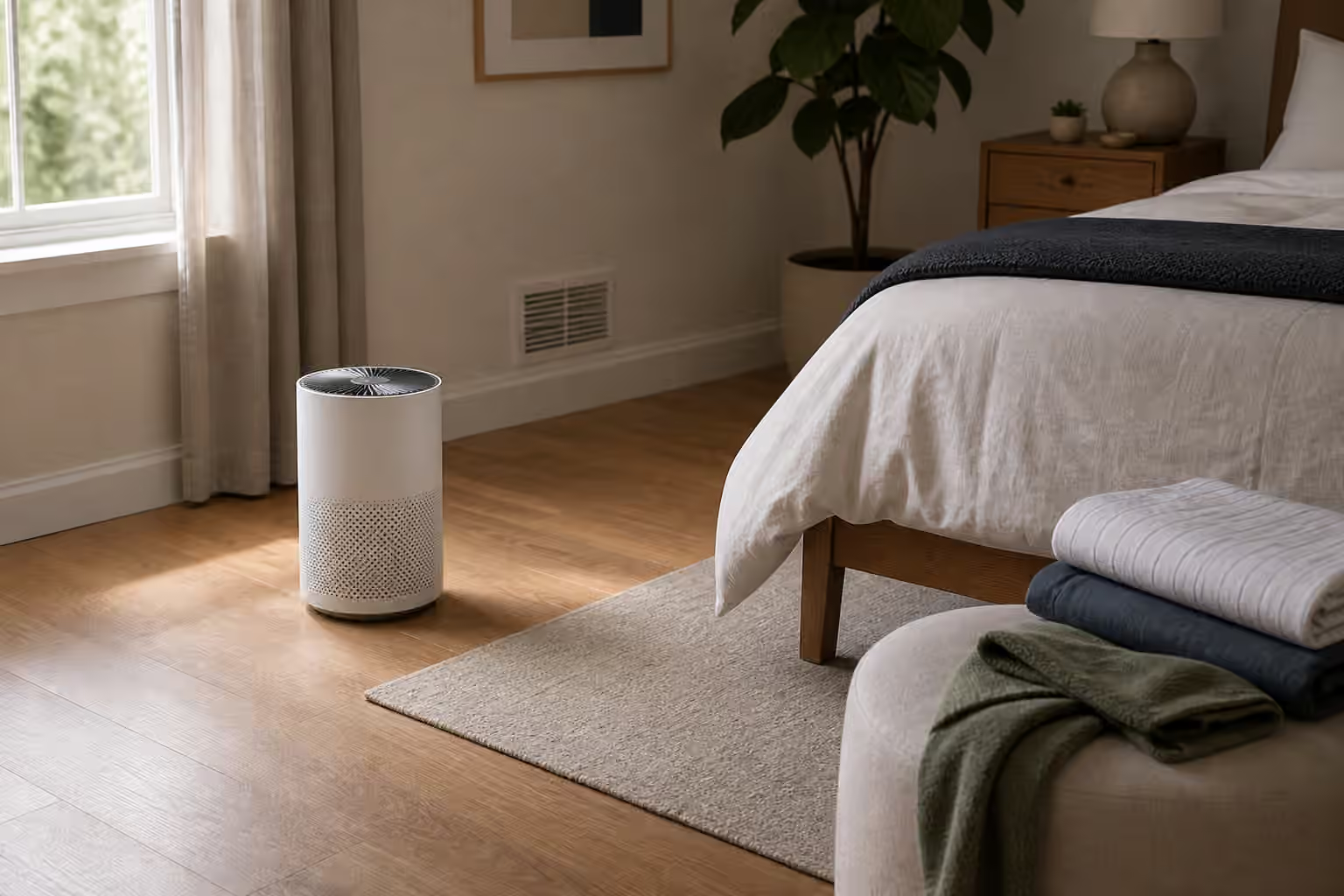
Check vents, returns, door gaps, and window habits. Keep furniture away from airflow paths. If a dehumidifier or air purifier is used, place it where intake and outlet are not blocked by bedding, curtains, storage bins, or the bed frame. Bedroom Air Quality Basics gives the broader room method, while Bedroom Fan Placement helps keep moving air from becoming noise, dust, or cord clutter.
Devices in basement bedrooms should be easy to maintain. A dehumidifier tank that is difficult to empty will be ignored. A purifier filter hidden behind storage will be forgotten. A fan under a dusty shelf will spread the room’s problem. Choose device locations that can be cleaned and reached on an ordinary weekday.
Add light without pretending it is upstairs
Some basement bedrooms are naturally dark, which can help sleep. The problem is the transition before bed and after waking. If the room has little daylight, it may feel hard to wake, clean, or notice dust and moisture. If the room has a low window, it may need privacy and light control at the same time. The goal is not to flood the room with harsh brightness. It is to give the bedroom a usable light rhythm.
Use layered lighting: a bedside lamp, a room light that can be used for cleaning, and a morning cue if the room feels too disconnected from daylight. Sunrise Alarm Buying Guide may help when mornings are abrupt in a dark lower-level room. Lighting and Evening Reset helps keep the night side calm so the added light does not become glare.
Window treatments should not trap moisture against glass or block needed access. Heavy blackout solutions may be unnecessary if the room is already dark. Privacy, condensation, airflow, and cleaning may matter more than maximum darkness. If the basement window leaks light from a streetlamp or walkway, Blackout Curtains Guide can still help, but use it with moisture awareness.
Control storage before it becomes the room
Basements attract storage. Extra bedding, luggage, seasonal decorations, tools, sports gear, documents, and boxes tend to migrate toward any lower-level room with free floor space. A bedroom cannot stay fresh if it also becomes an overflow closet. Storage should be deliberate, off the floor when possible, and kept away from the bed’s airflow.
Avoid cardboard near the sleep zone in damp rooms. Use storage that can be inspected and cleaned. Leave space around exterior walls if moisture is a concern. Keep under-bed storage minimal and low-use, because frequent digging stirs dust and makes the bed area feel like a warehouse. Storage and Bedside Setup is relevant because the basement bedroom needs stricter boundaries than a room with more air and daylight.
Rugs deserve the same discipline. A rug can warm the floor and soften sound, but it should not hide moisture or block a door. Choose something cleanable and sized for the actual floor path. Bedroom Rugs and Floor Paths keeps the comfort choice from becoming a tripping or maintenance issue.
Let quiet stay useful
Basement rooms can be acoustically calmer than upstairs rooms because they are separated from street and household activity. They can also carry mechanical hum, pipe noise, footsteps from above, or laundry sounds. Before adding sound masking, identify what kind of sound you are handling. A white-noise machine may help with upstairs footsteps, but it may not be needed if the room is already steady and quiet.
Bedroom Acoustics and Echo Control is useful when the room feels hard or hollow. Soft surfaces can help, but in a basement they must remain cleanable and moisture-aware. A thick rug that quiets footsteps but holds damp odor is not a sleep improvement.
A good basement bedroom feels intentionally lower-level, not like an upstairs room forced underground. It has measured moisture, a supported bed, washable layers, practical light, clear airflow, disciplined storage, and honest attention to safety. When those basics are handled, the room can use its natural quiet and darkness well. The calm comes from respecting the basement, not ignoring it.