An adjustable bed base can make a bedroom feel more flexible, but it also adds moving parts to a room that may already be short on space. The head section rises, the foot section may lift, the mattress bends, cables need power, the remote needs a home, bedding shifts differently, and the finished bed height may change. A good setup treats the base as furniture first and technology second. It has to support ordinary sleeping, reading, getting in and out, cleaning, and shared use without making the bed feel like a control panel. For background, see CDC/NIOSH — Tips to Improve Your Sleep When Times Are Tough .
This guide is about comfort, layout, and maintenance, not medical positioning advice. Adjustable bases are sometimes used for health reasons, but those questions belong with qualified professionals and product instructions. For a normal bedroom setup, the useful work is to ask whether the base fits the mattress, the room, the person using it, and the routines around the bed.
Confirm the mattress and base are meant to work together
Not every mattress belongs on an adjustable base. Some bend easily. Some may be too stiff, too thick, too heavy, or unsupported by the manufacturer for adjustable use. Before thinking about reading angles or remotes, confirm compatibility from the mattress and base information you actually have. Guessing can turn an expensive setup into a warranty and comfort problem.
The foundation question still matters. Bed Frames and Foundations explains how support under a mattress affects feel. An adjustable base changes the support because the surface moves. That movement can make a mattress feel slightly different in flat mode and raised mode. If the bed feels fine flat but awkward when raised, the issue may be mattress behavior, base angle, pillow setup, or bedding tension rather than a simple firmness problem.
Mattress thickness deserves attention. A very thick mattress may bend reluctantly or push the sleeper into an awkward curve. A thinner mattress may bend more easily but feel different from what the sleeper expects. The base does not erase the need for good mattress fit. Mattress Firmness and Feel is still relevant because incline can change pressure at the hips, shoulders, and knees.
Choose the reason for the incline
An adjustable base is easier to set up when each favorite position has a job. Reading in bed is a different job from watching a show, resting with legs raised, reducing pressure during a short break, or making it easier to sit up. If every use becomes one vague “up” position, the base may be raised too high, too often, or in a way that fights pillows and bedding.
The reading position usually needs less angle than people expect. A gentle lift combined with a pillow that supports the upper back can be more comfortable than a dramatic bend at the waist. A high angle may look useful but push the body downward, crease bedding, or make the neck work harder. If the mattress surface becomes a slide, lower the angle before adding more pillows.
Evening use should respect the rest of the sleep setup. Bright screens, awkward remotes, and late-night cable tangles can undo the benefit of a comfortable incline. Lighting and Evening Reset helps keep the raised-bed mode from turning into a work station. The bed can support reading without becoming the room’s second desk.
Give cables a safe and boring route
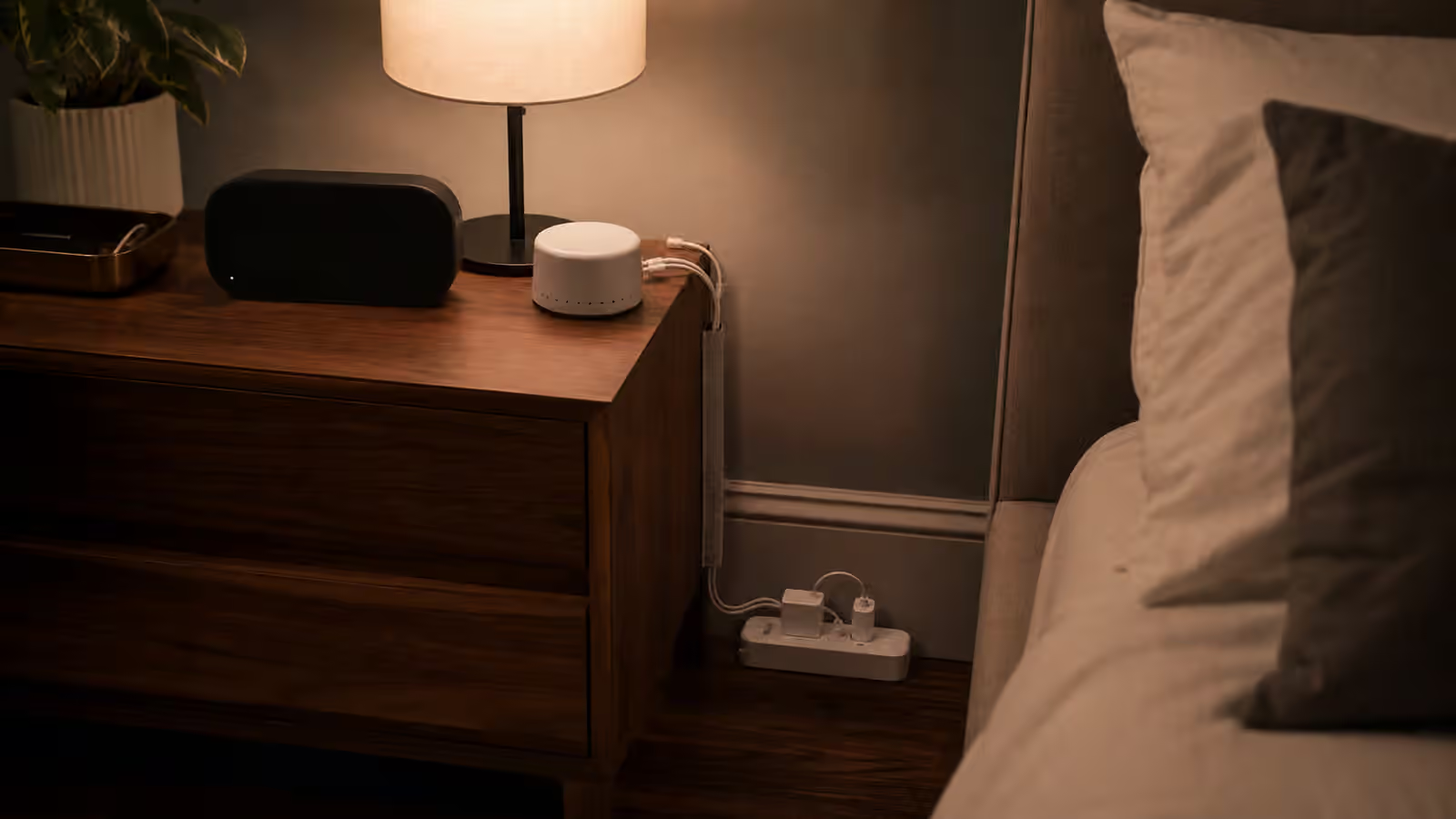
Power cords and control cables are part of the base now. They should not cross the walking path, pinch under moving parts, tangle with nightstand charging, or hide where they cannot be inspected. The best cable route is boring: short enough to be tidy, loose enough for movement, and visible enough that cleaning does not become risky.
Move the bed through its range after routing cables. Watch what happens near the wall, headboard, nightstand, and under-bed storage. A cord that looks fine when the bed is flat may pull tight when the head rises. A power strip tucked behind a leg may be hard to reach. Under-bed bins can block the mechanism or make cleaning around cables frustrating. Nightstand Charging and Cables covers the bedside side of this problem, but adjustable bases add a moving furniture layer beneath it.
The remote needs a home. If it lives loose in the sheets, it will be lost, pressed accidentally, or knocked onto the floor. A drawer, tray, side pocket, or consistent nightstand spot is enough. Avoid putting the remote where it crowds water, glasses, medications, or lamps. A control is useful only if it can be found when the room is dark and nobody wants to search the bedding.
Check bedding when the bed moves
Bedding behaves differently on an adjustable base. Fitted sheets may pull at the corners. Mattress protectors may bunch. Heavy duvets may slide toward the foot. A top sheet may tug when the head rises. A blanket that looks tidy while flat may become tight across the knees or loose around the shoulders in raised positions.
Start with the simplest bedding stack that works. Deep fitted sheets may help if the mattress is thick or movement pulls corners loose. A flexible protector is usually better than a stiff one if the mattress bends often. A lighter top layer may be easier to manage than a heavy duvet if the bed is raised for reading most nights. Duvet, Comforter, and Blanket Choices and Sheets Materials Guide are practical companions because fabric choice becomes more visible when the surface moves.
Couples may need separate bedding if one person uses the base often and the other wants a flatter sleep surface. Split bases and split mattresses bring their own sheet and blanket decisions. Even without a split base, Split Bedding and Blankets can reduce tugging when one person reads raised and the other is ready to sleep.
Re-check bed height and nightstand reach
An adjustable base can raise the finished bed height. That changes how easy it is to sit, stand, reach the nightstand, make the bed, and clean underneath. A comfortable mattress can become annoying if the finished stack is too tall for everyday use. Before keeping new nightstands or buying a taller lamp, sit on the bed at ordinary times: getting up, putting on socks, reaching water, setting down a book, and turning off the light.
Bed Height and Nightstand Reach gives the broader method. With adjustable bases, check both flat and raised positions. A nightstand may be perfect when the bed is flat and oddly low when the head is raised. A lamp shade may glare from a new angle. A glass of water may be reachable in one position and risky in another.
Cleaning access also changes. Some adjustable bases leave less clear space underneath than a simple frame. Others reveal motors, cords, or legs that collect dust. If the bedroom already struggles with dust, Bedroom Air Quality Basics matters more, not less. A base that cannot be cleaned around will age poorly in a bedroom.
Make shared use explicit
Shared beds need explicit defaults. What position does the bed return to before sleep. Where does the remote live. Is the massage or motor sound acceptable late at night. Does one person raise the head while the other is already asleep. Does the base make it harder for a pet to settle or for one person to get out quietly. These are small questions until they repeat.
An adjustable base should reduce friction, not create a private machine in the middle of a shared room. Shared Bedroom Light and Schedule is relevant because the base has a schedule and a sound profile, just like lamps and alarms. If one person uses the raised position for reading, that may require warmer light, quieter controls, and a bedding plan that does not pull across the other side.
The base should also have a simple reset. Flat position, remote back in place, cables clear, blankets untangled, and walking path open. If the bed is left raised, tangled, and visually busy every morning, the room can start to feel less restful even if the base itself is comfortable.
Keep the useful features and ignore the rest
Many adjustable bases include features that sound more important in the showroom than they feel in the room. Preset positions, under-bed lights, charging ports, massage modes, app controls, and memory settings may be useful, but only if they stay out of the way. A bright under-bed light or complicated app is not an upgrade if it makes the bedroom feel more technical at night.
Use the features that solve real situations. A quiet preset for reading, a flat reset, and easy control may be enough. If a feature is not used after the first week, let it stay irrelevant. The best adjustable base setup disappears into the routine: the mattress is compatible, the angle is modest, the cables are routed, bedding moves cleanly, and the room still feels like a bedroom.