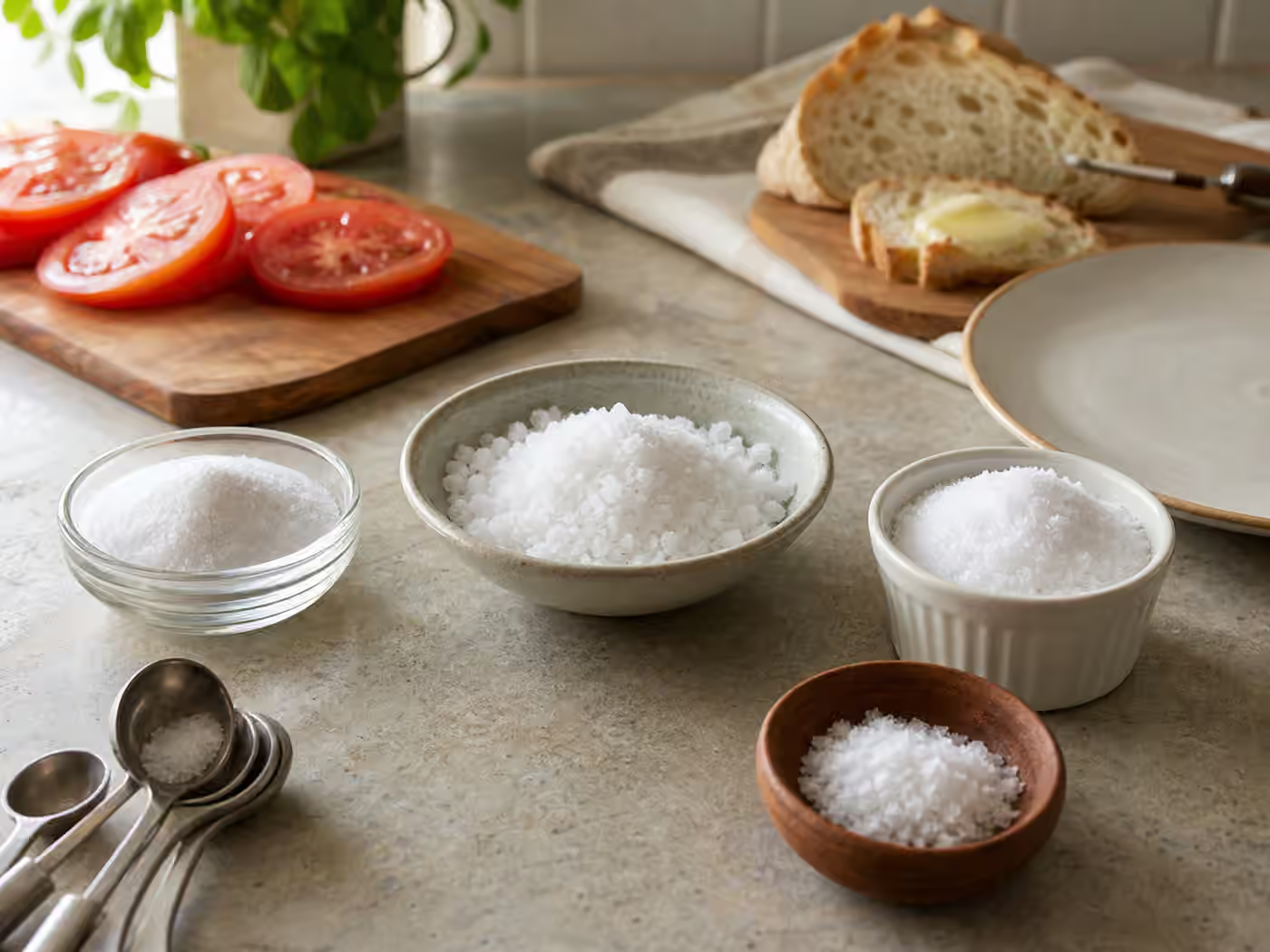
Most salt confusion begins at the grocery shelf, not at the stove. The labels look simple enough: table salt, kosher salt, sea salt, fine sea salt, flaky sea salt, iodized salt, non-iodized salt. Then a recipe asks for a teaspoon of one, your pantry contains another, and suddenly a basic ingredient feels like a trap.
The useful answer is not that one label is always better. The useful answer is that labels point toward different physical behavior. Some salts are fine and dense. Some are coarse and open. Some dissolve almost instantly. Some are built for pinching. Some are dry enough for a shaker. Some keep a visible crunch on a tomato. Once you separate label language from kitchen behavior, the shelf becomes much less mysterious.
This guide sits beside Measuring Salt because the biggest practical difference among everyday salts is often not origin. It is density, crystal shape, and how much actual salt fits into the same spoon. It also belongs after Salt Quickstart , where the first rule is simple: cook with a practical salt and finish with an expressive one.
Table Salt Is Built for Predictability
Table salt is usually fine, dry, and regular. Those traits make it easy to pour, easy to dissolve, and easy to pack into a measuring spoon. It works well in doughs, batters, dressings, spice blends, and places where the salt needs to disappear evenly. It is not glamorous, but it is useful in exactly the way a workhorse pantry ingredient should be useful.
Its fine texture is also why substitutions can go wrong. A teaspoon of fine table salt can contain much more salt by weight than a teaspoon of loose coarse crystals or big hollow flakes. If a recipe was written for a larger kosher-style salt and you use fine table salt spoon for spoon, the finished food may taste harsher than intended. The salt did not become stronger. It simply packed more tightly into the measure.
Table salt may also be iodized, which means a small amount of iodine compound has been added. That fortification has a long public-health history, but the kitchen question is narrower: does it change flavor or performance? In many everyday cooked foods, most people will not notice it. In very plain foods, delicate brines, or recipes where salt is a central flavor, some cooks prefer non-iodized salt because they find it cleaner or less metallic. That preference is culinary, not medical advice. If iodine matters to your diet, treat that as a nutrition question, not a salt-snob question.
Many table salts also include anticaking agents so the salt flows instead of clumping. Again, this is not automatically a problem. It is part of why the salt behaves well in a shaker. But if you are making a clear brine, a delicate preserve, or a recipe that specifically asks for salt without additives, follow the recipe’s wording. In ordinary cooking, the bigger issue is usually measurement, not moral purity.
Kosher Salt Is About Shape and Handling
In American cooking language, kosher salt usually means a coarse, dry salt with larger crystals that are easy to pick up and scatter by hand. The name comes from its use in koshering meat, where broad crystals helped draw moisture from the surface. It does not mean that other salts cannot be kosher-certified, and it does not mean the salt itself is automatically a religiously special category in every pantry context. In recipes, the phrase usually points to texture and handling.
That handling matters. Kosher-style salt is pleasant to pinch because the crystals are large enough to feel. It scatters more visibly than fine salt, which gives the cook feedback. It is good for seasoning meat, salting vegetables, tossing roasted foods, and building habits at the stove. If you keep one open salt cellar near your cooking area, a dry kosher-style salt or similar coarse cooking salt can train your hand quickly.
The caution is that not all kosher salts measure alike. Some brands have airy, irregular flakes. Others are denser. A tablespoon of one may not equal a tablespoon of another by weight. This is why recipes that name a specific salt can be more precise than recipes that simply say kosher salt. If you change brands and a familiar dish suddenly tastes different, the likely reason is packing density.
For everyday cooking, this does not have to become an obsession. Choose one practical salt and use it repeatedly until your hand understands it. If you bake, cure, brine, or repeat a recipe where salt balance matters, weigh the salt at least once. Measuring Salt explains why weight is the cleanest translation when crystal size changes.
Sea Salt Is an Origin Label, Not a Guarantee
Sea salt means the salt began as seawater. That can produce extraordinary hand-harvested salts, but the label by itself does not promise delicacy, texture, or better cooking. A sea salt can be fine and dry. It can be coarse and crunchy. It can be flaky, damp, gray, white, expensive, ordinary, industrial, or carefully artisanal. The origin matters less in the kitchen than the form that reaches your fingers.
This is where marketing can blur the practical question. A fine sea salt may be excellent as an everyday cooking salt, especially if it dissolves well and tastes clean. It may also be too expensive for pasta water, beans, or large batches if a simpler salt would do the same dissolved job. A coarse sea salt may be beautiful in a cellar but awkward in a dough if the crystals do not dissolve evenly. A flaky sea salt may be wonderful on eggs and tomatoes but wasteful inside a long-simmered stew.
Artisanal Salt Types maps the more expressive side of sea salts, including fleur de sel, sel gris, flakes, and mined salts. The important bridge is this: sea salt is not a single kitchen behavior. It is a family origin that still has to be judged by crystal size, moisture, density, and use.
Fine sea salt deserves special respect because it often gets dismissed as plain. Plain can be exactly right. If it dissolves quickly, tastes clean, and measures consistently, it can be the salt that makes bread, sauces, dressings, rice, eggs, and vegetables taste coherent. Not every salt has to announce itself.
Iodized and Non-Iodized Are Not Status Words
The iodized label attracts more anxiety than it deserves in cooking conversations. Iodized salt is not a low-quality category by definition. Non-iodized salt is not automatically more artisanal. They are different choices with different reasons behind them.
The flavor question is real but context-dependent. A tiny amount of iodized salt stirred into soup may be invisible. The same salt tasted on a plain radish or dissolved in a simple brine may read differently to a sensitive palate. If you dislike the taste, use a clean non-iodized cooking salt. If you do not notice a difference in your food, there is no culinary emergency.
What matters is not turning iodine into a badge of seriousness. Better cooking comes from knowing whether your salt dissolves, whether it measures densely, whether it scatters well, and whether it suits the task. A cook who understands a modest iodized table salt may season more consistently than a cook who owns five handsome jars and cannot predict any of them.
Finishing Salt Should Stay Out of the Measuring Spoon
Flaky salt, fleur de sel, and damp gray salts are often sea salts too, but they should not be treated like ordinary table salt. Their value lives in texture, moisture, and timing. A brittle flake on a fried egg gives a bright first impression. Fleur de sel on tomatoes lands softly and dissolves with restraint. Sel gris can feel savory and weighty on potatoes or roasted vegetables. Those qualities matter because the crystals remain physical for a moment.
Once those salts dissolve completely into pasta water, a braise, or a dough, much of the special experience disappears. They may still season the food, but they are no longer doing the thing that made them worth choosing. That is why When to Salt separates seasoning from finishing. Early salt should integrate. Finishing salt should arrive late enough to be felt.
This is also why measuring finishing salt by spoon can be misleading. A spoonful of flakes looks dramatic but may contain less salt than expected. A spoonful of damp coarse salt may contain more than it appears. Fingers are usually better because finishing salt is about placement. You are not trying to dose the whole recipe. You are trying to make the first second of the bite more vivid.
Pick One Everyday Salt and Learn It
The most useful pantry move is not buying the rarest salt. It is choosing one dependable everyday salt and using it consistently. That salt might be a coarse kosher-style salt in an open cellar. It might be a fine sea salt in a jar. It might be non-iodized table salt if you want quick dissolution and easy measuring. The exact choice matters less than consistency.
Consistency lets your hand learn. You begin to know what a small pinch does to scrambled eggs, how much belongs in a pan of onions, how much a pot of rice needs, and how much a tomato slice can take before the salt becomes louder than the fruit. Changing salt styles constantly makes that learning harder because every pinch carries a different mass and dissolves at a different speed.
Then keep one finishing salt for texture. A box of flakes or a small jar of fleur de sel can teach you the difference between seasoning food and finishing a bite. If you want to shop with restraint, Buying Artisanal Salt is the better path than collecting jars by label romance.
Read the Recipe Like a Cook
When a recipe names a salt, assume the writer had a physical salt in mind. Fine salt in cookies is not the same instruction as coarse salt on a roast. Kosher salt in a dry brine is not the same as flaky salt on a tart. Sea salt in a finishing note may mean texture; sea salt in a dough may simply mean a clean fine salt. The food gives clues.
If the salt dissolves into a large liquid, texture matters less and amount matters more. If it sits on the surface, texture matters more and amount should be judged by taste and placement. If the food cannot be tasted until later, as with baking or a large roast, weight and consistency help. If the food can be tasted as it cooks, adjust gradually.
The point is not to memorize a hierarchy where sea salt defeats kosher salt and kosher salt defeats table salt. The point is to understand what the salt is being asked to do. Pour, pinch, dissolve, scatter, crunch, season, finish. Those verbs are more useful than the label alone.
Once you think that way, the grocery shelf becomes quieter. Table salt is predictable. Kosher-style salt is handleable. Fine sea salt can be an excellent workhorse. Flaky sea salt is for finishing. Iodized and non-iodized are choices with context, not character judgments. Good seasoning begins when the label stops being the whole story and the salt in your hand starts telling you how it behaves.