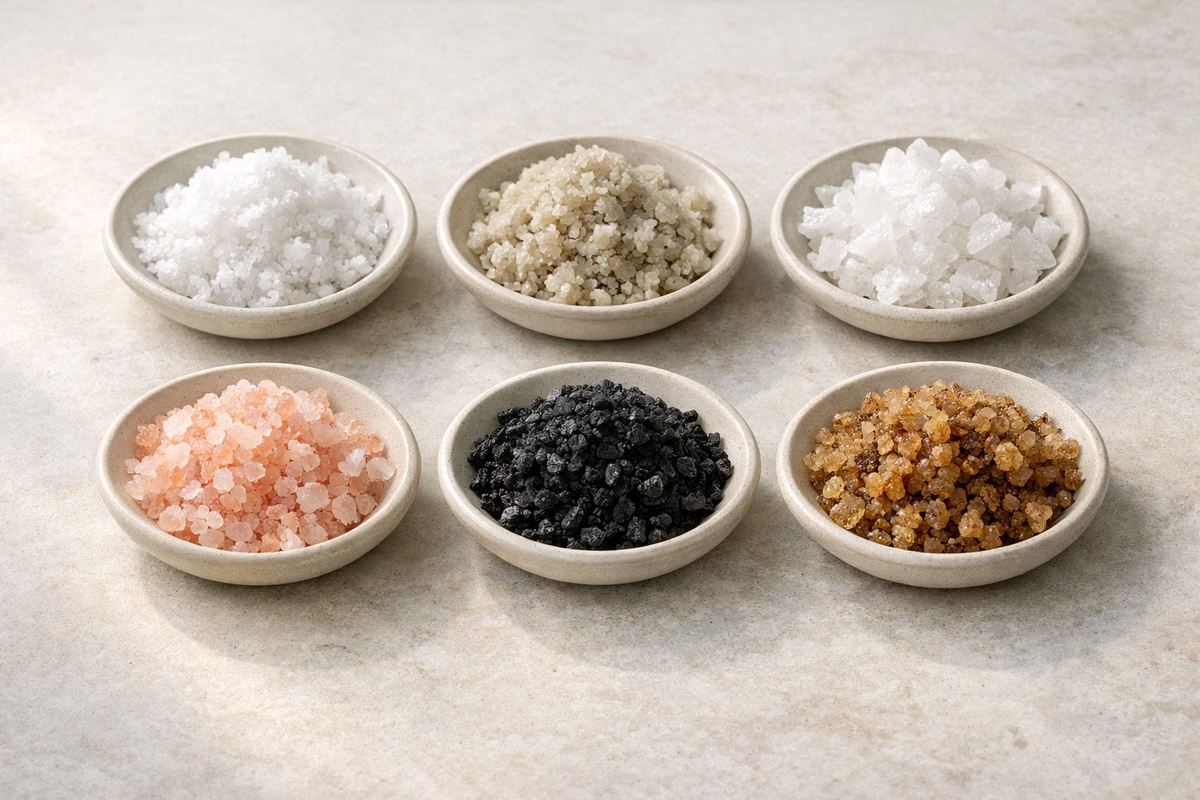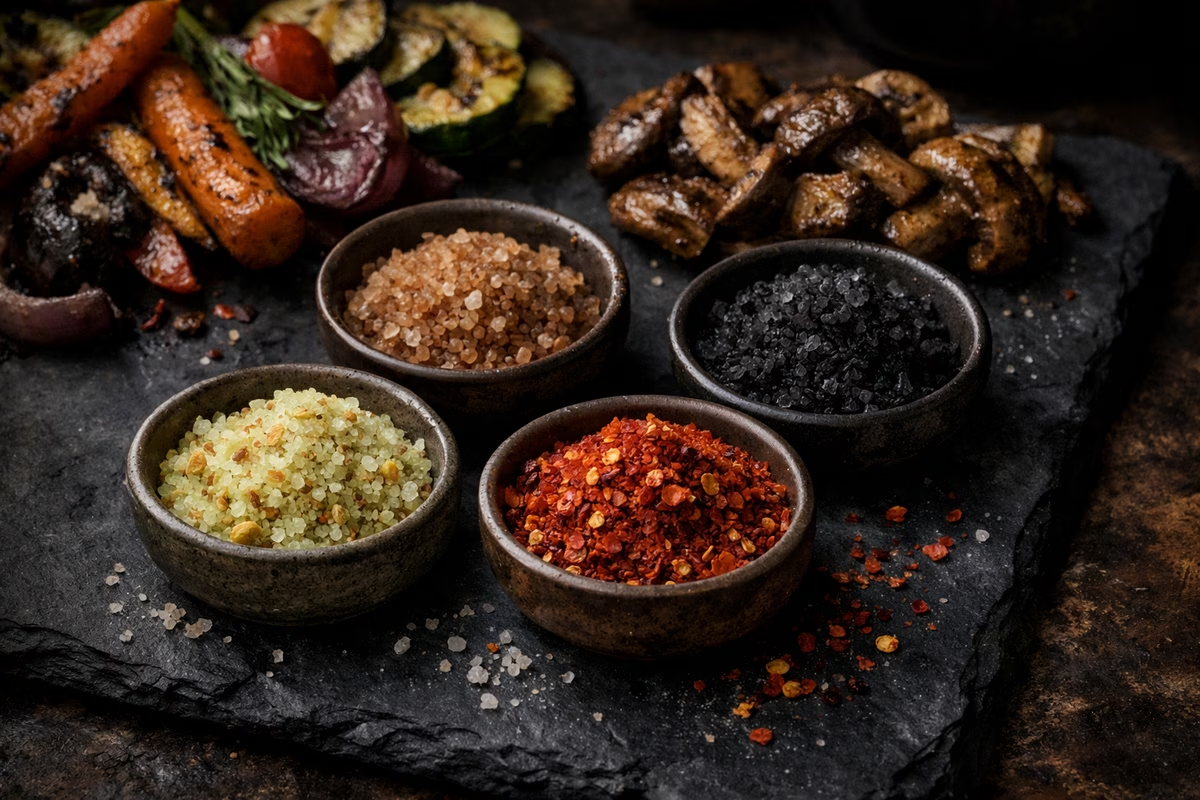
Specialty salts are the loudest members of the salt family.
They arrive already leaning in a direction: smoke, sulfur, herb, citrus, spice, charcoal, clay, or some combination of these. That built-in bias is what makes them useful and what makes them risky.
Used well, they create fast complexity. Used carelessly, they flatten everything into the same trick.
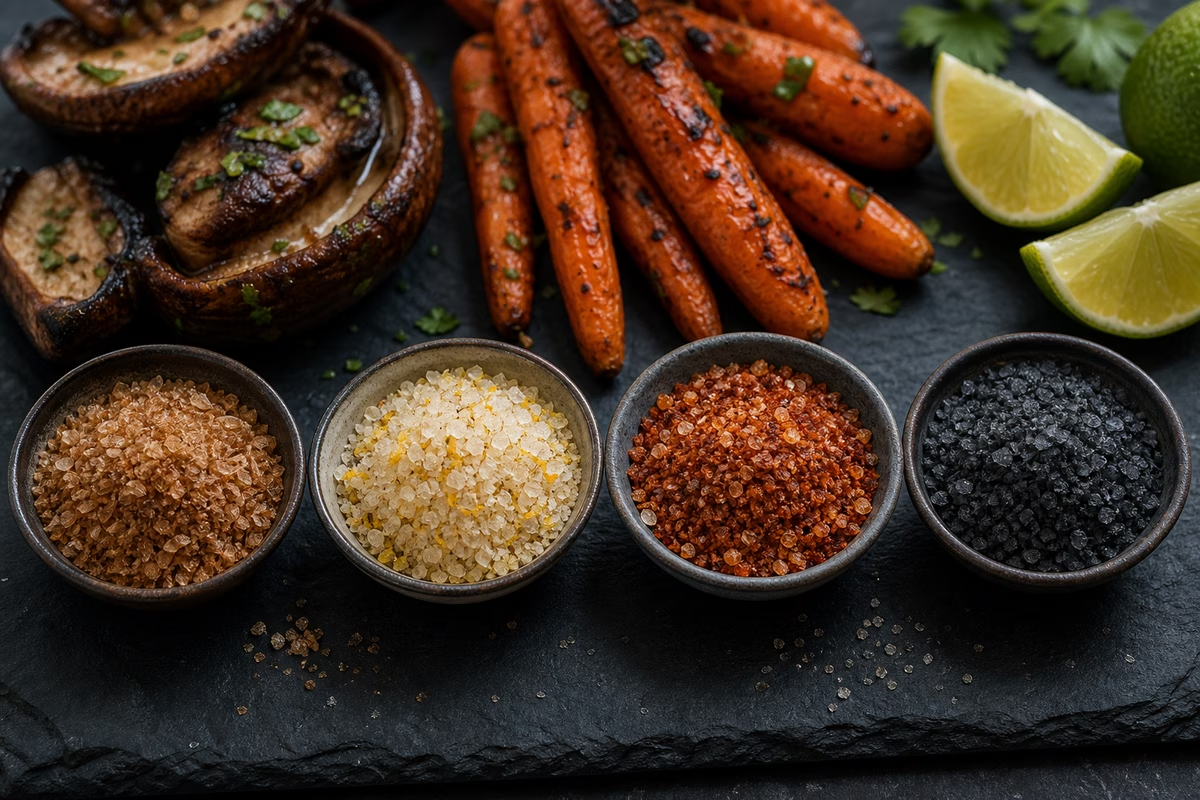
Smoked salt
Smoked salt is the easiest specialty salt to understand and one of the easiest to misuse.
It is exactly what it sounds like: salt exposed to smoke, often from woods that bring their own aroma profile with them. A small pinch can add an immediate grilled, campfire, or cured-meat association. That is why it works so well on roasted potatoes, grilled mushrooms, steak, corn, deviled eggs, and even some chocolate desserts.
The important thing is restraint. Smoked salt is seasoning concentrate, not atmosphere. You are trying to add a suggestion of smoke, not make dinner taste like the inside of a firebox.
It helps to think of smoked salt as a finishing cue rather than a substitute for actual barbecue. If the dish would benefit from a quick illusion of flame or ember, smoked salt can do real work. If the dish needs deep smoke integrated throughout, the salt alone will usually feel thin or fake. That distinction saves people from disappointment. Smoked salt is not fake smoke; it is small-format smoke.
Sulfurous black salt
This style has a savory, egg-like aroma that can be startling the first time you smell it. It is not a general finishing salt. It is a deliberate flavoring tool.
It shines in places where that sulfurous quality already makes sense: chaat-style seasoning, fruit with spice, yogurt dishes, chickpea salads, and tofu scrambles. In those contexts it can be clever, vivid, and very satisfying. On plain grilled fish or a clean salad, it can feel weirdly intrusive. This is not a salt for subtle uplift. It needs the right culinary conversation around it.
Beginners often make one of two mistakes with this category. They either use so little that the point never arrives, or they use enough to make the whole dish smell like boiled eggs in a bad way. The right move is to start tiny, taste, then add in deliberate steps. You are aiming for recognition, not domination.
Herb and citrus salts
These are often gifted more than studied, but they can be genuinely helpful.
A rosemary salt, fennel salt, lemon salt, or chili salt can provide a fast finishing move when you want salt and aromatic lift in a single pinch. They are especially useful for weeknight cooking because they compress two or three gestures into one. The catch is freshness. Once the aromatic component goes dull, the whole jar becomes sad in a hurry.
Buy small amounts. Use them while they are lively.
They are best when they replace a final flourish you might otherwise build from separate ingredients. A lemon salt on grilled asparagus, a rosemary salt on roast potatoes, or a chili salt on fruit can make sense because it compresses several finishing gestures into one. What it should not do is excuse stale cooking. If the herbs or citrus taste tired, the salt becomes a shorthand for ingredients you should have used fresh.
Charcoal-black and visually dramatic salts
Some specialty salts are chosen mainly for appearance. That is fine. Food is visual.
If a black flake salt makes oysters, butter, or white fish feel dramatic and celebratory, it has done useful work. Just do not confuse visible contrast with profound flavor difference. Sometimes the visual is the whole story, and that is fine. Not every ingredient needs to be philosophically deep to earn its place on the plate.
This is worth saying plainly because people sometimes feel embarrassed about caring how food looks. You do not need to invent a grand flavor theory to justify visual pleasure. If a salt earns its keep by making a simple plate more inviting, that can still be a real culinary benefit. The only mistake is paying for theater while expecting transformation.
How to keep specialty salt from taking over your cooking
Follow this rule:
Let specialty salt be the exception, not the household accent.
Most dishes still want one of your core salts. Specialty salts are for a directional nudge, a finishing note, or a specific craving. The cleanest way to use them is late, in small amounts, on food that benefits from obvious contrast.
If everything tastes smoky, truffled, citrusy, or sulfurous, you are no longer seasoning. You are branding dinner.
The cleanest system is to keep one dependable base salt and one specialty salt that solves a specific desire you actually have. Maybe you want smoke without lighting the grill. Maybe you often make chaat or tofu scrambles. Maybe you host often and like a bright citrus finish on vegetables or cocktails snacks. Those are coherent reasons. “Because the jar looked interesting” is how clutter happens.
A sensible starter set
If you want to explore this category, start with only one specialty salt, not a sampler box that turns your pantry into a dare. Choose smoked salt if you love roasted or grilled flavors, sulfurous black salt if you cook South Asian food or plant-based breakfasts, or a citrus or chili finishing salt if you entertain often and want an easy finishing move.
That is enough experimentation for a while. One well-chosen specialty salt teaches more than six novelty jars you barely remember to open.
If you later decide the category is genuinely useful to you, add a second specialty salt that solves a different problem rather than repeating the same one. Smoked salt and citrus salt can coexist because they point in different directions. Three different smoked salts usually cannot justify themselves unless smoke is central to your cooking life.
The buying filter
Before you buy, ask four questions. Do I already know what food this is for? Will I use it within a few months? Is the flavor distinct enough to justify a permanent spot on the shelf? And would the same effect be better achieved another way?
That last question matters more than people think. If the answer is “yes, probably with smoke, zest, spices, or herbs added directly,” then you may not need the salt at all. Specialty salts are at their best when they make something easier, faster, or more pleasurable, not when they imitate a fresher ingredient badly.
Price should also be judged against frequency of use. A tiny jar of something potent can be a better buy than a large pouch that lives untouched for a year, but only if the flavor direction is one you reach for repeatedly. Specialty salts are not staples. They are accessories. Good accessories still have to earn drawer space.
The real benchmark
The question is not whether a specialty salt is “worth it” in the abstract. The question is whether it gives you a repeatable move you enjoy enough to remember.
If smoked salt means you now finish roast potatoes with a subtle campfire note once a week, that is a meaningful ingredient. If black salt helps your tofu scramble or fruit chaat taste more like the dish you wanted, it has a real job. If the jar mostly sits there waiting to impress a dinner guest, it is decor that happens to be edible.
Next steps
Read Buying Artisanal Salt , Salt Tasting to understand how directional these salts really are, and Mineral-Rich and Mined Salts for the denser, less aromatic specialty side.