Most people have never tasted salt on purpose. They have only tasted food that happened to be salted.
That distinction matters. Until you isolate the ingredient, your brain has no reason to sort texture from salinity, moisture from minerality, or crystal size from intensity. Everything collapses into “salty.”
The good news is that salt tasting is very easy.
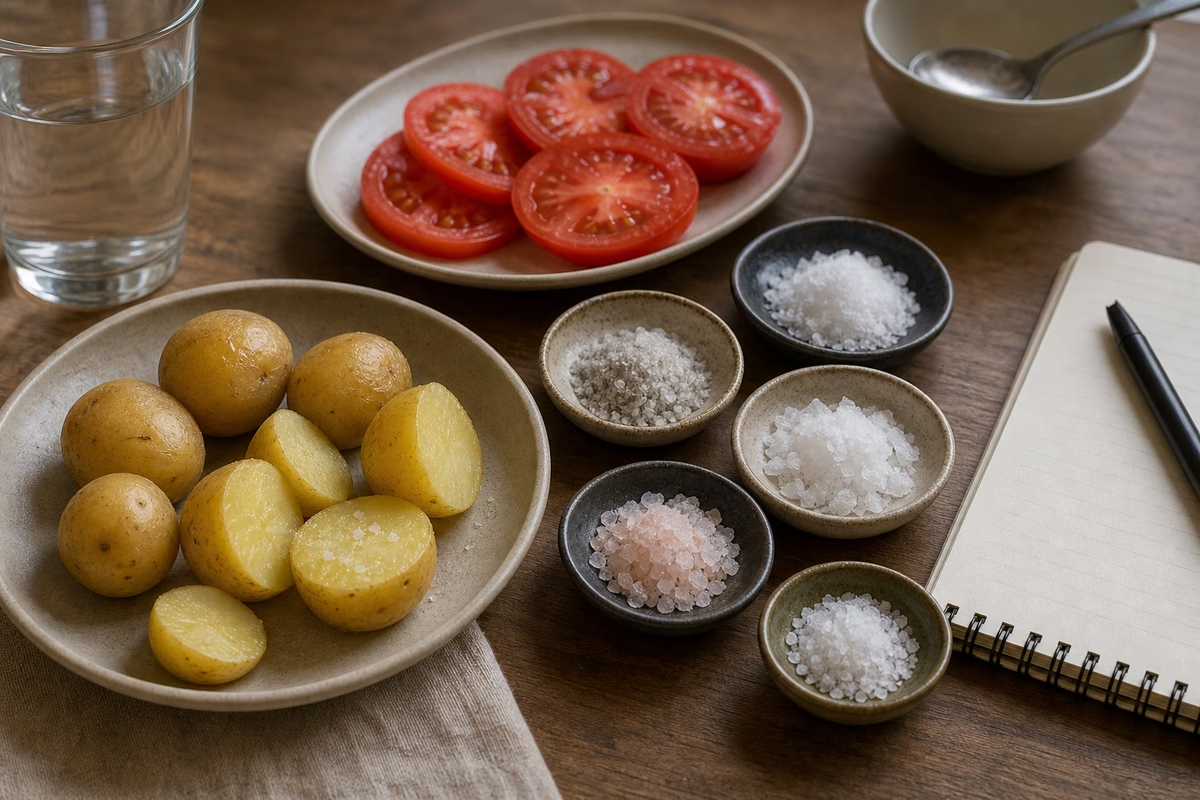
What you need
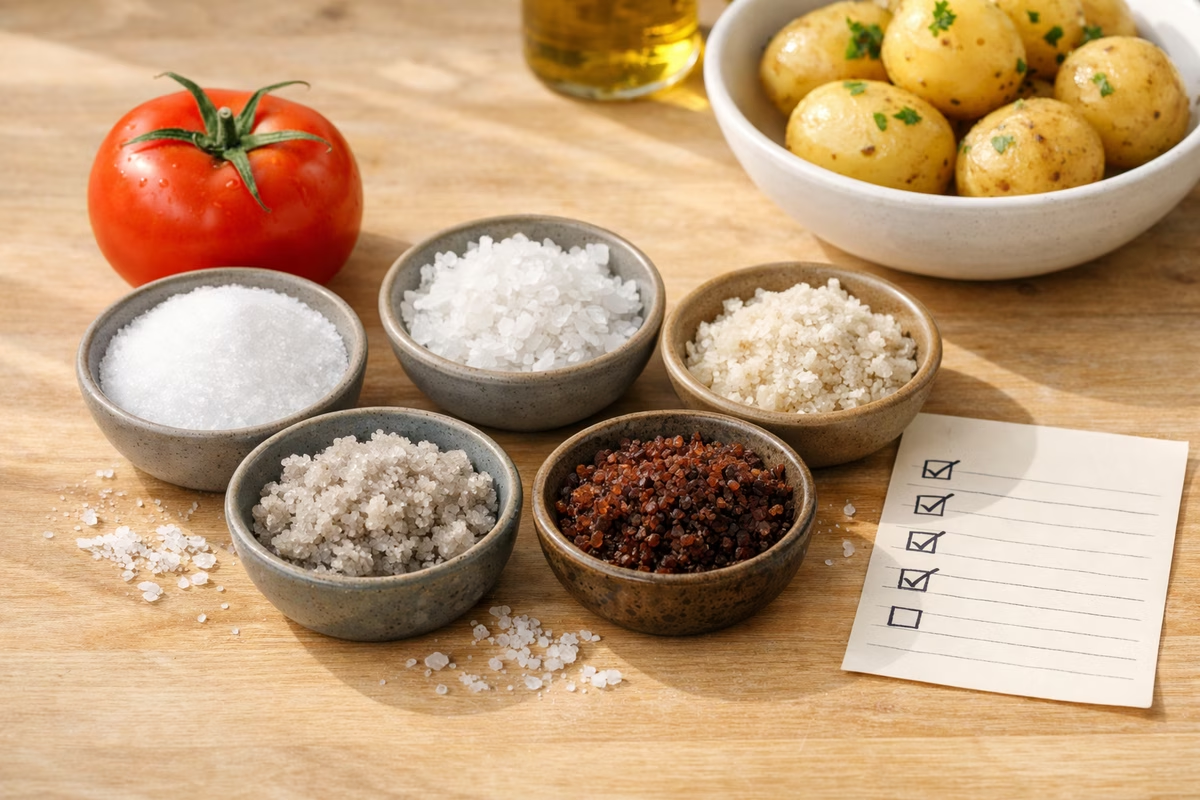
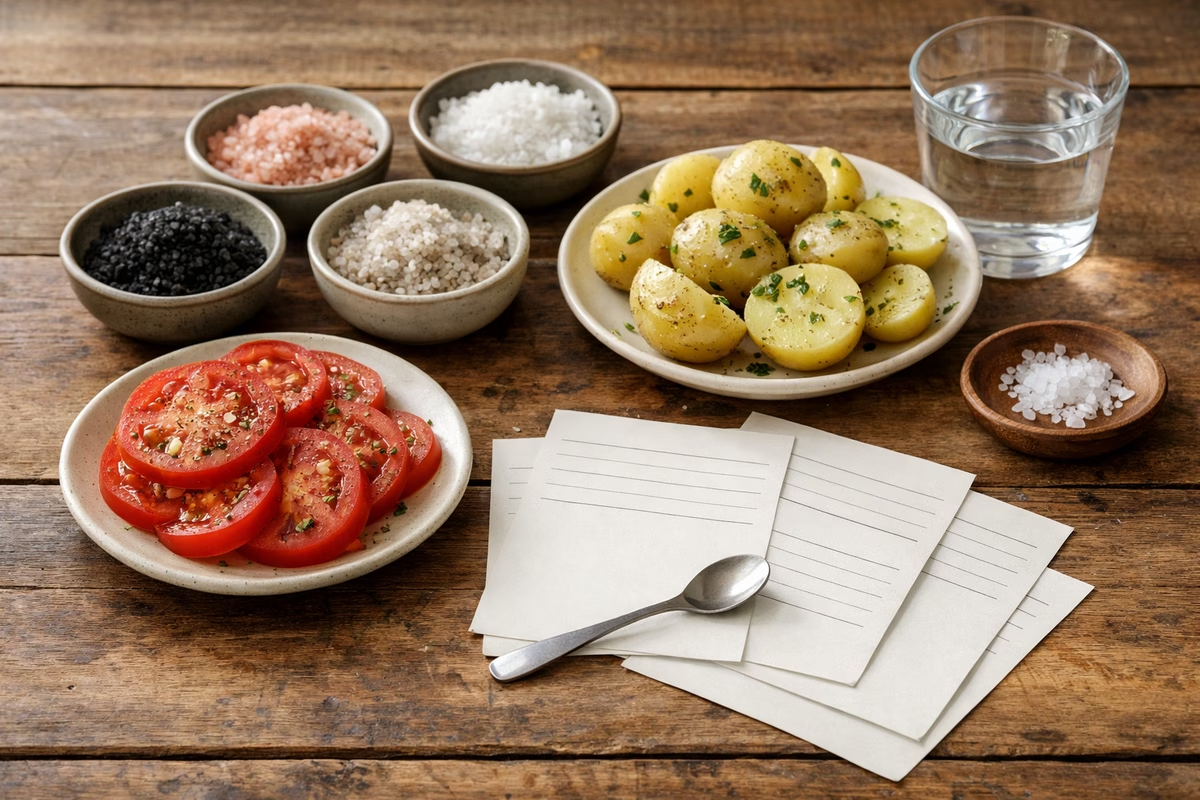
Use three to five salts. More than that and your attention gets muddy. A strong lineup is a fine cooking salt, a flake salt, a fleur de sel, a moist gray salt, and a denser mined salt. That gives you real contrast without becoming homework.
For food, keep it plain. Warm boiled potatoes are ideal because they are soft, gently sweet, and blank enough to let texture show. Plain bread works too. Tomato or cucumber is useful as a second test because juicy food reveals different things than dry starch. You also want water, and maybe a notebook if you are the sort of person who likes to pin impressions down before they blur.
If you do not already own contrasting salts, a gourmet salt sampler set is the fastest way to make this exercise real instead of comparing near-duplicates from the pantry.
Set yourself up somewhere calm and unrushed. Salt tasting fails when it is squeezed into the edge of dinner prep and everybody is hungry. Ten focused minutes with a small plate, a glass of water, and food that is actually plain will teach you more than a chaotic “taste this one too” while roasting vegetables.
The order matters
Taste from least physically assertive to most distinctive: fine salt first, then flake salt, then fleur de sel, then moist sea salt, then the dense or specialty salt. That order makes the differences easier to notice because you are not blowing out your attention with the most forceful sample at the start.
If you are comparing only two finishing salts, reverse the order and taste them again. First impressions are helpful, but they can be distorted by contrast. A second pass often reveals whether one salt is truly more graceful on the food or whether it only felt dramatic because it came second.
What to pay attention to
Do not ask only, “Which tastes best?” That question is too blunt to teach you much. Instead, notice how quickly the salt arrives, how long it lingers, whether it crunches, and whether it dissolves cleanly or gradually. Try to describe the overall mood too. Does it feel bright, broad, earthy, bitter, briny, soft, clean, or dense? Does it make the food taste more vivid, more savory, or simply more salty?
Those are the questions that build useful judgment. They move you from preference to observation.
This is the central shift. Preference asks for a winner. Observation asks for a pattern. A salt that is not your favorite on tomato may still be exactly right for roasted potatoes or a salt cellar at the table. Tasting becomes useful the moment you stop forcing every ingredient into a single ranking.
The boiled potato test
Warm potato may be the best salt-tasting food on earth. It is bland in a useful way, lightly sweet, and soft enough to let crystal structure show clearly. On potato, flake salt often feels vivid and quick. Fleur de sel usually feels more integrated. Moist gray salt can seem deeper and denser. A mined crystal salt may come across as more solid and straightforward.
Once you feel those differences in your mouth, they stop being theoretical forever. You start recognizing them on real meals without trying.
Use small bites and keep the potato warm, not hot. If it is too hot, every salt seems to dissolve too quickly. If it is cold, texture becomes less expressive. You are trying to create a neutral stage where the salt can show its timing and structure without interference.
The tomato test
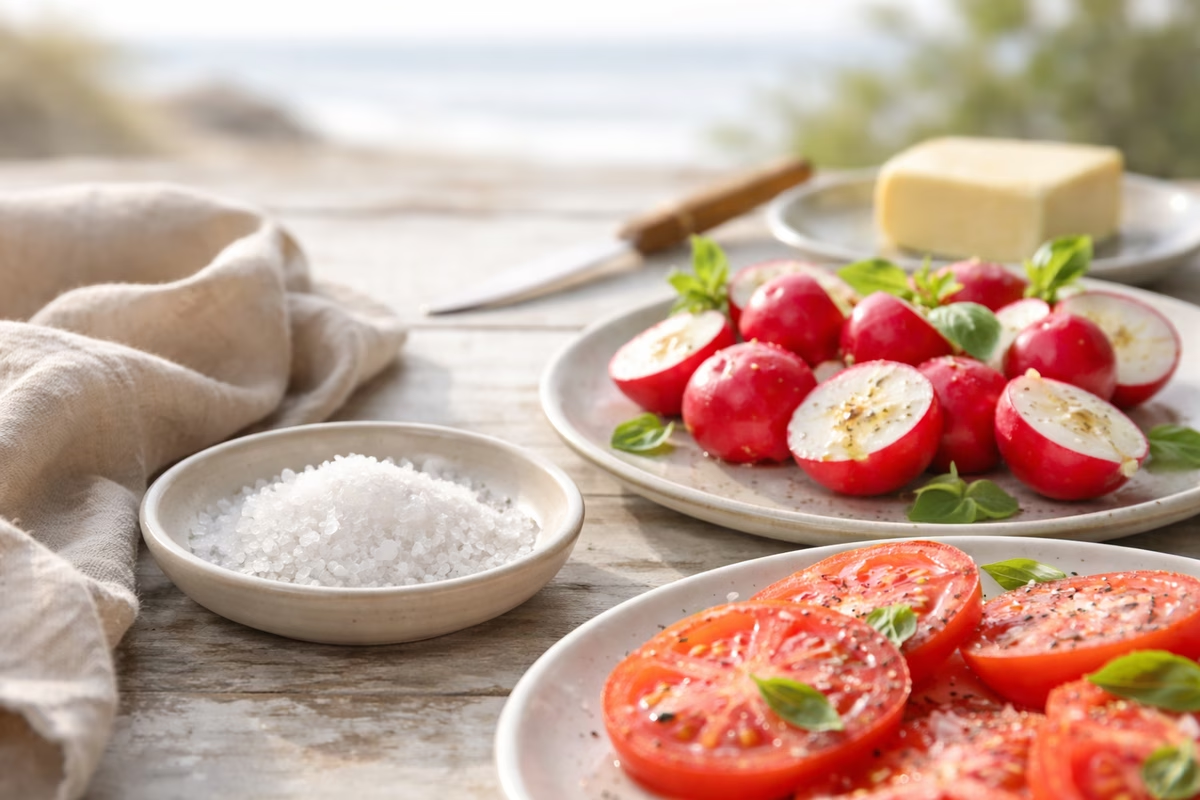
Tomato is great for delicate finishing salts because the fruit is juicy, acidic, and fragile. A heavy-handed salt can bully it. A good finishing salt can sharpen and frame it. This is often where people understand the appeal of fleur de sel for the first time. It does not just salt the tomato. It seems to tidy the flavor.
Tomato is also useful because it punishes clumsy tasting. If you over-salt, every sample turns harsh and you learn nothing. Keep the amounts small.
You may notice that some salts seem to brighten the tomato while others simply sit on top of it. That is a useful distinction. Brightening means the salt and the food are collaborating. Sitting on top means the crystal form may be too dense, too coarse, or simply too forceful for that ingredient.
Tasting specialty salts
If you are tasting smoked, sulfurous, or otherwise flavored salts, keep the samples tiny. These salts are not neutral, so they can dominate a lineup very quickly. The right question is not whether they are better. The right question is whether their built-in flavor direction is one you actually want access to in your cooking.
It also helps to taste specialty salts last and separately if possible. Once smoke or sulfur is on your palate, subtle distinctions among plain salts become harder to read. Specialty salts are more like flavored condiments than neutral reference points, so treat them that way in the tasting.
Common beginner mistake
People often use too much salt in the tasting itself. Then every sample becomes harsh and the exercise collapses. Use less than you think. The goal is discrimination, not endurance.
The second common mistake is using food with too much personality. Good olive oil, sourdough with a tangy crust, ripe heirloom tomato, or cultured butter can all be wonderful foods, but they can also dominate the exercise. When you are learning, boring is a feature. Plainness gives the salt room to speak.
A good note-taking shortcut
For each salt, write only four things: texture, speed, mood, and best use. A note like “brittle, quick, bright, eggs” or “damp, slow, savory, potatoes” is more than enough. You are building a working kitchen vocabulary, not publishing tasting cards.
If that still feels too abstract, compare in sentences. “This one disappears faster.” “This one leaves a louder crunch.” “This one feels broad rather than sharp.” Ordinary language is fine. The goal is to create a memory you can use later when you are choosing what to put on dinner.
The outcome you want
You do not need to become a salt sommelier. You just want to reach the point where you can say, with some confidence, that one salt belongs on the surface, another belongs in the pot, another is mostly visual, and another is useful only for a particular cuisine or mood.
That is real knowledge. It changes how you shop, season, and finish food almost immediately.
The best sign the exercise worked is that you stop thinking of artisanal salt as a luxury category and start thinking of it as a set of distinct tools. Once that happens, a lot of vague marketing loses its power. You no longer need to be told that a salt is special. You can feel what it does.
Next steps
Read Flake Salt , Fleur de Sel , and Buying Artisanal Salt next.