Salt has always been two things at once: a seasoning and a system.
People needed it to preserve food, cure meat, ferment vegetables, tan hides, feed animals, and keep bodies functioning. That practical need gave salt extraordinary power. Once communities figured out where salt came from and how hard it could be to move, they built roads around it, taxed it, traded it, fought over it, and wrapped it in ritual.
This is why salt history never stays small. The story starts in kitchens and fish sheds, then immediately spills into empire.
Before salt was flavor, it was stability
Modern cooks think first about taste. Earlier societies often thought first about survival.
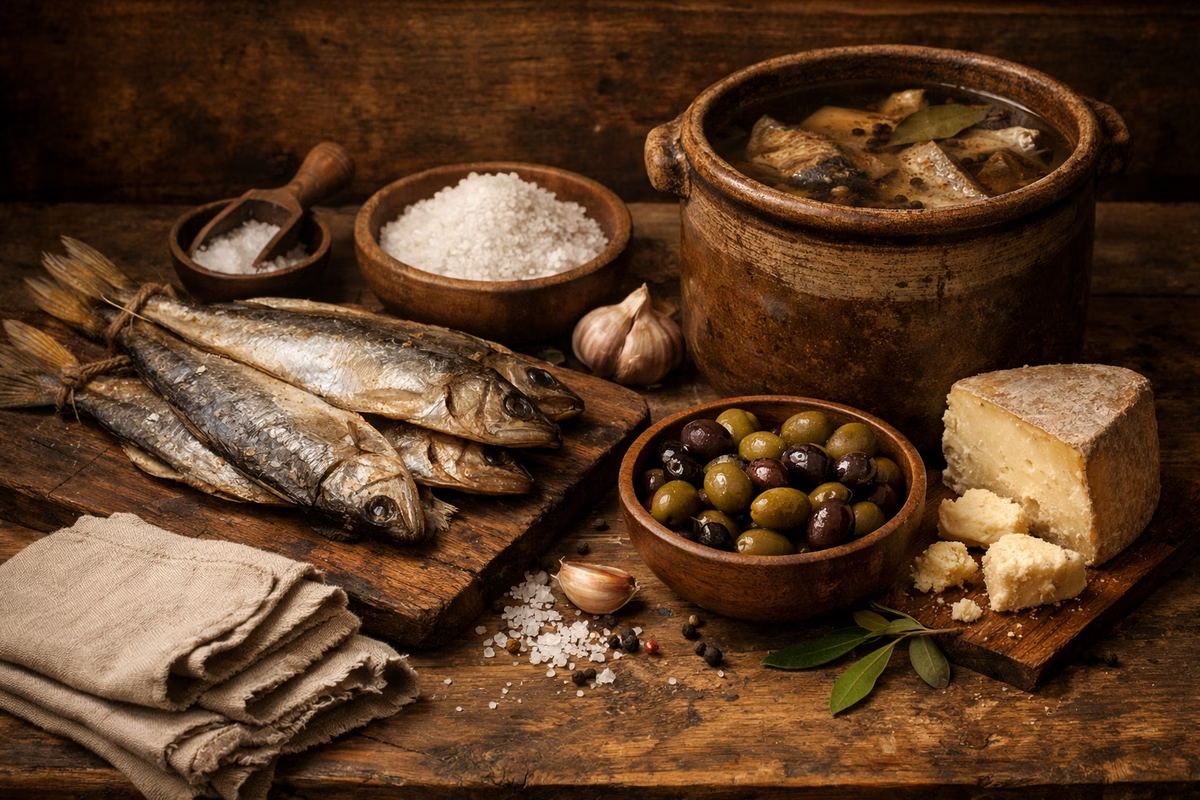
Before refrigeration, salt made food portable across time. Fish, meat, olives, cheese, and vegetables could all be preserved or transformed through salting. That meant winter stores, military rations, ship provisions, and urban populations became more manageable. Salt was not glamorous. It was infrastructure you could eat.
This is one reason salt production appears in so many very old civilizations. When a place had brine springs, coastal flats, or mineable salt deposits, it held something strategically useful. When a place did not, it had a problem to solve.
Salt roads and salt towns
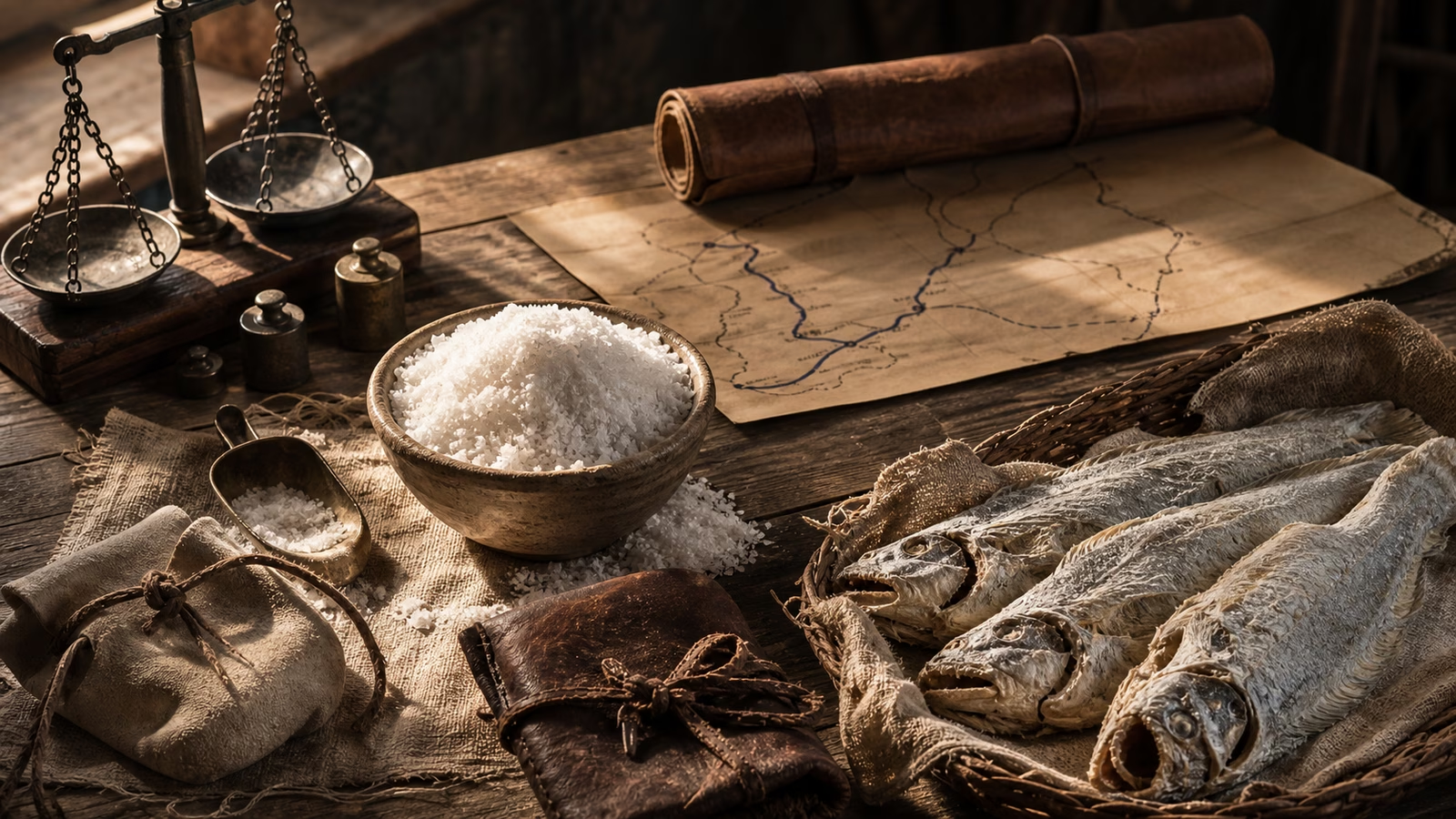
The map of salt is also a map of movement. Across Europe, North Africa, the Middle East, China, and South Asia, salt traveled along dedicated routes or along the same trade corridors that moved grain, metal, cloth, and spices.
Entire towns grew around evaporation pans, marsh harvests, boiling houses, or mines carved into underground seams of halite. River traffic carried salt inland. Pack animals crossed mountain passes with it. Coastal communities exchanged it for timber, grain, wine, and preserved fish. Once you see salt as cargo, history starts looking different.
Some old roads still carry the memory of this in their names. Even where the exact route has blurred, the pattern is clear: salt production created centers of wealth, and salt scarcity created dependency.
Taxation made salt political
Governments loved taxing salt for a very obvious reason: people could not simply stop needing it.
That made salt a reliable revenue source and, inevitably, a recurring source of resentment. When rulers monopolized production or distribution, ordinary households felt the pressure immediately. A tax on salt was not abstract. It showed up in preserved food, cooking, and daily necessity.
This is why salt keeps surfacing in political history. The details vary by place and century, but the pattern repeats: control the salt, and you control a slice of everyday life.
The Roman aura
Rome did not invent salt, but Roman history helped fix it in the Western imagination as something bound up with roads, wages, soldiers, trade, and statecraft. The details are often simplified in popular retellings, yet the broader point holds: salt mattered enough to administration and logistics that it became part of the cultural vocabulary of power.
You can feel that legacy in the way salt still gets talked about. Even now, people reach for Roman examples when they want to explain why a basic mineral once held outsized social force.
Salt and preservation changed cuisine itself
The history of salt is not only a story about taxes and caravans. It is also a story about what people learned to crave.
Salt preservation created entire flavor traditions:
- anchovies and salted fish
- cured meats
- preserved cheeses
- pickles and ferments
- soy sauce, fish sauce, and other brined seasonings
In other words, salt did not merely keep food from spoiling. It shaped regional taste. It taught cultures to love certain textures, depths, and forms of savoriness.
That is one reason salt never disappeared once refrigeration arrived. Its practical monopoly weakened, but its culinary identity remained.
Coastal labor and invisible craft
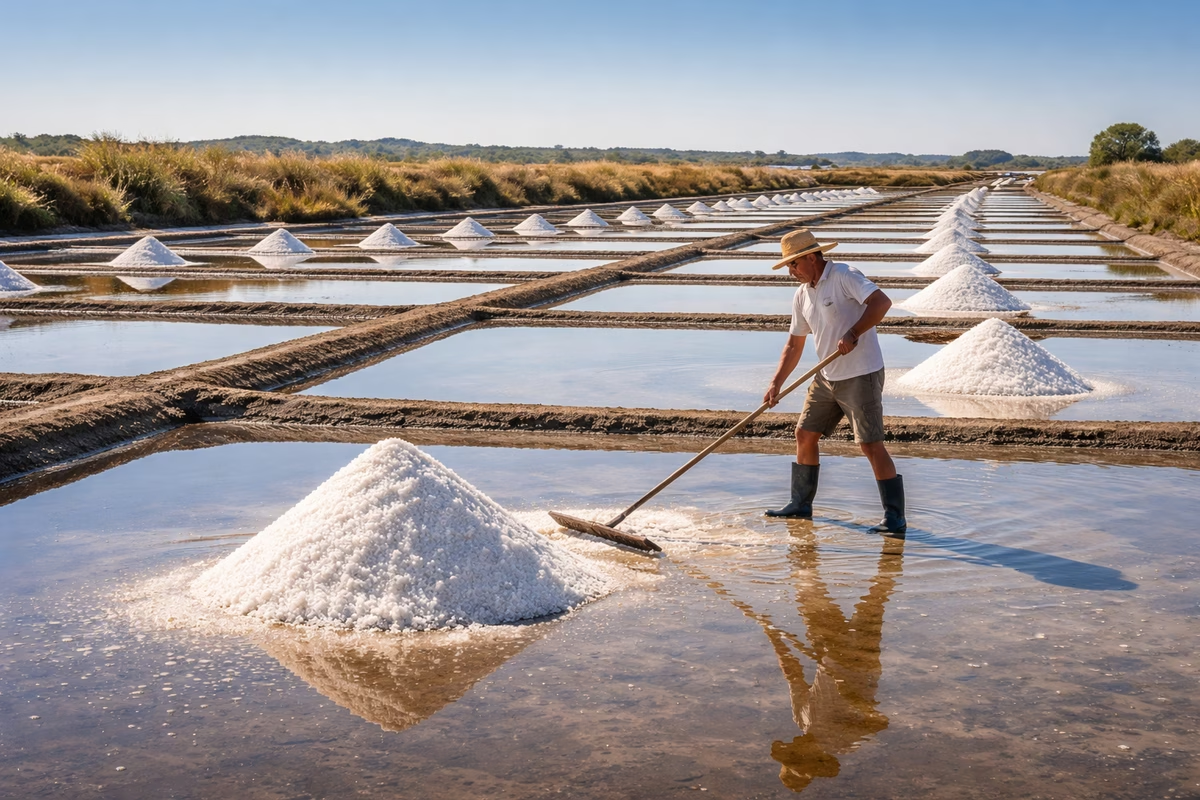
Artisanal salt history is also labor history. Behind every pretty jar of sea salt is some combination of weather watching, water management, raking, drying, sorting, carrying, and waiting.
Salt marsh workers learned to read wind, heat, humidity, tide, and pond behavior with extraordinary precision. In mined salt regions, labor looked different but was no less demanding. In boiling-house traditions, fuel, timing, and concentration mattered. Salt often appears in history as a commodity, but it was always produced by bodies working in specific landscapes.
This matters because artisanal salt is easy to romanticize. Some of it is beautiful. Much of it is also repetitive, exposed, and unforgiving work.
The industrial turn
As transportation, extraction, refining, and industrial food systems developed, salt became cheaper, more standardized, and less visible. For most households, that was a real improvement. Reliable, inexpensive salt is a good thing.
But standardization also flattened perception. When salt became mostly fine, dry, and anonymous, people stopped expecting it to have texture, origin, or personality.
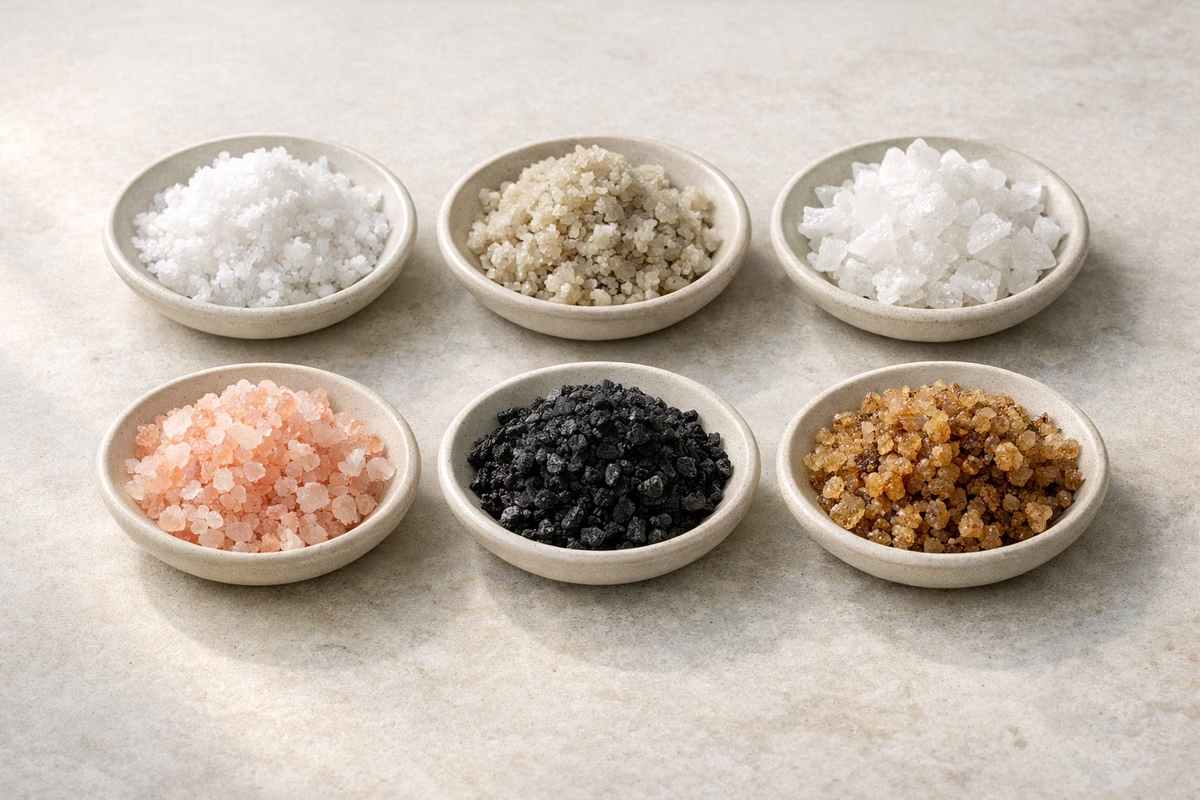
The artisanal revival is partly a reaction to that flattening. Not because refined salt is evil. It is not. But because once all salt started looking identical, many cooks lost sight of what different physical forms of salt can do.
Why artisanal salt returned
The return of interest in regional, hand-harvested, and visually distinctive salts happened for several reasons at once:
- chefs started emphasizing finishing texture
- diners became more interested in origin stories
- small producers found markets for traditional harvests
- home cooks began treating salt like a visible ingredient rather than a backstage utility
Some of this revival is genuinely educational. Some of it is marketing in a handsome jar. Usually it is both.
The useful move is not cynicism or worship. It is discrimination. Learn which salts truly bring something distinctive, and which ones are mostly decorative storytelling.
Salt still carries memory
That is the part I find most moving. Salt remains ordinary, but it is ordinary in a historically loaded way.
When you sprinkle flaky salt on roast vegetables, you are using a modern convenience product shaped by older ideas about crystal structure and finishing texture. When you buy fleur de sel, you are stepping into a tradition of careful surface skimming tied to weather and place. When you cook with coarse sea salt in beans or fish, you are participating in methods that once mattered not just for taste but for storage and trade.
Very few ingredients carry this much human history while asking so little attention of us day to day.
The practical takeaway
Salt matters because it solved problems before it expressed preferences. Then, after solving those problems, it began expressing place.
That is why it deserves two kinds of reading:
- historical reading, to understand how deeply it shaped trade, preservation, and power
- sensory reading, to understand why different artisanal salts still feel distinct now
If you want the second half of that story, continue with Artisanal Salt Types and How Artisanal Salt Is Harvested .