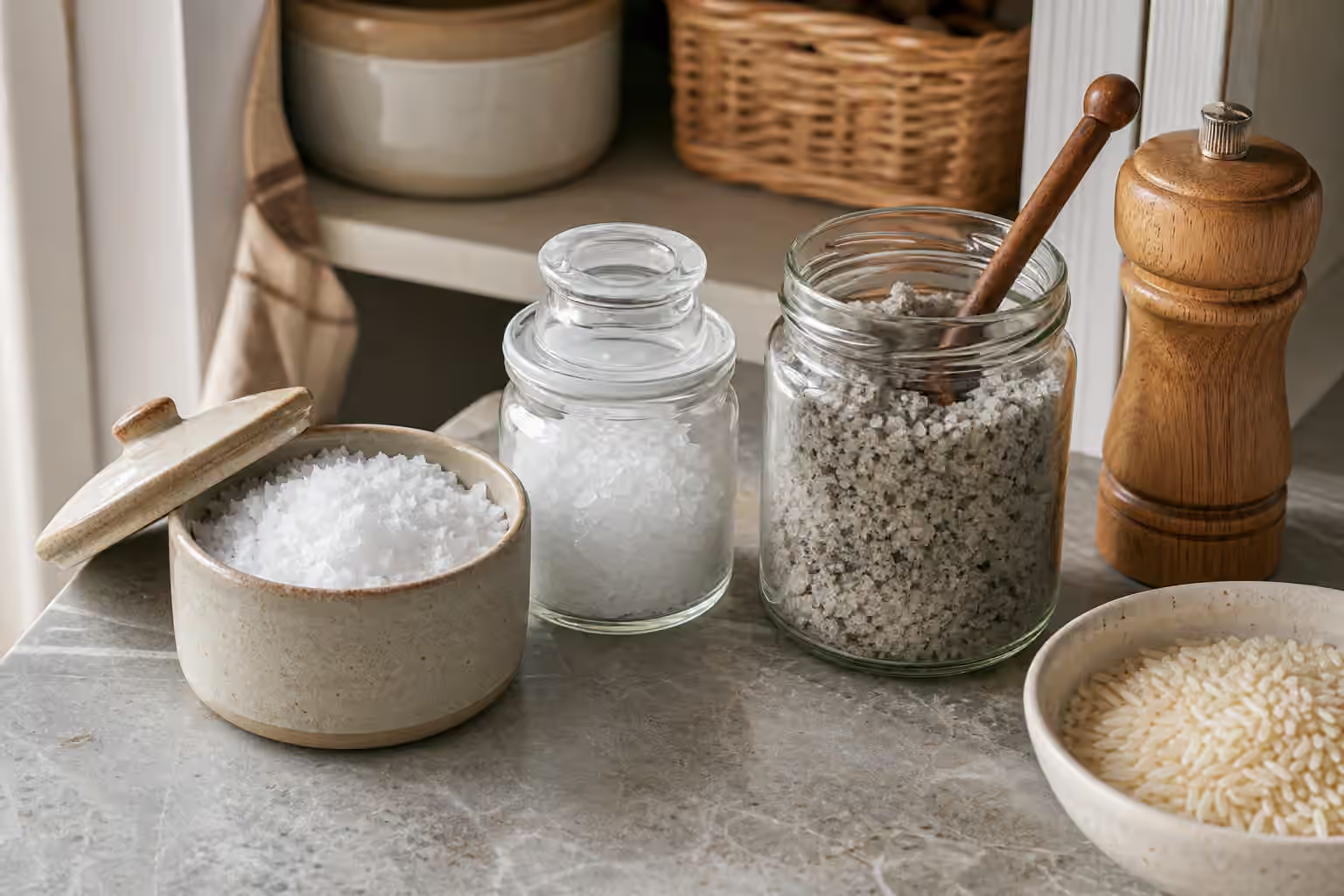
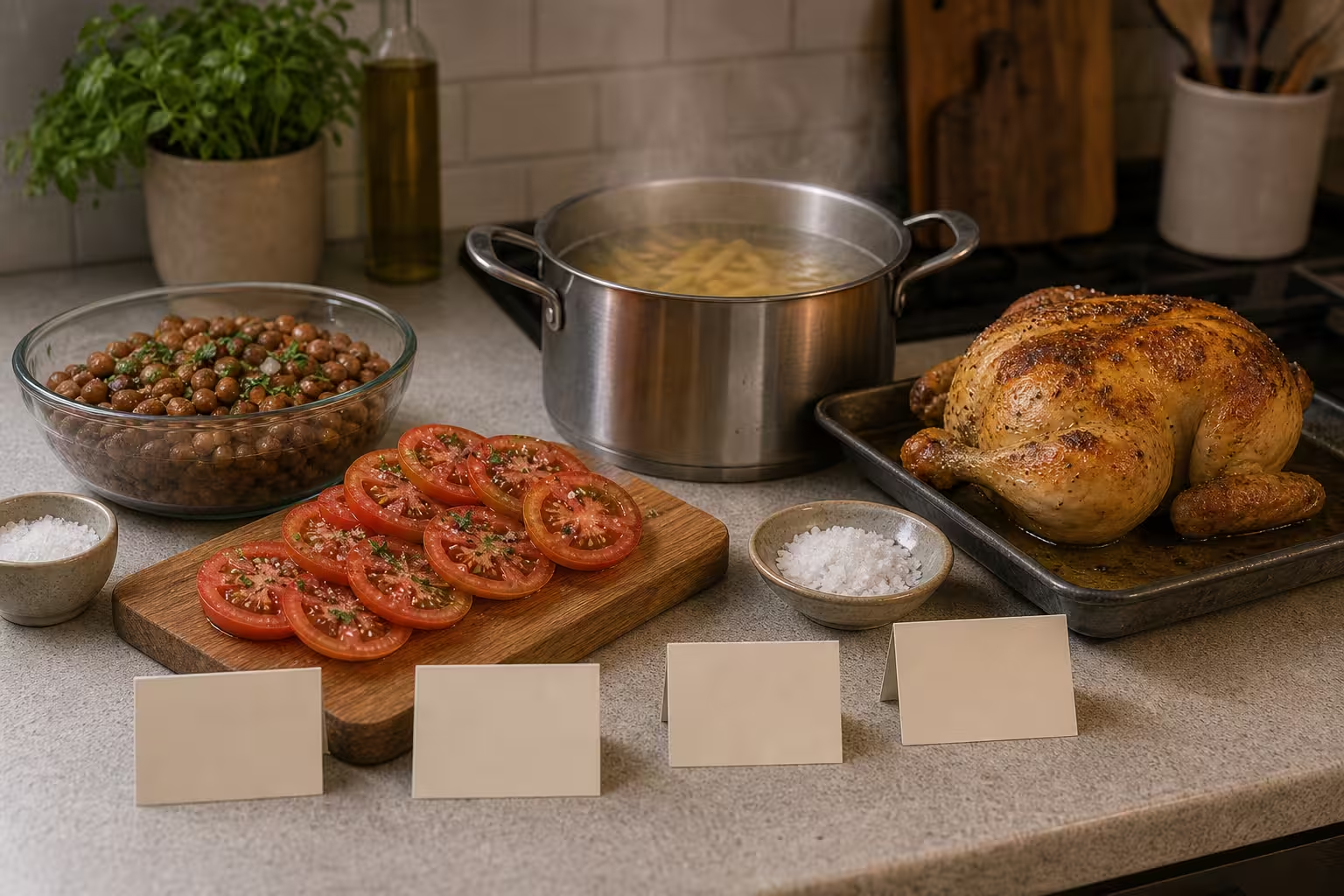
A salt mill looks simple enough: put crystals inside, turn the top, season the food. In practice, the grinder is one of the most misunderstood objects on the salt shelf. It can make dense crystals easier to scatter at the table, but it can also turn interesting finishing salt into anonymous powder, clog with moisture, and encourage people to treat every salt as if its best form is freshly crushed.
The useful question is not whether salt should be ground. The useful question is which salt gains something from being ground at the exact moment you use it.
This guide belongs beside Salt Storage because a grinder is partly a storage vessel, partly a serving tool, and partly a mechanical promise. It also sits near Measuring Salt because ground salt changes volume, surface area, and the way a pinch or turn behaves. A grinder is not a universal upgrade. It is a tool with a narrow job.
A Grinder Is Best for Dense, Dry Crystals
Salt mills work best with dry, hard crystals that are too large or irregular to scatter comfortably as they are. A dense mined salt or coarse dried sea salt can be pleasant from a mill because the mechanism breaks it into smaller fragments just before it lands on food. The result is easier distribution and a little table theater without asking the eater to bite into rock-like chunks.
That is different from saying the mill improves the flavor of the salt. Salt does not release volatile aroma in the same way pepper does. Freshly ground pepper matters because grinding exposes aromatic oils that fade quickly. Salt is mostly a mineral crystal. Grinding changes its size and texture more than its aroma. The pleasure is physical: finer fragments, more even scattering, and sometimes a sharper first contact because the new pieces dissolve quickly.
This distinction keeps the mill honest. If the salt is already the right size and texture, grinding may do nothing useful. If the salt was bought for its flake shape, damp grip, or delicate surface, grinding may erase the exact quality you paid for.
Flake Salt Usually Does Not Belong in a Mill
Flake Salt is already engineered by nature and process to be fragile, broad, and quick to crush between fingers. The flake is the point. It lands visibly, snaps under light pressure, and dissolves in a bright, uneven way on tomatoes, eggs, roast potatoes, and sweets. Put those flakes into a grinder and the mill turns them into something closer to ordinary crushed salt.
That is not a disaster. The salt will still season food. But it is a waste of character. A flake salt kept in a wide cellar lets your fingers choose how intact or crushed the crystals should be. You can crumble a few flakes over popcorn, press them gently over buttered bread, or leave them broad on a chocolate cookie. The hand gives you more control than a mill does.
The same logic applies to Fleur de Sel . Its delicacy comes from soft, irregular crystals that feel gentle on simple food. A grinder makes that delicacy harder to notice. Fleur de sel wants a small dish, a dry spoon, or clean fingers, not a mechanism that treats it like industrial road gravel.
Moist Salts Ask for Patience
Wet gray salts, damp sea salts, and some mineral-rich salts can be wonderful in the hand, but they are often poor candidates for grinders. Moisture helps them cling and gives them a savory presence, yet that same moisture can make crystals clump inside a mill. Once a grinder binds, people tend to force it, which can damage the mechanism or create uneven bursts that are more frustrating than useful.
Sel Gris and Wet Salts explains why dampness can be part of the salt’s character rather than a flaw. A wet salt does not need to be disciplined into behaving like a dry one. It usually belongs in a small covered jar or cellar where a spoon or pinch can lift it cleanly. If it dries slightly at the surface, that is often easier to manage than a clogged grinder full of paste-like crystals.
There are exceptions, because some mills are designed for damp salt and some salts are only lightly moist. But the beginner rule is practical: if the salt clings to your fingers, it may also cling to the grinder. Try it only in a mill you are willing to clean, and do not fill the whole chamber until you know how that salt behaves in your kitchen’s humidity.
The Mechanism Matters More Than the Shape
A handsome mill can still grind badly. Salt is corrosive enough that cheap metal mechanisms may wear, pit, or seize over time. Ceramic and stainless mechanisms are common for this reason. The exact design matters less than the combination of durable grinding parts, adjustable output, and a chamber that keeps moisture out reasonably well.
The adjustment should be useful, not symbolic. A good mill can move from small fragments to a slightly coarser scatter without producing a mix of dust and boulders. It should turn smoothly without requiring a wrestling match. It should also be easy enough to refill that you do not postpone refilling it for months, because an empty mill becomes kitchen decoration.
Clear acrylic mills show how much salt remains, but they can look tired after years of counter life. Wood feels warm and hides wear, but it can conceal moisture problems. Glass is clean and useful, though sometimes heavier than expected at the table. None of these materials is morally superior. The right mill is the one that keeps dry grinder salt dry, turns predictably, and does not make seasoning feel fussy.
A Cellar and a Mill Do Different Jobs
A salt cellar teaches touch. A mill teaches distribution. Those are related but not identical.
Salt Cellars and Table Rituals makes the case for pinching because fingers learn crystal weight and landing pattern. That matters for flake salt, fleur de sel, and many everyday cooking salts. A cellar also lets you move quickly while cooking. You can pinch, taste, adjust, and keep the pot moving.
A mill is slower and usually more table-facing. It works when you want small crystals freshly broken over a finished plate, especially if the original crystals are too big for comfortable biting. It can be useful on boiled potatoes, sliced radishes, grilled vegetables, simple eggs, or a table salad. It is less useful when salt needs to dissolve into soup, dough, brine, pasta water, or a sauce. In those places, a practical cooking salt from a cellar or box is better because it dissolves evenly and does not make you turn a crank over a pot for no good reason.
The best salt shelf can include both. Keep an everyday cooking salt near the stove, a finishing salt in a cellar, and a grinder only if you like dense crystals at the table. If the grinder is the only salt tool you own, you may find yourself grinding when you should be pinching, measuring, or dissolving.
Grinding Changes How Salt Measures
One turn of a grinder is not a stable unit. It depends on crystal size, mechanism setting, how full the chamber is, how hard you turn, and how much moisture is in the salt. This makes grinders poor tools for precise cooking. They are fine for table adjustment, but they are frustrating in bread dough, pickling liquid, or any recipe where repeatability matters.
If you want accuracy, weigh salt or use a known salt with a known spoon measure. If you want control while finishing, use your hand or a grinder by taste. The mistake is pretending the grinder sits between those worlds as a reliable measuring device. It does not. A grinder is a finishing tool, not a scale.
This also explains why a recipe that calls for coarse salt cannot be interpreted casually as a few grinder twists. Coarse salt before grinding and ground salt after grinding occupy different volumes. The food experiences dissolved salt, not the romance of the mill. When precision matters, step away from the table tool and measure the salt in the form the recipe expects.
Care Is Mostly About Dryness
Most grinder problems begin with humidity. Steam from the stove, damp hands, and moist crystals can make salt bridge inside the chamber or stick to the mechanism. Store the mill away from active steam, refill it with dry hands, and avoid holding it directly over a boiling pot. If a mill starts grinding unevenly, empty it before assuming it is broken. Let the parts dry fully, brush away stuck crystals, and refill with a drier salt.
Do not rinse a salt mill casually unless the maker’s instructions say it can be washed that way. Water left inside the mechanism can make the next problem worse. A dry brush, a cloth, and patience usually solve more than a sink does. If the mill smells stale or the salt tastes like the cabinet, the problem may be old storage rather than the mechanism itself.
The grinder should make seasoning calmer. If it clogs, sheds dust, requires force, or makes every plate taste uneven, move that salt into a cellar and use the mill for a better candidate. There is no shame in retiring a tool from a job it performs badly.
Use the Mill Where Texture Is the Goal
The salt grinder earns its place when it gives a dense dry crystal a better landing. It is useful on food that is already cooked and close to being eaten, where a small scatter can still be felt. It is not a magic freshness device, not a precision measure, and not the best home for flakes, fleur de sel, or damp sea salt.
Treat the grinder as one voice on the shelf. Let cooking salt dissolve. Let flakes stay flaky. Let moist salts stay moist. Let the mill break dry crystals when breaking them helps. That modest role is enough, and it keeps the grinder from flattening the very differences that make a salt collection worth having.