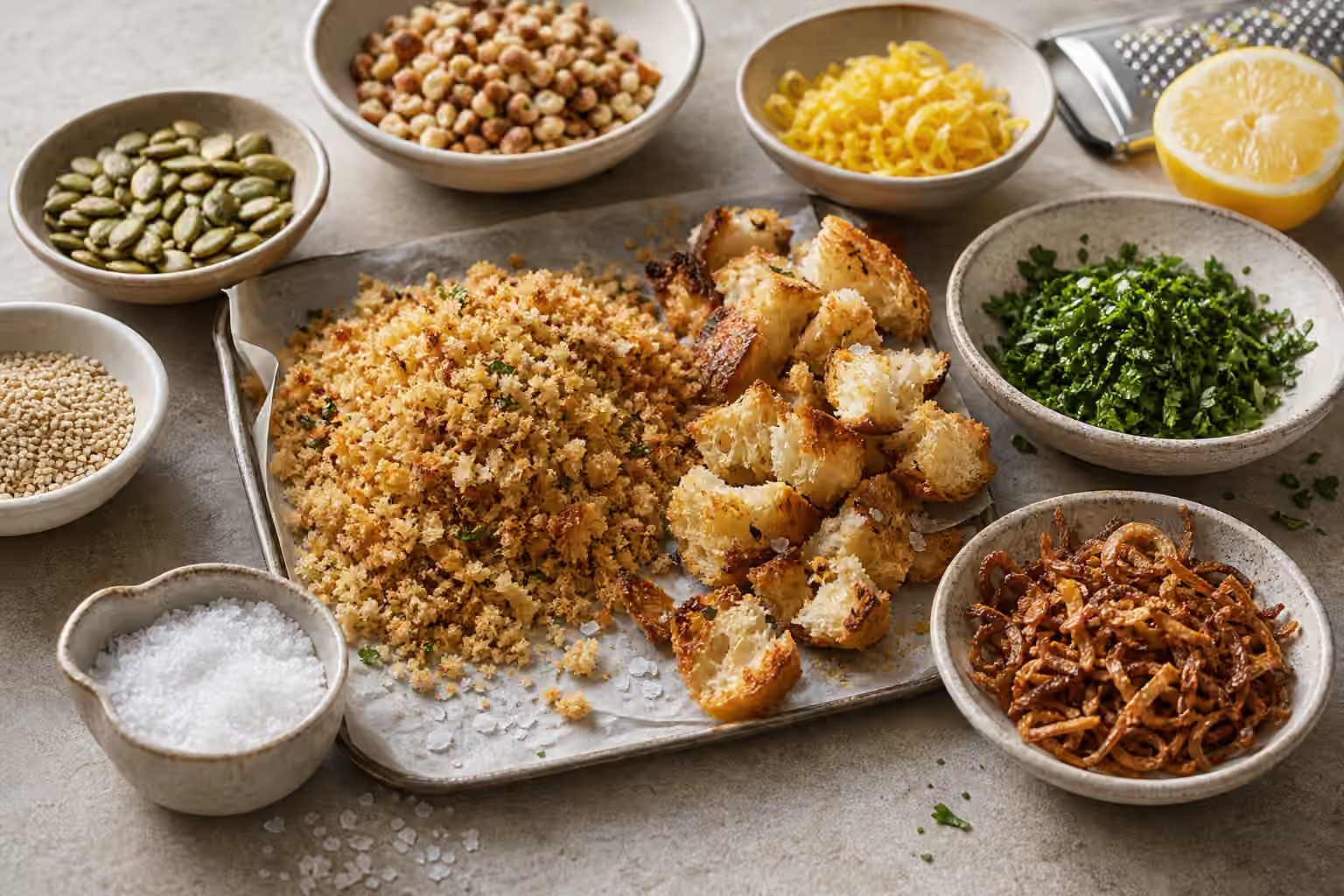
Dry snacks make salt behave like a physical object again. In soup, the salt dissolves and disappears. In bread dough, it becomes part of the structure. On popcorn, nuts, crackers, seeds, chips, and roasted chickpeas, salt has to land, cling, and stay distributed long enough for the hand to keep reaching back into the bowl.
That makes the problem more practical than poetic. The right salt for popcorn is often not the most beautiful finishing salt. It is the salt fine enough to catch on irregular surfaces without falling to the bottom. Roasted nuts may need salt while they are warm and lightly oily. Crackers may need salt in the dough, on the surface, or both. A snack can taste underseasoned while a little pile of salt sits uselessly in the bowl.
This guide belongs near Salting Fried Foods because both categories depend on heat, fat, and timing. It also belongs near Measuring Salt because snack seasoning exaggerates the difference between fine powder, coarse crystals, brittle flakes, and damp salts. When the food is dry, crystal size is not a detail. It decides whether the salt participates at all.
Popcorn Needs Fine Salt or Help From Fat
Popcorn is full of angles, hollows, and fragile surfaces, but it is also light. Large crystals slide off. Even ordinary coarse salt can bounce into the bottom of the bowl, leaving the first handful bland and the last handful harsh. This is why popcorn salt is usually very fine. It has more contact with the surface and can cling to butter, oil, steam, or the tiny rough spots on each popped kernel.
If you do not keep fine popcorn salt, a mortar, spice grinder, or clean pepper mill can turn a practical salt into a better popcorn salt. The goal is not dust for its own sake. The goal is contact. Fine salt reaches more of the popcorn with less total salt, which makes the bowl taste seasoned rather than randomly salty.
Fat helps, but it can also fool the cook. Melted butter, warm oil, ghee, or flavored fat gives salt something to cling to, yet too much fat can make the popcorn taste heavy before it tastes seasoned. Add the salt while the popcorn is still warm and toss more than you think you need to toss. The motion is part of the seasoning. A lazy sprinkle over the top creates a salty lid and a plain bowl underneath.
Finishing flakes can be pleasant on popcorn if they are crushed first, but they are rarely the main tool. A few broad flakes look handsome and give occasional crunch. That is not the same as seasoning the bowl. Flake Salt is about bright surface texture; popcorn usually needs distribution before drama.
Nuts Take Salt Best While Warm
Roasted nuts have enough fat to carry flavor, but their surfaces can be smooth and stubborn. Salt added to cold nuts often slips away unless the nuts have a coating. Salt added when nuts are warm from the oven has a better chance because the surface oils are more active and any glaze, syrup, spice paste, or oil film is still tacky.
The best roasted nuts usually have some salt before roasting and a small correction after. Early salt joins the oil, spices, and heat. Late salt sharpens the surface once the nuts have cooled enough to taste clearly. If all the salt is added before roasting, some of the first impression may soften. If all the salt is added after cooling, the seasoning may sit beside the nuts instead of on them.
Sweet nuts make the salt question more interesting. Candied pecans, honeyed peanuts, spiced almonds, and brittle-style snacks need salt to keep sweetness from becoming flat. The salt should not merely counter sugar. It should make the toasted flavor clearer. This is the same balance described in Salt in Baking and Sweets , but nuts show it in a smaller, more concentrated bite.
Spiced nuts need restraint with salty ingredients. Soy sauce, miso, cheese powder, Worcestershire-style sauces, mustard, and prepared spice blends can all bring salt before the cook opens the salt cellar. Taste the coating if it is safe to taste in that stage, and taste the nuts again after roasting. Heat changes aroma and concentration. What seemed timid in the bowl may become assertive after water leaves.
Crackers and Crisp Snacks Need Two Kinds of Salt
Crackers, flatbreads, breadsticks, and crisp snacks often need salt inside and outside. Salt in the dough seasons the base. Salt on the surface gives the first bite its snap. If the dough is underseasoned, surface salt has to shout. If the surface is unsalted, a well-seasoned cracker can still feel quiet at first contact.
This is the same distinction as bread, only thinner and faster. A cracker has less crumb to hide behind. A tiny imbalance is obvious because every bite is mostly surface. Fine salt in the dough dissolves and distributes. A slightly coarser or flakier salt on top can give texture, but it should be chosen with the bite in mind. Large hard crystals can dominate a thin cracker and make the eating feel interrupted.
Moisture decides whether the surface salt adheres. A brushed egg wash, oil, water mist, or naturally tacky dough surface can hold crystals through baking. A dry surface may shed salt before the tray reaches the oven. This is not a failure of the salt’s flavor. It is a failure of attachment.
Dry Beans, Seeds, and Roasted Chickpeas Need Surface Planning
Roasted chickpeas, seeds, lentil snacks, and dry roasted beans are small enough that uneven salt becomes obvious quickly. A few pieces can taste intense while others taste plain. Fine salt distributes more evenly, but it can also make a snack seem dusty if used carelessly. Coarse salt looks appealing but may fall away.
The answer is often a thin coating rather than more salt. A little oil, tahini thinned with lemon, syrup, egg white, aquafaba, or another recipe-specific binder can help salt and spices cling. The binder should serve the snack, not turn it damp. Once crispness is the promise, every added liquid has to earn its place.
Acid can do what extra salt cannot. Lime zest, vinegar powder, sumac, dried citrus, or a squeeze of lemon added at the right moment can make a salty snack taste more vivid without making it saltier. Salt, Acid, and Fat is especially useful for snacks because fat and salt can become heavy together. Acid gives the bowl lift.
Seasoned Salts Are Useful Only When They Stay Legible
Snack foods are tempting places for seasoned salts because the surface is exposed and the bite is repetitive. Chili-lime salt on popcorn, rosemary salt on roasted nuts, seaweed salt on crackers, or smoked salt on roasted chickpeas can all make sense. The danger is turning every snack into the same flavored dust.
Making Seasoned Salts at Home argues for mixtures with jobs. Snacks prove the point. A seasoned salt should answer a specific question. Does this popcorn need heat and citrus? Do these almonds need rosemary and orange? Does this cracker need sesame and seaweed? If the mixture has no intended food, it will probably become pantry decoration or bowl-bottom powder.
Grind matters here too. A seasoned salt with large dried herbs and coarse crystals may look good in a jar and fail on popcorn. A finer mixture may cling but lose the texture that made the salt appealing. Sometimes the best answer is split timing: fine seasoned salt for distribution, then a tiny amount of crushed flake for final texture.
The Bottom of the Bowl Tells the Truth
After people eat, look at what remains. If there is a salty drift at the bottom, the crystal was too large, the surface was too dry, or the tossing was too timid. If the first handful was bland and the last was overwhelming, the salt was not distributed. If every bite tasted salty but the snack still felt dull, the problem may have been missing acid, stale fat, old spices, or insufficient roasting rather than too little salt.
Dry snacks are humble, but they sharpen judgment. They teach that salt is not only an ingredient. It is a particle with size, weight, texture, and timing. Make it fine when it needs to cling. Add it warm when surfaces are receptive. Use fat or another coating when the food is too dry to hold it. Save beautiful crystals for the moments when a visible crunch improves the bite. The bowl will tell you quickly whether the salt landed where it belonged.