If you want to understand why salt once mattered so much, stop thinking about seasoning and start thinking about time.
Salt gave people time. Time between catch and meal. Time between slaughter and winter. Time between harvest and travel. Time between one season and the next.
That is not a small thing. It is civilization-scale useful.
Why salt preserves food
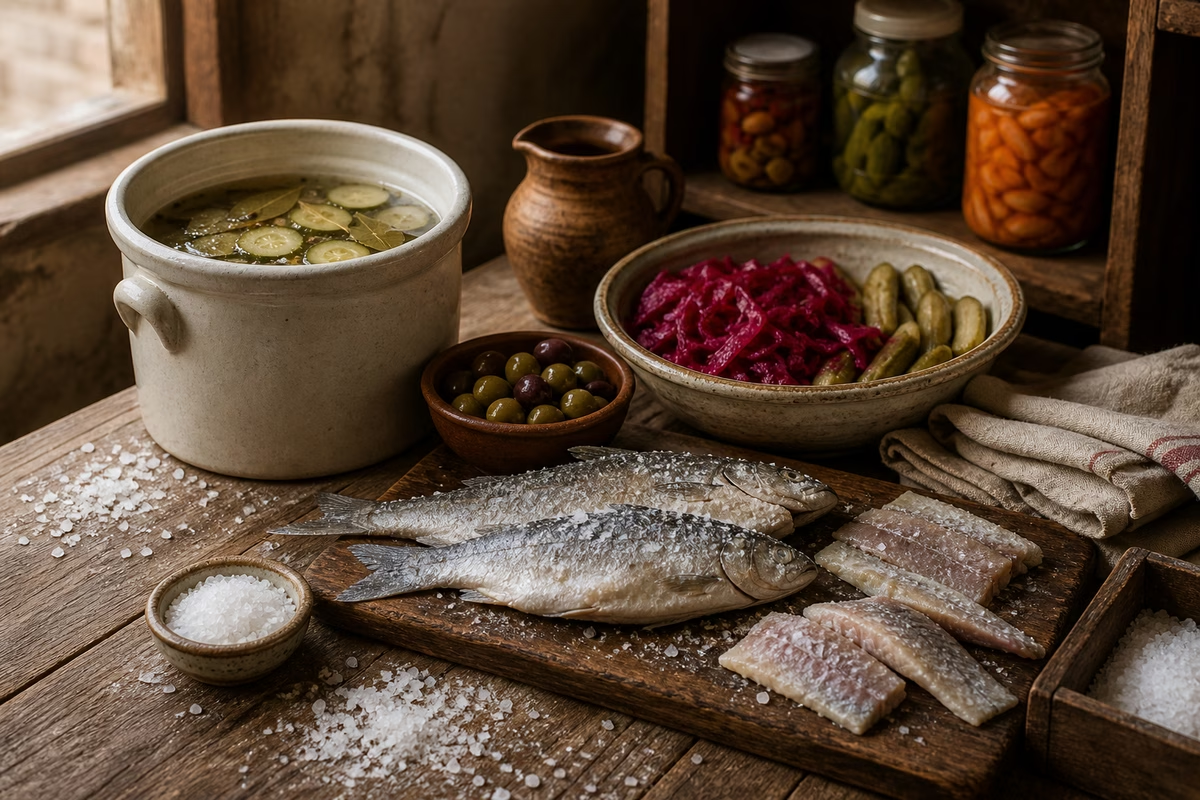
Salt preservation works because salt changes the environment around food. It draws out moisture, lowers the amount of available water, inhibits the growth of many spoilage organisms, and creates conditions in which some kinds of controlled preservation become possible. That sentence sounds technical, but the lived result is easy to grasp: salted food lasts longer and behaves differently.
In some cases, salt was used dry. In others, it was dissolved into brine. Sometimes it was part of a longer chain that included drying, smoking, fermenting, or aging. Preservation was rarely just one trick. Salt was the anchor that made the other steps reliable enough to build a food culture around.
That last phrase matters. Salt rarely worked alone as a magic shield. It worked as the dependable center of a preservation system. It bought safety margins, slowed decay, and made other techniques more predictable. Once you see that, a lot of traditional foods stop looking quaint and start looking brilliantly engineered.
The foods that built salt’s reputation
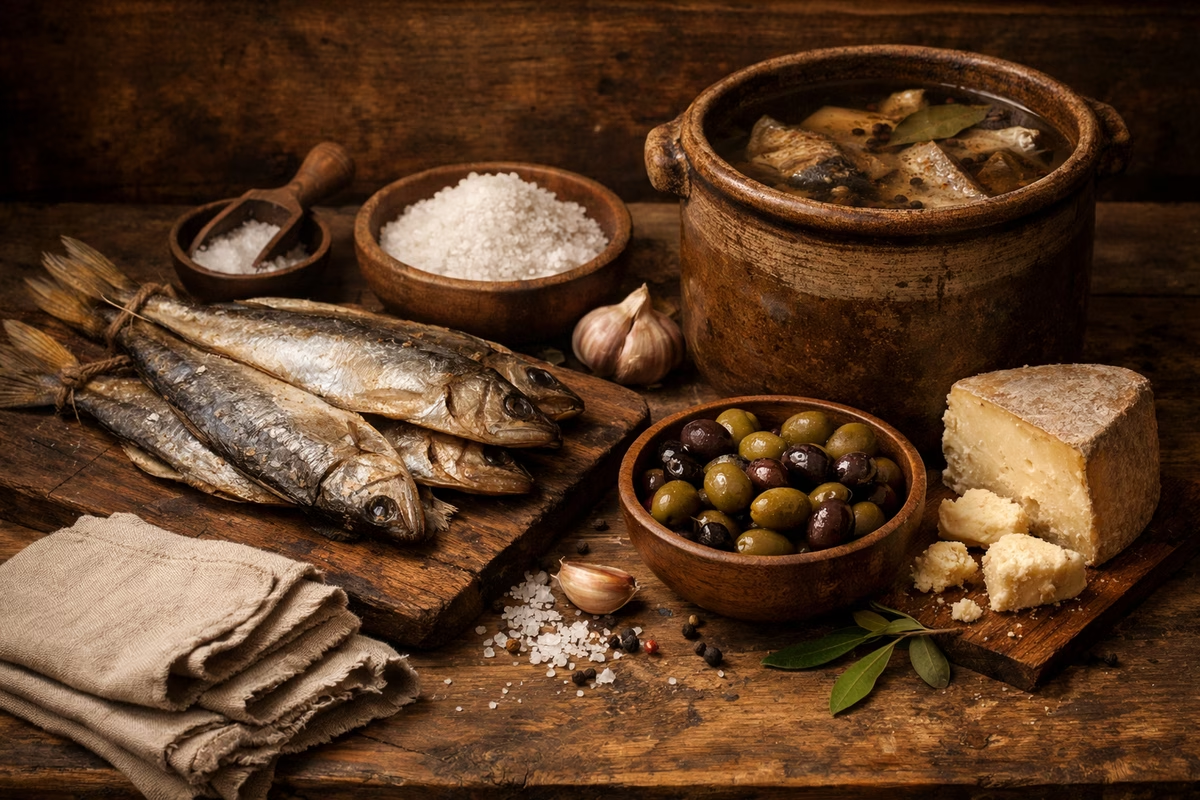
Salt earned its central place not through one miracle but through repetition across many foods. Fish, meat, olives, cheese, butter, and vegetables all became more stable, more portable, or more transformable with salt in the picture. Every time a family got another week out of food, every time a ship carried provisions farther, every time a town could rely on preserved staples through lean seasons, salt increased its own importance.
That is how an ordinary mineral became socially powerful. It kept proving itself useful in daily life.
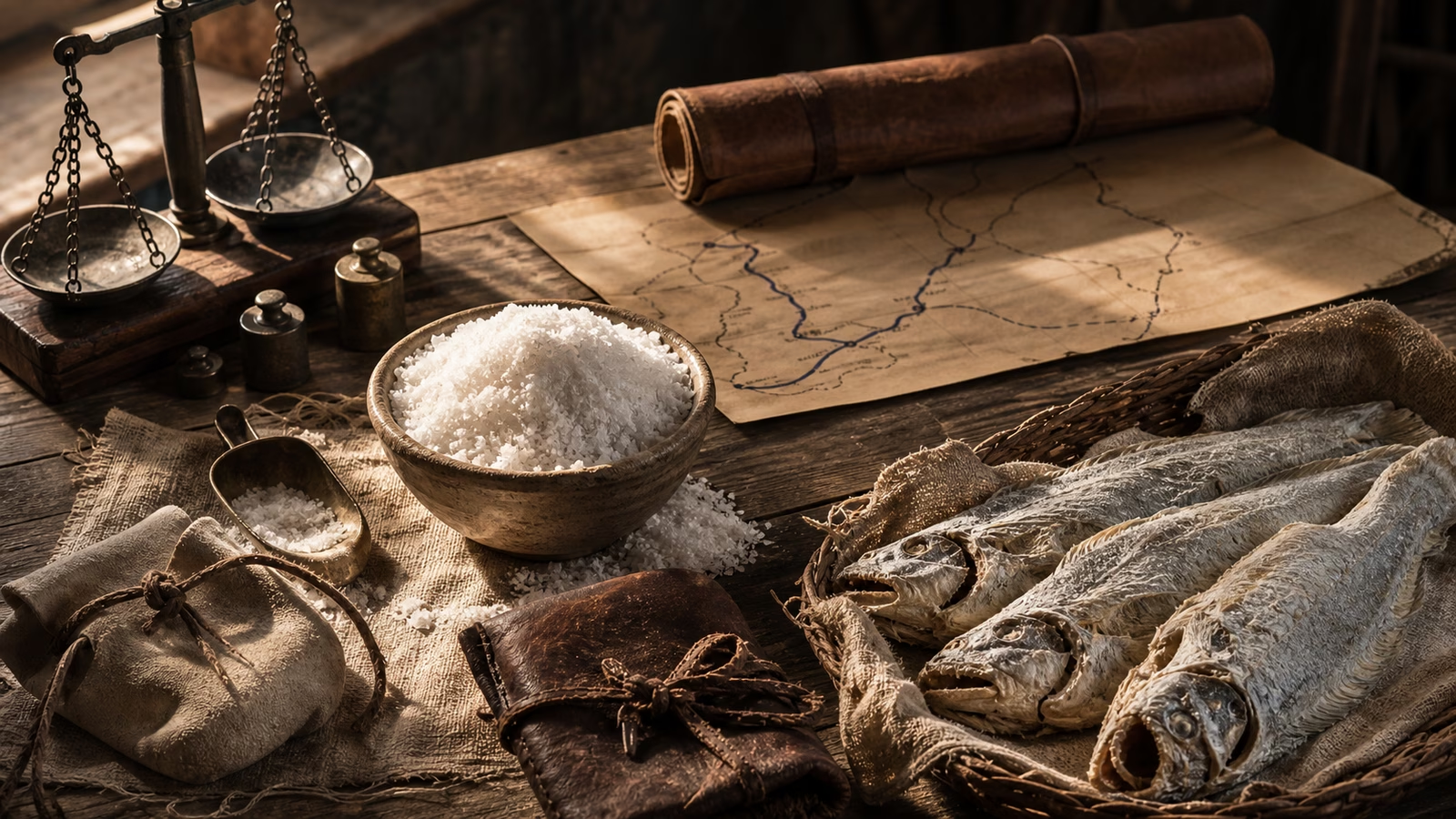
Fish may be the easiest example to feel in your bones. Fresh fish is fragile, local, and urgent. Salted fish becomes transportable, tradable, and storable. The same basic pattern applies to many foods. Salt changed what could move, what could wait, and what could become commerce instead of immediate necessity.
Preservation created flavor traditions, not just storage
This is the part people often miss.
Salt did not simply keep food from spoiling. It created entire cuisines of cured, brined, dried, fermented, and aged foods. A preserved anchovy is not just a fish that lasted longer. It is a different ingredient with a different culinary destiny.
The same is true of cured meats, pickled vegetables, preserved olives, and many cheeses. Salt preservation taught societies to love concentration, savoriness, funk, and depth. It also taught cooks patience. Many preserved foods become themselves only after time has reshaped them.
That is why preservation history still matters in a modern kitchen. It explains why so many beloved ingredients taste the way they do. The flavor is not incidental. The flavor is the legacy of the storage method.
Anchovies, country ham, bottarga, pickles, miso-adjacent ferments, salt cod, olives, hard cheeses, and countless cured meats all belong to this logic. These foods are not accidents of taste. They are solutions that became appetites. People first learned to preserve, then learned to crave the results.
Dry cure, brine, and fermentation are different conversations
It is useful to separate the main preservation modes because “salted” covers a lot of territory.
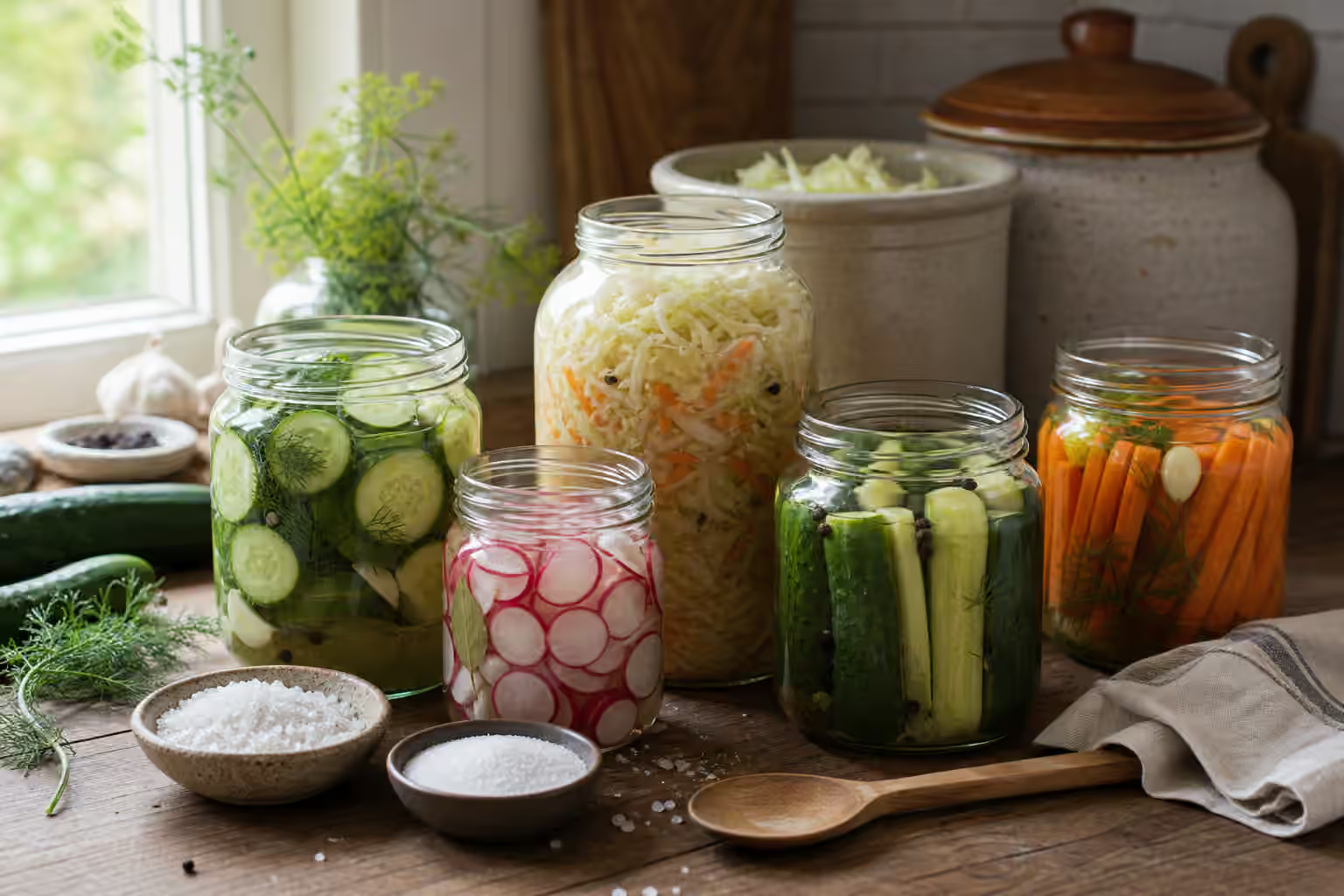
In a dry cure, salt is applied directly and moisture is drawn outward. In a brine, salt works through water, surrounding the food more evenly. In fermentation, salt both restrains harmful microbes and gives desirable ones a better chance to dominate. The outcomes are not interchangeable. One produces concentration, another balance and penetration, another transformation.
Understanding those distinctions helps modern cooks read recipes and traditions with more respect. Salt is not doing one simple job across all preserved foods. It is shaping very different processes.
Preservation was local, practical, and often beautiful
Different places learned different salt logics. Coastal communities salted fish. Pastoral communities salted and aged dairy. Dry climates paired salt with sun and wind. Cooler regions leaned into long cures and storage traditions. Fermentation cultures worked with salt not just to prevent rot, but to guide transformation.
None of this was theoretical. It was responsive. People looked at the climate, the harvest, the animals, the travel distance, and the fuel they had available, then built preservation habits that made sense. Over generations those habits became cuisine.
This is one reason salt history is so revealing. It connects environment directly to taste. A preserved food often tells you what a place had too much of, too little of, or too far to travel without help. Salt was the mediator between geography and the dinner table.
Why this still matters now
You no longer need a salt cellar to survive winter. Good news.
But the culinary world shaped by salt preservation is still everywhere around you. Many of the foods people consider deeply comforting or deeply delicious are still descendants of preservation logic. Salt remains central not because your pantry lacks refrigeration, but because your palate inherited a preserved world.
Even modern cravings often reveal this inheritance. People talk about wanting food that is punchy, savory, funky, snackable, or “addictive.” Very often they are naming qualities that preservation intensified long before industrial food companies learned to imitate them. Salt trained human taste across centuries.
The practical lesson
Understanding preservation makes modern artisanal salt feel less frivolous. It reminds you that salt first proved its worth through function. Texture, delicacy, and finishing beauty came later. The nice jar on the counter belongs to a much older story about survival, transport, scarcity, and control.
That historical grounding is useful because it keeps the ingredient honest. Better salt can be pleasurable, beautiful, and worth caring about. But it matters in the first place because it used to solve urgent problems.
It also corrects a modern blind spot. Many people think of salt mainly as something to sprinkle at the end. Historically, it was infrastructure. It stabilized food systems, enabled trade, and reduced vulnerability to seasonality. Remembering that makes contemporary salt culture easier to enjoy without losing perspective.
A modern cook’s takeaway
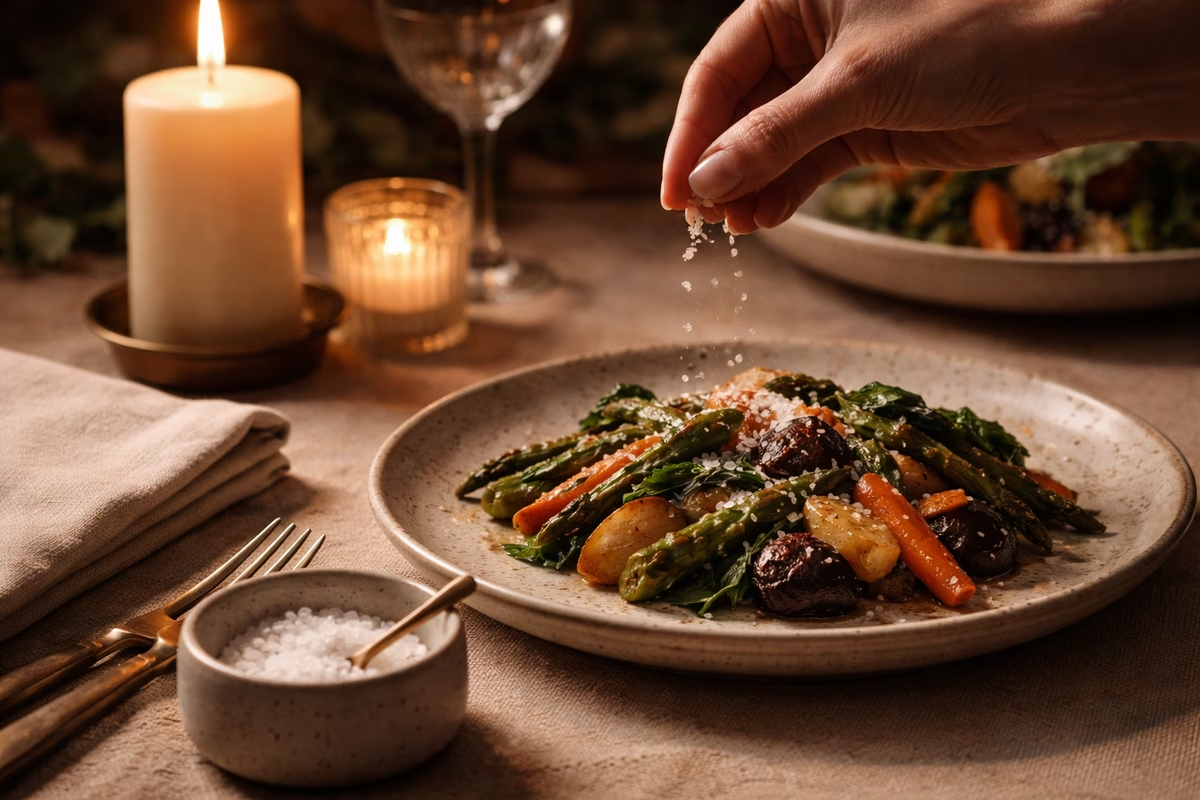
You do not need to start curing hams to appreciate this. The practical takeaway is simpler. When you season with salt, you are not using a decorative finishing dust. You are using one of the oldest and most consequential tools in the pantry.
That perspective sharpens judgment. It helps you see the difference between essential salt, expressive salt, and novelty salt. It also makes old preserved foods easier to understand. Their intensity is not excess. It is history that still tastes alive.
The modern kitchen lesson is not “be old-fashioned.” It is “notice what salt is actually doing.” In a cucumber quick pickle, in a dry brine on chicken, in a batch of sauerkraut, or in a wedge of aged cheese, salt is still managing time, water, and microbial behavior. The refrigerator changed the stakes. It did not erase the craft.
Next steps
Read A Human History of Salt , How Artisanal Salt Is Harvested , and Salt Tasting next.