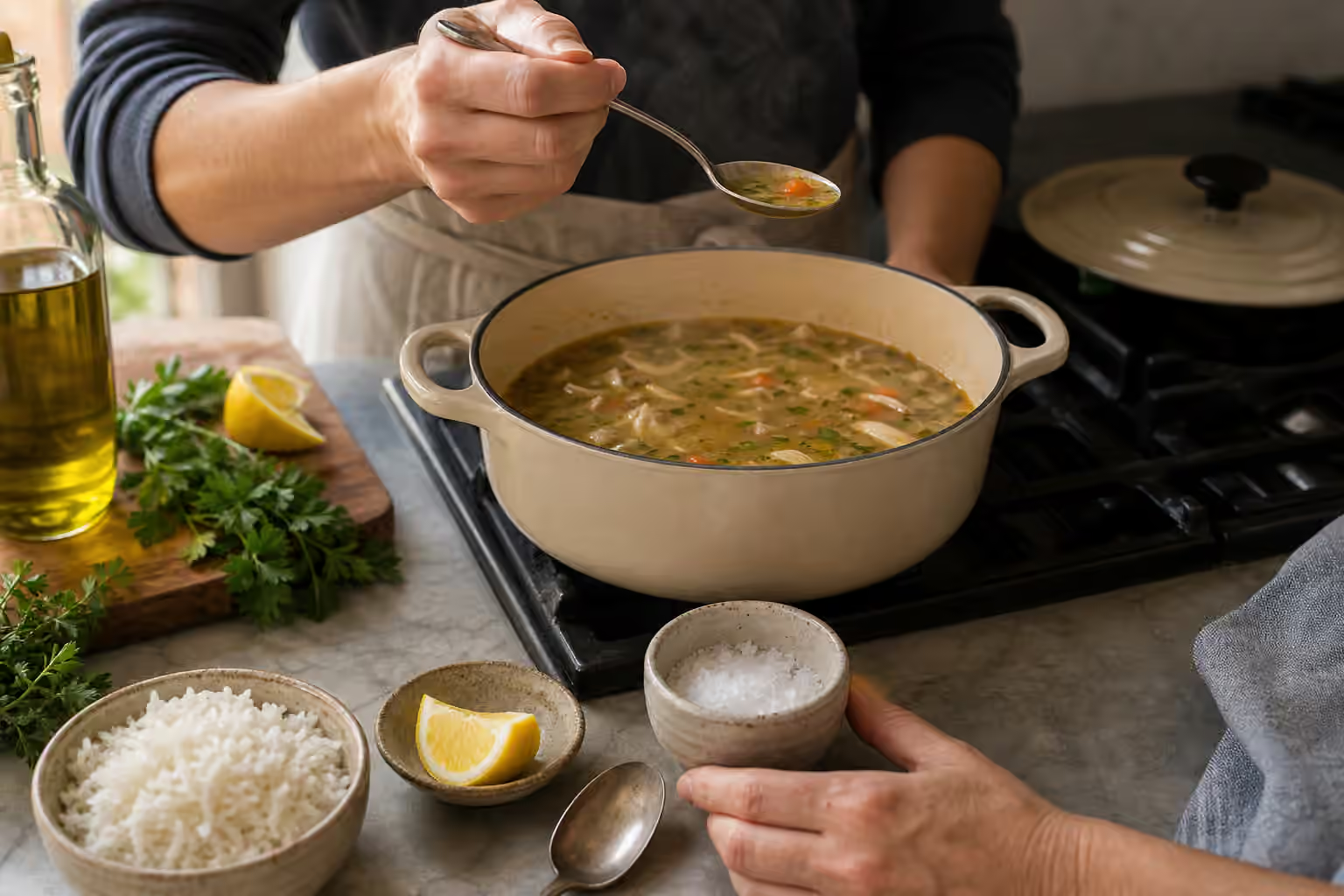
Salt gets treated like background noise right up until the moment somebody hands you a tomato with flaky salt on it and your whole relationship with seasoning changes.
That moment matters because it reveals a useful truth: you do not need twenty salts. You need to understand what a few salts feel like, what they do best, and when a fancier salt is wasted.
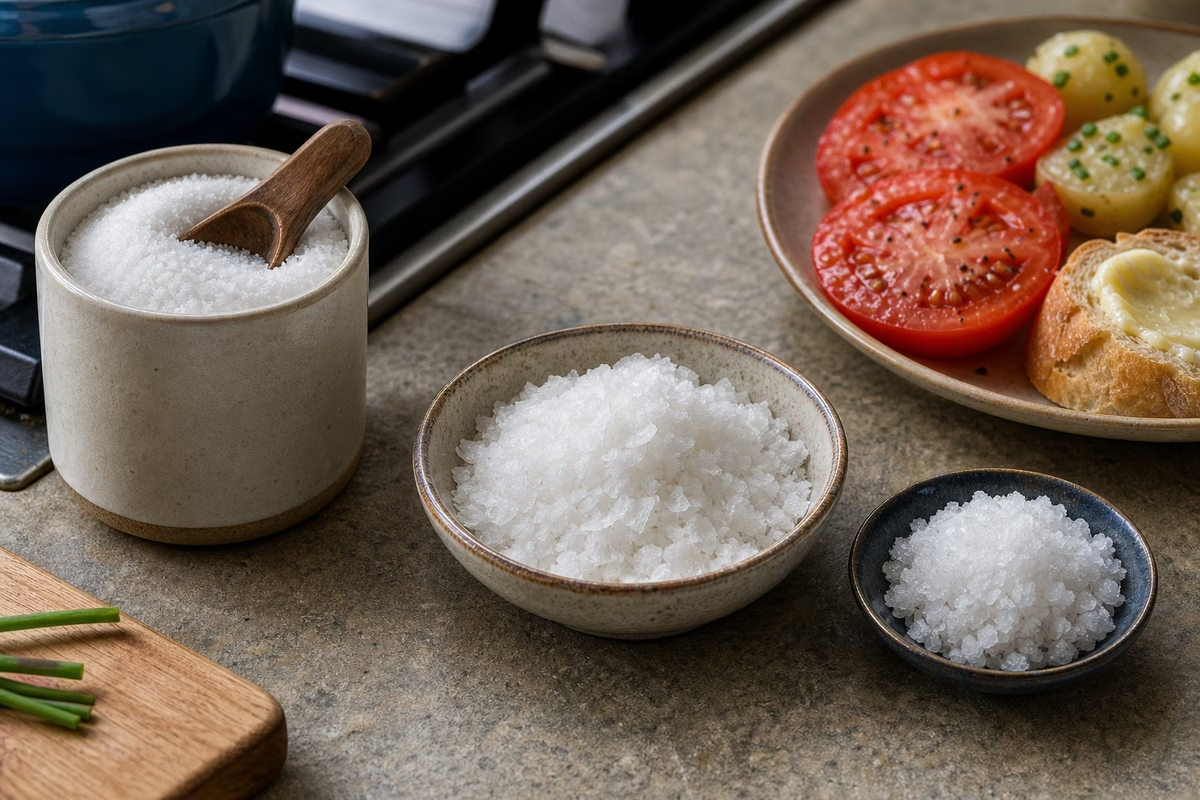
The only five buckets most home cooks need
1. Everyday cooking salt
This is the workhorse. It goes into pasta water, soups, braises, beans, dough, and anything else where the salt dissolves into the background. What matters here is not romance. What matters is that it is affordable, easy to pinch, and consistent enough that your hand learns it quickly. Most artisanal salts are simply too expensive for this role unless you are using them with unusual restraint.
2. Flake salt
Flake salt is the one that makes people suddenly understand why texture matters. It is light, brittle, and easy to scatter with control, so it works beautifully on roast potatoes, grilled fish, eggs, sliced cucumbers, and even cookies. It often tastes brighter than denser salts because the crystals break fast and dissolve quickly on the tongue.
3. Fleur de sel
Fleur de sel is softer and quieter. It is still a finishing salt, but it feels less sharp and dramatic than a flake. You use it on foods that leave room for nuance: ripe tomatoes, buttered radishes, caramel, good bread with olive oil, or anything else simple enough for a gentle finishing salt to remain noticeable.
4. Wet gray salt or other moist sea salt
These salts are damp, denser, and more grounded. They tend to feel savory rather than sparkling, which makes them excellent for roasted vegetables, grilled meat, lentils, potatoes, and hearty bread. They are not as flashy as flake salt, but they can feel more substantial and more satisfying with rustic food.
5. Specialty salt
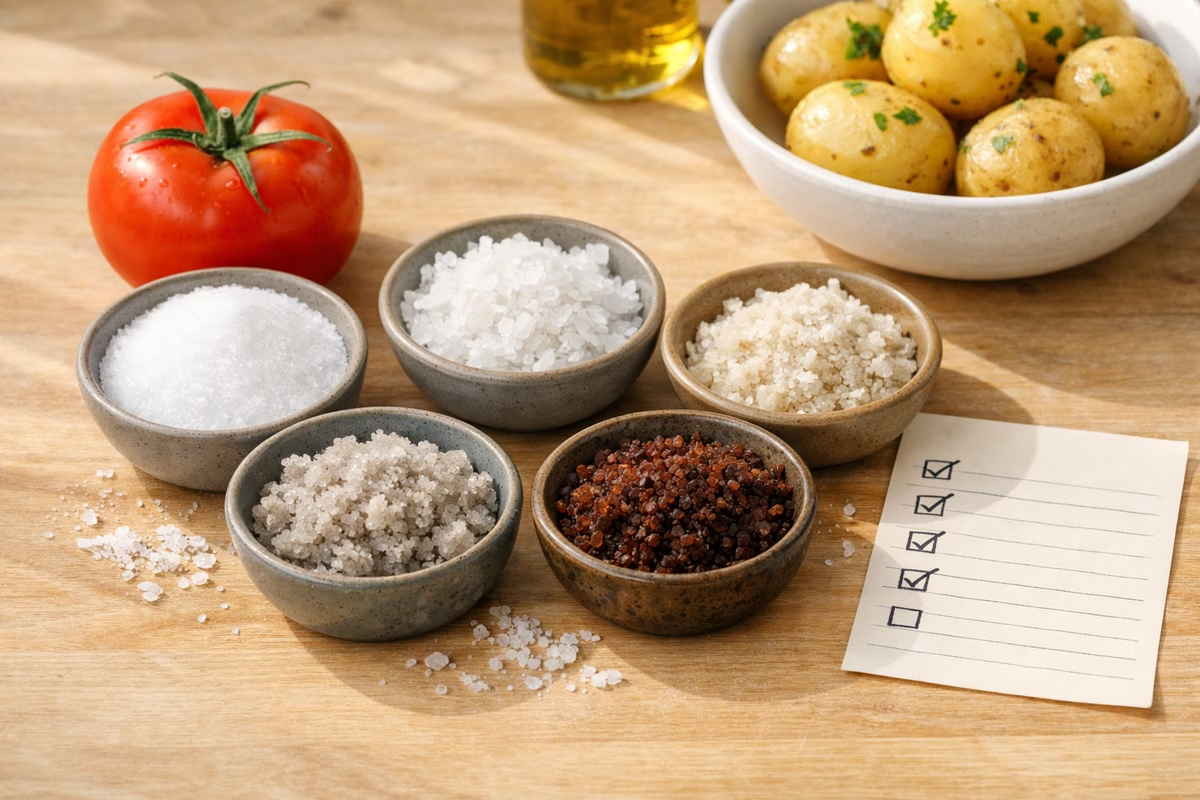
Smoked salt, black salt, red clay salt, blue salt, and other regional curiosities belong here. These are supporting actors, not pantry foundations. The right specialty salt can be genuinely useful, but only when you already know what it is for. If you are buying it because the shelf felt persuasive, slow down.
What changes from salt to salt
People often talk about artisanal salt as if the whole story lives in mineral analysis. Sometimes that matters a little. More often, the differences you notice first are physical. Crystal size changes how quickly the salt dissolves. Moisture changes the way it clumps, pinches, and lands. Harvest method affects shape, brittleness, and texture. Mineral traces can nudge flavor from clean to briny to earthy to faintly bitter.
That is why two salts with the same sodium chloride base can behave very differently at the table. One disappears in a clean flash. Another lingers. Another adds crunch. Another feels almost creamy. Once you notice that, better salt stops sounding like a marketing category and starts feeling like a practical one.
The easiest way to feel the difference
Do one side-by-side tasting and you will stop buying salt blindly. Slice a tomato or boil a few small potatoes, then put out three salts: a fine cooking salt, a flake salt, and a moist sea salt. Use tiny amounts on the same food and pay attention to what changes. Which salt disappears fastest? Which one leaves texture behind? Which one feels broad, sharp, mellow, or mineral?
That ten-minute exercise teaches more than a pile of product descriptions. You are not trying to identify terroir like a wine critic. You are just learning what your hand and palate actually notice.
Where people waste artisanal salt
The classic mistake is using beautiful finishing salt in places where it fully dissolves and disappears into the background. Pasta water does not care that your salt was hand-raked at dawn. Long-simmered stew does not care either.
Use expensive salt where there is still a chance to feel it: after roasting, at the table, on simple produce, on bread and butter, or on sweets where a visible finishing salt makes sense. If the salt vanishes into a pot for forty minutes, save your money for the salt that lives by the stove.
A smart first salt shelf
If you want a tiny collection that covers almost everything, start with three jars: one affordable everyday cooking salt, one good flake salt, and one moist or delicate finishing salt. That is enough to learn a lot without turning your pantry into a museum of handsome duplicates.
If you are building that shelf while you read, start with a box of Maldon and a small fleur de sel before you spend money on more decorative niche salts.
From there, choose directionally. If you want delicacy, move into Fleur de Sel . If you want more savory mineral depth, go to Sel Gris and Wet Salts . If you want the broader map first, read Artisanal Salt Types .
The one sentence rule
Cook with practical salt. Finish with expressive salt.
That rule is not perfect, but it is good enough to keep you from spending foolishly and seasoning timidly.
Next steps
Read Artisanal Salt Types for the full landscape, Buying Artisanal Salt before you shop, and Salt Tasting if you want to train your palate.
Let salt teach your hand
The quiet skill is learning how each salt leaves your fingers. Fine salt pours quickly and disappears into food. Flake salt feels generous but weighs less than it looks. Moist sea salt clings, lands heavily, and asks for a different pinch. After a few side-by-side meals, your hand starts to know what the jar will do before your brain names it. That is why a small salt shelf can improve everyday cooking more than a crowded collection. The point is not owning rare crystals. The point is seasoning with confidence and finishing food with texture you can actually feel.