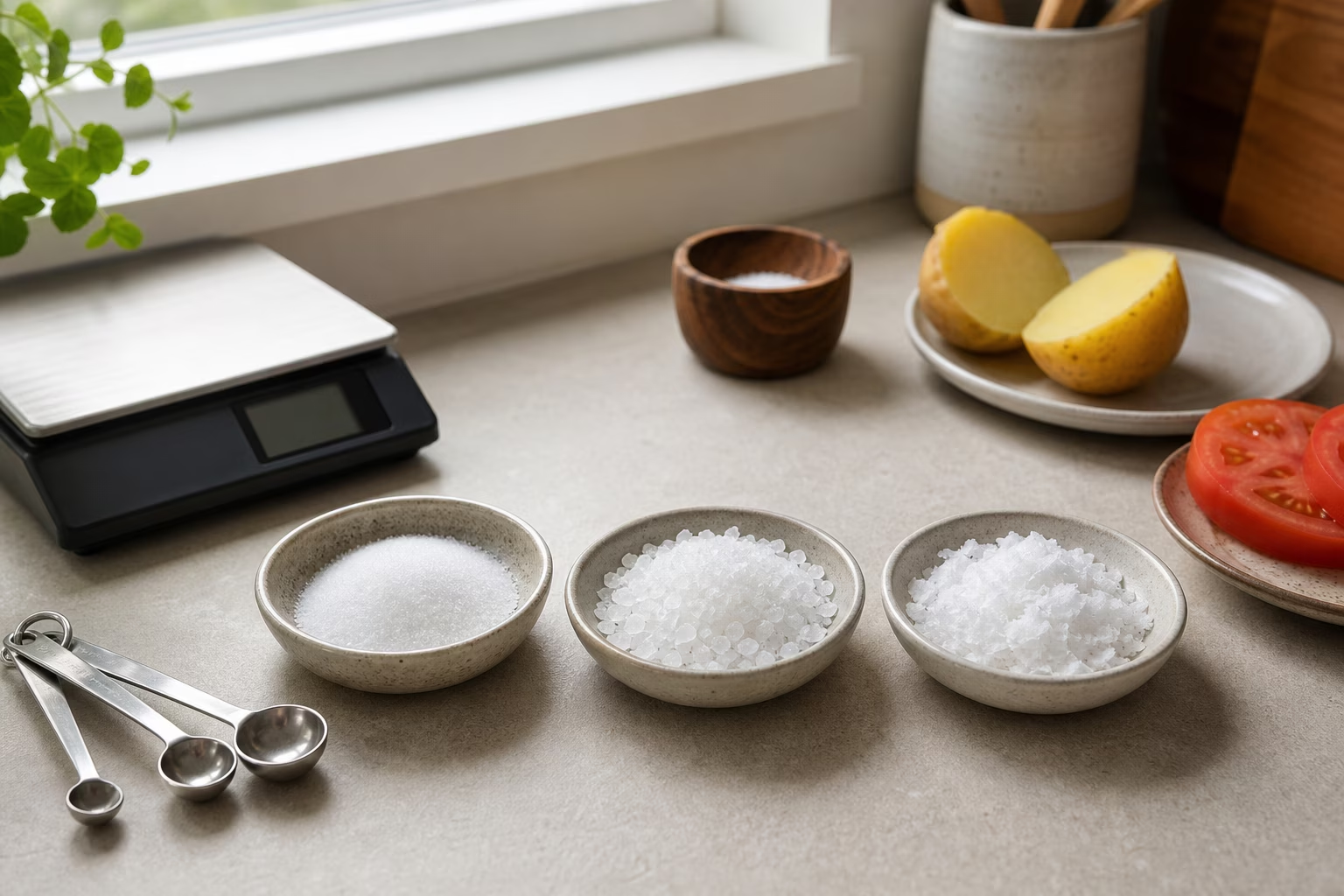
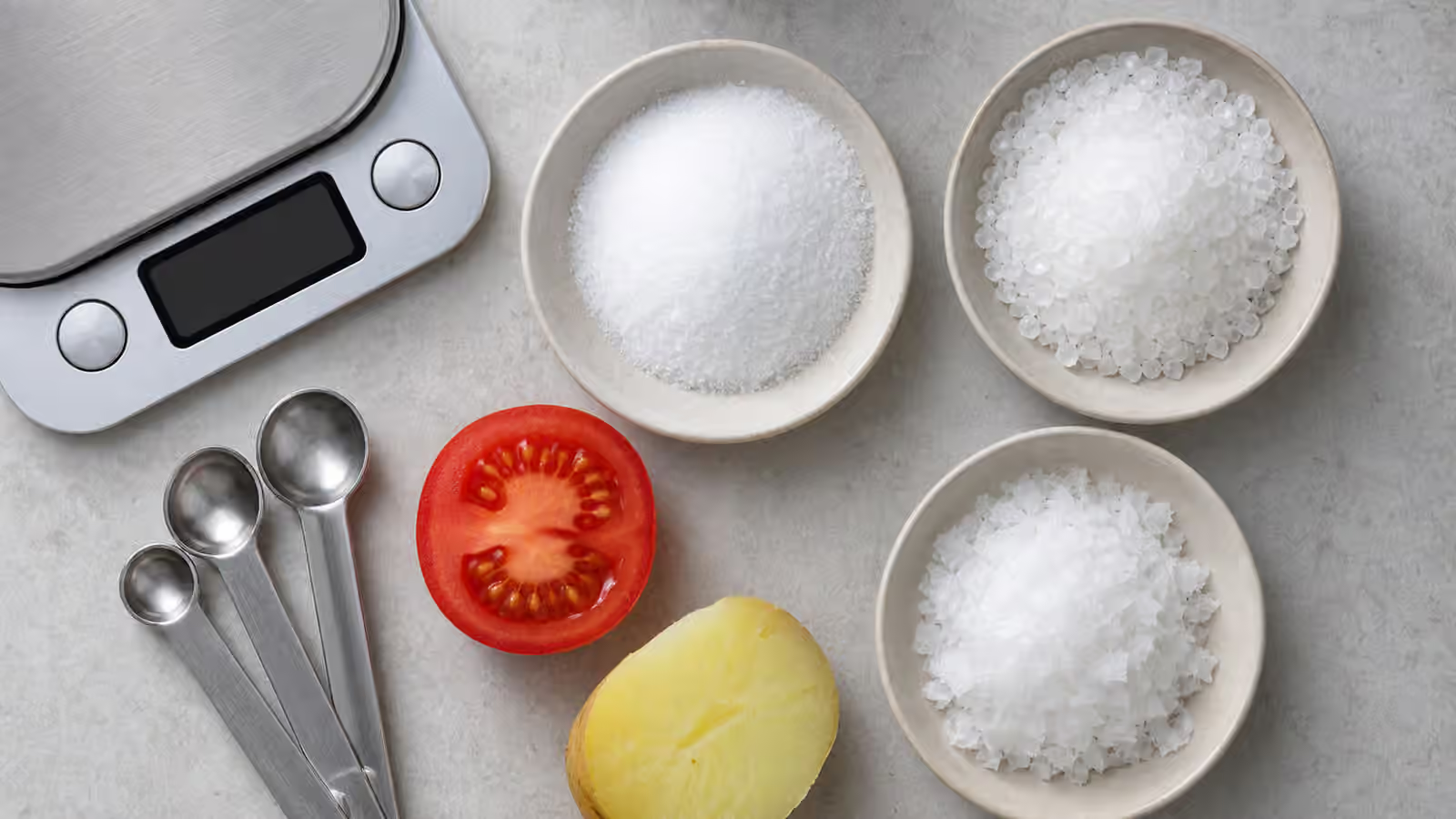
Recipes make salt sound more exact than it is. A teaspoon appears tidy on the page. A pinch sounds casual but knowable. A sprinkle feels harmless. Then one cook uses fine table salt, another uses a loose flaky salt, another scoops from a coarse sea salt cellar, and the same instruction lands in three different kitchens as three different amounts of sodium chloride.
That is not because salt is mysterious. It is because volume is a clumsy way to measure crystals that can be dense, hollow, damp, flat, jagged, or airy. A spoon filled with fine salt packs tightly. A spoon filled with flakes contains more space between crystals. A spoon filled with coarse salt may look generous but dissolve slowly and unevenly. The word salt is simple. The physical salt in your hand is not.
Learning to measure salt well does not mean turning dinner into laboratory work. It means knowing when precision matters, when your fingers are more useful than a spoon, and when a recipe’s salt instruction needs translation. Once you understand the difference between weight, volume, crystal size, and surface texture, you stop blaming yourself for recipes that taste oddly bland or too aggressive.
Volume Measures the Space as Much as the Salt
A teaspoon measures volume, not mass. That sounds obvious until salt enters the spoon. Fine salt can settle into a compact layer because the grains are small and regular. Larger crystals leave more air between them. Flake salt can be especially misleading because it looks dramatic while remaining comparatively light. The spoon is measuring the pile, including the empty spaces inside it.
This is why changing salt styles inside a recipe can change the result. If a dough was developed with a fine salt and the cook substitutes a very flaky salt by the same teaspoon measure, the dough may receive less actual salt than intended. If a recipe expected a large-grained kosher-style salt and the cook uses fine table salt spoon for spoon, the food may become noticeably saltier. The difference is not flavor romance. It is packing density.
The shape of the crystal also changes how the salt behaves before it dissolves. Fine salt spreads quickly and disappears easily into batters, dressings, and simmering liquids. Coarse salt can sit on a surface longer, creating bursts of salinity. Flakes can look abundant but collapse quickly on the tongue. A measuring spoon cannot tell you any of that. It only tells you how much space the salt occupied for a moment.
Salt Quickstart separates everyday cooking salt from finishing salts for exactly this reason. The salt you use inside the food should be predictable enough that your hand learns it. The salt you use at the end can be expressive, brittle, damp, or delicate because texture is part of the point.
Weight Is the Clearest Translation
When precision matters, weight is the cleanest language. A gram of salt is a gram of salt regardless of whether the crystals are fine, flaky, or coarse. The shape still affects how fast the salt dissolves and how it feels on the surface, but the amount of salt itself is no longer a guess hidden inside a spoon.
Baking is the most obvious place to care. Bread dough, crackers, pastry, salted caramel, and cookies often depend on balance. Too little salt leaves sweetness, butter, grain, or chocolate tasting dull. Too much can make the whole batch harsh. A scale removes much of the uncertainty, especially when a recipe is already written by weight. Salt in Baking and Sweets gets into the flavor side of that balance, but measurement is the quieter foundation underneath it.
Weight also helps when you cook the same dish repeatedly. If your favorite beans, focaccia, tomato sauce, or dressing finally tastes right, weighing the salt once can turn a happy accident into a repeatable habit. You do not need to weigh every pinch forever. You only need to build a memory. After a while, your fingers understand what that amount looks like in your own salt cellar.
There are still foods where strict weight is unnecessary. A sliced tomato, an egg, a pan of mushrooms, or a bowl of cucumbers is often better seasoned by watching, tasting, and adjusting. Salt is not only an arithmetic problem. But weight is useful whenever the food is hard to taste until later, whenever the batch is large, or whenever a small difference becomes noticeable in the finished texture.
Pinches Are Personal Measurements
A pinch is not a universal unit. It depends on hand size, salt texture, how deep the cook reaches into the cellar, and whether the salt is dry, damp, fine, or flaky. A pinch of moist gray sea salt may cling differently from a pinch of clean flakes. A pinch from a wide open cellar is not the same gesture as a pinch from a narrow jar.
That personal quality is not a weakness. It is part of how cooking becomes fluent. The problem appears when a recipe asks for a pinch as if every reader shares the same fingers and the same salt. Experienced cooks use pinches because they have practiced with one familiar salt. They know what a small correction feels like. They know how much salt their thumb and first two fingers usually pick up. They know how the food tastes after that gesture.
If you want your own pinches to become reliable, keep one everyday cooking salt near the stove and use it consistently. Changing between fine salt, coarse crystals, and flakes every night makes your hand relearn the measure over and over. This is not a moral argument for one brand or style. It is a practical argument for familiarity.
Pinching also gives better control at the end of cooking than shaking from a closed container. A shaker hides the amount until it lands. A pinch lets you feel the salt and scatter it with intention. That matters with delicate foods. It also matters when you are correcting a soup, salad, or sauce a little at a time.
Finishing Salt Should Not Be Measured Like Pot Salt
Finishing salt often looks as if it should be measured generously because the crystals are visible and beautiful. That beauty can mislead the cook. A large flake on the tongue is a different experience from the same salt dissolved into a pot. Surface salt arrives first, so a little can feel like a lot. This is why finishing salt belongs to the last bite, not to the arithmetic of the whole recipe.
Flake Salt works because brittle crystals break quickly and create a bright first impression. Fleur de sel works differently, with a softer landing. Damp salts can feel more savory and grounded. Those differences are useful precisely because they remain physical for a moment. If you grind them into a dough or dissolve them in pasta water, most of the special texture disappears.
Measuring finishing salt by spoon can also make food look carefully finished while tasting uneven. A spoonful dropped over a platter may cluster in some spots and miss others. Fingers do better. They let you lift the salt high enough to scatter it, crush a few flakes if needed, and stop before the surface becomes crowded. The goal is not coverage like snow. The goal is a few well-placed moments of texture.
This is one reason When to Salt treats seasoning and finishing as separate acts. Cooking salt dissolves and integrates. Finishing salt lands and announces itself. Confusing those jobs leads to bland interiors with salty surfaces, or expensive crystals wasted in places where they cannot be felt.
Recipes Need Reading, Not Blind Obedience
A good recipe often names the salt style it used. If it does, listen. If it does not, read the context. A soup recipe that calls for a teaspoon of salt early in the pot is not making the same demand as a cookie recipe, a tomato salad, or a steak finished at the table. The food tells you how risky substitution will be.
Liquid cooking is forgiving in one way because you can usually taste and adjust. It is less forgiving when the liquid will reduce, because salt stays behind as water evaporates. Dough and batter are harder because you often cannot fully judge the finished salt balance until after baking. Raw meat and fish preparations deserve extra care because recipe amounts may be tied to texture, timing, or preservation technique, not only flavor. When a tested preservation or curing method gives salt amounts, treat those amounts as part of the method rather than a casual seasoning suggestion.
Most everyday cooking sits between those extremes. If a recipe seems under-salted because you used a very light flake salt by volume, you can correct next time. If it seems too salty because you used fine salt in a recipe developed around larger crystals, the lesson is not that the recipe failed. The lesson is that volume needed translation.
One useful habit is to taste your own salt on a plain food before trusting it in a new recipe. A warm potato, a slice of tomato, or a piece of bread will show you whether the salt lands sharply, softly, quickly, or slowly. Salt Tasting turns that into a deliberate exercise, but even a small kitchen taste can recalibrate your hand.
The Salt Cellar Teaches by Repetition
A reliable salt cellar is not just a charming object. It is a training tool. When the same salt lives in the same place, your fingers begin to remember it. You learn how much a small pinch seasons scrambled eggs, how much a larger pinch helps onions sweat, how much a final dusting wakes up sliced tomatoes, and how much is too much for a small pan sauce.
This kind of memory cannot develop if every meal begins with a different container and a different crystal. Variety is useful for finishing salts and tasting experiments. For everyday cooking, consistency makes you better. The goal is not to reduce salt to one bland household standard. The goal is to give yourself one dependable baseline so the expressive salts can stay expressive.
After that baseline is established, measuring becomes less anxious. Use weight when the batch, recipe, or technique asks for precision. Use a familiar pinch when you are cooking and tasting in real time. Use finishing salt by sight, feel, and restraint. Translate spoon measures when you change crystal styles. Taste after water moves, after starch absorbs, after dough bakes, after sauce reduces, and after the food cools enough for your palate to understand it.
Salt is often described as simple because it is chemically simple. In the kitchen, its shape matters. The same mineral can pack tightly, scatter lightly, dissolve slowly, crunch loudly, or vanish into a pot. Measuring it well begins with respecting that physical truth. Once you do, the teaspoon stops being a trap, the pinch stops being vague, and seasoning starts to feel like a skill you can repeat.