The first thing worth understanding about artisanal salt is that it is not really made. It is managed.
Salt producers do not invent sodium chloride. They create the conditions under which water leaves, crystals form, and specific textures can be gathered at the right moment. That means salt harvest is a craft of timing, landscape, weather, and patience more than one of invention.
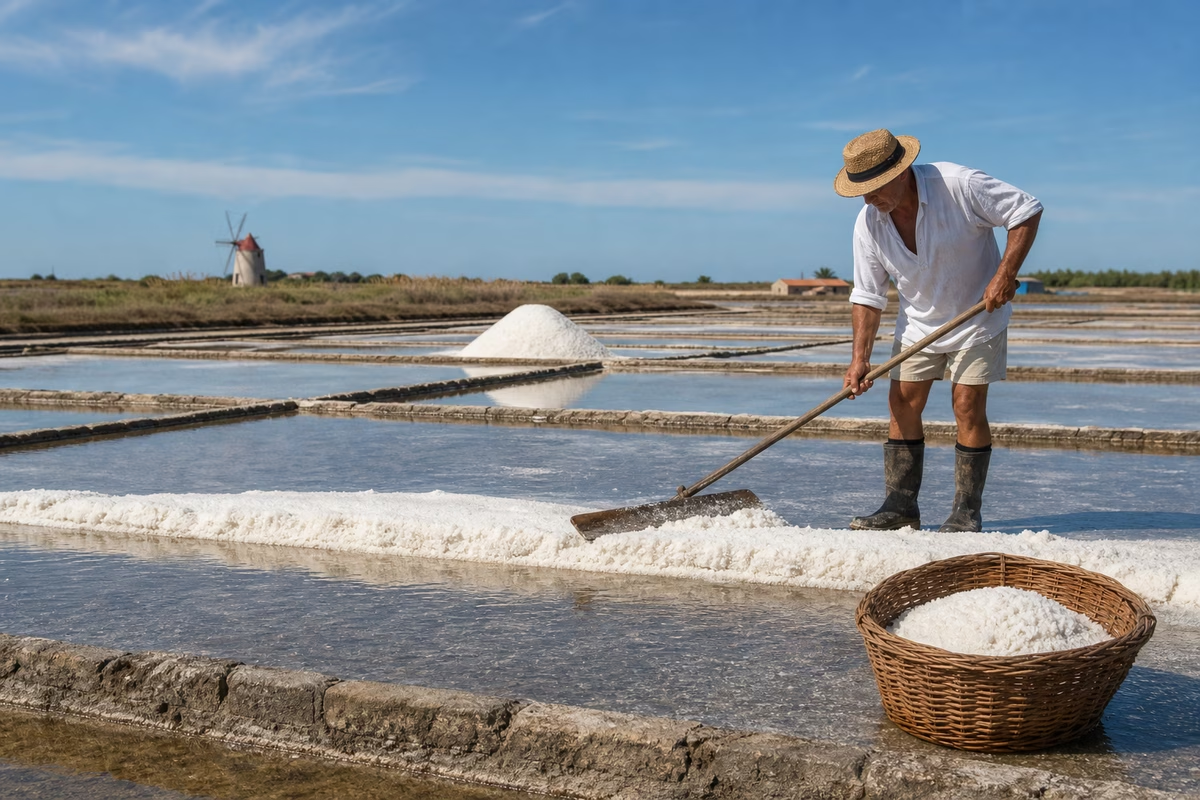
The sea-salt path: guiding evaporation
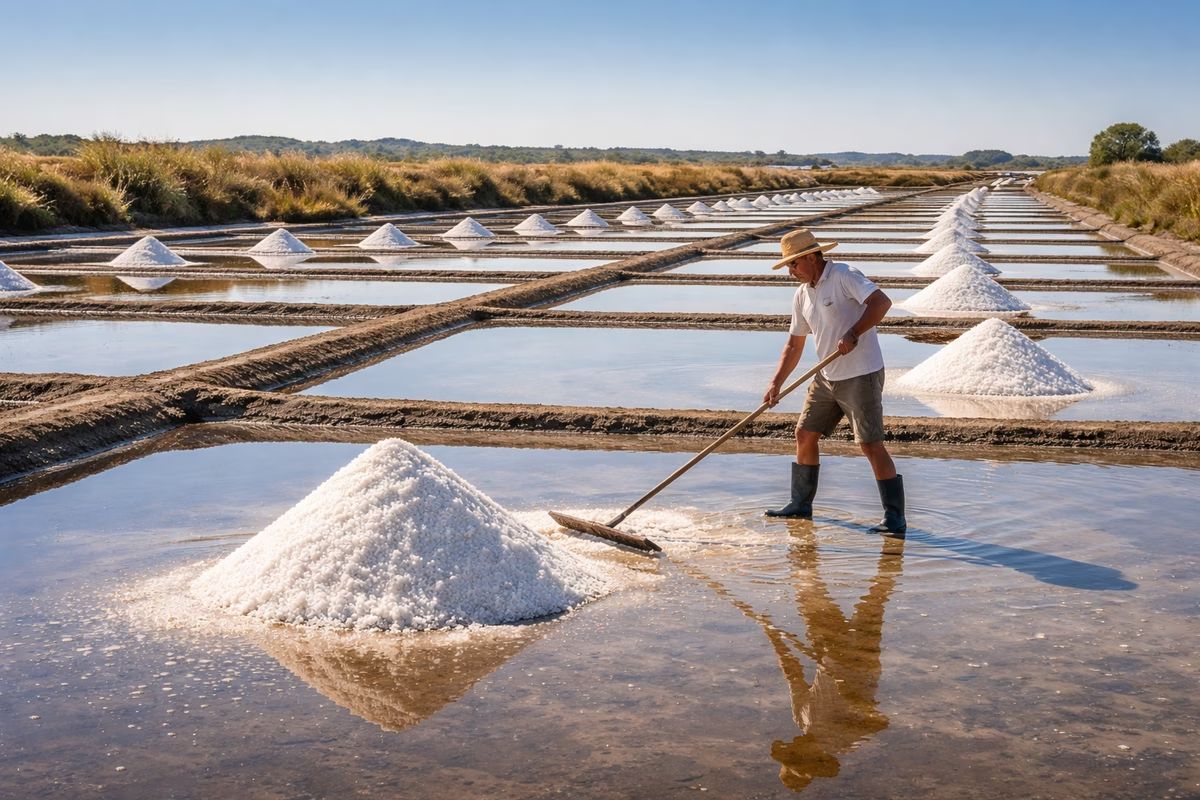
In traditional sea-salt production, seawater moves through a sequence of shallow ponds or pans. As sun and wind drive off water, salinity increases. Eventually crystals begin to form.
What sounds simple on paper is anything but simple in practice.
Producers must manage:
- water depth
- flow between ponds
- wind exposure
- temperature
- contamination
- timing of harvest
Tiny shifts in weather can change yield, texture, and quality.
What makes this craft impressive is that the producer is not chasing one generic outcome. They are often steering toward a particular texture, moisture level, or harvest moment. The same marsh can produce salts with very different personalities depending on when and how the crystals are taken. That is why “sea salt” is a beginning, not a conclusion.
Surface salts versus bottom salts
One of the most useful distinctions in artisanal salt is where the crystals form.
Some delicate salts form at or near the surface under favorable conditions. These can be skimmed carefully and kept separate. Fleur de Sel belongs to this world.
Heavier crystals collect below, where they can be raked, gathered, and dried. These bottom salts often become the coarser, denser salts associated with everyday sea-salt harvests or gray salts.
That single distinction explains why salts from the same marsh can end up feeling so different.
It also explains why producers and writers sometimes sound fussy about harvest timing. They are not merely protecting romance. They are trying to preserve a physical difference that matters in the kitchen. A surface salt that stays light and delicate can become something else entirely if it is allowed to collapse, sink, or absorb too much moisture before collection.
Why weather matters so much
Salt harvesting is one of the clearest examples of food production being held hostage by the sky.
Sun speeds evaporation. Wind helps. Humidity complicates things. Rain can interrupt or ruin the timing. Calm, heat, and dryness may create the narrow conditions needed for delicate crystal formation. A producer is reading the day constantly.
This is why artisanal salt can carry such strong local identity. The harvest is not just a matter of geography. It is a matter of repeated weather patterns and the human knowledge that grew around them.
Weather is also why artisanal salt resists industrial neatness. A producer can know the land intimately and still have a disappointing day or season. That unpredictability is part of the cost, part of the beauty, and part of why some salts command prices that would seem absurd if they were merely crushed mineral in a prettier box.
Clay, ponds, and physical character
The shape, depth, lining, and mineral environment of a salt pan affect the harvest. Clay-lined beds, for instance, can influence color and mineral feeling in salts such as sel gris .
Again, the important lesson is not that one system is morally superior. It is that production method leaves a tactile signature.
For cooks, that tactile signature is the real prize. You are not buying a production story to admire from a distance. You are buying the consequences of that story: whether the salt pinches cleanly, lands softly, clings damply, crunches sharply, or dissolves with a certain speed. Harvest method becomes meaningful the moment it reaches your fingers.
Boiling brine
Not all artisanal salt comes from sun-driven evaporation in coastal marshes.
Some traditions rely on brine springs or saline water that is concentrated through boiling. In these systems, the key variables shift:
- fuel or heat source
- evaporation rate
- concentration control
- crystallization timing
The resulting salts can differ noticeably from solar sea salts in shape, dryness, and production story. Boiled salts often carry a different relationship to climate and labor, one tied more to controlled heat than open-air weather.
These traditions can feel less picturesque in modern marketing because steam and fuel are less romantic than shining salt marshes. But they deserve the same respect. Brine-boiled salts often reflect a different kind of technical intelligence: not reading clouds and wind, but reading concentration, timing, heat, and vessel behavior.
Mining and cutting underground salt
Mined salts come from ancient underground deposits. Here the craft is no longer about guiding water across pans. It is about extraction, selection, cutting, crushing, sorting, and sometimes grinding.
These salts are often:
- larger
- denser
- drier
- easier to sell as crystals, chunks, or mill salt
Their appeal is often geological rather than meteorological. They feel deep-time old because, in a real sense, they are.
That difference in origin often creates a difference in mood on the table. Solar salts can feel airy, marine, and exposed to weather. Mined salts often feel stable, dense, and architectural. Neither is automatically better, but they invite different uses and different kinds of attachment.
The hidden labor
Artisanal salt is often photographed beautifully, and fair enough: salt fields are striking. But beauty can obscure labor.
Harvesting means bending, raking, carrying, skimming, sorting, drying, and constantly watching conditions. It can involve glare, heat, repetitive movement, and short windows for action. The romance is not fake, exactly. It is just incomplete.
If you care about artisanal salt, it is worth caring about the work behind it.
It is also worth noticing how often the labor disappears once the salt reaches a boutique shelf. By then the product is dry, clean, and elegant. The glare, repetition, wet boots, timing pressure, hauling, and sorting are nowhere in sight. Remembering that distance helps keep the category honest.
Why harvest method still matters in the kitchen
Because harvest method changes the salt you hold.
It affects:
- crystal shape
- moisture retention
- brittleness
- visual appearance
- how the salt lands on food
This is why harvesting is not just origin-story fluff. It has direct culinary consequences. A hand-skimmed surface salt behaves differently from a compact damp salt raked from the bed. A dense mined crystal behaves differently again.
If you have ever wondered why one expensive salt felt revelatory and another felt decorative, harvest method is often part of the answer. You are responding not only to purity or origin but to structure. The production choice became a cooking outcome.
A good way to connect production to taste
Set out three salts:
- a delicate surface salt
- a moist sea salt
- a dense mined salt
Pinch each. Crush each. Taste each on warm potato.
Once you do that, harvesting stops being abstract.
Next steps
- Read A Human History of Salt
- Read Fleur de Sel
- Read Sel Gris and Wet Salts
Season with attention
Salt is simple until it touches food. For How Artisanal Salt Is Harvested, the useful lesson is that crystal size, timing, moisture, texture, and the food itself all change the result. A pinch can season, preserve, draw out water, sharpen sweetness, or finish a dish with crunch.
Start by tasting in context. A salt that feels strong on the tongue may dissolve gently in soup. A delicate flake may shine on tomatoes and disappear in pasta water. Fine salt measures differently from coarse crystals. The hand learns by comparison.
Then pay attention to timing. Early salting can season deeply or pull moisture. Late salting can add texture and brightness. Brines, rubs, ferments, baked goods, and finishing salts each ask for a different kind of control.
Keep notes for repeatable dishes. Weight helps when precision matters, while a tasting habit helps when ingredients vary. Both can belong in the same kitchen.
How Artisanal Salt Is Harvested should make seasoning feel more deliberate and less mysterious. Good salt use is not about using more. It is about putting the right salt in the right moment.