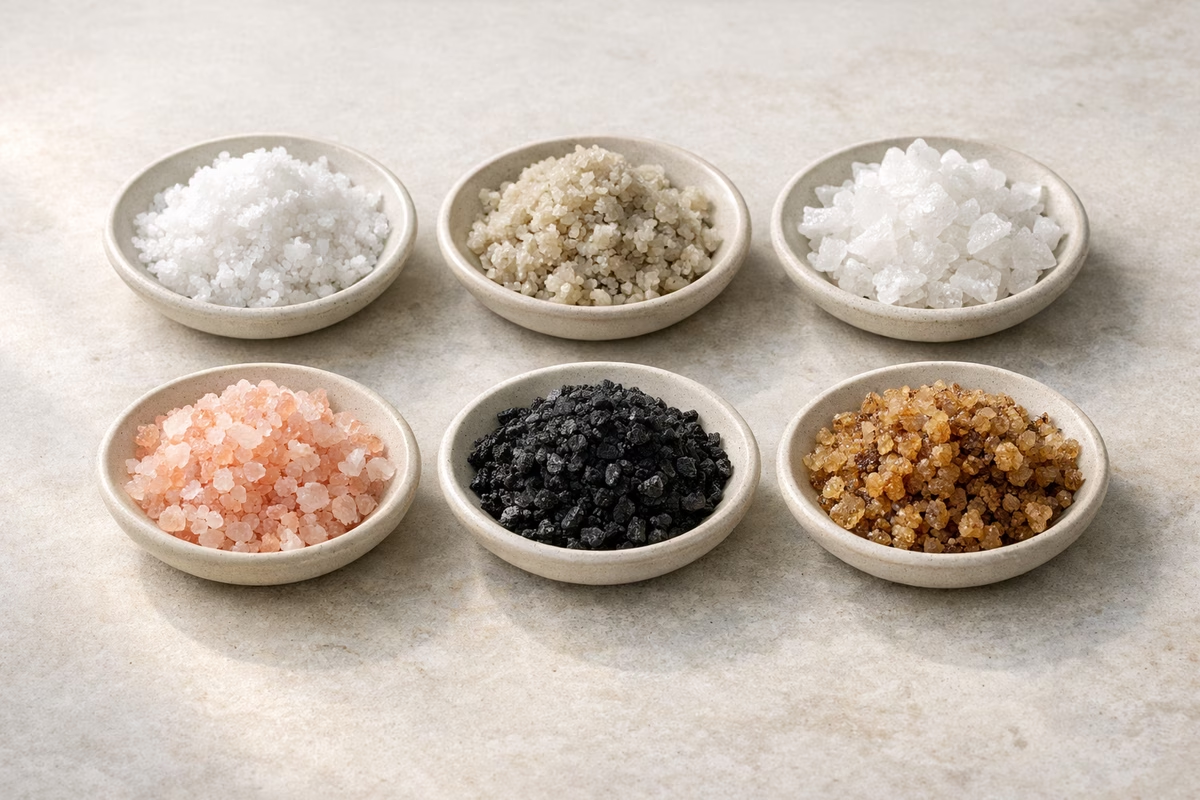
Flake salt is the salt that makes people say, “Wait, why does this taste better?”
Often the answer is not “more flavor.” It is better delivery.
Flake salts are built from thin, brittle crystals that crush easily and dissolve quickly. That combination creates a kind of seasoning sleight of hand: the salt lands visibly, gives a little crackle, then blooms fast across the tongue. Food seems brighter, even when the total amount of salt is modest.
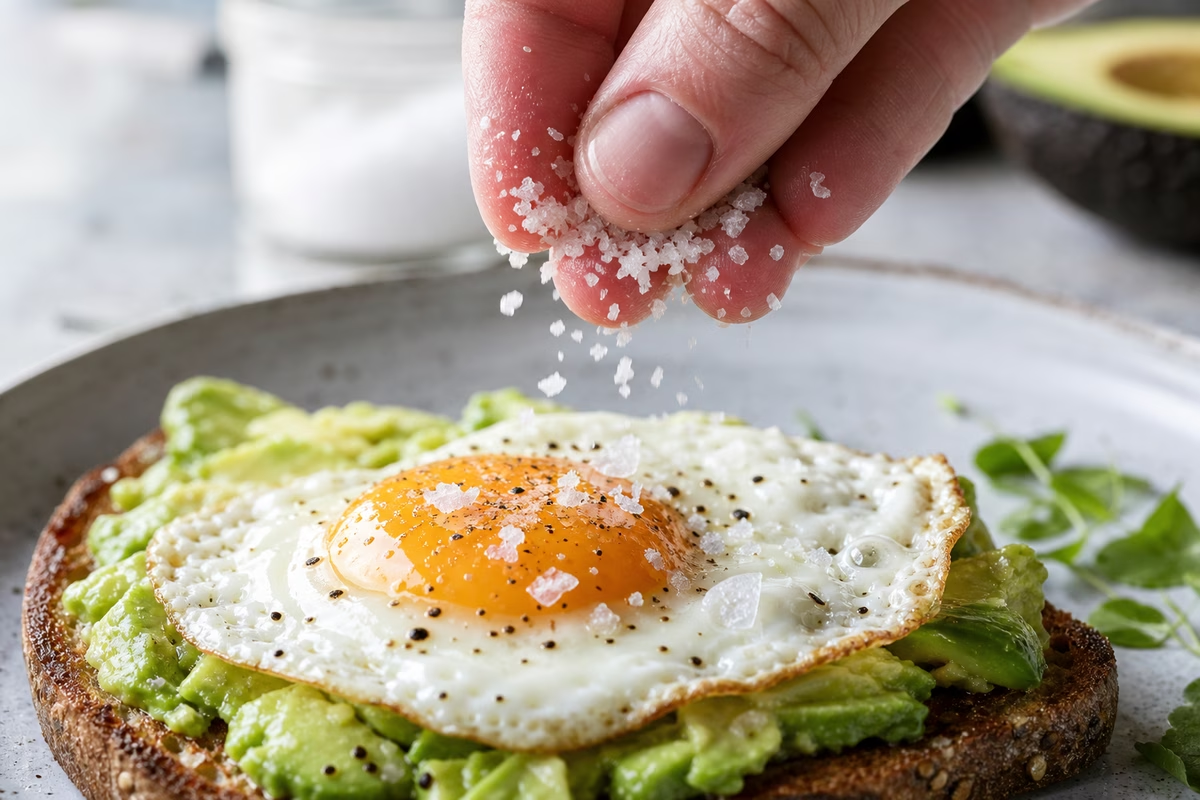
What makes a flake a flake
A true flake salt is not just coarse salt in prettier packaging. It has a physical architecture:
- thin crystal walls
- low density relative to chunkier salts
- easy crush between fingers
- quick, clean dissolution
That architecture is what gives it its appeal. You can distribute it lightly and still feel it.
Why it is so good on finished food
Finishing is where flake salt earns its keep.
It gives you:
- precise control
- visible placement
- crisp texture
- fast flavor release
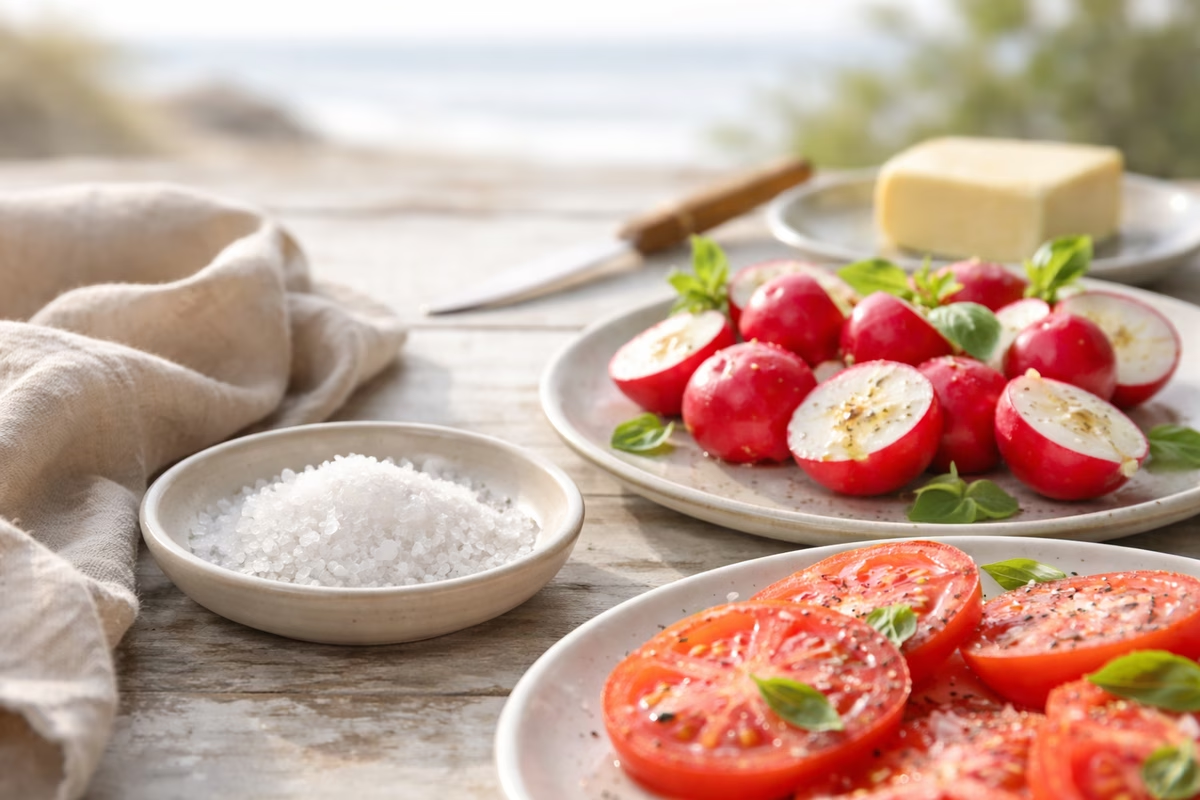
This is why it works so well on steak, salad, fish, roast vegetables, eggs, focaccia, and sweets. The salt stays present long enough to be noticed, then gets out of the way.
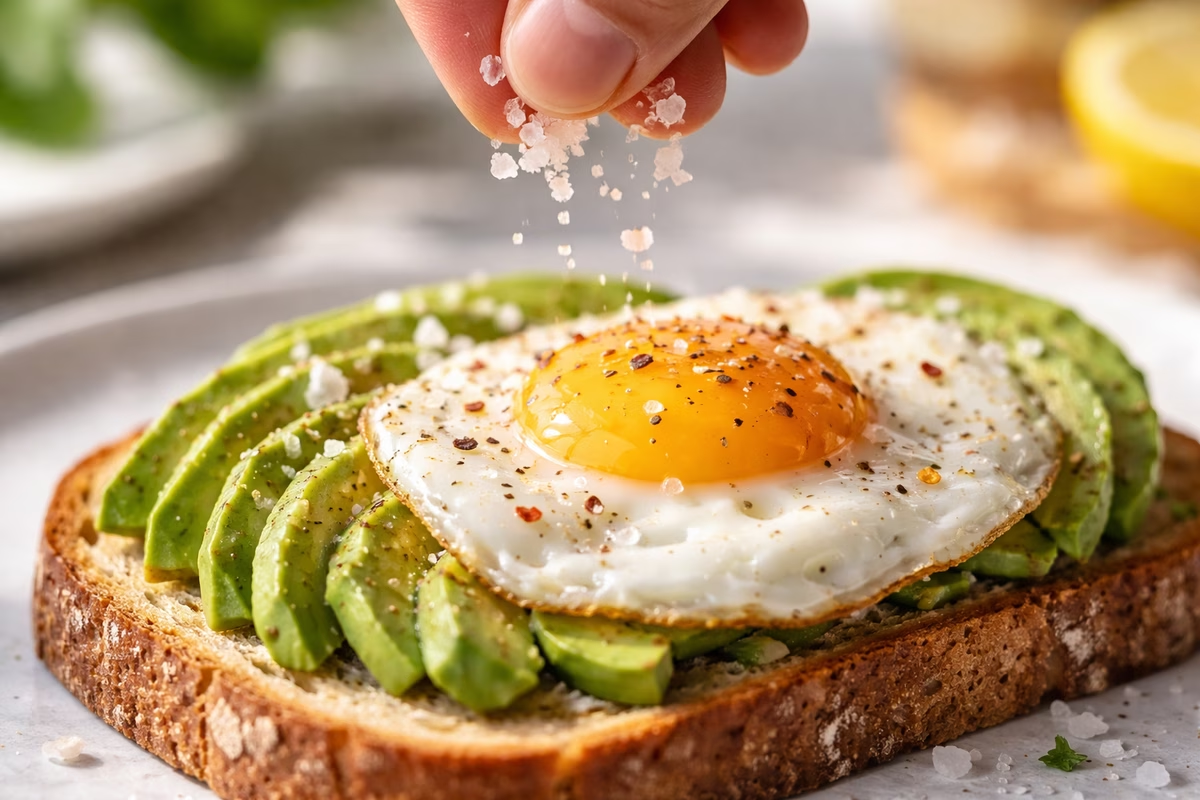
That last point is more important than it first appears. Good flake salt is dramatic for a second and then merciful. It does not sit on the food like gravel, and it does not flatten the flavor into generic saltiness. It creates a quick flare of definition. If a tomato suddenly tastes more tomato-like or a fried egg seems more awake, that is the mechanism you are noticing.
Why volume measurements get weird
Flake salt teaches one of the most useful salt lessons in the kitchen: volume is not the same thing as strength.
A teaspoon of flake salt does not behave like a teaspoon of fine salt because the crystals trap air and occupy more space for the same weight. That is why people regularly over- or under-season when they substitute casually. With flake salt, a big-looking pinch can be surprisingly modest in total sodium, while a recipe written for fine salt can go badly off course if you swap by volume alone.
For finishing, this is an advantage. You get broad visual coverage without dumping a huge mass of salt onto the dish. For baking or recipe testing, it is a warning. If the recipe depends on precision, use the salt it asks for or convert by weight.
Why chefs and bakers both love it
Savory cooks love the crackle.
Bakers love the contrast.
On roasted vegetables or grilled meat, the flakes provide a sharp finishing lift. On cookies, brownies, and caramels, the same flakes create tiny bursts of salt that keep sweetness from feeling flat or sticky. It is one of the rare ingredients that can make food feel more precise without making it feel more complicated.
There is also a practical reason bakers stay loyal to flake salt: it is easy to place late. A cookie dough mixed with fine salt gets seasoned evenly from within. A baked cookie finished with flake salt gets contrast. You feel the sweetness first, then the butter, then the brittle pop of salt on the surface. Those layers arrive in sequence rather than all at once, which is why the dessert feels more articulate instead of merely more salty.
When not to use it
Flake salt is not the right answer for everything.
Avoid using it as your default for:
- pasta water
- soups
- doughs
- big-volume seasoning
- recipes that depend on teaspoon-for-teaspoon consistency with fine salt
You are paying for structure. If the structure disappears instantly into liquid or batter, you lose the main benefit.
It is also a poor choice when you need salt to disappear invisibly. A vinaigrette, quick pickle, or soup base usually wants a salt that dissolves predictably and leaves no textural trace. Reaching for flake salt there is a little like wearing dress shoes to go hiking. The shoes may be beautiful. They are still the wrong tool for the job.
The pinch test
Here is how you know a flake salt is pleasant to use: it should collapse willingly under your fingertips.
If the crystals feel awkwardly sharp, hard, or stubborn, the salt may still taste fine, but it will not deliver the graceful, controllable finish most people want from this category.
Good flake salt feels almost architectural in the bowl and almost weightless in the hand.
That hand-feel is part of why people become attached to it so quickly. You can sense, before the salt even hits the food, whether it is going to scatter elegantly or fall in clumsy chunks. A good flake gives immediate tactile feedback. It teaches better seasoning because it slows you down just enough to pay attention.
Timing matters more than people think
Flake salt is at its best when it is added close to serving. Put it on hot food too early and the crystals soften into the surface. Leave it on moist food for too long and the crispness fades. That does not ruin the dish, but it changes the effect.
This is why chefs often finish with flake salt at the pass and why home cooks should think in terms of the last thirty seconds, not the last ten minutes. On steak, grilled vegetables, toast, or chocolate desserts, the ideal moment is usually right before the plate reaches the table. You want the structure intact when the first bite happens.
Best pairings for learning it
If you want to understand flake salt fast, use it on:
- warm sourdough with butter
- fried eggs
- sliced avocado
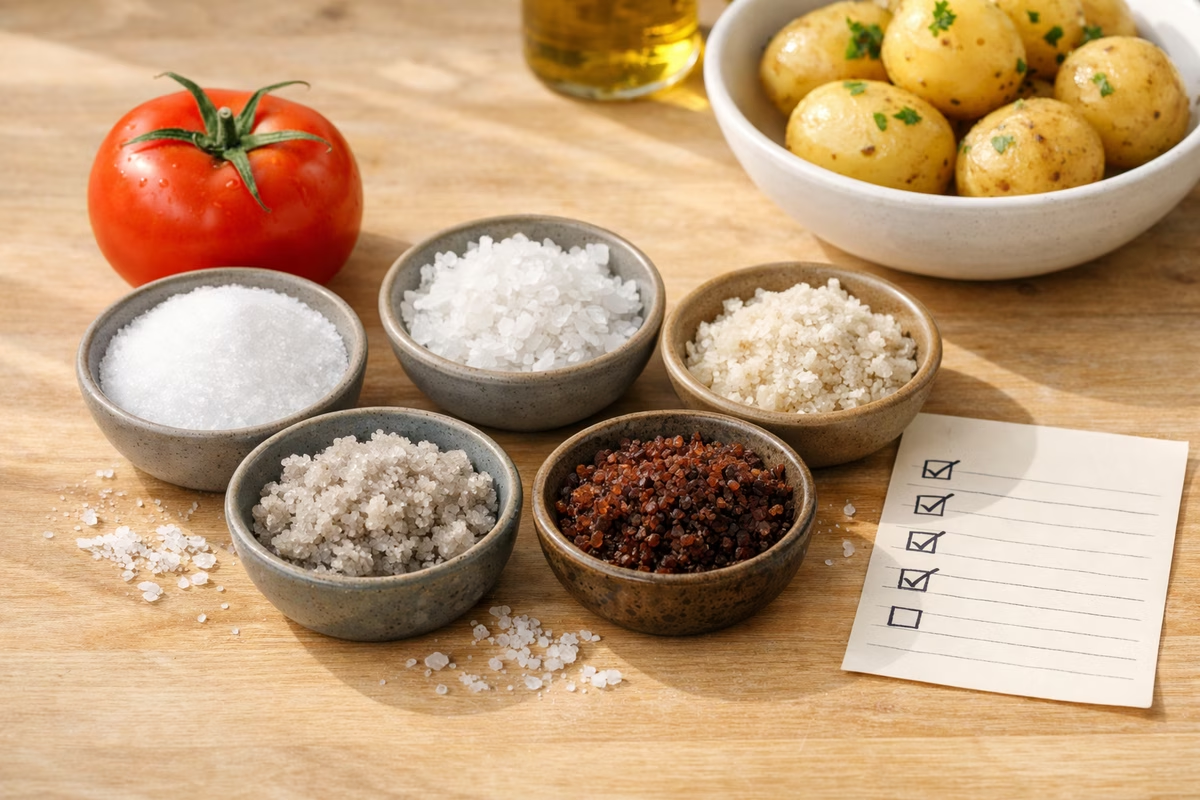
- roasted potatoes
- dark chocolate cookies
If you want the cleanest first reference point, Maldon sea salt flakes are still the easiest way to understand why people get attached to this category.
These foods let you notice both the crunch and the speed of dissolution.
Flake salt versus fleur de sel
They get compared constantly because both are finishing salts, but the effect is different.
Flake salt is:
- drier
- crisper
- more dramatic
- often easier to distribute broadly
Fleur de sel is:
- softer
- more delicate
- more subtle in texture
- often more restrained in feel
If you love clean, bright definition, flake salt is usually the easier daily finishing choice.
Another practical distinction is emotional. Flake salt feels modern and graphic. Fleur de sel feels softer and more restrained. If you like seasoning that announces itself visually and texturally, flakes tend to win. If you want the salt to seem almost woven into the food, fleur de sel often makes more sense. Both can be excellent; the difference is partly culinary and partly stylistic.
The real reason people become attached to it
It turns seasoning into touch.
You do not shake it absentmindedly. You pinch it, crush it slightly, scatter it, and watch where it lands. That little ritual is satisfying, and it often makes people season more consciously. The salt becomes less automatic, which usually means the cook becomes better.
This is why flake salt can be a surprisingly good teacher for beginners. It makes the last stage of seasoning visible. You start noticing how a little more on the eggs changes breakfast, how a smaller pinch on salad is enough, how sweet foods become more balanced with only a few crystals. The salt does not just improve the food. It trains your hand.
Next steps
- Read Fleur de Sel for the softer, more delicate surface salt
- Read Salt Tasting to compare texture effects directly
- Read Buying Artisanal Salt to choose a first flake intelligently
Season with attention
Salt is simple until it touches food. For Flake Salt: Why Brittle Crystals Make Food Taste Brighter, the useful lesson is that crystal size, timing, moisture, texture, and the food itself all change the result. A pinch can season, preserve, draw out water, sharpen sweetness, or finish a dish with crunch.
Start by tasting in context. A salt that feels strong on the tongue may dissolve gently in soup. A delicate flake may shine on tomatoes and disappear in pasta water. Fine salt measures differently from coarse crystals. The hand learns by comparison.
Then pay attention to timing. Early salting can season deeply or pull moisture. Late salting can add texture and brightness. Brines, rubs, ferments, baked goods, and finishing salts each ask for a different kind of control.
Keep notes for repeatable dishes. Weight helps when precision matters, while a tasting habit helps when ingredients vary. Both can belong in the same kitchen.
A box of good flakes should make seasoning feel more deliberate and less mysterious. Good salt use is not about using more. It is about putting the right salt in the right moment.
What to notice after you use this guide
Once you have finished this guide, choose one next action that can be observed. A guide becomes more valuable when it changes a real choice, not only when it adds more facts.
Name the context. Where are you, what are you trying to improve, and what would count as a good result? The answer keeps the advice grounded in daily life.
Change one variable first. A small controlled change teaches more than a dramatic reset because you can tell what mattered.
Keep one note. Write the date, the choice, the outcome, and the thing you would repeat. The note can be plain and still useful.
Look for tradeoffs. Better salt decisions often involve cost, time, maintenance, comfort, fit, risk, or skill. Seeing the tradeoff makes the decision calmer.
If the result is unclear, wait before adding another fix. Some lessons need a second use, a different day, or a quieter comparison.
If the stakes are high, use qualified sources and professional guidance where appropriate. A guide can organize the question, but it should not pretend to replace expertise.
The goal is practical confidence. Flake Salt: Why Brittle Crystals Make Food Taste Brighter should make the next step easier to choose and easier to repeat.