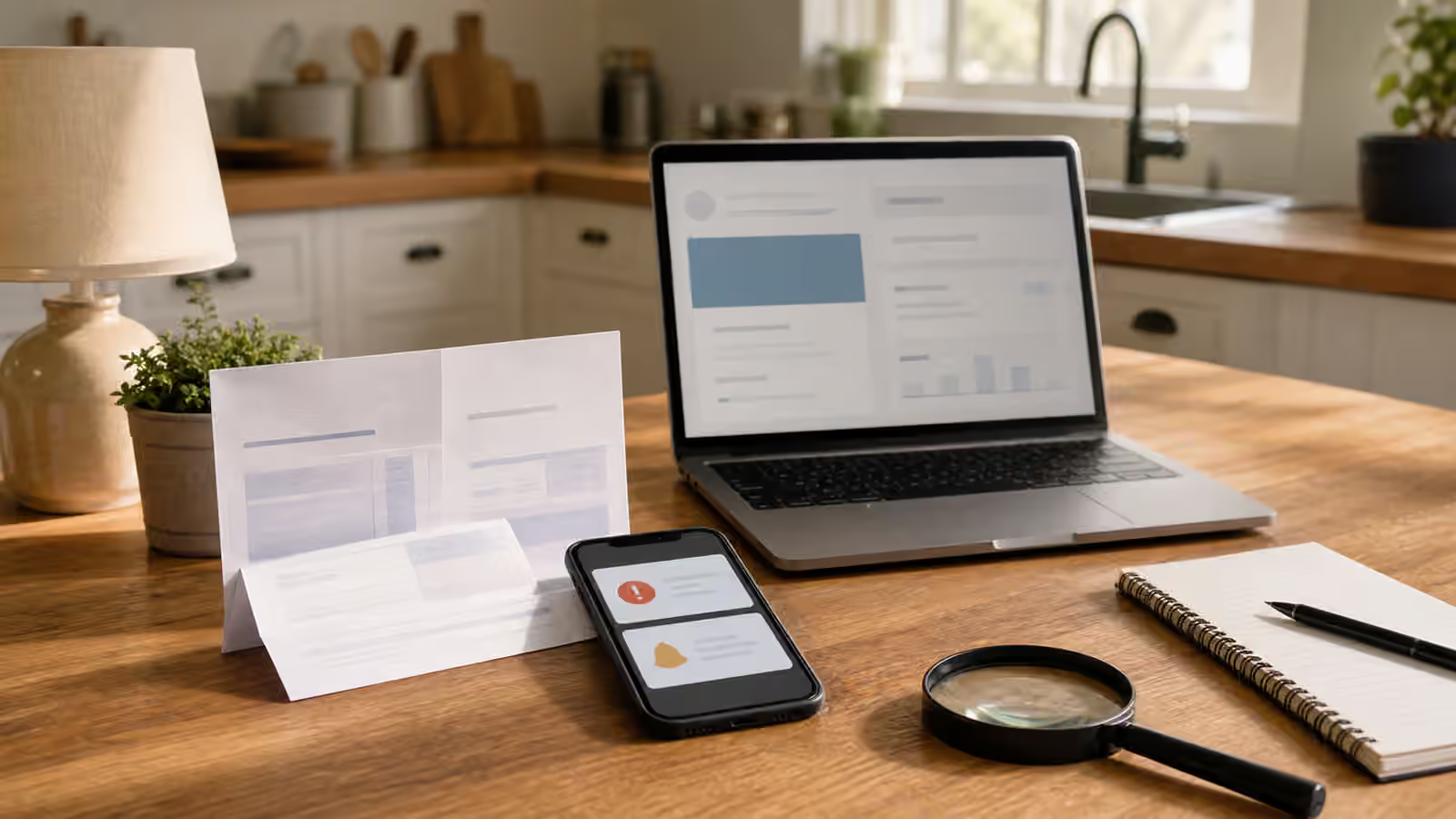
A utility shutoff warning can make a calm person move too quickly. Electricity, gas, water, internet, heat, and phone service are not luxuries in the moment a message says they are about to disappear. That pressure can arrive by text, phone call, email, paper notice, door hanger, search result, or a person at the door. Some notices are real. Some are billing errors. Some are impersonation attempts. The verification habit is to move the decision away from the route that created the fear.
A shutoff story is not a trusted route
Utility pressure often starts with a simple claim: your account is overdue, a meter reading failed, a technician missed you, service will be disconnected, restoration requires a deposit, or a government program needs confirmation. The story may be plausible because real utility accounts do have billing cycles, service appointments, outages, and notices. Plausibility is not enough. The route still has to be checked.
Do not use the phone number, payment link, QR code, or reply path in the notice as the first source of truth. Open the utility account through a saved bookmark, official app, printed bill, card statement, landlord portal, or a number you already had before the warning arrived. If the account is truly at risk, the issue should be visible there. If the official route shows no urgent balance or service hold, the warning has not earned your money or account details.
This is the same reason the Known-Channel Callback habit works. You are not trying to win an argument with a caller. You are moving the decision to a channel that did not arrive inside the pressure moment.
The small payment can be the opening
Many utility impostors ask for amounts that feel practical rather than dramatic. A reconnection fee, late charge, meter deposit, same-day technician fee, equipment balance, or prepaid-card payment may sound like the sort of annoying charge a person pays to make a problem go away. The payment method matters. Requests for gift cards, cryptocurrency, payment-app transfers, wire transfers, or unusual prepaid codes are especially concerning because they may be difficult to reverse and do not match ordinary account billing.
Even when the requested method seems normal, check the account independently. A real utility account should have a billing record, service address, account number, and normal payment route. If the caller refuses to let you hang up and check, says the payment must happen while they stay on the line, threatens immediate disconnection, or tells you not to call the usual number because it is too slow, the pressure is part of the evidence.
The payment caution in Gift Card Request Verification: When a Message Wants Codes applies whenever the request moves away from the standard account path. A utility provider should not need gift card numbers read over the phone. A legitimate balance should not depend on secrecy, shame, or a race against a caller’s timer.
Door hangers and technician stories still need checking
Paper can feel more official than a text, but a door hanger or printed notice can also be copied, misplaced, misunderstood, or paired with a misleading QR code. If a notice says service will be shut off, a meter must be replaced, or entry is required, check from an independent route before scanning or calling from the paper. Use a bill, official website, saved account, landlord office, building manager, or utility customer service number you find outside the notice.
Be especially careful when a person at the door turns the paperwork into immediate payment or entry pressure. Real service visits can happen, and some work requires access, but a visitor should not need you to pay a surprise fee through a personal payment app, reveal account passwords, share one-time codes, or ignore normal building procedures. If you rent, bring the landlord or building management route into the check. If you own, use the utility account route and any appointment record already in your account.
This does not mean confronting the visitor or escalating the scene. A steady response is enough: you need to verify through the account or known office before paying, granting entry, or rescheduling. A real process should survive that pause.
Outages and emergencies can muddy the signal
Storms, heat waves, cold snaps, construction, billing migrations, and local outages create confusion. During those periods, people expect messages from utilities, municipalities, landlords, and internet providers. That makes impersonation easier because the background noise is real. A fake notice may borrow the language of restoration, grid work, account migration, outage credits, reimbursement, or safety inspection.
When the area is already disrupted, use sources that separate general service information from account-specific action. A public outage map may tell you whether a neighborhood issue exists, but it should not ask for your card number through a text link. A utility account page may show whether your account owes money, but a social media reply or search ad should not become the billing route. If a message offers an outage refund, rebate, or restoration priority for a fee, slow down and compare it with the official account and public utility communications.
The guide to Search Ad and Lookalike Domain Verification is useful because people often search quickly during outages. Ads, copied pages, and misleading listings can appear near the top when a person types a utility name plus “support” or “payment.” When service is stressful, rely on a bill, saved app, or bookmarked account before a fresh search result.
Shared housing and business accounts need a clear owner
Utility accounts often sit between people. A tenant pays a landlord. A roommate manages the electric bill. A parent pays a phone plan. A small business has one person handling invoices and another receiving service calls. Impostors benefit when nobody knows who normally approves payment or service changes.
Before paying a shutoff warning for a shared account, identify the account owner or usual payer. Ask that person to check through the account route rather than forwarding the pressure link. If the message names a business, school, nonprofit, synagogue, church, or building, route the notice to the person responsible for facilities or finance. Do not let an unexpected caller force the newest employee, busiest parent, or most worried roommate to make a payment alone.
If the notice asks for a direct-deposit change, vendor payment change, or business invoice update, compare it with Small Business Invoice and Vendor Impersonation Checks . Utility language can be used to make a payment change sound operational rather than risky.
If you already paid or shared details
Once you suspect a utility notice was false, stop using the same route. Save the message, phone number, payment request, account details shown, link domain, QR code photo if safe, and any receipt. Then move through the official utility account and the payment provider. If you shared a card, bank login, one-time code, or account password, treat the issue as account exposure, not just a billing mistake.
If service is actually at risk, the official account route is still the right place to handle it. If the account shows no issue, preserve evidence and consider reporting through the platform, payment provider, utility, bank, or relevant consumer channel. Verification Notes: Keep Evidence Without Making a Mess can help you record enough without scattering personal details across texts and screenshots.
A calmer utility habit
The safest utility routine is simple enough to remember under stress. A shutoff or service warning arrives. You do not use the supplied payment route. You open the account through a bill, saved app, known portal, or verified number. You check the balance, service address, appointment record, and notice history there. Then you decide.
That pause does not ignore real bills or outages. It protects the path you use to respond. A legitimate utility problem can be handled through the account. A false warning usually needs you to stay inside the pressure path. Your advantage is leaving that path before it becomes the decision.