A calm guide to AI watermarks, invisible signals, platform labels, and the limits of generated-media disclosure. The useful move is not to become suspicious of everything. It is to slow the one decision in front of you, keep the evidence intact, and check the claim through a channel that was not supplied by the pressure message.
The human pattern underneath
Watermarks and provenance systems are part of the verification future, but they are not a universal truth layer. Some synthetic media may be marked. Some will not be. Some real media may lose metadata as it moves through platforms. Some claims will remain misleading even when the media file is authentic.
The reader does not need to become suspicious of every message, caller, image, seller, or appeal. The better skill is to notice when a situation is asking for trust faster than it is offering accountable proof. That gap is where most mistakes happen: not because someone is foolish, but because the request arrives wrapped in timing, emotion, and just enough detail to feel familiar.
A calmer way to make the next move
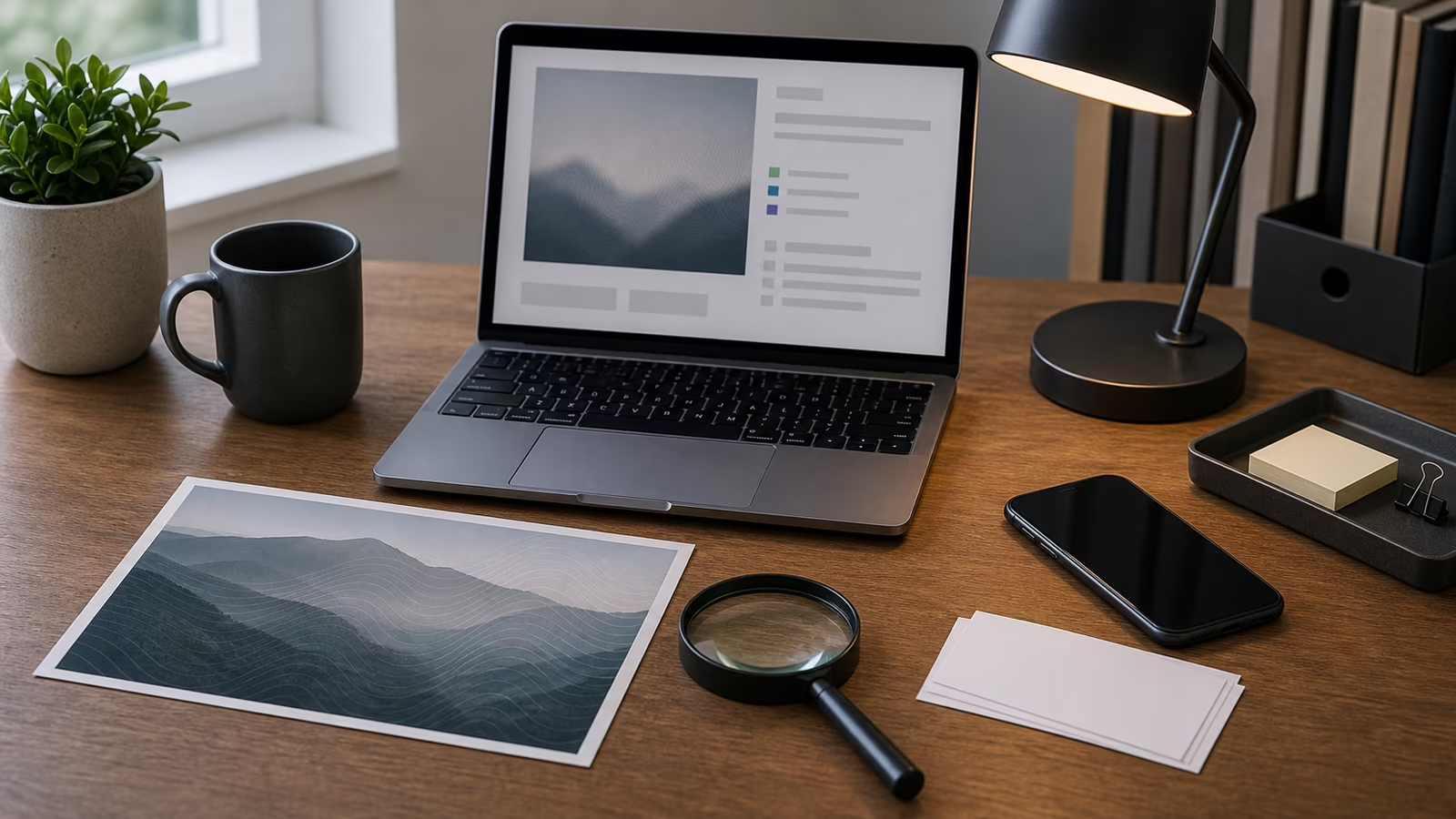
Use SynthID and related signals as one piece of context. Ask what the signal covers, which tool or publisher created it, whether it survived upload and reposting, and whether the actual claim depends on more than generation status. A marked AI image can still be harmless satire. An unmarked real photo can still be weaponized with a false caption.
For synthid, watermarks, and ai provenance, a good check should leave you with one of three outcomes. You can continue through a safer route, stop because the claim failed basic verification, or escalate because money, access, identity, threats, minors, intimate material, or legal concerns are involved. The win is not exposing a stranger on the internet. The win is making the next move from steady ground.
Quick facts
| Question | Practical answer |
|---|---|
| Level | Intermediate |
| Time | 10 minutes |
| First move | Pause before clicking, paying, reposting, downloading, replying, sharing a code, or keeping a secret. |
| Stronger proof | Use a known channel, official source, original context, and preserved evidence instead of caller ID, screenshots, vibes, or one detector result. |
| Escalate when | Money, credentials, account access, intimate images, minors, threats, impersonation, or legal concerns are involved. |
What this helps you decide
This guide helps you decide what a watermark, label, or missing signal can and cannot tell you about a piece of media.
Plain definitions
| Term | Plain meaning |
|---|---|
| Watermark | A visible or hidden signal added to content to identify a source or generation process. |
| Platform label | A notice added by a service, sometimes based on metadata, user disclosure, or automated detection. |
| Absence problem | The fact that no visible label does not prove a file is real. |
The practical workflow
| Step | What to do |
|---|---|
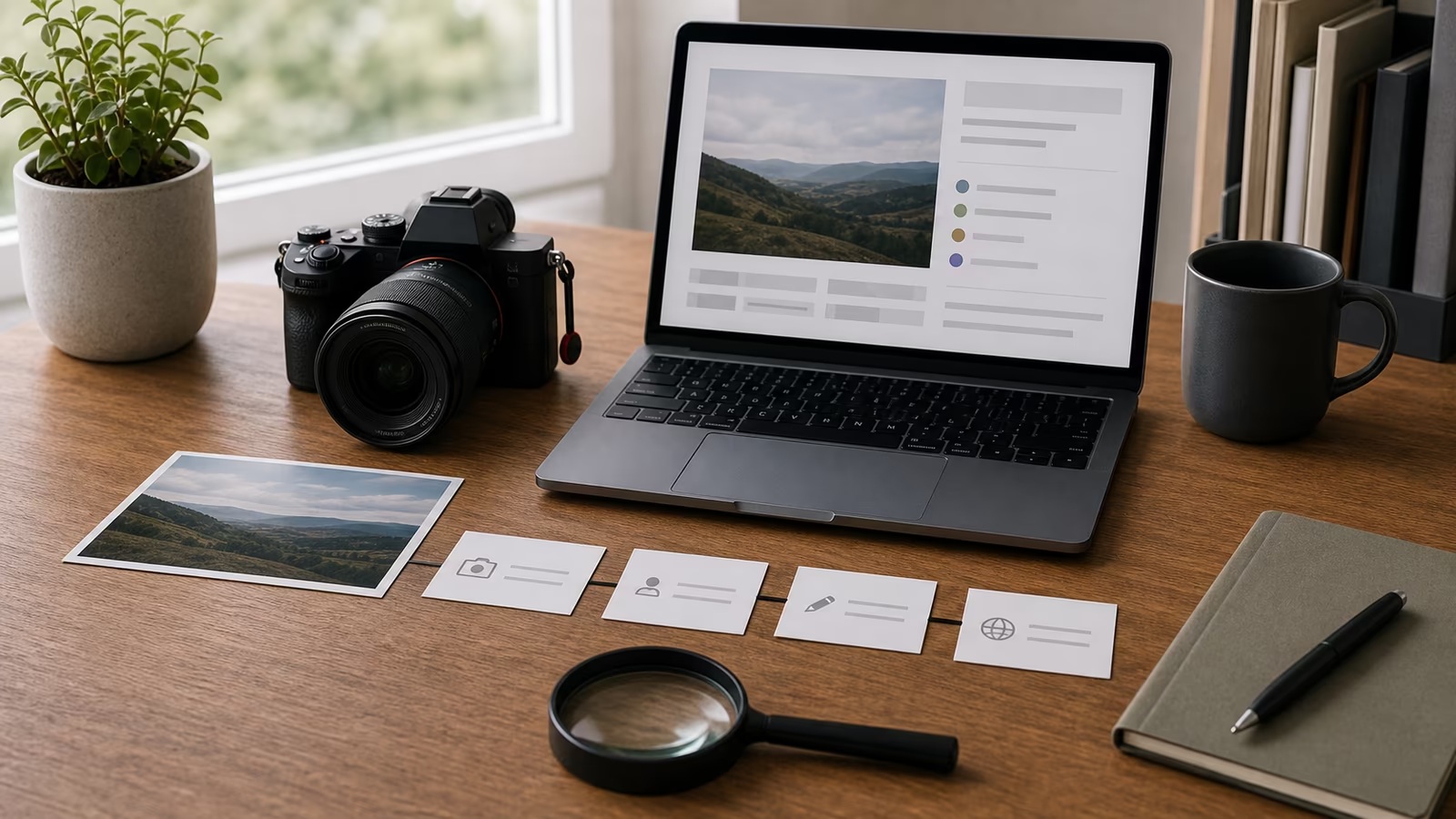
| Identify the signal | Is it a platform label, visible mark, invisible watermark, or Content Credential? |
| Ask what it covers | Generation, editing, upload context, or only the platform copy. |
| Check portability | Screenshots, crops, compression, and re-uploads can break signals. |
| Use other evidence | Source, reverse search, and known-channel verification still matter. |
A grounded example
A synthetic image carries a watermark, and that may answer one question: a tool marked it as generated or edited. It does not answer whether the post is satire, whether the caption is honest, or whether the image is being used to scam someone. Another image may have no watermark because metadata was stripped during upload. The absence of a signal is not innocence, and the presence of a signal is not the whole story. Use it as a clue in a larger chain.
Keep the decision reversible
The safest verification move is usually small, private, and reversible. Do not escalate the drama just to feel decisive. Save the message, close the pressure path, open the account or contact through a route you already trust, and ask one narrow question: what would I see if this were real? That habit protects money, accounts, relationships, and reputation because it avoids the two common overreactions: obeying too quickly or publicly accusing too quickly.
A good check also protects the future version of you who may need records. Keep links, handles, screenshots, times, payment details, and platform names in one private note. Do not send more codes, documents, deposits, or intimate material while the claim is unresolved. If the issue turns out to be legitimate, you can continue from a cleaner channel. If it fails verification, you have stopped without making a larger mess.
Common mistakes
- Assuming every AI system uses the same watermark.
- Treating a watermark as proof that the surrounding claim is true.
- Assuming removal means malicious intent.
- Confusing parody labels with provenance.
Try this next
- Read Content Credentials and C2PA.
- Use AI detector limits for tool confidence.
- Use screenshot verification for re-shared images.
- Keep the next guide handy: Viral Claim Check: Before You Repost .
- If you arrived here after another check, compare it with Content Credentials and C2PA Explained for Normal People .
Related Fondsites path
Safety and source check
Do not use this guide to confront suspects, collect more dangerous material, or test whether you can trick someone back. Keep records private, use official support paths, and involve a trusted person when money, credentials, intimate images, minors, threats, or legal issues are involved.