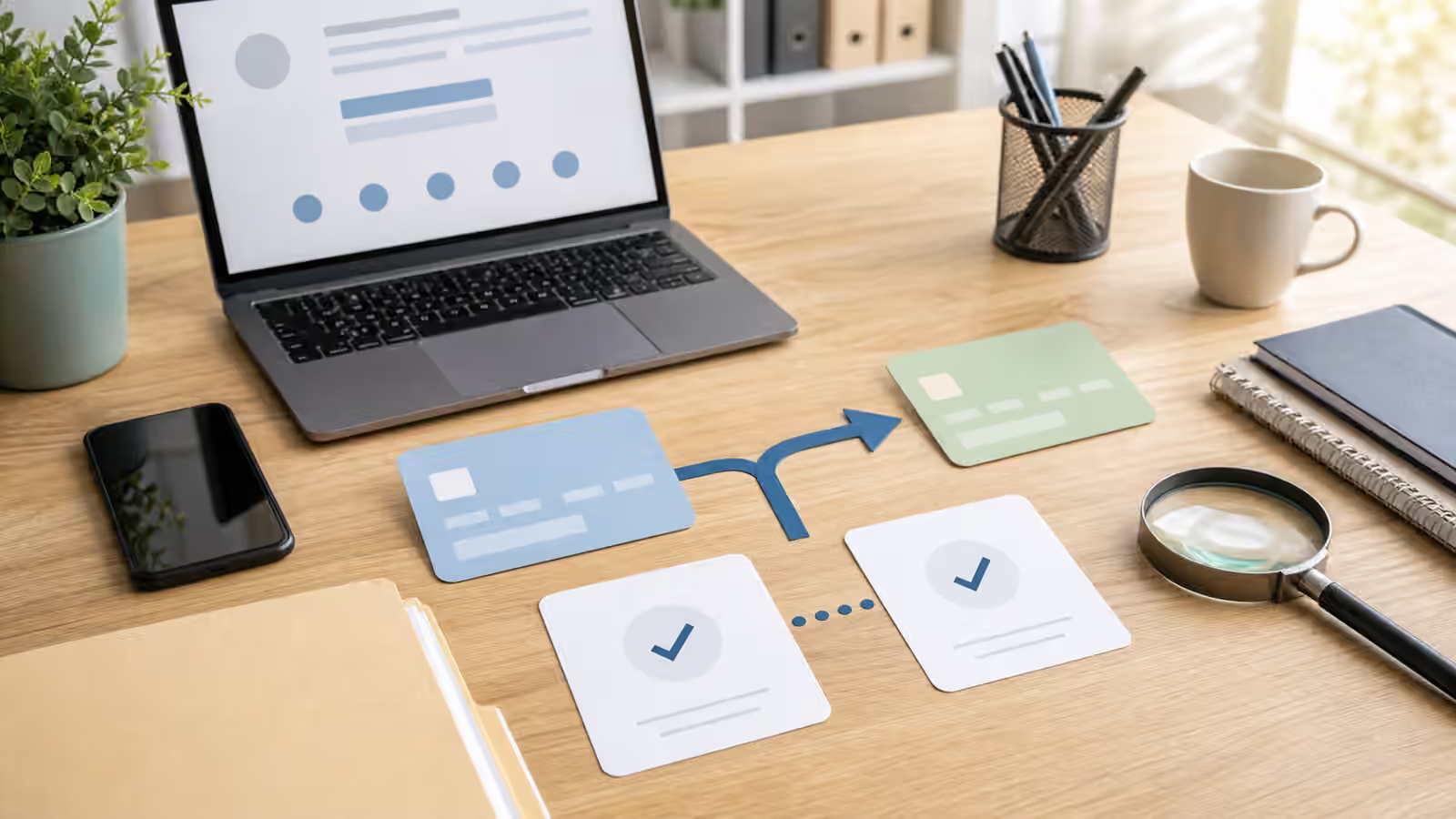
A practical small-business workflow for invoice changes, bank detail updates, urgent wire requests, and vendor impersonation. The useful move is not to become suspicious of everything. It is to slow the one decision in front of you, keep the evidence intact, and check the claim through a channel that was not supplied by the pressure message.
The human pattern underneath
Small-business invoice scams exploit normal busyness. A vendor changes bank details, a contractor sends a revised invoice, a boss wants a wire before closing, or a familiar email thread suddenly includes new payment instructions. The request may sit inside real work, which makes it harder to see as a separate risk.
The reader does not need to become suspicious of every message, caller, image, seller, or appeal. The better skill is to notice when a situation is asking for trust faster than it is offering accountable proof. That gap is where most mistakes happen: not because someone is foolish, but because the request arrives wrapped in timing, emotion, and just enough detail to feel familiar.
A calmer way to make the next move
Build a payment-change rule before the urgent invoice arrives. Any new bank account, payment app, mailing address, routing number, or unusual urgency gets verified through a saved contact or previously known phone number, not by replying to the email thread. This is a control, not an accusation. Good vendors would rather wait than have both sides lose money to a forged instruction.
For small business invoice and vendor impersonation checks, a good check should leave you with one of three outcomes. You can continue through a safer route, stop because the claim failed basic verification, or escalate because money, access, identity, threats, minors, intimate material, or legal concerns are involved. The win is not exposing a stranger on the internet. The win is making the next move from steady ground.
Quick facts
| Question | Practical answer |
|---|---|
| Level | Intermediate |
| Time | 12 minutes |
| First move | Pause before clicking, paying, reposting, downloading, replying, sharing a code, or keeping a secret. |
| Stronger proof | Use a known channel, official source, original context, and preserved evidence instead of caller ID, screenshots, vibes, or one detector result. |
| Escalate when | Money, credentials, account access, intimate images, minors, threats, impersonation, or legal concerns are involved. |
What this helps you decide
This guide helps you decide whether a payment instruction, invoice, or bank-detail change can move forward under a repeatable approval rule.
Plain definitions
| Term | Plain meaning |
|---|---|
| Business email compromise | Impersonation or account abuse that tries to redirect business payments or sensitive records. |
| Payment-change policy | A written rule for verifying new bank details, wire instructions, or invoice destinations. |
| Two-person approval | A control requiring a second person to confirm high-risk changes. |
The practical workflow
| Step | What to do |
|---|---|
| Freeze payment changes | Do not update account details from email alone. |
| Call known contacts | Use saved vendor numbers or contract records. |
| Require dual approval | Route wires, new vendors, and changes through a second reviewer. |
| Keep an audit trail | Save the request, callback result, approvers, and payment decision. |
A grounded example
A real vendor email thread suddenly includes new bank details and a note that payment must go out before the weekend. Everyone is busy, the invoice amount matches the project, and the language sounds normal. The safeguard is not suspicion of the vendor. It is a standing rule: payment changes are verified through a saved phone number or previously established contact, never by replying to the altered thread. That rule protects the vendor relationship as much as the business account.
Keep the decision reversible
The safest verification move is usually small, private, and reversible. Do not escalate the drama just to feel decisive. Save the message, close the pressure path, open the account or contact through a route you already trust, and ask one narrow question: what would I see if this were real? That habit protects money, accounts, relationships, and reputation because it avoids the two common overreactions: obeying too quickly or publicly accusing too quickly.
A good check also protects the future version of you who may need records. Keep links, handles, screenshots, times, payment details, and platform names in one private note. Do not send more codes, documents, deposits, or intimate material while the claim is unresolved. If the issue turns out to be legitimate, you can continue from a cleaner channel. If it fails verification, you have stopped without making a larger mess.
Common mistakes
- Replying to the same thread to verify a changed account.
- Letting executive urgency skip payment policy.
- Approving invoices from mobile without reviewing details.
- Failing to brief bookkeepers and assistants on the rule.
Try this next
- Use known-channel callback as the universal control.
- Use verification notes for evidence records.
- Use reporting map if money moved.
- Keep the next guide handy: School, Synagogue, Church, and Community Rumor Verification .
- If you arrived here after another check, compare it with Job Offer and Recruiter Scam Checks .
Related Fondsites path
Safety and source check
Do not use this guide to confront suspects, collect more dangerous material, or test whether you can trick someone back. Keep records private, use official support paths, and involve a trusted person when money, credentials, intimate images, minors, threats, or legal issues are involved.