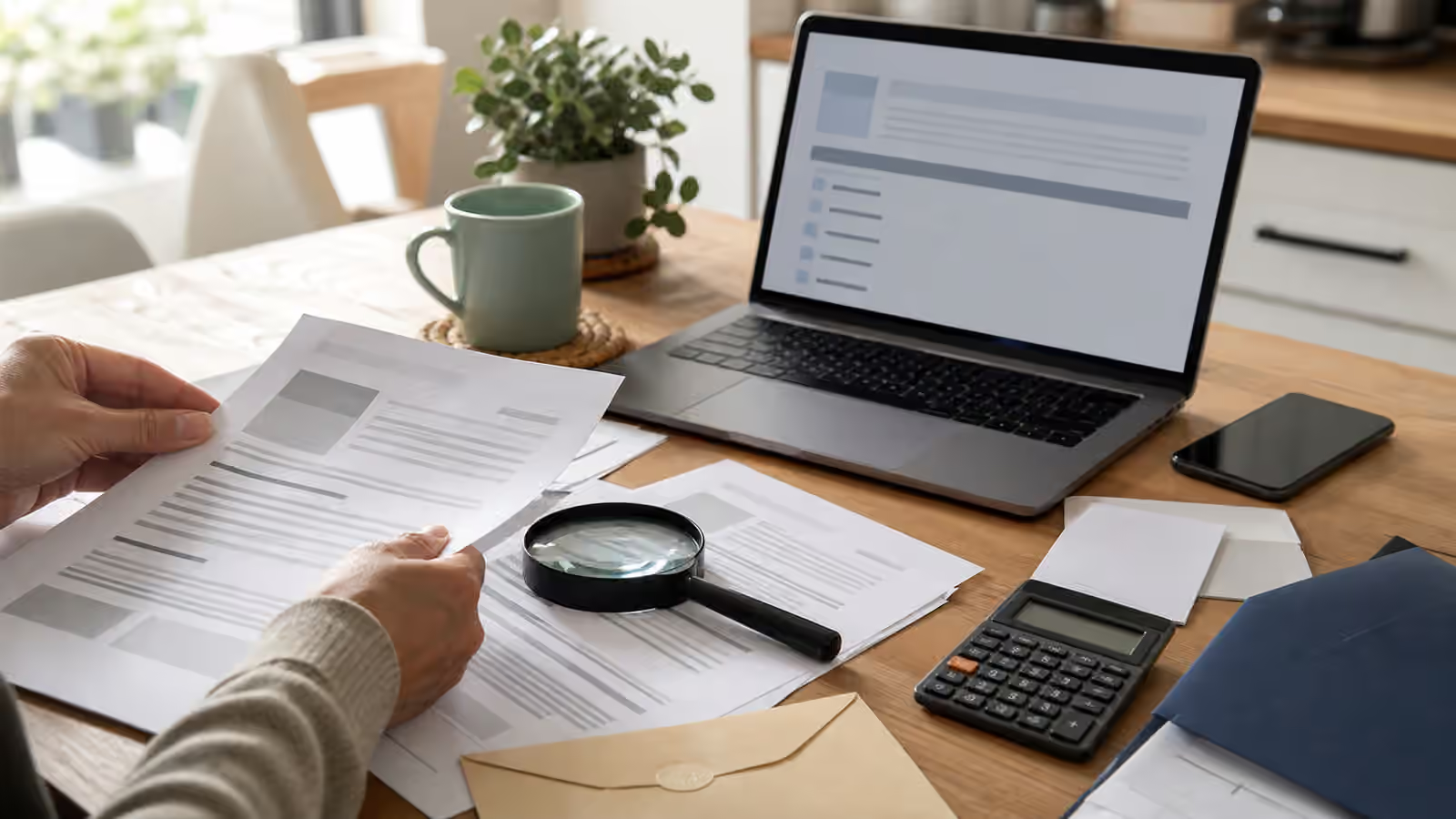
Official-looking pressure works because people are trained to take institutions seriously. A message says you missed jury duty, owe a fine, have a warrant, need to update benefits, must pay a tax balance, or must speak to an officer before the day ends. The words sound formal, the caller may sound confident, and the consequence may sound frightening. That does not mean the notice is real. It means the next step should happen through a channel you choose, not the one supplied by the threat.
The authority effect is part of the pressure
An ordinary phishing message asks for attention. An official-looking message asks for obedience. That difference can shrink your thinking. You may worry that ignoring the message is illegal, disrespectful, or dangerous. You may feel that you are not allowed to question a badge, agency name, case number, or formal deadline. Imposters use that hesitation. They do not need every detail to be right if they can make the pause feel like defiance.
The safer frame is simple: real authority can be verified through real channels. A genuine court, agency, police department, school district, tax office, licensing board, or benefits administrator has a route that exists outside the message you just received. That route may be a published phone number, a portal you already use, a mailed notice, an attorney, an employer contact, or an in-person office. The urgent text or caller is not the source of truth just because it uses official words.
Start by separating the claim from the contact path. The claim might be worth checking. The phone number, link, payment method, attachment, or reply instruction may be unsafe. That separation lets you act responsibly without obeying the suspicious route. You are not ignoring a possible notice. You are refusing to let the notice choose its own verification method.
Calls and caller ID do not settle identity
Government and police imposter calls often lean on sound. The caller may use formal language, background noise, a badge number, a case number, or a transferred call to another supposed office. Caller ID may display a familiar agency or local number. None of that is enough. Caller ID can be misleading, titles can be invented, and transfers can keep you inside the same false conversation.
If the call is not an emergency requiring immediate safety action, slow it down. Ask for the name of the office, the general reason for the call, and how you can contact the office through a public or already trusted route. Do not provide codes, passwords, payment details, identity documents, or personal confirmations while the caller controls the pace. End the call if needed and use the known-channel callback habit. Look up the agency or department independently, use a saved or official number, and explain that you are verifying a contact.
The same principle applies to texts, emails, letters photographed into a group chat, and direct messages from supposed officials. A message can contain a real agency name and a false link. It can include your city, a partial name, a plausible deadline, or a copied logo. Those details make the claim worth checking through the official route. They do not make the supplied route safe.
Payment methods reveal a lot
Many official-looking scams become clearer when the conversation turns to payment. A caller may demand gift cards, crypto, payment apps, wire transfers, prepaid cards, courier pickup, or a small “clearance” fee. A text may link to a page for tolls, fines, taxes, benefits, permits, or missed notices. A message may say that paying immediately avoids arrest, suspension, deportation, account closure, license loss, or public embarrassment.
Do not debate the policy inside the pressured conversation. Check the payment route against the institution. Real obligations usually have documented processes, account portals, mailed notices, case numbers that can be checked independently, or qualified professionals who can help. A demand that turns a serious matter into a same-day irreversible payment is a verification problem before it is a money problem.
This overlaps with suspicious texts and QR code and payment link checks because many fake official notices arrive as tiny fees. The amount may be small enough to feel cheaper than checking. That is the trap. A small payment can expose card details, confirm your contact information, or open the door to larger pressure.
Notices in community channels need extra context
Not every false official notice arrives directly. A screenshot can circulate in a neighborhood chat, school group, congregation list, workplace channel, or family thread. Someone forwards a warning about police activity, fines, immigration checks, benefits deadlines, court summonses, missing children, emergency orders, or local closures. The person forwarding it may be sincere. The source may still be wrong, old, cropped, or disconnected from the official context.
Treat forwarded notices as claims to verify, not instructions to spread. Look for the original source, date, location, and issuing office. If the claim affects a school, house of worship, employer, landlord, event, or local group, check the group’s official announcement route before reposting. The community rumor verification guide fits this situation because the harm may come from panic and confusion even when nobody intended fraud.
Screenshots deserve special care. A screenshot of a court page, police post, agency email, or benefits notice can be cropped away from the URL, date, comment thread, or correction. It can also outlive the event it originally described. The right response is not to become a forensic image expert. It is to find the same notice through a source that controls the information now.
Keep records without escalating the conversation
If a notice feels serious, preserve it before replying. Save the phone number, time, claimed office, caller name, case or reference number, message text, envelope, link destination, payment demand, and any documents received. Keep the record private. Do not post sensitive notices publicly for crowd judgment, especially if they include names, addresses, case numbers, identity information, minors, medical details, immigration details, or financial information.
Good notes help you ask better questions through official routes. They also help if you need support from a trusted person, attorney, employer, school administrator, bank, platform, or law enforcement. The verification notes guide is useful here because fear can scatter evidence across screenshots, voicemail, email, and paper. A short timeline is often more useful than a long argument with the caller.
If you already shared a code, password, account access, payment details, or identity document, move to containment rather than continuing the debate. The shared code, password, or account access guide covers credential mistakes, and the guide on what to do if you sent money to a scammer covers payment after the fact. If there is an immediate safety issue, use appropriate emergency or local support instead of relying on a web guide.
The decision point
Before acting on an official-looking notice, ask one question: can I reach the same authority without using the number, link, payment route, or reply path in this message? If the answer is yes, use that independent route and let the official system confirm or reject the claim. If the answer is no because the caller insists secrecy, speed, or payment must happen inside their channel, the pressure is doing too much of the work. Real authority does not need to borrow trust from panic.