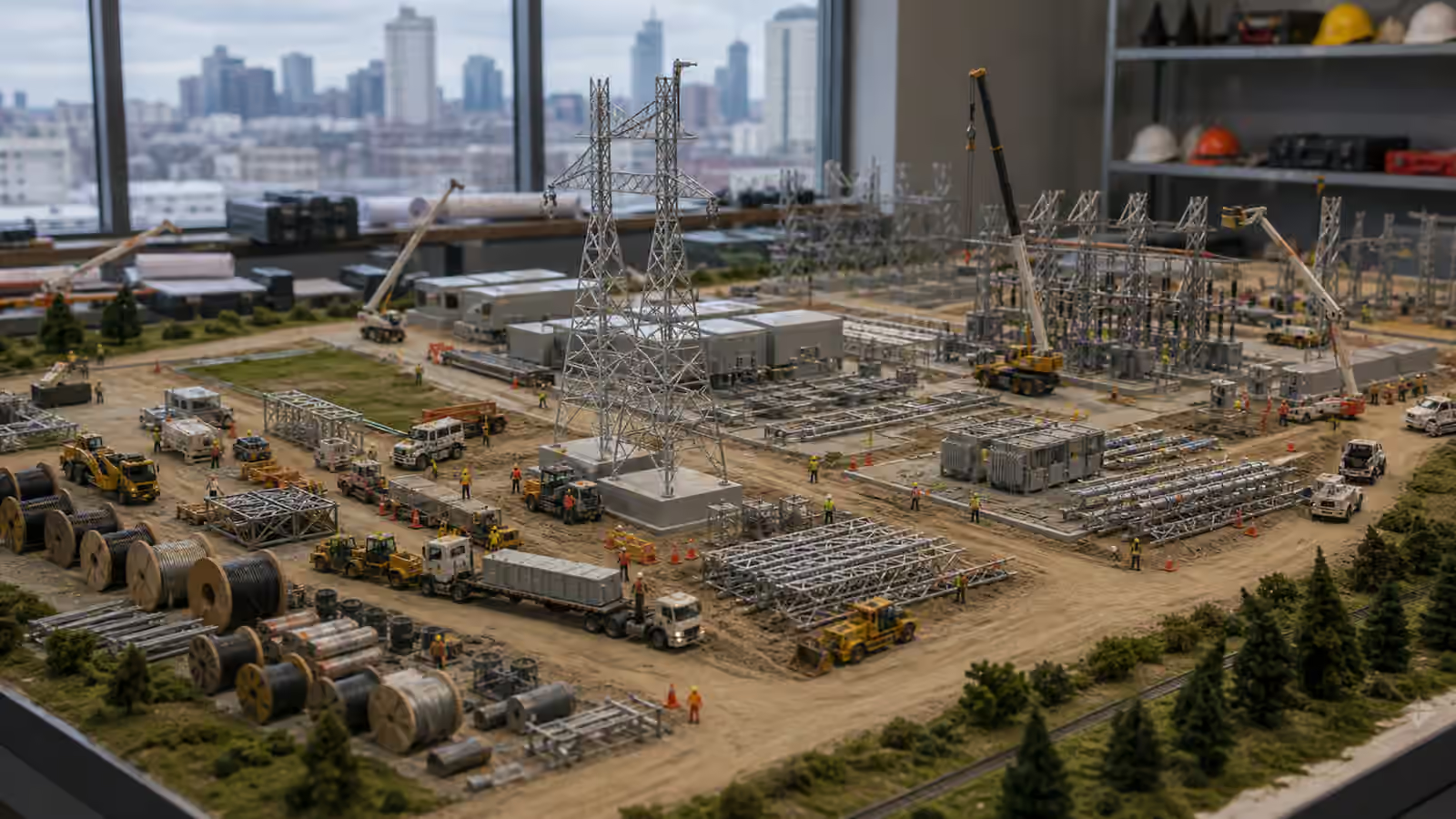
A transmission line looks like a physical object: towers, conductors, foundations, rights of way, substations, and access roads. The harder part often begins before any of those appear. Someone has to decide which line is needed, which future it is meant to serve, which alternatives were serious, which communities will host it, which customers will benefit, and how the cost will be shared. The wire is visible. The planning bargain behind the wire is what decides whether it can be built.
That bargain matters more as the power system changes. New wind and solar projects may sit far from load centers. Data centers may arrive in clusters. Older plants may retire. Heat pumps and EV charging may change local demand. Batteries may relieve one constraint while leaving another untouched. A line built for only one project can look too expensive, while a line planned for a broader portfolio can look obvious only after many parties admit they need one another.
The guide to transmission bottlenecks explains why clean power can be trapped behind limited wires. Transmission planning asks the next question. If the bottleneck is real, how does a region choose the right fix without pretending every benefit is simple or every opponent is unreasonable?
Planning starts with a future that is uncertain
Transmission planners work with scenarios because the future does not arrive as a single spreadsheet. One scenario may assume rapid electrification, heavy data-center growth, and fast renewable buildout. Another may assume slower load growth, more local generation, or more demand flexibility. A third may stress extreme weather, fuel disruption, or a major generator retirement. A credible plan does not need to predict every detail perfectly. It needs to reveal which upgrades remain valuable across several plausible futures.
This is why transmission planning is different from connecting a single power plant. A generator interconnection study asks what upgrades are needed for one project or cluster of projects to connect safely. Regional transmission planning asks whether the broader network is being prepared for load growth, resource diversity, reliability, congestion relief, public policy goals, and resilience. Those categories overlap, but they are not the same job.
The distinction can frustrate developers and customers. A wind project may ask why it must wait for a regional line that was not in its original business plan. A large load may ask why its service request triggered upgrades that seem useful to others too. Households may ask why bills include a line hundreds of miles away. The answers should be concrete. Vague claims that “everyone benefits” do not build trust. Planners have to explain the physical path from a project to a benefit: lower congestion, better reliability, reduced curtailment, access to diverse resources, avoided local generation, or a stronger path for future load.
Benefits are real, but they are not all the same
Transmission benefits arrive in different forms. Some are operational. A line may reduce congestion so cheaper or cleaner power can reach a load center. Some are reliability related. A stronger network may give operators more options when a generator trips, a storm damages equipment, or a heat wave pushes demand higher than expected. Some are economic. A line may reduce the need for expensive local generation or reduce the amount of curtailment paid by customers. Some are strategic. A corridor may allow several future resources to connect without forcing each one through a separate fight.
The mix matters because different benefits point to different payers. If a line mainly serves one customer, that customer may be expected to pay much of the cost. If it relieves regional congestion, a broader set of customers may reasonably share the bill. If it helps satisfy a public policy target, regulators may decide that the costs should follow the policy beneficiaries. If it improves reliability across a wide area, the case for shared payment is stronger, but the evidence still has to be shown.
Cost allocation becomes contentious when benefits are distant, delayed, or hard to measure. A line may look expensive in the first year but valuable over decades. It may reduce rare outage risk, which is hard to price until the avoided event happens. It may enable projects that are not yet built, which means some benefits are option value rather than immediate savings. Ignoring those benefits can lead to underbuilding. Exaggerating them can lead to expensive projects that never earn public confidence.
The useful standard is not perfect foresight. It is disciplined explanation. A planning case should say what problem the line solves, who gains from that solution, what assumptions drive the result, what cheaper alternatives were tested, and what happens if load or generation grows differently than expected.
Alternatives should be part of the same conversation
Transmission planning should not treat the largest new line as the only possible answer. Grid-enhancing technologies can make existing corridors more useful through dynamic line ratings, power-flow controls, topology optimization, or reconductoring. Batteries can reduce congestion in some places by charging when a path is available and discharging near load. Demand response can reduce the hours when a constraint matters most. Local generation can help if it is deliverable, accepted, and reliable.
Those alternatives are serious, but they are not universal substitutes. A dynamic rating cannot create a new corridor where geography or grid topology is fundamentally short. A battery cannot move energy across seasons unless it has the required duration and charging path. Demand flexibility may reduce peaks but not replace the need to connect a remote renewable zone. A local generator may solve one reliability pocket while adding fuel, emissions, land, or cost questions.
The planning discipline is to compare alternatives honestly. Sometimes a smaller non-wire solution buys time until a larger line is ready. Sometimes reconductoring an existing corridor is better than opening a new route. Sometimes a new line is the cleanest answer because every workaround is narrower, shorter lived, or more expensive once the full system is counted. The public argument is stronger when the plan shows that those choices were weighed rather than assumed.
Cost allocation is also a trust problem
People often talk about cost allocation as if it were an accounting formula. It is also a trust problem. Customers want to know why their bills should pay for infrastructure. Communities want to know why their land should host infrastructure. Developers want to know whether network upgrades will be assigned fairly. Utilities want to recover prudent costs. Regulators want evidence that the plan is useful and not merely ambitious.
That trust can be damaged in several ways. A community may see a line cross its land while most of the power flows elsewhere. A customer class may fear paying for a project built mainly for a large new load. A developer may receive a network upgrade bill so large that it abandons the project, shifting costs and delays to the next projects in the queue. A state or region may hesitate to pay for benefits that spill across borders. The result is not only argument. It is delay, duplication, and weaker infrastructure.
Energy permitting and community trust belongs inside this topic. A line that is financially allocated but socially illegible is still not fully planned. Host communities need early information, credible alternatives, fair compensation, and a reason to believe the project has been designed with local realities in mind. Public process cannot be a theater performance after the route has already been chosen.
Large loads make the payer question sharper
Large loads expose weak planning rules quickly. A data center campus, factory, charging depot, or electrolyzer may request enough power to require substation work, transmission upgrades, protection studies, and local distribution improvements. Some of those upgrades may mainly serve the customer. Others may strengthen the grid for future customers too. Drawing that boundary is difficult, but avoiding it is worse.
The large load interconnection guide explains why a promised megawatt is not the same as an energized megawatt. Cost allocation decides who carries the bridge from promise to service. If a large customer pays too little for its direct impacts, existing customers may subsidize private growth. If it pays for every shared upgrade as if no one else benefits, useful projects may be discouraged and the grid may remain undersized. The answer usually depends on transparent studies, staged commitments, and rules that distinguish direct connection facilities from broader network value.
Clean power contracts add another layer. A large buyer may support new renewable generation but still need transmission to make that energy deliverable. Clean power contracts can help finance resources, but contracts alone do not settle who pays for the wires, substations, and operating changes that make the resource useful to the grid.
The best plans make later decisions easier
Transmission planning is slow because the infrastructure is heavy, public, expensive, and long lived. That slowness is exactly why the planning has to look ahead. A line built too small can become congested almost as soon as it enters service. A corridor chosen without future expansion in mind may force another permitting fight later. A cost allocation rule that treats every upgrade as isolated may miss the portfolio value of building once and using the path many times.
Good planning does not mean building everything everywhere. It means making hard choices with a clear view of time, place, and beneficiaries. It means recognizing when a line is a regional asset rather than a private driveway. It means using non-wire tools where they genuinely solve the problem. It means paying attention to communities early enough for the conversation to change the project. It means explaining costs in language that customers and host regions can test, not only in filings that specialists can parse.
For a reader, the useful question is not only “Do we need more transmission?” The sharper question is “What problem is this line solving, who benefits, who pays, and what happens if we do not build it?” Future energy depends on turbines, panels, reactors, geothermal wells, batteries, flexible demand, and efficient buildings. It also depends on a public method for deciding when shared wires are worth the trouble.