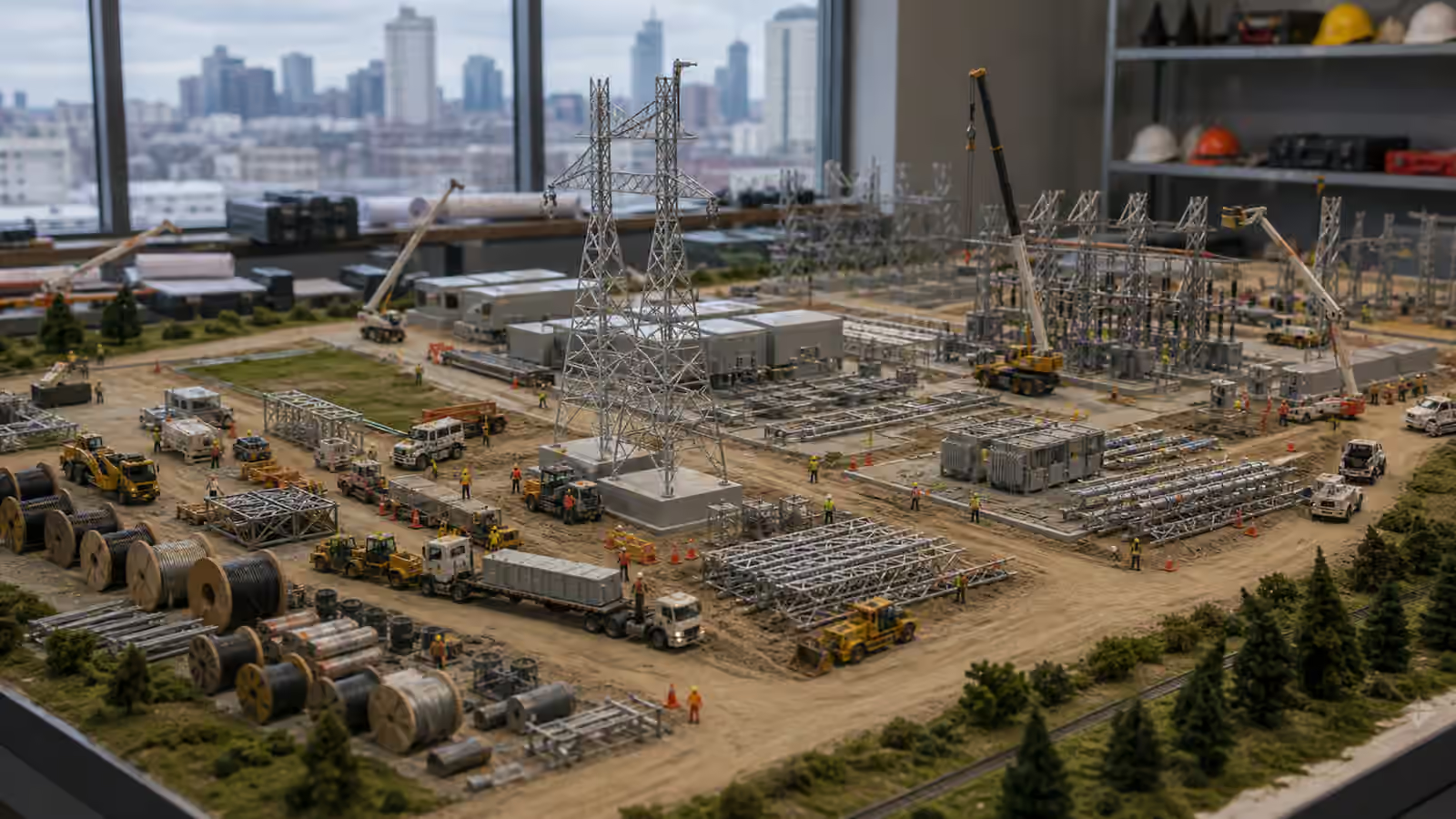
Electrification is often discussed as if the future depends only on generation. Build more solar, wind, geothermal, nuclear, storage, or clean fuels and the power will arrive. But the grid is not an idea. It is a physical machine made of transformers, breakers, wires, insulators, poles, towers, switchgear, relays, controls, protection systems, trenches, rights of way, and substations that occupy real land.
That hardware can become the bottleneck even when the energy source is ready. A data center may have land and a power contract but still wait on substation work. A housing development may need transformer upgrades before heat pumps and EV chargers fit comfortably. A renewable project may be built faster than the transmission equipment needed to move its output. A factory may want to electrify heat, but the local feeder or interconnection capacity may not be prepared for the new load.
The grid’s heavy equipment does not move at software speed. It has design cycles, manufacturing lead times, transport constraints, permitting, testing, installation, outage windows, and maintenance schedules. Ignoring that reality makes future energy planning sound easier than it is.
Transformers Change Voltage, Not Importance
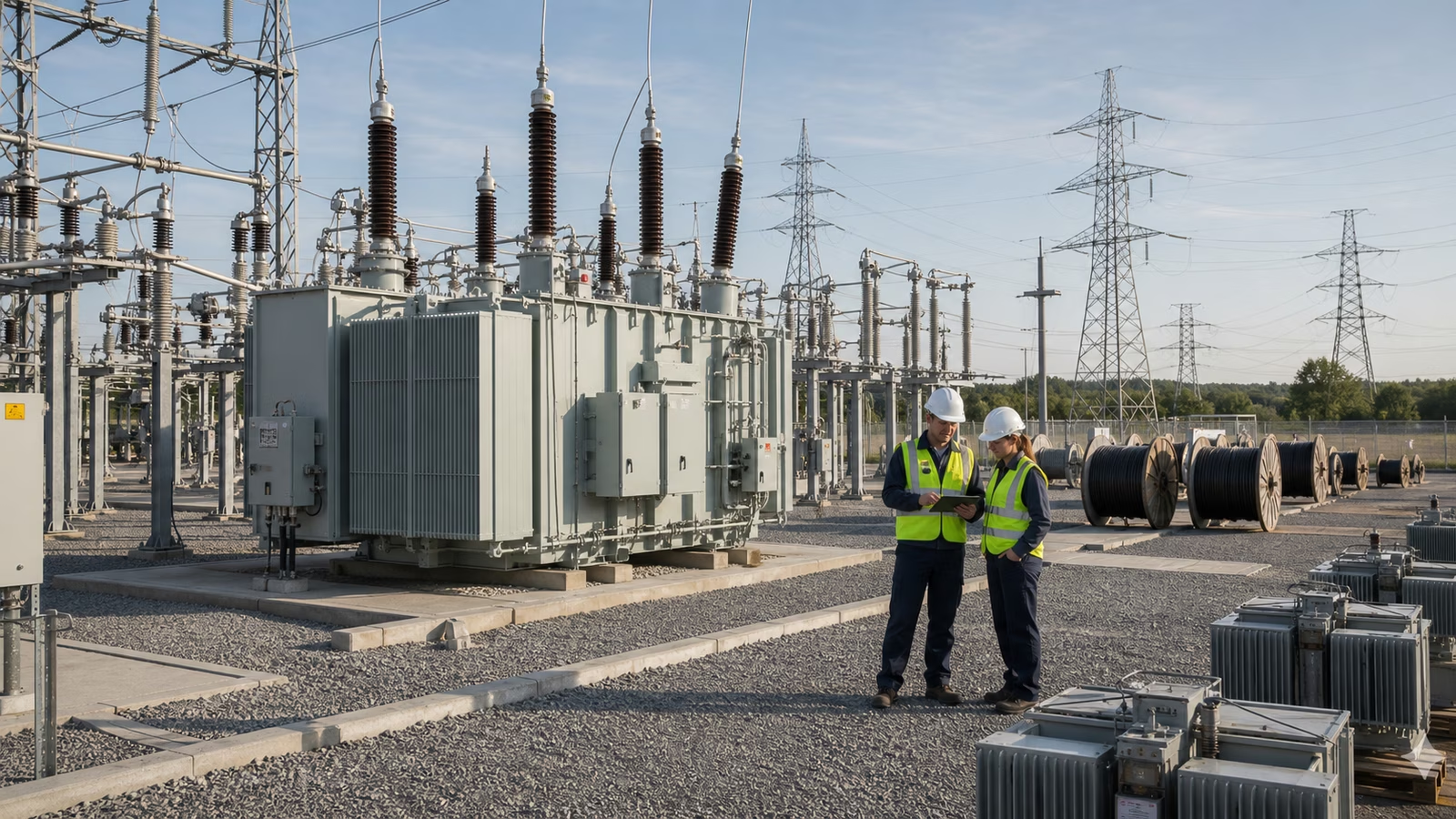
Transformers are among the quiet heroes of the grid. They allow electricity to move at high voltages over long distances, then step down to voltages that local networks, buildings, and equipment can use. Without transformers, the grid would be far less efficient and far less flexible.
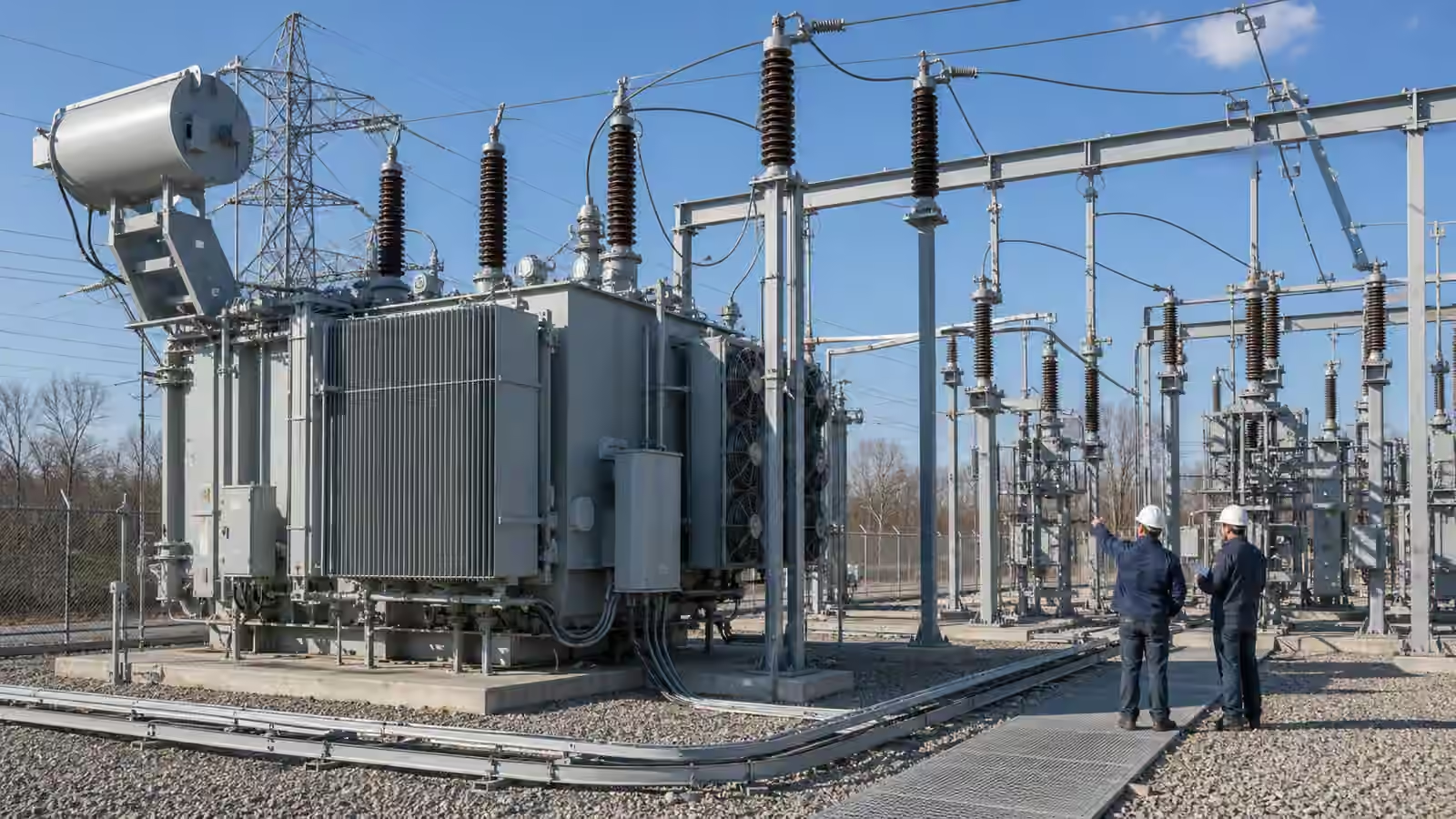
They are also large, specialized, and not always easy to replace quickly. A small distribution transformer on a pole is very different from a massive power transformer at a substation, but both matter. When load grows faster than expected, transformer capacity can become a local limit. When storms, fires, supply constraints, or aging equipment create stress, replacement is not always as simple as ordering another box.
This is why electrification planning needs to look at hardware capacity early. It is not enough to know that a region produces enough electricity over the year. The question is whether the right pieces of equipment can carry the power at the right times and places. A neighborhood with many new chargers, heat pumps, and rooftop solar systems may stress equipment differently from the old pattern. A data center campus may require a new substation, new feeders, redundant paths, and protection studies before its load can be served reliably.
Substations Are Where the Grid Becomes Local
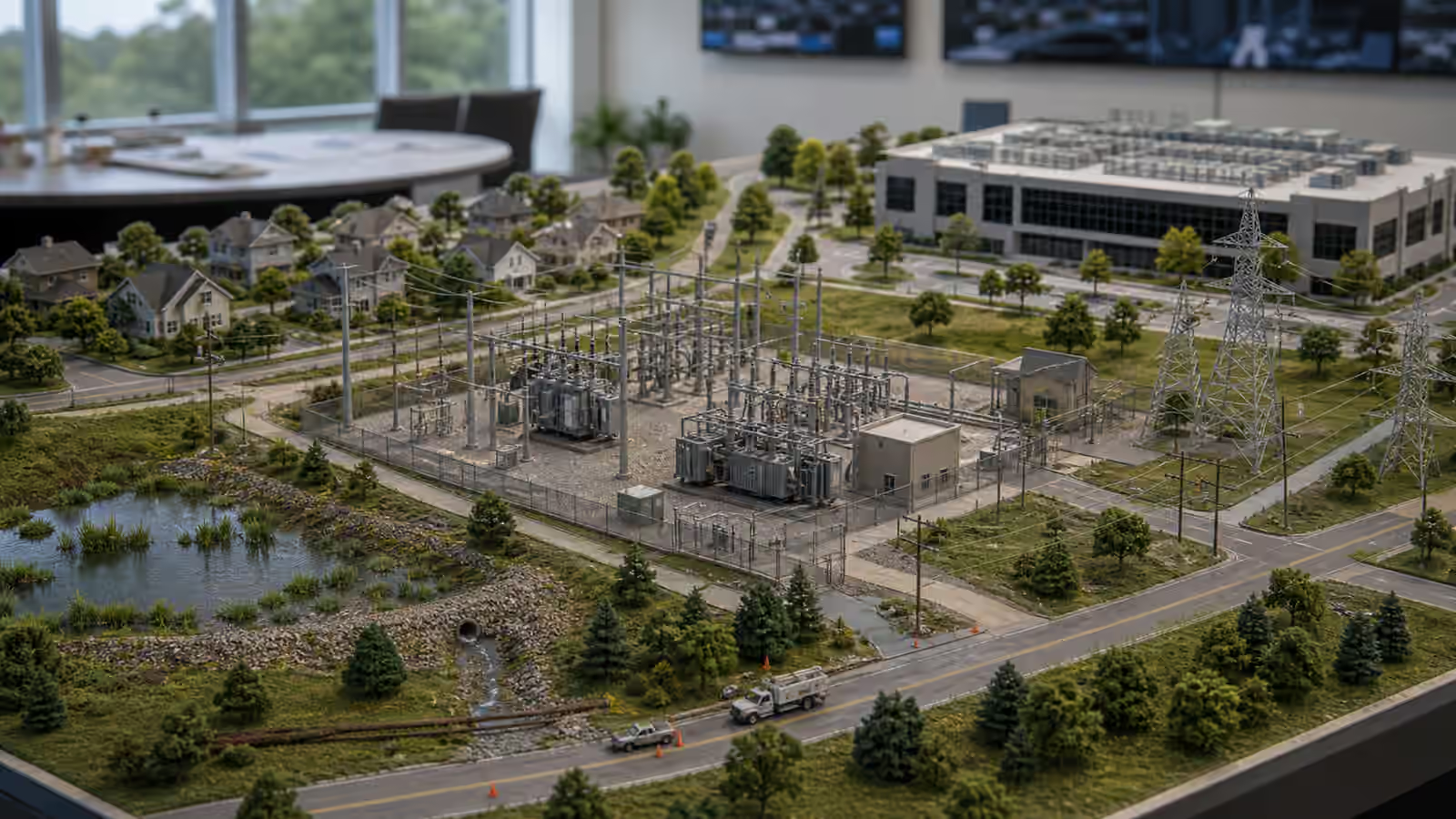
A substation can look like a fenced yard of metal, gravel, and warning signs, but it is one of the places where the abstract grid becomes practical. Voltage is transformed. Circuits are switched. Faults are isolated. Equipment is protected. Power flows are monitored and controlled. A substation connects the wider transmission or distribution network to the local needs of towns, industries, campuses, and neighborhoods.
Substations are also hard to add casually. They need land, access, engineering, environmental review, community acceptance, equipment, communications, protection settings, and construction time. The site has to work physically and electrically. It has to be maintainable. It has to fit into a network where failures can be managed safely.
As electricity demand grows, substations become more visible in planning fights. People may want clean power, reliable service, and electrified transportation while still objecting to new grid sites nearby. Those concerns can be reasonable. Substations affect land use, views, noise, construction traffic, and community trust. The point is not to dismiss objections. It is to admit that the clean energy transition still needs physical places to put equipment.
Switchgear and Protection Decide What Happens When Things Go Wrong
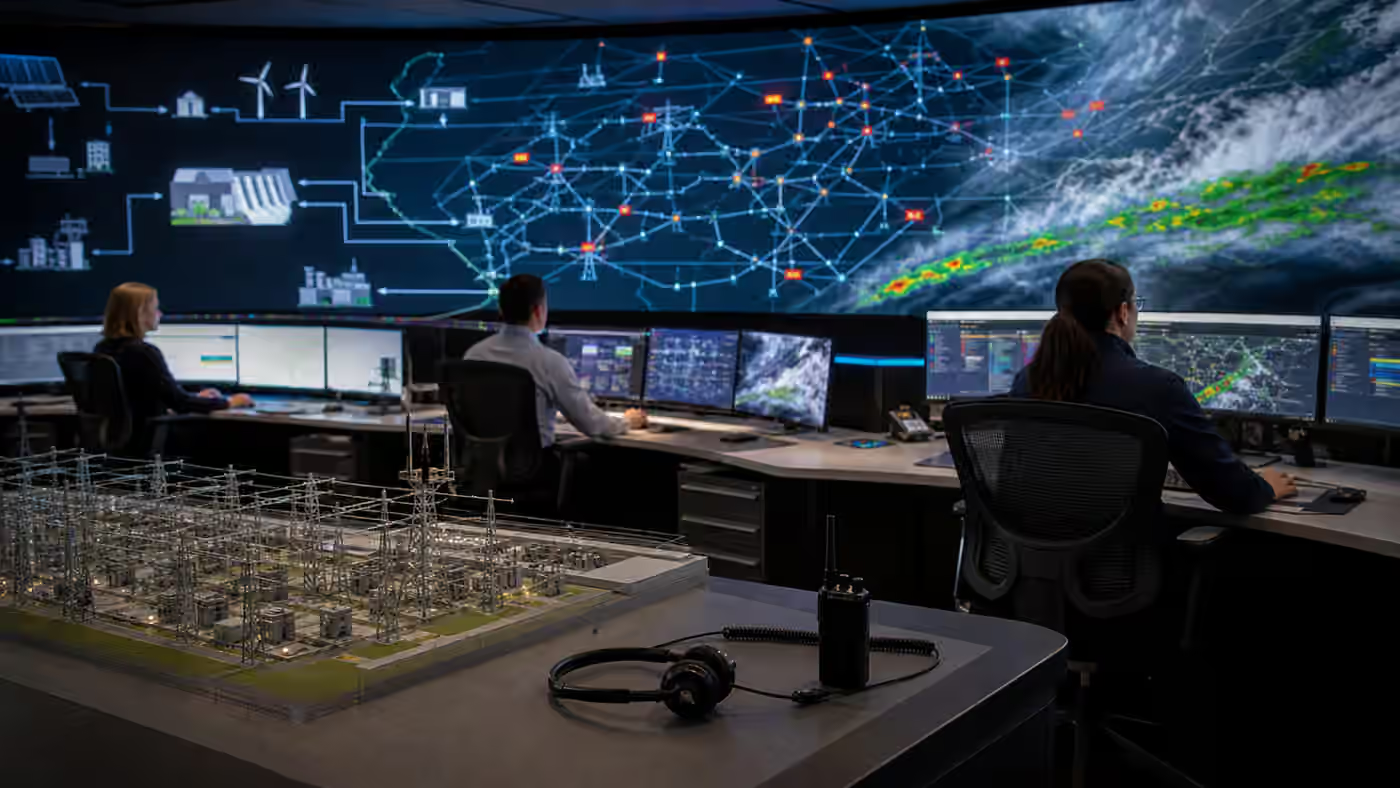
The grid has to assume that things will fail. A line can be damaged, equipment can fault, a tree can fall, a storm can hit, a component can overheat, and a human can make a mistake. Switchgear, breakers, relays, sensors, and protection systems decide how the grid responds when trouble appears.
This equipment does not get the same public attention as generation, but it is central to reliability. The grid must isolate problems quickly enough to protect people and equipment while keeping as much service running as possible. As more inverter-based resources, storage systems, distributed energy devices, and flexible loads connect, protection settings and control logic become more complicated.
A future grid with more clean resources is not automatically simpler. It may have more devices, more bidirectional flows, more electronics, and more local generation. The hardware and control systems need to evolve with that complexity. Otherwise, clean energy can be available in theory but difficult to integrate safely.
Cables and Conductors Have Real Limits
Wires may seem basic, but they are not infinite pipes. Conductors heat up under load. Underground cables have thermal constraints. Overhead lines sag when hot. Equipment ratings matter. Routes matter. Weather matters. A line that was adequate for yesterday’s demand may not be adequate for tomorrow’s peak.
This becomes especially important when load changes shape. EV charging may add evening demand. Heat pumps may shift winter peaks. Data centers may bring steady high demand. Industrial electrification may create large new loads in places that were not built for them. Rooftop solar may send power back through parts of the distribution network that were originally designed for one-way flow.
Upgrading wires and cables is often less glamorous than announcing a new power plant, but it can be just as important. It may also be slower than expected because work must happen around roads, buildings, outages, permits, and existing service. The grid cannot be taken apart all at once so it can be rebuilt neatly.
Spare Equipment Is a Resilience Strategy
Grid hardware planning is partly about normal growth and partly about resilience. When critical equipment fails, having the right spare available can shorten outages and reduce stress. But spares cost money, take space, and may be specific to voltage, design, and site conditions. A utility cannot keep an unlimited warehouse of every possible part.
This creates a planning tension. Lean inventories may look efficient until a rare failure occurs. Excess inventory may look wasteful until a storm, fire, or supply disruption makes it essential. As electrification makes electricity more central to heating, transport, communication, and industry, the value of resilience rises.
Communities should understand this tradeoff. Reliability is not only a matter of heroic crews after a storm. It is built years earlier through equipment standards, maintenance, spare strategy, vegetation management, substation design, cybersecurity, and capital planning.
Hardware Makes the Transition Honest
The clean energy future will depend on many things at once. Generation matters. Storage matters. Demand flexibility matters. Siting and permitting matter. Markets matter. But hardware is where ambition becomes concrete. A plan that does not account for transformers, substations, cables, switchgear, and workforce capacity is not really a plan. It is a wish with good branding.
This does not make electrification impossible. It makes it more practical. If planners see hardware constraints early, they can sequence projects better, order equipment sooner, coordinate with communities, design flexible loads, and avoid pretending that every bottleneck is a mystery. If they wait until the load is ready to connect, the grid may become the slowest part of the story.
The future will have more electricity doing more kinds of work. That means the grid’s heavy equipment deserves more attention, not less. The transformer yard, the substation, the cable trench, and the switchgear lineup may not look like the future in a brochure. They are still where much of the future will either connect or wait.