Thermal energy storage begins with an easy-to-miss observation: a large share of energy use is really a need for temperature. A building needs cool air on a hot afternoon. A water heater needs hot water before showers begin. A food plant needs steam. A warehouse needs cold space. A factory may need steady heat even when the electric grid would rather that load wait a few hours. If the useful service is heat or cold, storing temperature can sometimes be simpler than storing electricity and converting it back later.
That distinction matters because the future grid will be asked to serve more flexible and less flexible loads at the same time. Solar may be abundant at noon and scarce after sunset. Wind may be strong during some weather patterns and weak during others. Data centers, homes, factories, and transit systems may all add demand in different shapes. Grid batteries and long-duration storage move electricity through time, but not every storage problem needs to end as electricity. Sometimes the practical answer is to make heat when power is easy, store it in a material that holds temperature well, and use it later where heat was needed all along.
Thermal storage sounds technical, but most people already live with small versions of it. A hot water tank stores useful heat. A well-insulated building stores coolness or warmth for a while after equipment changes output. A freezer can coast briefly if its contents and controls are managed safely. A district heating loop can use large tanks to shift heat across hours. These examples are modest compared with industrial systems, but the principle is the same. Temperature has inertia, and that inertia can become a grid resource when it is measured and controlled carefully.
Heat Is Not Just Another Electron
Electricity is valuable because it is flexible. It can run motors, chips, lights, pumps, compressors, induction equipment, resistance heaters, and controls. Heat is less flexible but often easier to store for thermal jobs. If a bakery, hospital, apartment building, or chemical process needs hot water or steam, it may not care whether that heat was made by a boiler five minutes ago or by an electric heater charging a storage tank overnight. The process cares about temperature, flow, pressure, cleanliness, reliability, and timing.
That is why thermal energy storage has a different personality from a battery. A battery can discharge electricity into many devices. A thermal store usually serves a narrower purpose. A tank of hot water is not useful for powering a server rack, but it may be excellent for domestic hot water, space heating, laundry, or low-temperature industrial steps. A chilled-water tank will not run a train, but it may reduce the electric load of a large building during a hot afternoon. A brick heat battery may not be a general-purpose power plant, but it can give a factory a reservoir of high-temperature heat.
The limitation is also the advantage. Because a thermal store is matched to a thermal job, it can avoid unnecessary conversions. If electricity charges a battery, then the battery powers a resistance heater, the system has stored electricity and then turned it into heat. If electricity directly heats bricks, water, salt, rocks, or another medium, the system stores heat as heat. The best choice depends on the application, but the question is practical rather than ideological. What temperature is needed? How long must it be stored? How quickly must it charge and discharge? How much space is available? What happens if the system is called during a grid stress event?
The Building Version Is Often Quiet
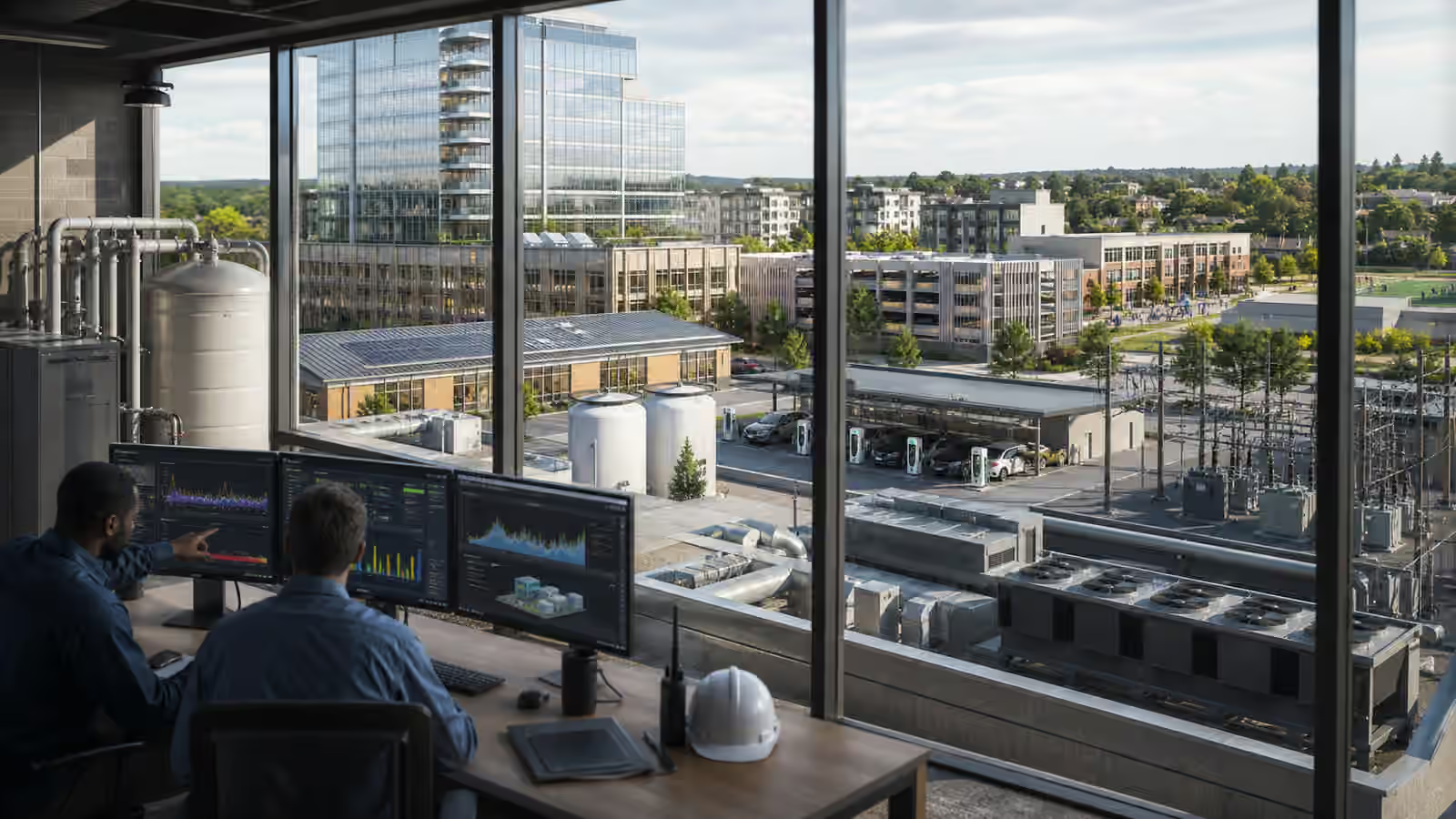
Buildings are full of thermal storage opportunities because comfort systems already manage temperature over time. A large office tower may make chilled water at night or in the morning, store it in a tank, and use that cold reservoir when afternoon cooling demand rises. A campus may pre-cool buildings before a peak and let them coast within comfort limits. A home water heater may run before a grid peak, then wait while stored hot water remains available. A heat pump paired with a well-insulated tank can turn flexible electricity into useful heat without asking occupants to think about grid operations.
The important phrase is within limits. Buildings hold heat and cold, but people live and work inside them. A demand program that lets a building drift too hot, too cold, too humid, or too stale has failed even if it helps the grid for an hour. Thermal storage works best when the equipment, envelope, controls, and occupants are treated as one system. Better insulation, thoughtful ventilation, and transparent override rules can make the same storage strategy feel invisible instead of intrusive.
This connects directly to demand response . Many flexible loads are not flexible because people are indifferent. They are flexible because a physical buffer exists. Hot water remains hot. A cold room warms slowly. A building with thermal mass does not instantly match outdoor temperature. When that buffer is respected, the grid can shift some electric demand without degrading the service people actually wanted.
Industry Needs Temperature, Not Slogans
Industrial heat is where thermal storage becomes more consequential and more demanding. The industrial electrification guide explains why process heat is not one uniform load. A dairy plant, paper mill, glass furnace, food processor, district steam system, refinery unit, and pharmaceutical line all need different temperatures and operating patterns. Some can use warm water. Some need steam. Some need high-temperature heat delivered steadily. Some processes can pause. Others become unsafe, wasteful, or uneconomic if interrupted.
Thermal storage can help when it decouples the electric input from the heat output. A plant may use electric boilers, heat pumps, resistance heaters, induction equipment, or other electric systems to charge a store during easier grid hours. Later, the plant draws heat from that store while reducing electric demand during the evening peak or a local grid constraint. The factory is not pretending its process is flexible. It is creating flexibility upstream of the process.
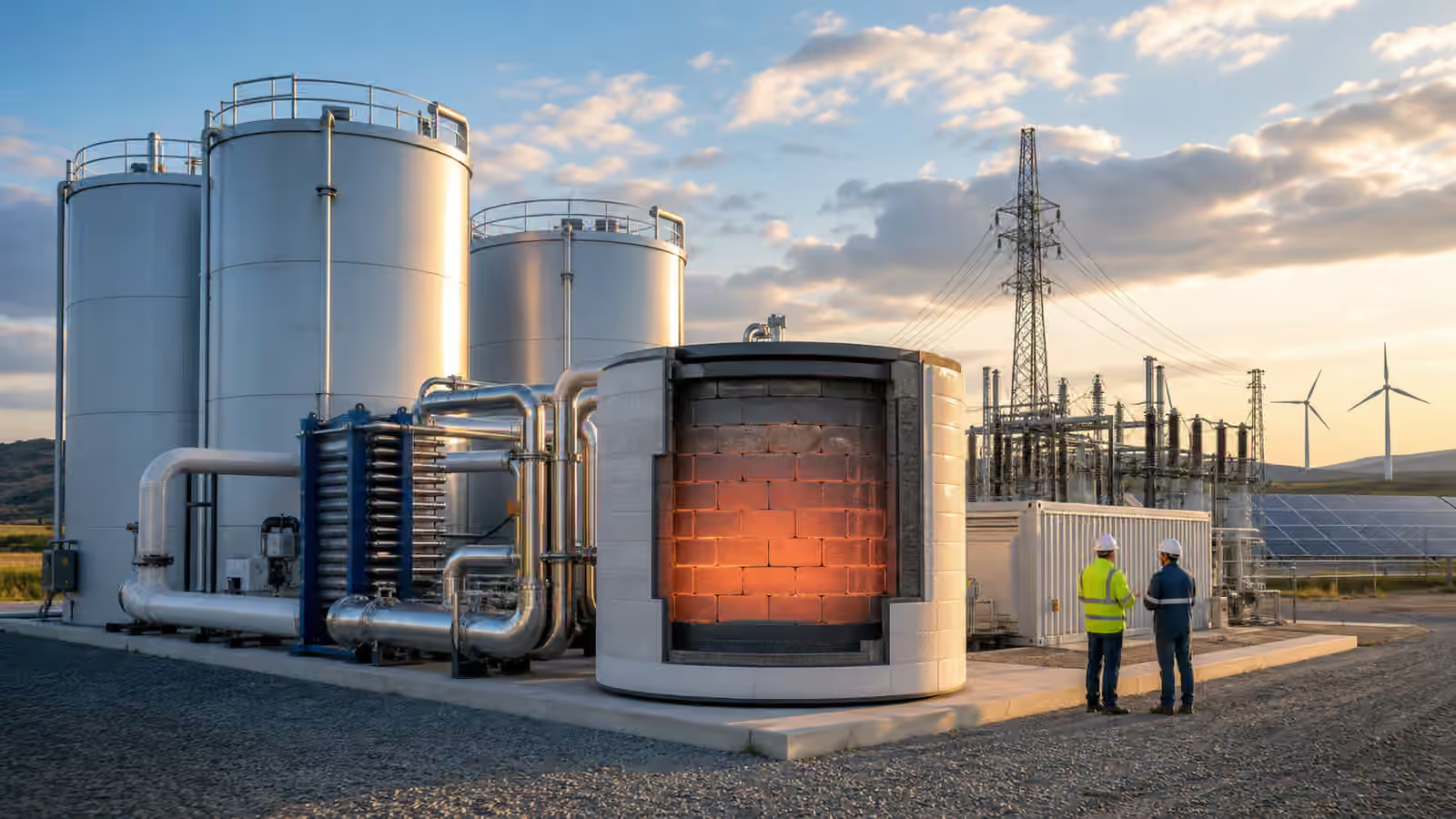
The storage medium has to match the job. Hot water is familiar and useful at lower temperatures. Pressurized water and steam systems can serve other ranges with stricter engineering. Molten salts have been used where high-temperature storage is useful, including in some solar thermal contexts. Ceramic bricks, refractory materials, rocks, sand-like media, phase-change materials, and specialized fluids can store heat in different ways. None is a universal answer. Materials expand, corrode, leak, degrade, insulate, conduct, and age differently. A storage design that looks elegant on a diagram still has to survive real maintenance, real operators, and real duty cycles.
Grid Value Comes From Decoupling
The grid value of thermal storage is not that it creates energy. Like every other storage system, it moves useful energy service through time. Its value appears when the timing of electricity supply and thermal demand do not line up.
Imagine a region with strong midday solar and a late-afternoon cooling peak. A commercial building that makes and stores chilled water before the peak can reduce compressor load when the grid is tight. Imagine a factory that needs steady heat across the evening. A thermal store charged during low-stress hours can let the plant keep operating while drawing less electricity during the hardest period. Imagine a district energy system with large hot-water tanks. It may absorb heat when power is cleaner or cheaper, then serve buildings later without forcing every boiler or heat pump to run at once.
These uses connect to resource adequacy because the hardest grid hours are not solved only by building more supply. They are also shaped by demand that can move without harming the underlying service. A thermal store can turn some heating and cooling demand into a capacity resource, but only if planners know how much response will appear, how long it can last, and what constraints protect the customer. Overcounting thermal flexibility is as risky as overcounting any other resource.
Thermal storage also helps explain curtailment . When clean electricity has nowhere to go, a well-placed flexible heat or cooling load may absorb some of it. This is not a license to waste electricity just because it is clean in that hour. It is a way to replace later fuel use or reduce later grid stress by doing useful thermal work at a better time.
It Is Local Infrastructure
Thermal storage is physical, local, and sometimes bulky. Tanks need space. High-temperature systems need insulation, safe clearances, controls, pumps, valves, maintenance access, and trained operators. Chilled-water systems need water treatment and careful integration with cooling equipment. Heat stores need piping that can deliver useful temperature to the right process or building. The value may disappear if the store is far from the load or if the temperature is wrong.
That local nature can be a strength. A thermal store near a building, campus, or factory may reduce stress on the distribution grid exactly where load would otherwise peak. It may help a constrained feeder, transformer, or substation avoid a few intense hours, which links it to the neighborhood-level problems described in distribution grid upgrades . The same idea can work behind the meter at a facility or in front of the meter as part of a district energy network. Either way, the project has to fit the place.
It also has to fit human institutions. A building owner may not invest in a tank unless the tariff, contract, or resilience value is clear. A factory may not risk production quality for vague grid benefits. A district energy system may need public coordination, long planning horizons, and trust from customers. Thermal storage is often technically ordinary compared with advanced reactors or fusion machines, but ordinary equipment still needs a business case and a responsible operator.
The Honest Way To Judge It
The useful question is not whether thermal storage is better than batteries. The useful question is what service must be stored. If the service is electricity for any purpose, electrochemical batteries, pumped hydro, flow batteries, compressed air, hydrogen, or other storage paths may be the better fit. If the service is heat or cold at a known location and temperature, thermal storage deserves attention.
A good project starts with the load. The engineer or planner needs to know the temperature range, daily and seasonal shape, acceptable downtime, safety requirements, space constraints, charging hours, and consequences of failure. A grocery cold-storage system is not the same as a steel reheating furnace. A residential water heater fleet is not the same as a campus chilled-water tank. A brick heat store serving a factory is not the same as a district heating reservoir. The category is useful, but the design is always specific.
Thermal energy storage matters because the future grid will not only be an electricity problem. It will be a timing problem, a temperature problem, a local infrastructure problem, and a trust problem. Storing heat or cold will not remove the need for transmission, firm clean power, batteries, efficiency, or better planning. It can, however, make some loads easier to serve by letting useful thermal work happen when the grid has room.
The quiet promise is practical. A tank charges before the peak. A brick store heats while solar is abundant. A chilled-water loop carries a building through the hardest hour. A factory keeps producing without demanding the grid’s most expensive electricity at the worst moment. No single thermal store transforms the energy system. Many well-matched thermal stores can make the system less brittle, one temperature buffer at a time.