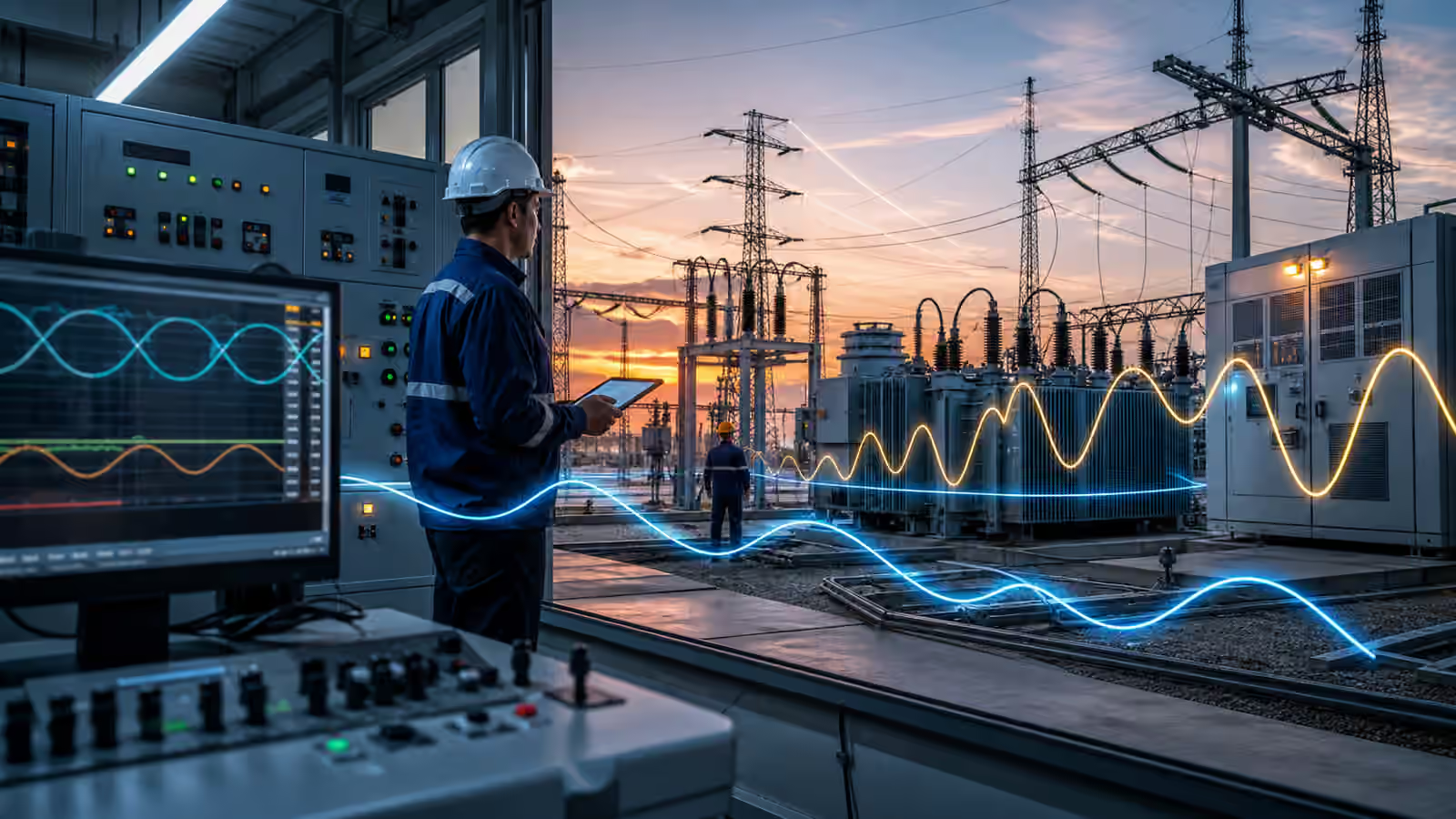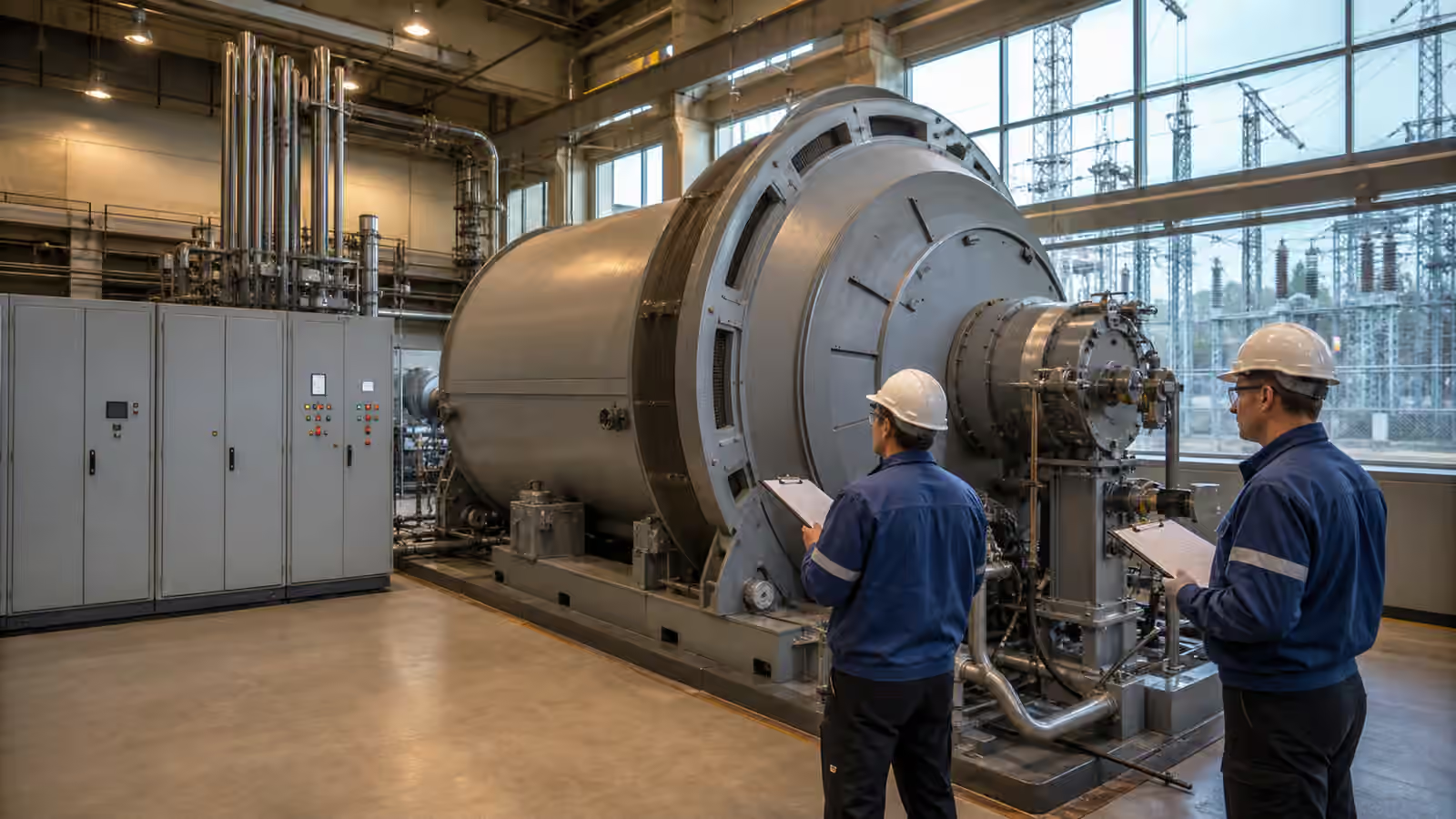
Some future-grid tools look futuristic: advanced inverters, digital controls, batteries, artificial intelligence, and fast sensors. A synchronous condenser looks more like old power equipment. It is a large rotating electrical machine connected to the grid, often housed in a plain industrial building near a substation. It does not burn fuel to produce electricity. Instead, it spins with the grid and provides support functions that many older generators once supplied as a side effect of being connected.
That makes synchronous condensers interesting in a renewable-heavy power system. As coal, gas, and nuclear generators retire or run less often, the grid can lose rotating mass, fault current, voltage support, and familiar electrical behavior. Wind, solar, and batteries connect through inverters, which can provide many services but do not behave exactly like big spinning machines unless designed and controlled to do so. Synchronous condensers are one way to keep some rotating support without running a fuel-burning generator.
The guide to grid inertia and frequency response explains why first-seconds stability matters. Synchronous condensers belong in that same first-seconds story, but they also support voltage, protection, and system strength.
A condenser is a machine that gives support without making energy
A synchronous condenser is related to a synchronous generator. It has a rotor, stator, excitation system, cooling, bearings, controls, and a grid connection. Unlike a generator attached to a turbine, it is not driven by steam, water, or combustion to export continuous active power. It spins in synchronism with the grid and can absorb or supply reactive power, helping control voltage. Its rotating mass can contribute inertia. Its electrical behavior can provide fault current and system strength that protection equipment and inverter controls may depend on.
The word “condenser” can confuse readers because this machine is not a cooling condenser. It is an electrical device. Historically, synchronous condensers were used for voltage control and reactive power. Some were later retired when other equipment became available or when grids had plenty of online generators. They are now being reconsidered in places where inverter-based resources are replacing rotating generation.
This does not mean every grid needs a synchronous condenser. The need depends on local resource mix, transmission strength, protection design, voltage behavior, disturbance studies, and the capabilities of inverters already connected. In some places, grid-forming batteries, static compensators, capacitor banks, reactor banks, upgraded controls, or transmission changes may be better. In other places, a rotating machine at the right node can solve several problems at once.
Inertia is only one part of the value
People often introduce synchronous condensers through inertia. A spinning rotor stores kinetic energy. If grid frequency begins to fall after a sudden loss of supply, rotating machines naturally release some energy for a brief moment as they slow slightly. That response buys time for governors, batteries, demand response, and other controls to act. A system with less rotating mass can change frequency faster, which gives operators and equipment less time.
The inertia value is real, but it is not the whole story. A synchronous condenser can also provide dynamic reactive power, which helps maintain voltage after disturbances and during changing power flows. Voltage support is crucial because a grid can have enough megawatts on paper and still be unstable if voltage cannot be controlled. Power quality and voltage support covers this everyday electrical behavior.
Fault current is another reason synchronous condensers matter. Protection systems often depend on a clear surge of current when a fault occurs so relays can detect and isolate the problem. Inverter-based resources may limit fault current differently from synchronous machines. That does not make inverters unsafe by default, but it can require new protection settings, controls, or equipment. Grid protection and relays explains why that coordination layer is delicate.
Grid-forming inverters and condensers can work together
It is tempting to frame synchronous condensers and grid-forming inverters as rivals. The more useful view is that they are tools with different strengths. Grid-forming inverters can support voltage and frequency through power electronics. Batteries and advanced inverter controls can respond extremely fast, provide active power, and be tuned for future operating needs. They can also be deployed in modular ways and paired with storage or renewable plants.
Synchronous condensers provide physical rotating behavior, fault current, and voltage support that grid operators understand well. They can be especially useful in weak-grid areas, near large renewable zones, at the end of long transmission paths, or where protection systems and inverter controls need a stronger electrical reference. They do not require stored energy to provide reactive support, though they do consume some power to cover losses and auxiliary systems.
The best answer may be both. A renewable zone might use grid-forming batteries for fast active power and control, synchronous condensers for system strength and fault current, dynamic line ratings for transmission use, and better telemetry for operations. The future grid is unlikely to be stabilized by one device class everywhere. It will be stabilized by combinations chosen for local electrical conditions.
Location decides whether the machine helps
Synchronous condensers are not generic trophies placed anywhere on the map. Their value depends on where they connect. A weak part of the grid may need voltage support close to a renewable cluster. A retiring generator site may already have a strong grid connection, switchyard, cooling access, and land, making it a candidate for conversion or new equipment. A load pocket may need system strength to support motors, data centers, or industrial processes. A long transmission corridor may need support at a strategic substation.
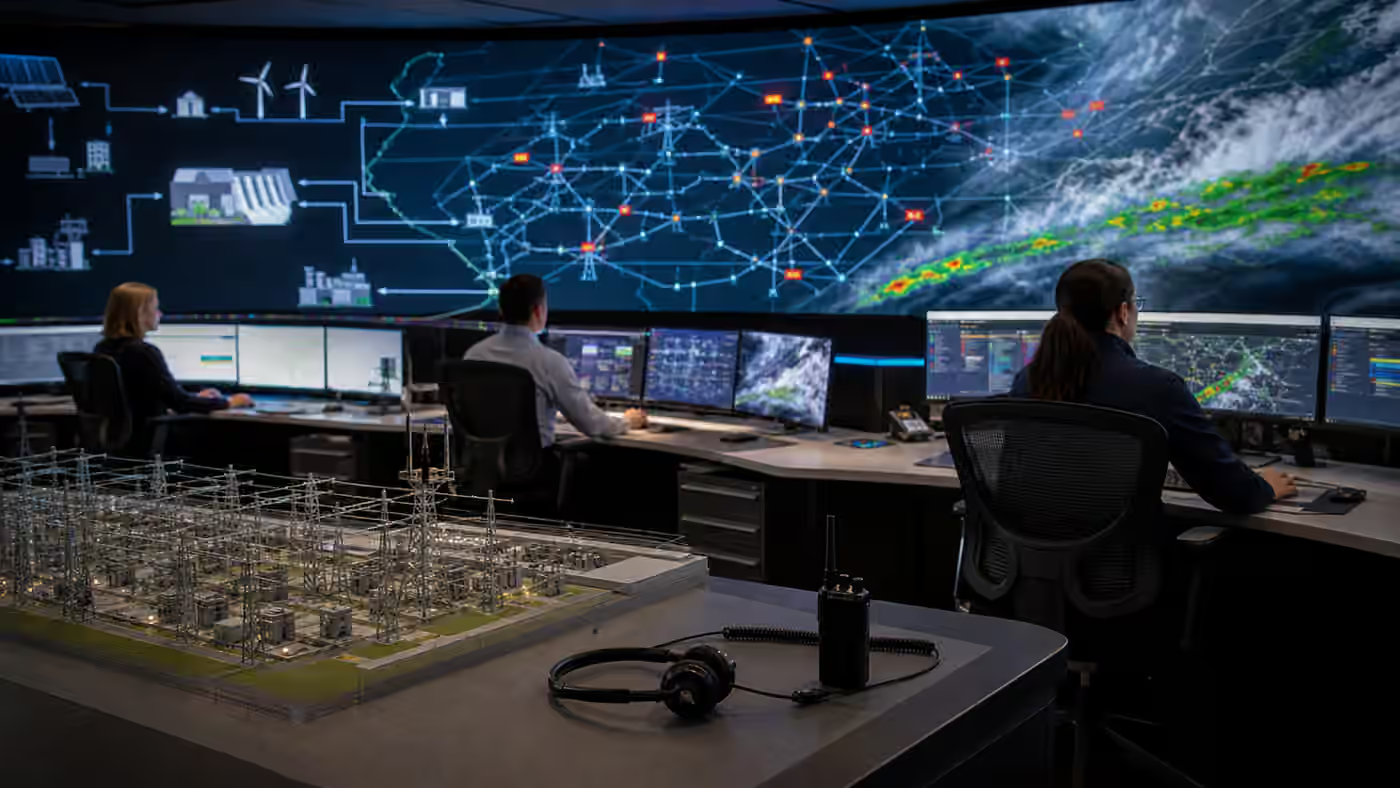
Planning studies test these locations. Engineers simulate faults, line trips, generator retirements, renewable output, load patterns, and inverter behavior. They ask whether voltage recovers, whether frequency stays within limits, whether protection operates correctly, and whether the system can survive credible disturbances. Grid visibility and sensor telemetry matters because models have to be checked against real measurements.
The location question also affects cost. A synchronous condenser needs foundations, buildings or enclosures, connection equipment, controls, maintenance access, auxiliary power, and sometimes flywheels for additional inertia. Installing one at an existing substation or retired plant site may be easier than building a new support site from scratch. The grid value has to justify the physical project.
Retired generators can sometimes be converted
One appealing path is converting a retired synchronous generator into a condenser. If a power plant is no longer needed for energy or emissions reasons but its generator and grid connection remain useful, removing the turbine drive and operating the machine as a condenser may preserve support services. This can reduce the need to build entirely new equipment, though the feasibility depends on age, condition, control systems, cooling, site plans, and economics.
Generator retirements and replacement capacity explains why closing a plant is a sequencing problem. A plant may provide local reliability services even when its energy output is no longer attractive. Before retirement, planners need to ask which services disappear and how they will be replaced. A synchronous condenser conversion is one possible answer for some services, not a universal retirement plan.
Communities may also view conversions differently from new generation. A condenser does not burn fuel on site to make power, but it still keeps industrial equipment, substations, noise, maintenance, and land use in the area. The public explanation should be concrete: what service the machine provides, why it is needed, how it will operate, and what impacts remain.
Rotating support is not a step backward
Because synchronous condensers look old, they can be misunderstood as nostalgia. They are better understood as one of several support tools for a power system changing its generation mix. A grid with more wind, solar, batteries, HVDC links, large data centers, and electrified industry still needs voltage control, protection performance, disturbance ride-through, restart paths, and stable operation. Some of those needs can be met by software-controlled inverters. Some may be met more reliably or economically by rotating equipment in the right place.
Ancillary services gives names to the support jobs behind reliable electricity. Synchronous condensers make that lesson visible. Energy is not the only product the grid consumes. It also needs electrical behavior that keeps the system usable when something changes suddenly.
For a reader, the practical question is not whether synchronous condensers are modern or old-fashioned. The sharper question is which grid service is missing at a specific location and which tool supplies it best. If a rotating condenser provides inertia, voltage support, fault current, and system strength where those are scarce, it can be a future-grid asset. If other tools solve the same problem better, the grid should use those instead. The goal is not to preserve a machine type. It is to preserve reliable electrical behavior while the sources of energy change.