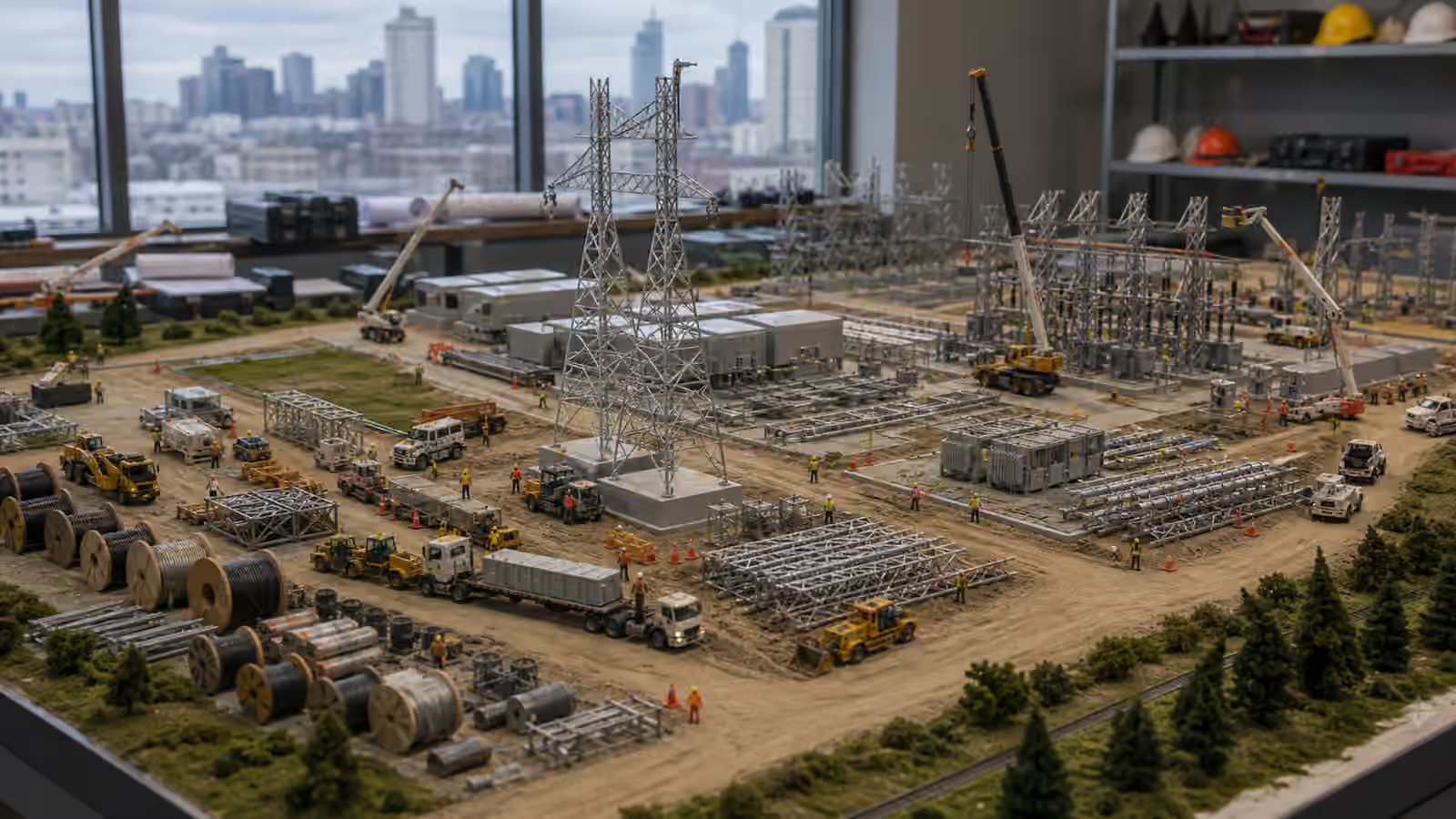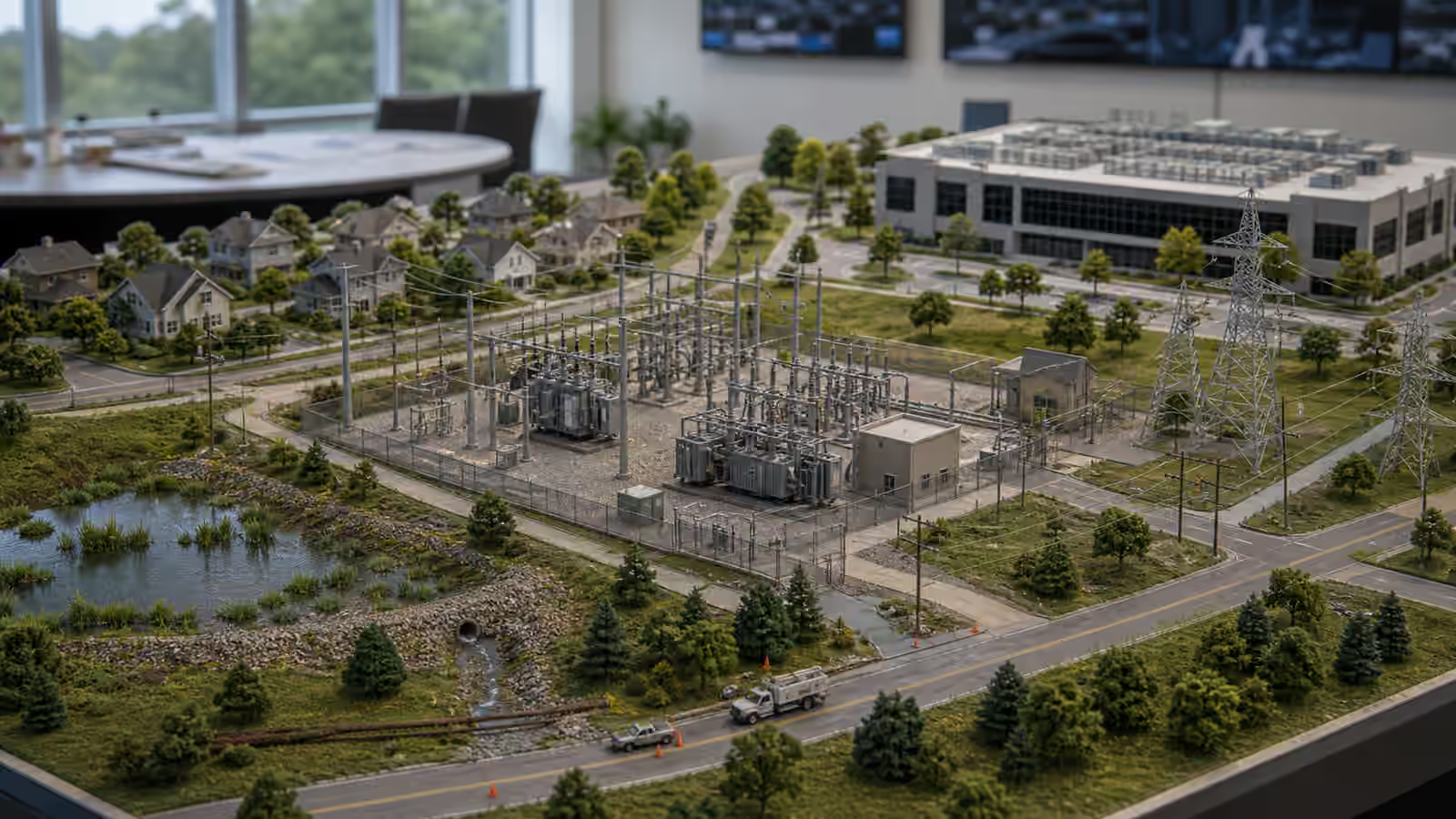
A substation is where the grid stops being a line on a planning map and becomes a fenced place with transformers, breakers, buswork, control cabinets, access roads, communications equipment, protection settings, fire clearances, and neighbors. It is a gateway. Power passes through substations when voltage changes, when circuits split, when a large customer connects, when a battery injects energy, when a solar plant feeds the network, and when a distribution feeder carries electricity into a neighborhood.
Substations rarely get the attention given to new power plants or long transmission corridors. That is a mistake. A future energy system with more clean generation, more data centers, more EV charging, more heat pumps, more batteries, and more local solar will need more substation capacity and better substation locations. The transformers and grid hardware guide explains why heavy equipment matters. Substation siting explains where that equipment can actually live.
The siting problem is practical, not merely technical. A good site has to fit the electrical need, the land, the construction route, the operating requirements, the emergency access plan, the community context, and the future expansion path. A substation placed poorly can become a bottleneck for decades. A substation planned well can make later electrification easier because the grid has a real node where new resources and loads can connect.
Voltage Changes Need Physical Space
Electricity moves through the grid at different voltage levels because different jobs require different equipment. High-voltage transmission moves large amounts of power over distance. Lower-voltage distribution carries electricity through local circuits. Substations connect those layers. They step voltage up or down, switch circuits, isolate faults, measure flows, and provide control points for operators.
All of that work takes space. Transformers are large and heavy. Breakers and buswork need clearances. Control buildings need communications and backup power. Fire safety may require separation between major equipment. Crews need room to bring in a replacement transformer or park trucks during maintenance. Stormwater, grading, fencing, lighting, noise, vegetation, and security all become part of the site design.
This is why substations cannot be dropped into any leftover parcel. The electrical map may say that a node should be near a load pocket, a renewable interconnection, or a transmission corridor. The land map may say the nearby parcels are too small, too steep, too constrained, too expensive, too close to homes, too exposed to flooding, or too difficult to reach with heavy equipment. The final answer has to satisfy both maps.
Large Loads Make the Gateway Visible
Substation siting becomes especially visible when a large load asks to connect. A data center campus, factory, hydrogen facility, rail electrification project, or charging depot may need a new substation or major expansion of an existing one. The large load interconnection guide follows the study process from request to energized load. Substations are often where that process becomes concrete.
A large load does not only need a contract for electricity. It needs transformers, switchgear, protection coordination, metering, communications, service roads, construction staging, outage coordination, and sometimes new transmission or distribution lines. If the nearest substation has no room for expansion, the project may need a new site. If the local transformer bank is already close to its limit, equipment lead times can shape the schedule. If the substation is in a constrained neighborhood, access and community impacts may become as important as engineering.
This does not mean every large load is a problem. It means large loads reveal the hidden physical layer behind power availability. A region may have enough generation in theory and still be unable to energize a new campus quickly because the right substation capacity is not in the right place.
Distribution Growth Needs Local Nodes
Substations also sit behind ordinary electrification. Heat pumps, EV chargers, rooftop solar, home batteries, commercial building controls, and local storage all change the way distribution circuits behave. The distribution grid upgrades guide explains the neighborhood layer of that change. Substation planning is the upstream version. Feeders can be reconfigured, transformers can be upgraded, and smart controls can help, but many local circuits still depend on the capacity and flexibility of the substation that serves them.
As loads grow, a utility may add a new transformer bank, split feeders, create a new distribution substation, or expand an existing yard. As distributed solar grows, voltage control and reverse power flows may require new equipment or settings. As batteries and virtual power plants participate, the substation becomes a measurement and control point as well as a power delivery point.
The hardest cases are not always the biggest cities. Fast-growing suburbs, industrial parks, rural renewable areas, and highway charging corridors can all strain local substations. A few large projects can change the shape of a feeder plan. A cluster of home chargers can reveal a transformer issue that was invisible when vehicles used liquid fuel. Siting is the bridge between those new demands and the physical places where equipment can be built.
A Substation Has Neighbors
Substations are industrial infrastructure, and they affect the places around them. They can raise concerns about appearance, noise, lighting, land use, fire response, traffic during construction, vegetation removal, stormwater, property values, and fairness. A community may accept that electricity is necessary while still objecting to being treated as an empty space on a utility map.
The energy permitting and community trust guide makes the broader point: infrastructure needs a public path. For substations, that path should start before the design feels finished. Residents deserve to understand why the site is needed, what alternatives were considered, what the visible impacts will be, how construction will be managed, and what local benefits or protections are being offered.
Good siting does not promise that everyone will like the project. It makes the tradeoffs legible. A site near existing transmission may reduce new line mileage but affect a particular neighborhood. A site farther away may require more wires and more land. An underground route may reduce visual impacts but raise cost and construction disruption. A compact design may save land but leave less room for future expansion. These are real choices, and communities can evaluate them only when the information is clear.
Resilience Starts With the Site
Substations must survive the conditions they are built to serve. Flooding, wildfire, extreme heat, cold snaps, storms, vegetation, salt spray, seismic risk, vandalism, and access during emergencies can all affect reliability. The grid weatherization and resilience guide looks at the system level. At the substation level, resilience means grading, drainage, equipment elevation, fire breaks, spare parts, communication backup, physical security, crew access, and restoration plans.
A substation that floods during a storm can turn a local problem into a prolonged outage. A substation without access during a wildfire or snow event may be difficult to repair. A substation with no room for mobile equipment may recover more slowly after a transformer failure. These details are not decorative. They decide whether capacity is usable when conditions are hard.
Resilience also includes future expansion. A substation sized only for the next few years may become a bottleneck when loads or resources arrive faster than expected. Leaving room for another transformer, another feeder bay, or another control building can be more valuable than squeezing the first project into the smallest possible footprint. That spare space has a cost, but so does rebuilding the site later under pressure.
Controls Make the Yard Smarter, Not Smaller
Modern substations are increasingly digital. Sensors, automated switches, protection relays, communications systems, and remote controls let operators see and manage the grid more precisely. The distribution automation and DERMS guide explains how local coordination improves flexibility. Substations are one of the places where that coordination is anchored.
Digital controls can reduce some operating constraints, improve fault isolation, support distributed resources, and make maintenance smarter. They do not remove the need for physical equipment. A relay can trip a breaker quickly, but the breaker still has to exist. A sensor can reveal transformer loading, but the transformer still has a thermal limit. A control system can help manage voltage, but it needs devices capable of changing voltage or reactive power.
The future substation is therefore both heavier and smarter. It may contain more power electronics, more communications, more cybersecurity requirements, and more automation, while still depending on transformers, buswork, steel, copper, concrete, and clearances. Siting has to plan for both layers.
The Quiet Node That Decides the Pace
Substation siting is not a glamorous topic, but it decides the pace of many energy plans. New generation needs places to interconnect. New loads need places to draw power. Distribution circuits need stronger upstream nodes. Batteries need switching and protection. Communities need infrastructure that is explained before it arrives. Crews need sites they can maintain safely. Operators need control points they can trust.
The useful question is not simply whether a region has enough megawatts. It is where those megawatts can pass through the system. A substation is one of the answers. If it is missing, undersized, poorly located, or impossible to expand, the rest of the plan slows down. If it is planned with land, access, resilience, neighbors, and future growth in mind, it becomes a durable gateway for the power system that comes next.