Small modular reactors, usually called SMRs, are one of the most discussed answers to a hard grid question: where can we get reliable low-carbon power when demand is rising and weather-dependent generation is not always available? The basic promise is simple. Instead of building a very large nuclear plant as a giant one-off project, build smaller reactor units that can be manufactured more repeatably, shipped or assembled in modules, and added as needed.
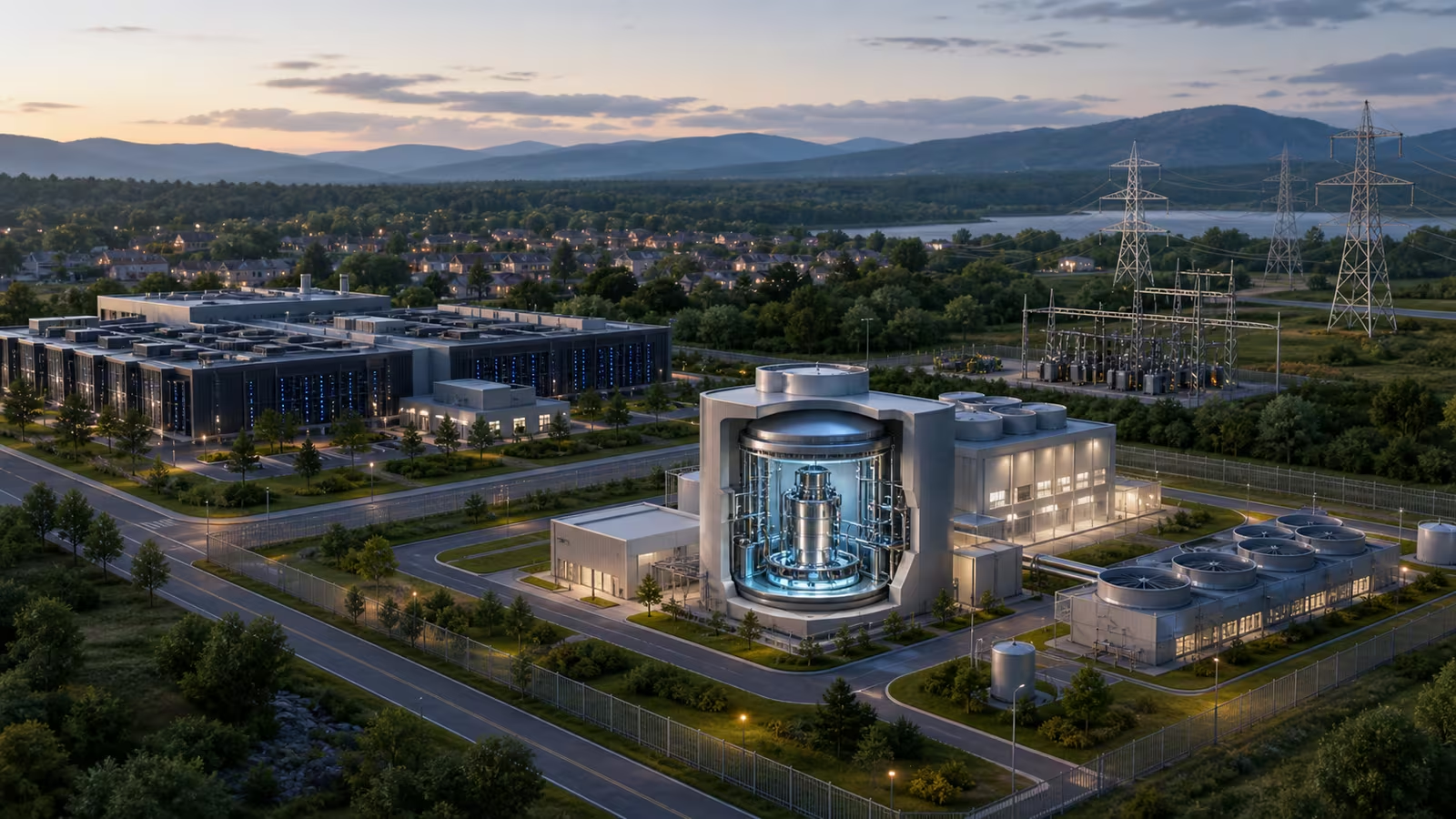
The appeal is especially clear for large industrial loads and data centers. These customers often want steady electricity around the clock. They may have climate goals. They may operate in regions where new transmission is slow or where the grid is already tight. A compact nuclear plant that provides firm clean power sounds like a neat fit. But energy history teaches caution: a good concept still has to become a licensed, financed, built, operated, and publicly accepted plant.
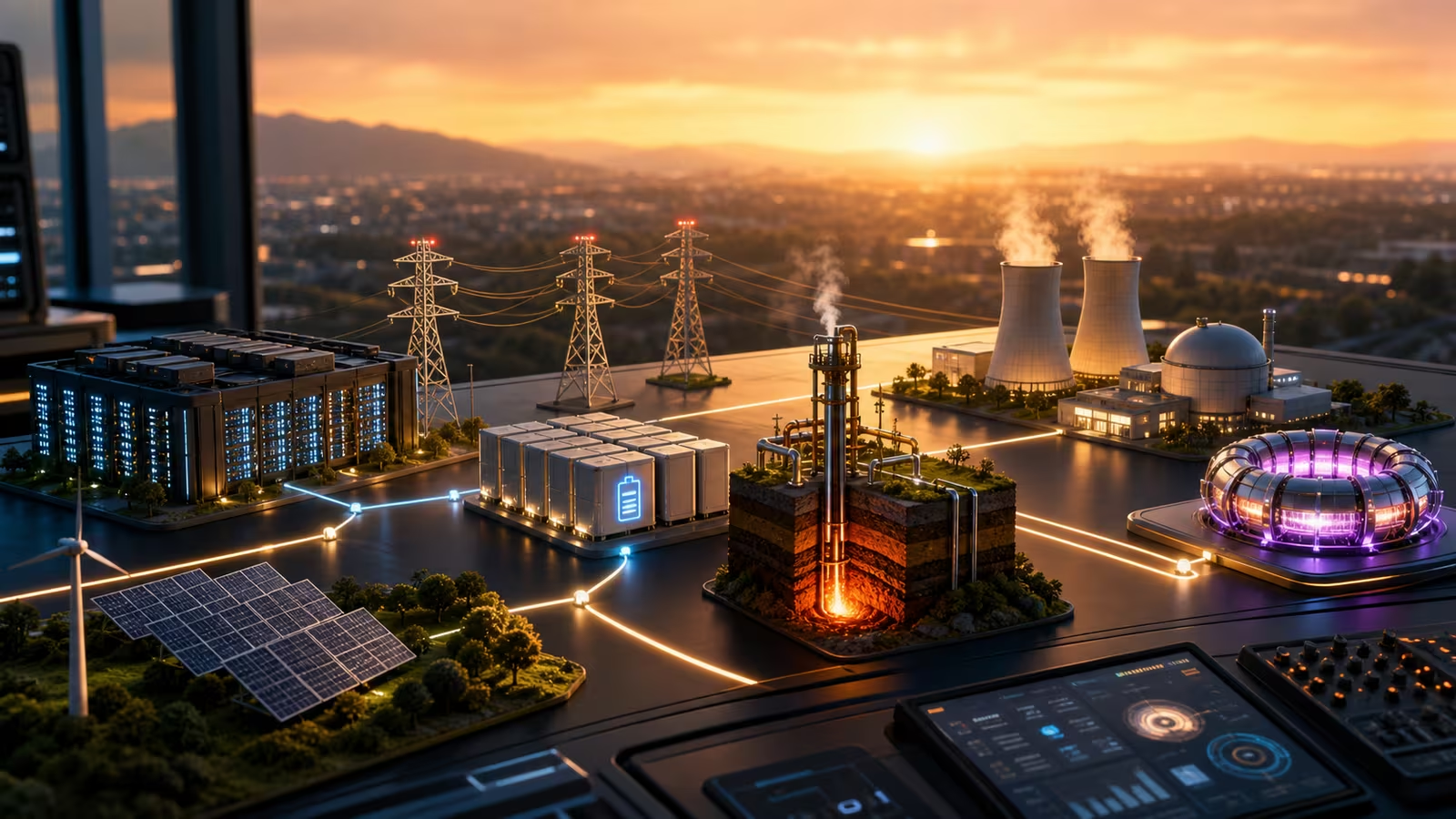
What makes an SMR different
Traditional nuclear plants are large, complex, and expensive. They can produce enormous amounts of power for decades, but recent projects in some countries have struggled with cost overruns and long construction timelines. SMRs try to improve the pattern by shrinking the unit size and increasing repeatability. The hope is that factory production and standardized designs can reduce construction risk over time.
Modular does not mean easy. A reactor is not a shipping container full of batteries. It involves nuclear fuel, safety systems, cooling, control, security, regulation, emergency planning, waste management, skilled workers, and long-term responsibility. The “small” part may reduce some challenges, but it does not remove the seriousness of nuclear energy.
There are also different kinds of SMRs. Some are smaller versions of familiar light-water reactors. Others use advanced designs such as high-temperature gas, molten salt, fast reactors, or microreactors. Different designs may target electricity, industrial heat, remote sites, military bases, mining, hydrogen production, or data centers. The category is broad, so every claim should be tied to a specific design.
Why grids care about firm low-carbon power
Nuclear power’s main grid value is steadiness. A nuclear plant can run day and night, often at high capacity, without direct carbon emissions from operation. In a grid with lots of solar and wind, firm low-carbon resources can reduce the amount of storage, backup, and overbuilding needed to serve demand during difficult periods.
This matters for AI data centers because they often need high reliability. A data center can buy renewable energy over a year, but the servers still need electricity at night, during calm weather, and during heat waves. If an SMR could provide clean firm power near a load or inside a regional grid, it could become part of the answer.
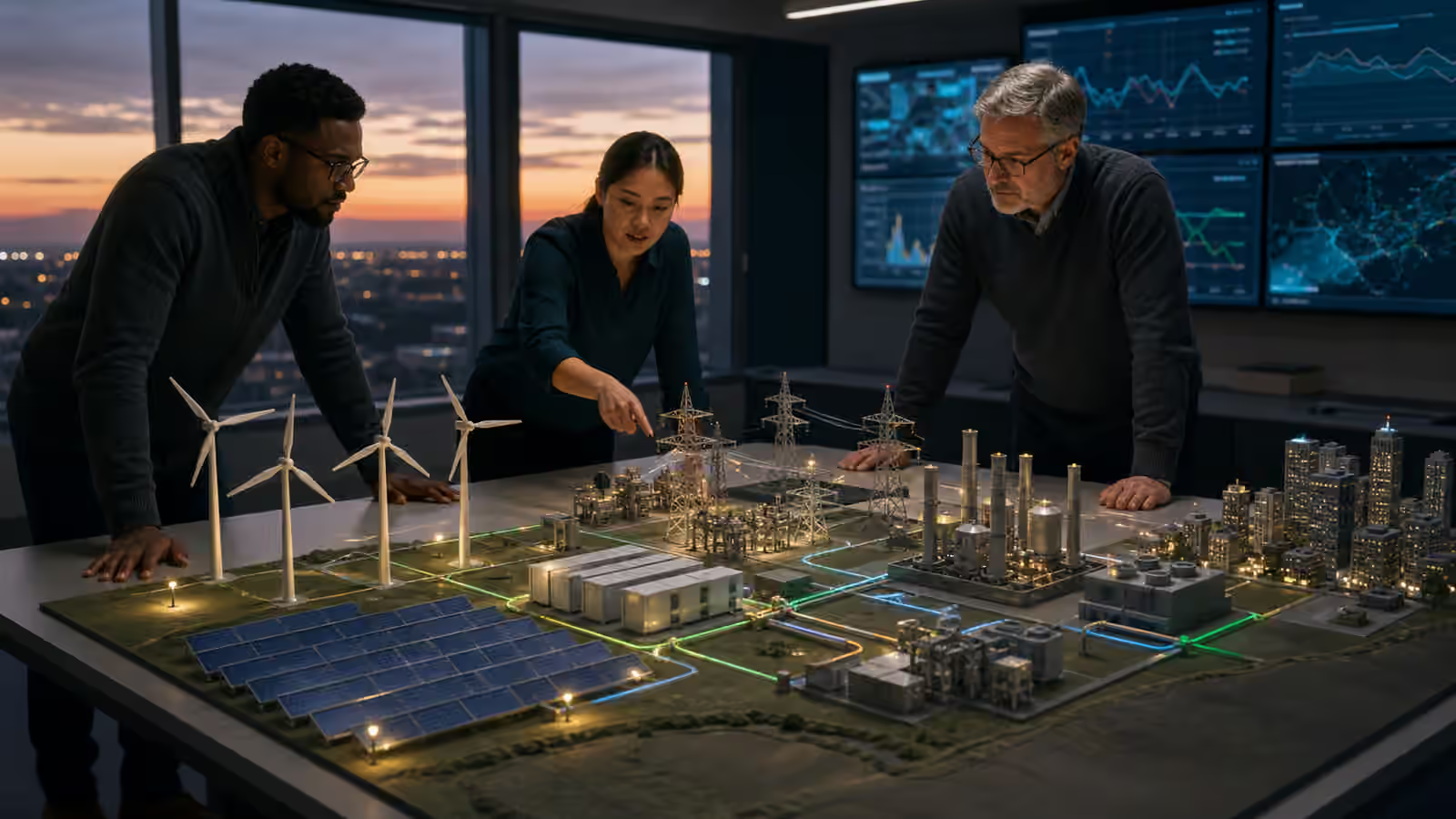
The important phrase is “part of the answer.” SMRs would not remove the need for transmission, renewables, storage, efficiency, or demand flexibility. They would add another tool, especially for places that value compact firm power.
Cost is the central test
Nuclear energy has strong technical virtues but a difficult cost record in many recent Western projects. SMRs are partly an attempt to change that. Smaller modules may reduce upfront risk per unit. Factory learning may reduce cost after many units. Standardization may reduce design changes. Shorter construction periods may lower financing costs.
But the first units may be expensive. Factories need orders before they get efficient. Regulators need confidence. Utilities need customers. Customers need prices. Investors need proof. This creates a chicken-and-egg problem: SMRs need deployment to get cheaper, but buyers want them cheap before deployment.
For this reason, early SMR projects may need strong anchor customers, government support, or special use cases where firm clean power is valuable enough to justify early costs. Data centers are interesting because they are large, creditworthy loads that may care about clean power and reliability. But even a wealthy customer will ask hard questions about timelines, risk, and total delivered cost.
Safety, waste, and trust
Any nuclear guide that ignores safety and waste is not being honest. Modern reactor designs include passive safety features, simpler systems, underground siting options, smaller cores, and other improvements. Those features matter. But public trust depends on more than engineering diagrams. Communities ask who regulates the plant, what happens in an emergency, how waste is handled, how long the site remains active, and whether local people benefit.
Used nuclear fuel is small in volume compared with fossil waste released into the air, but it is politically and technically serious because it remains hazardous and needs secure management. SMRs do not eliminate this responsibility. Some designs may change the waste profile, but every nuclear technology must answer the back-end question.
Trust also depends on competence. A nuclear plant is not a gadget. It is an institution. It requires trained operators, transparent oversight, emergency planning, maintenance culture, security, and a regulatory system that is neither careless nor paralyzed.
Siting and heat
SMRs may be useful not only for electricity but also for heat. Some advanced reactors aim to provide high-temperature heat for industry, hydrogen production, district energy, or desalination. Industrial heat is a huge part of energy demand and can be harder to decarbonize than ordinary electricity. If an SMR can provide both power and useful heat near an industrial site, its economics may improve.
For data centers, heat is usually a problem to remove, not a product. But a reactor nearby could provide firm electricity while the data center handles its own cooling. Siting would need to consider security, water, cooling, emergency planning, transmission, local acceptance, and whether the reactor is serving one customer or the broader grid.
Why this matters
SMRs matter because they aim at a real gap: firm clean power that can be built in repeatable units. If they work economically, they could help grids with rising demand, support industrial decarbonization, and provide low-carbon power for large loads. If they fail to control cost or earn trust, they will remain an interesting idea with limited deployment.
For a normal reader, the best way to evaluate SMR news is to ask practical questions. Is this a licensed design or a concept? Has it been built? Who is buying the power? What is the expected cost? What schedule risks exist? How is waste managed? What role does it play in the local grid? Does it reduce emissions compared with realistic alternatives? SMRs should be judged neither by fear alone nor hype alone. They should be judged as serious infrastructure.